LACMA

ShopMembershipMyLACMATickets
LACMA
Los Angeles County Museum of Art
5905 Wilshire Blvd.
Los Angeles, CA 90036
info@lacma.org
(323) 857-6000
Sign up to receive emails
Subscribe
© Museum Associates 2025

Museum Hours

Monday

11 am–6 pm

Tuesday

11 am–6 pm

Wednesday

Closed

Thursday

11 am–6 pm

Friday

11 am–8 pm

Saturday

10 am–7 pm

Sunday

10 am–7 pm


  • About LACMA
  • Jobs
  • Building LACMA
  • Host An Event
  • Unframed
  • Press
  • FAQs
  • Log in to MyLACMA
  • Privacy Policy
© Museum Associates 2025
Collections

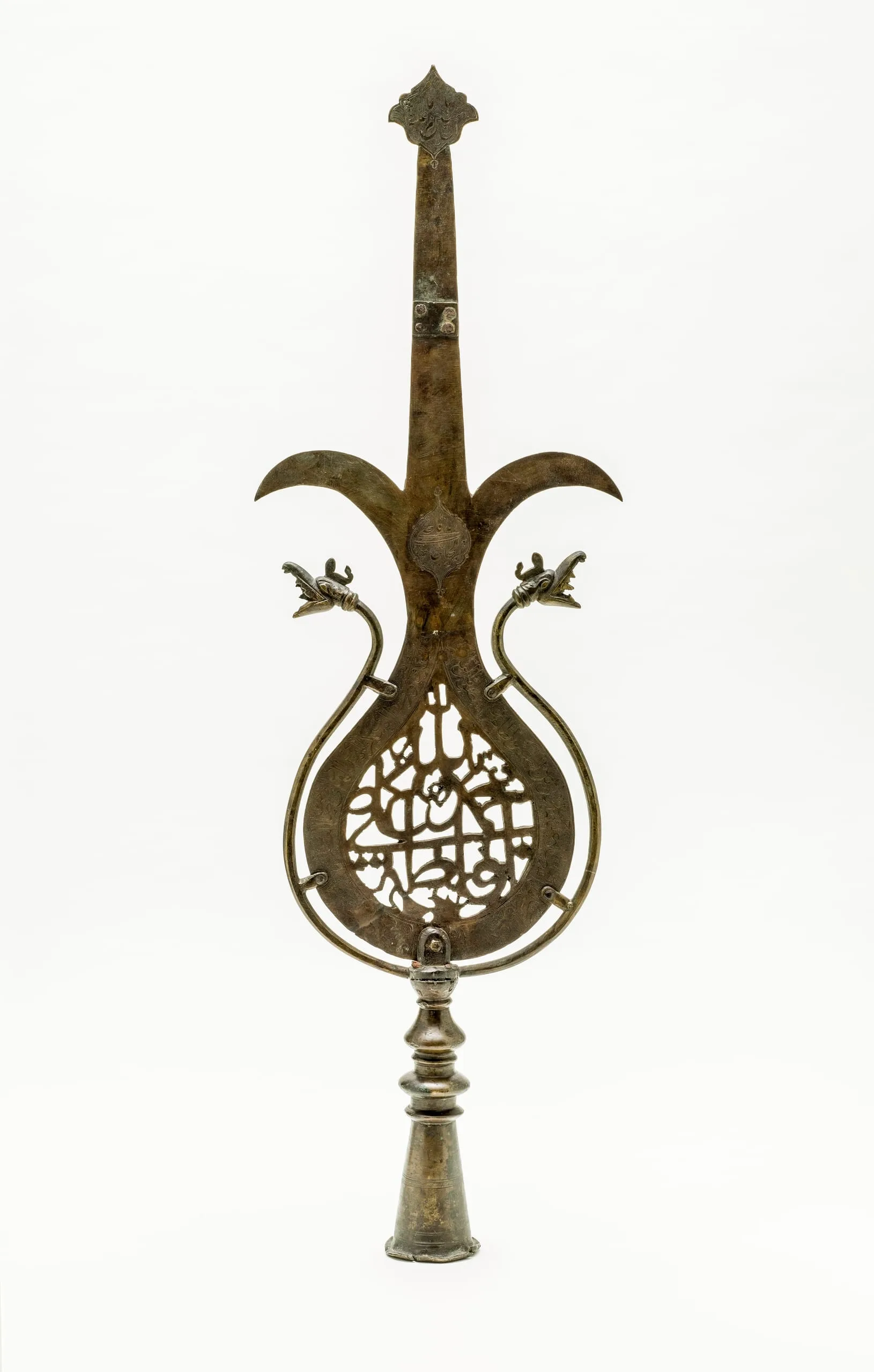
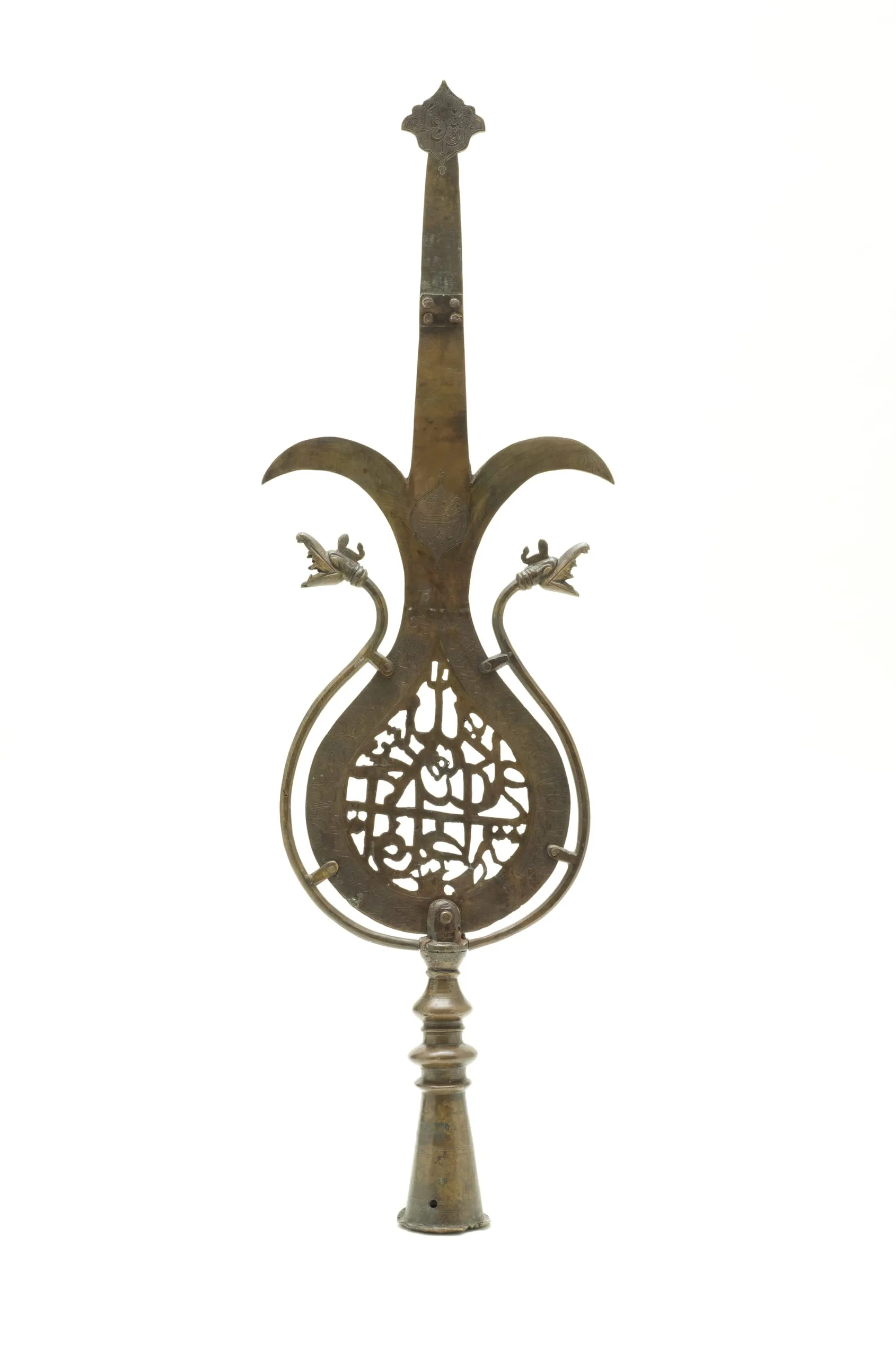
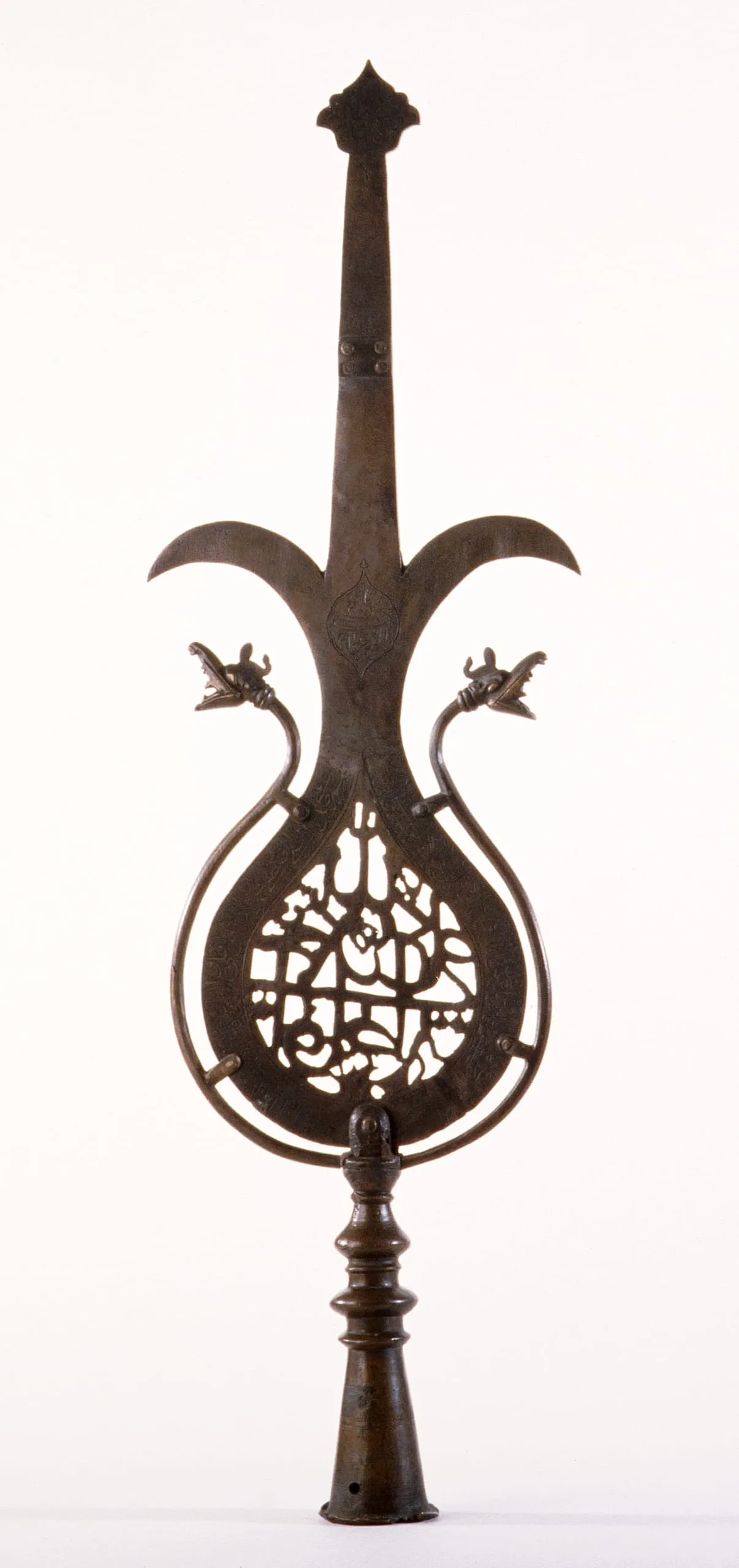
'Alam (Standard)1630-31/1040 A.H.

Not on view
Brass or bronze finial with a blade-form top, curving arms ending in animal heads, and a pierced oval panel of Arabic or Persian script, mounted on a turned baluster and conical socket
Cast brass finial with a cylindrical socket at base, a pierced teardrop-shaped body bearing openwork Arabic calligraphy, flanked by two crescent shapes with small animal-head terminals, and a pointed spike at top.
Cast iron ceremonial standard with a vertical blade topped by a fleur-de-lis finial, two upward-curving crescent blades at mid-shaft, small animal-head projections at their junctures, and an oval openwork panel with Arabic-script inscription below, mounted on a turned socket.
Title
'Alam (Standard)
Place Made
Iran
Date Made
1630-31/1040 A.H.
Period
Safavid (1501-1732)
Medium
Brass, cast
Dimensions
36 7/8 × 11 3/8 in. (93.66 × 28.89 cm) Overall (Diameter): 3 in. (7.62 cm)
Credit Line
The Edwin Binney, 3rd, Collection of Turkish Art at the Los Angeles County Museum of Art
Accession Number
M.85.237.91
Classification
Metal
Collecting Area
Art of the Middle East: Islamic
Curatorial Notes

Unlike Sunni Muslims, Shi‘ites believe that the Prophet Muhammad designated ‘Ali, his cousin and son-in-law, as the next leader (imam) of the Islamic community. This office was inherited by ‘Ali’s sons (the Prophet’s grandsons by his daughter Fatima) and then passed to successive generations of male descendants. Inscribed throughout with invocations to God, the Prophet, Fatima, and the imams, this standard was likely carried in Shi‘ite rituals such as Muharram processions or perhaps into battle as a proclamation of faith as well as a means of securing blessings and protection.

Selected Bibliography
  • Komaroff, Linda. "Islamic Art Now and Then." In Islamic Art: Past, Present, Future, edited by Sheila Blair and Jonathan Bloom, 26-56. New Haven, New York, and London: Yale University Press, 2019.