- Title
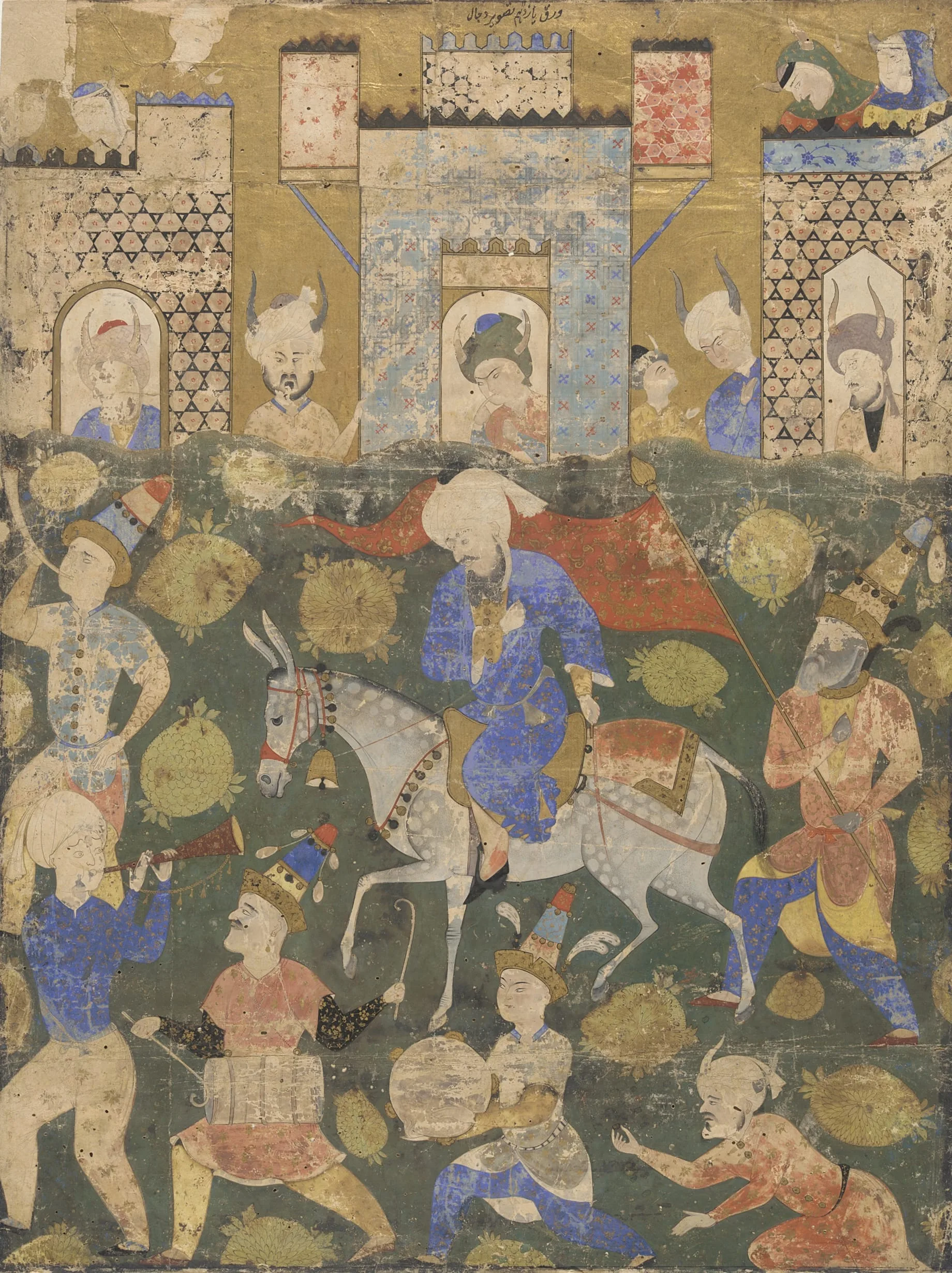
- Entry of the Antichrist into Jerusalem, Page from a Manuscript of the Falnama (Book of Omens)
- Date Made
- circa 1550-60
- Medium
- Opaque watercolor and gold on paper
- Dimensions
- 23 3/8 x 17 5/8 in. (59.4 x 44.7 cm)
- Accession Number
- M.85.237.72
- Curatorial Notes
The desire to know the future and seek answers to pressing questions is a universal human impulse. In the first half of the sixteenth century, people in Safavid Iran and Ottoman Turkey practiced bibliomancy, or the art of divination through texts including the Qur’an and the work of the Persian poet Hafiz (d. 1390). Another popular practice was divining messages from the Falnama (Book of Omens), large-format paintings depicting prophets, saints, and tales from romances and epics. These were sometimes accompanied by texts and sometimes not, instead requiring the interpretation of a diviner.
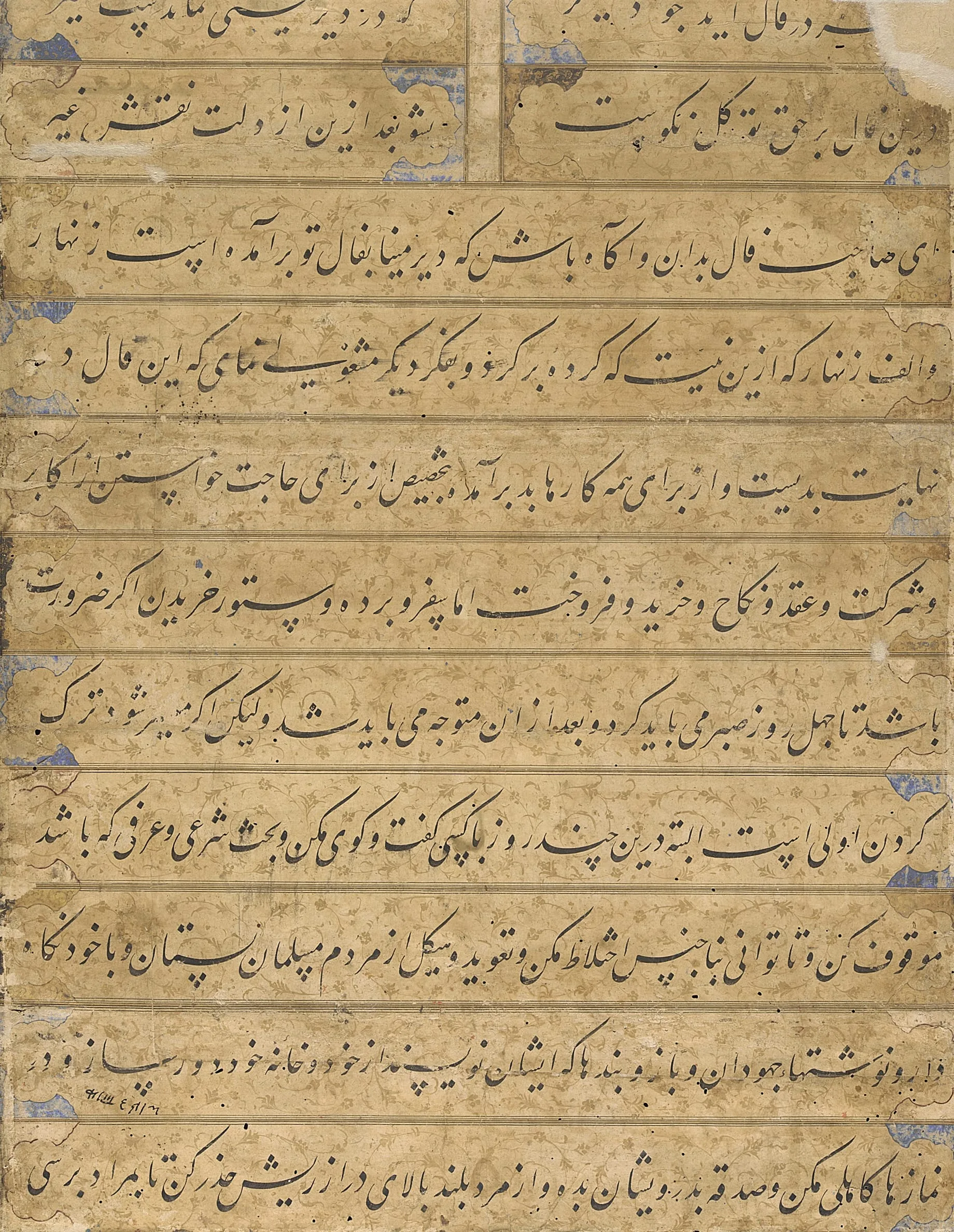
While divination was enjoyed by royals and common folk alike, this folio may come from a now-dispersed manuscript commissioned for the Safavid ruler Shah Tahmasp I (r. 1524−76). The man riding a donkey at the center of the painting is Dajjal (the Antichrist), whose arrival from the east is one of the ten signs of the coming of the Apocalypse. The painting is thus one of ill omen, and the text on its now-separated facing page advises: “The Antichrist in the augury is like an affliction. It is most appropriate to beware of this augury. Anyone who is wise knows, avoiding bad company is necessary.” The text on the reverse relates to another painting.
2024
- Selected Bibliography
- Denny, Walter B. Turkish Treasures from the Collection of Edward Binney, 3rd. Portland, OR: Portland Art Museum, 1979.
- Farhad, Massumeh, and Serpil Bagci. Falnama: The Book of Omens. Washington, DC: Arthur M.Sackler Gallery, 2009.
Pal, Pratapaditya, Thomas W. Lentz, Sheila R. Canby, Edwin Binney, 3rd, Walter B. Denny, and Stephen Markel. "Arts from Islamic Cultures: Los Angeles County Museum of Art." Arts of Asia 17, no. 6 (November/December 1987): 73-130.