- Title
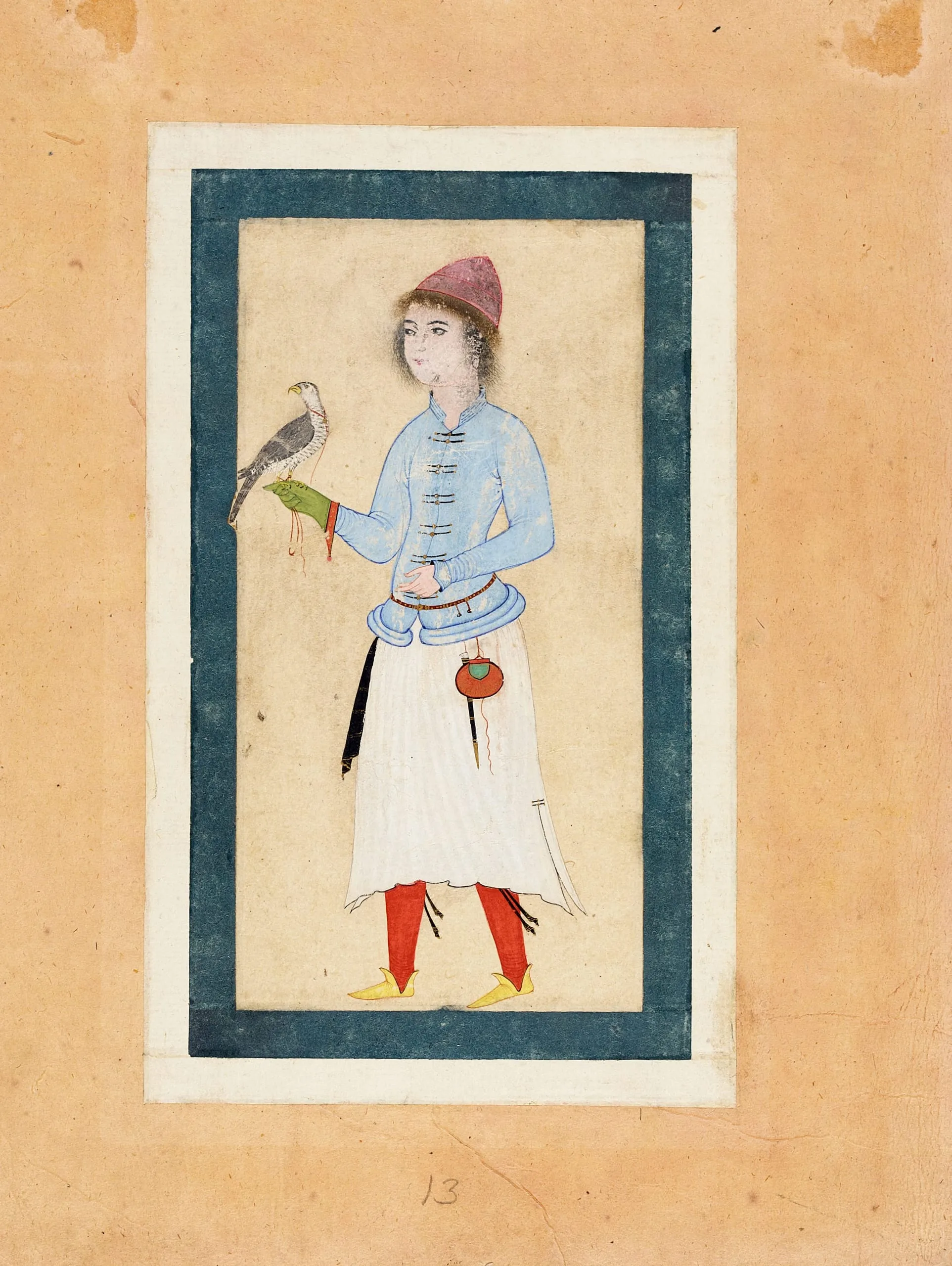
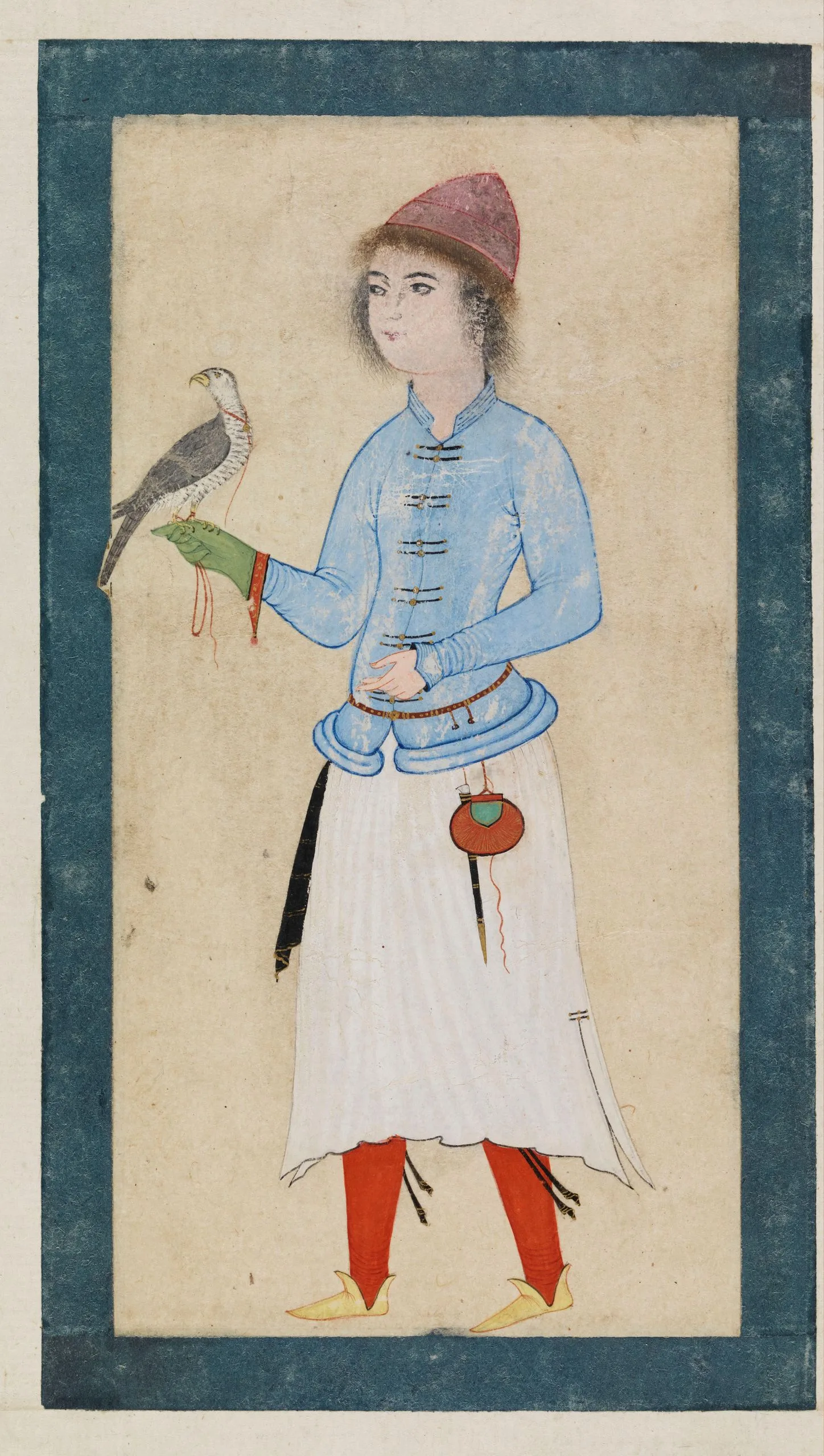
- Portrait of a Falconer Holding a Hawk on Gloved Right Hand
- Date Made
- late 16th century
- Medium
- Ink, opaque watercolor, and gold on paper
- Dimensions
- 9 3/4 × 7 1/4 in. (24.77 × 18.42 cm)
- Accession Number
- M.85.237.31
- Curatorial Notes
Hunting with sporting birds was a favorite activity at most Islamic courts and has been documented since the Umayyad period (661–750). The practice of hawking or falconry was probably introduced through contact with Iran following the Islamic conquests. Bayzara, the Arabic word for the art of the flying hunt, is derived from baz, the Persian word for a bird of prey. The domesticated and specially trained birds of prey were highly prized and frequently depicted in a variety of mediums. Such was their importance that even the bird’s handler became a fitting subject, as in this Ottoman painting of a young page with a hawk, perhaps awaiting his royal master. It should not be understood as an exacting likeness but rather as a generic image of the type of attractive attendant who might be attached to the court.
- Selected Bibliography
- Denny, Walter B. Turkish Treasures from the Collection of Edward Binney, 3rd. Portland, OR: Portland Art Museum, 1979.
- Komaroff, Linda. Gifts of the Sultan: the Arts of Giving at the Islamic Courts. Los Angeles: Los Angeles County Museum of Art, 2011.
- Komaroff, Linda. Beauty and Identity: Islamic Art from the Los Angeles County Museum of Art. Los Angeles: Los Angeles County Museum of Art, 2016.
Komaroff, Linda. "Islamic Art Now and Then." In Islamic Art: Past, Present, Future, edited by Sheila Blair and Jonathan Bloom, 26-56. New Haven, New York, and London: Yale University Press, 2019.