LACMA

ShopMembershipMyLACMATickets
LACMA
Los Angeles County Museum of Art
5905 Wilshire Blvd.
Los Angeles, CA 90036
info@lacma.org
(323) 857-6000
Sign up to receive emails
Subscribe
© Museum Associates 2025

Museum Hours

Monday

11 am–6 pm

Tuesday

11 am–6 pm

Wednesday

Closed

Thursday

11 am–6 pm

Friday

11 am–8 pm

Saturday

10 am–7 pm

Sunday

10 am–7 pm


  • About LACMA
  • Jobs
  • Building LACMA
  • Host An Event
  • Unframed
  • Press
  • FAQs
  • Log in to MyLACMA
  • Privacy Policy
© Museum Associates 2025
Collections

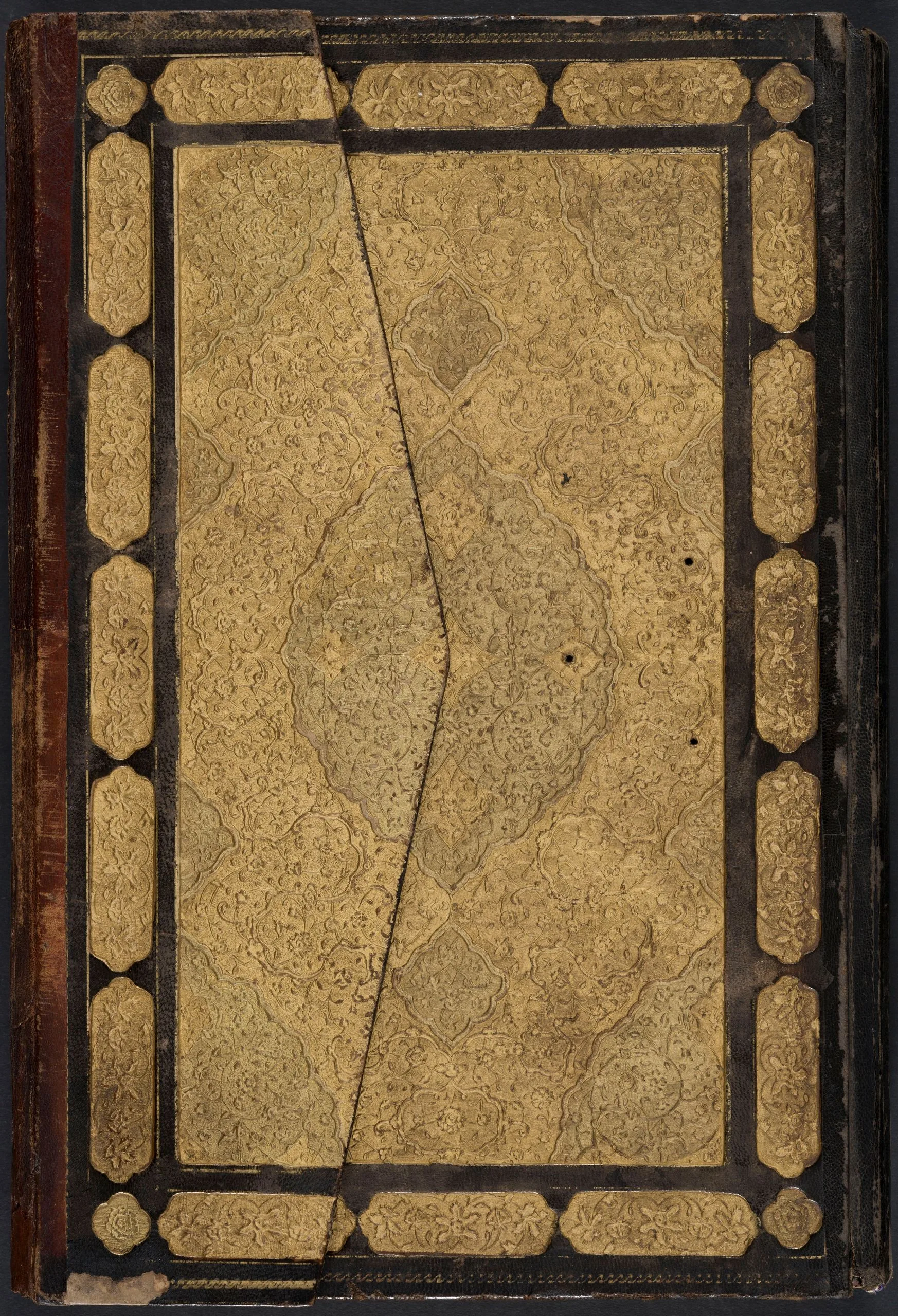
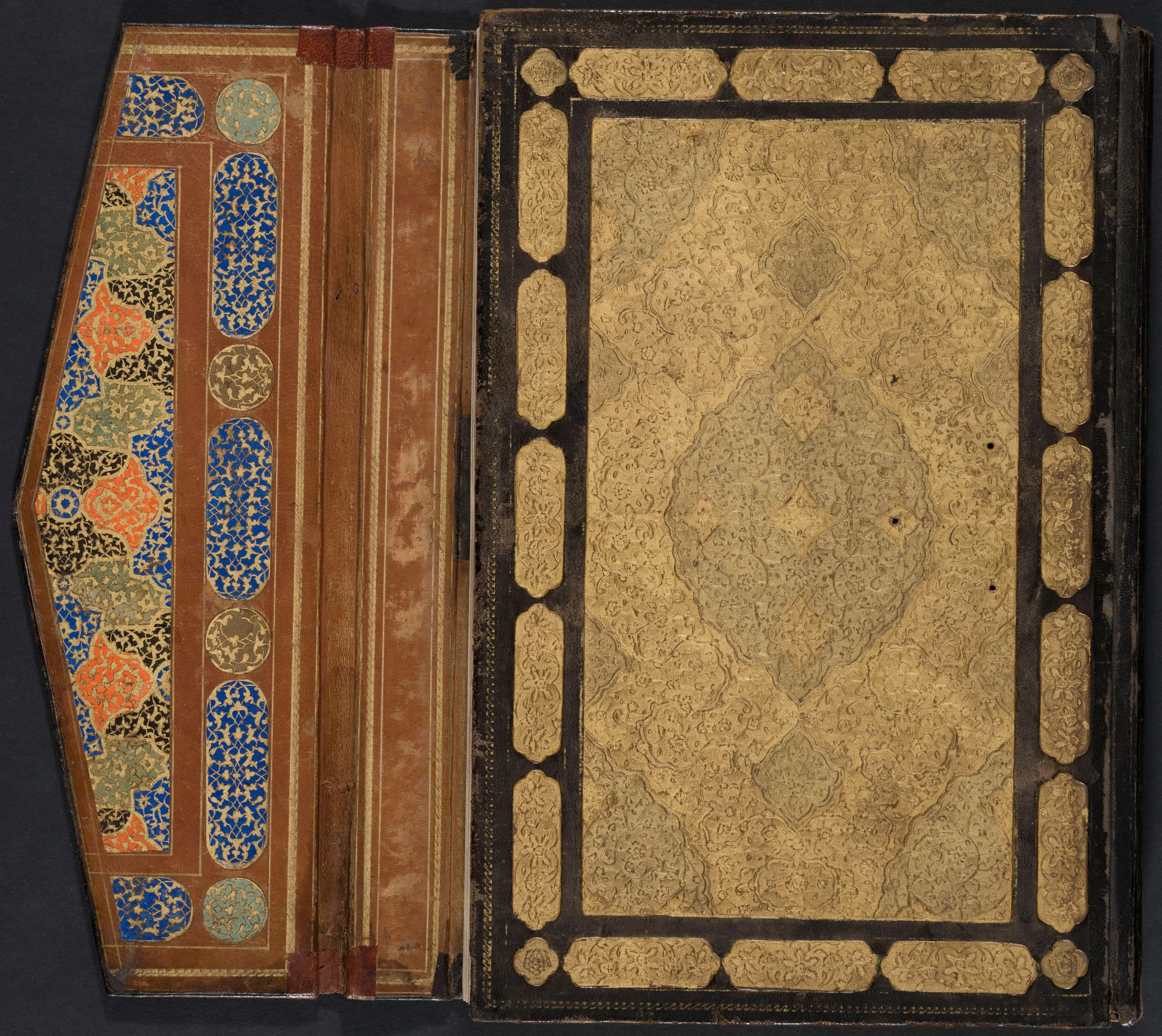
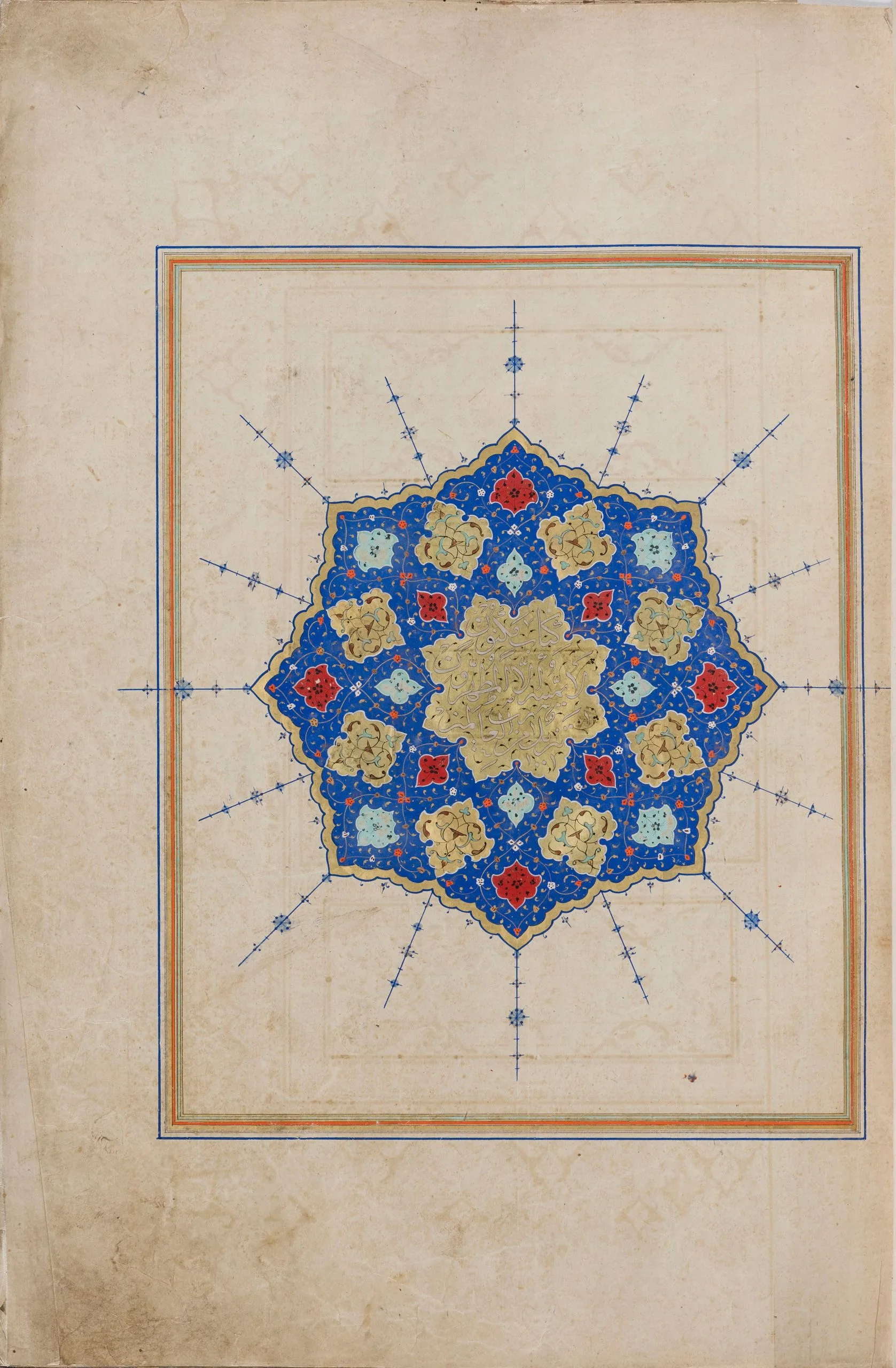
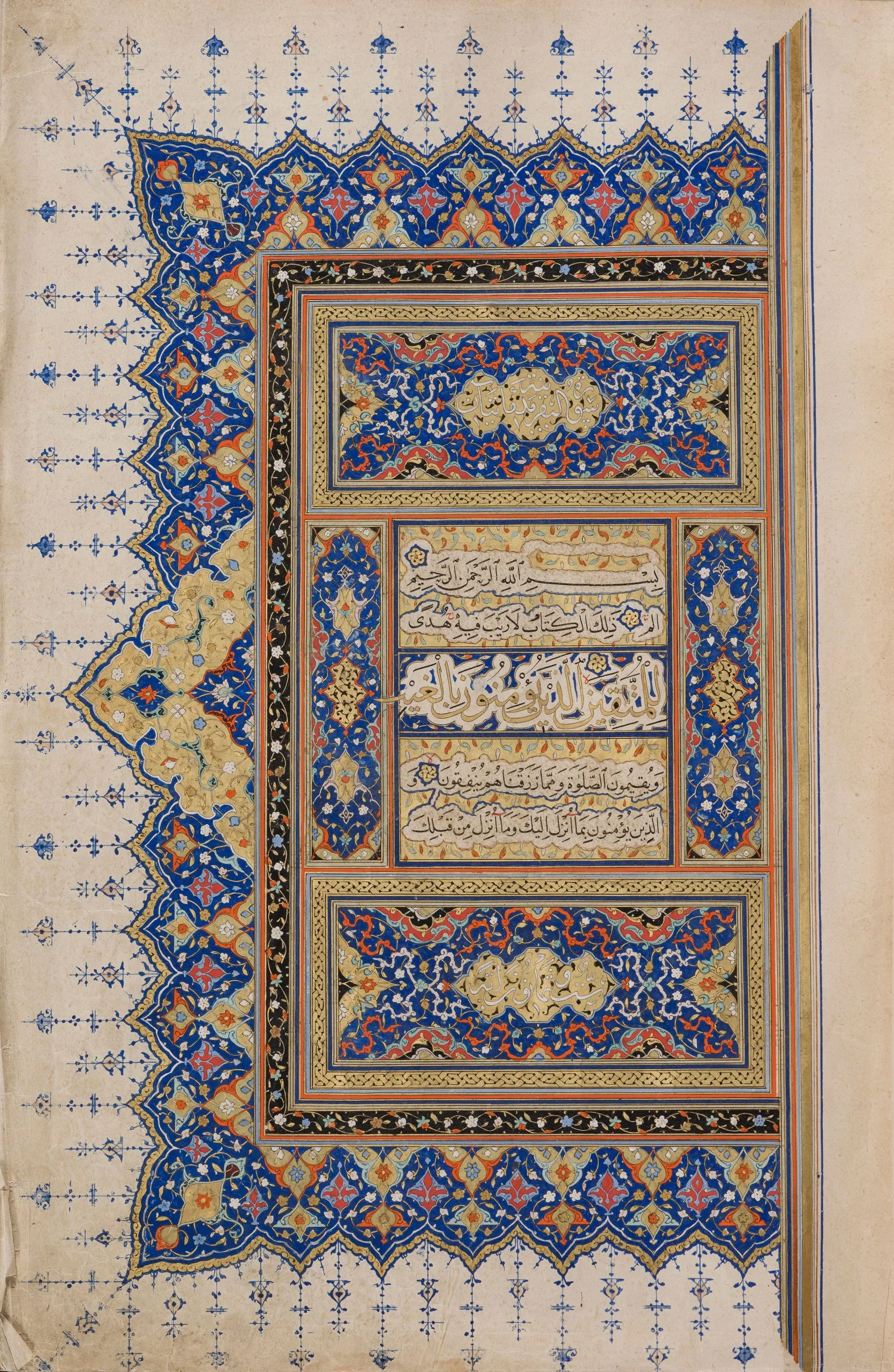
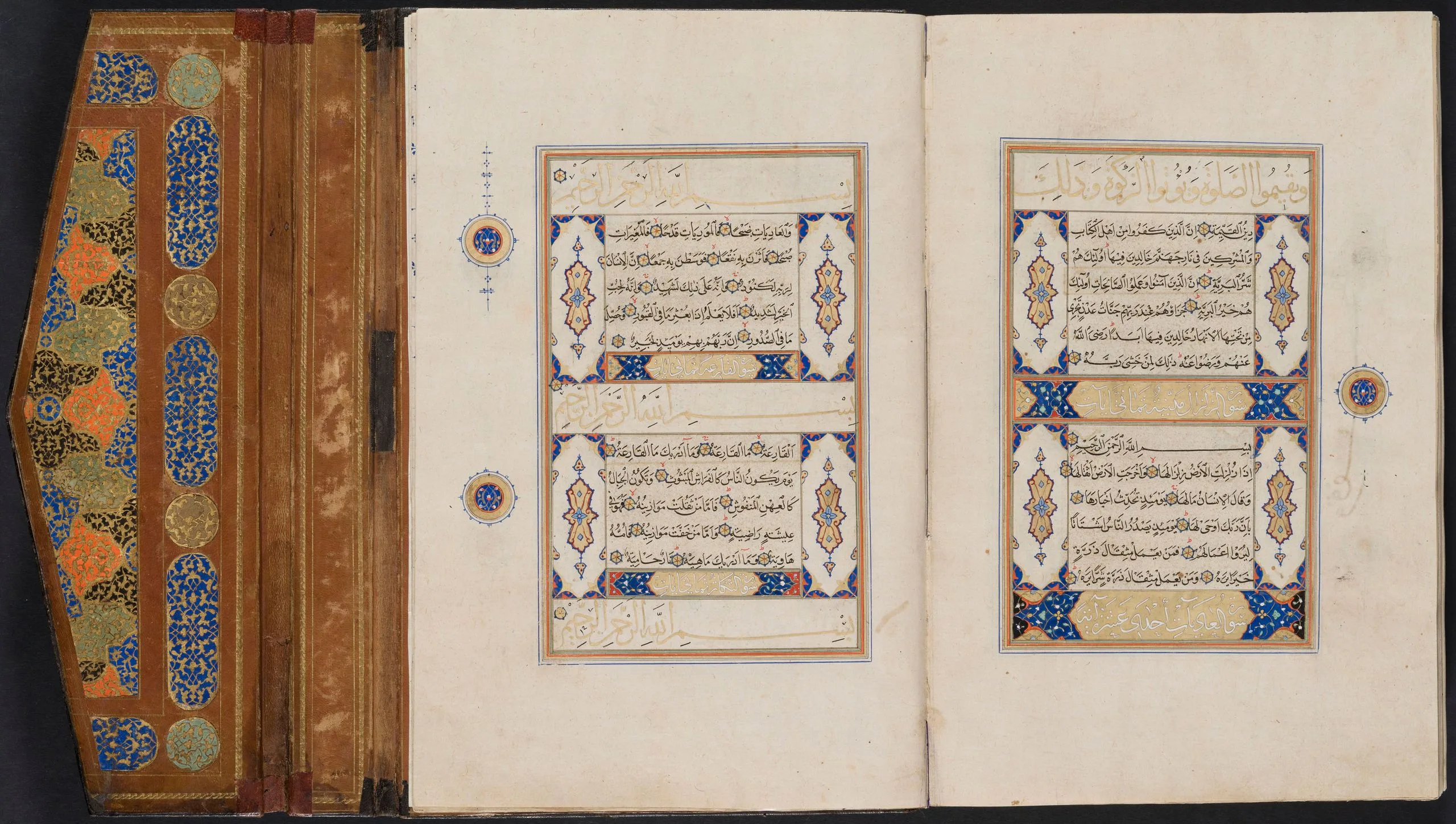
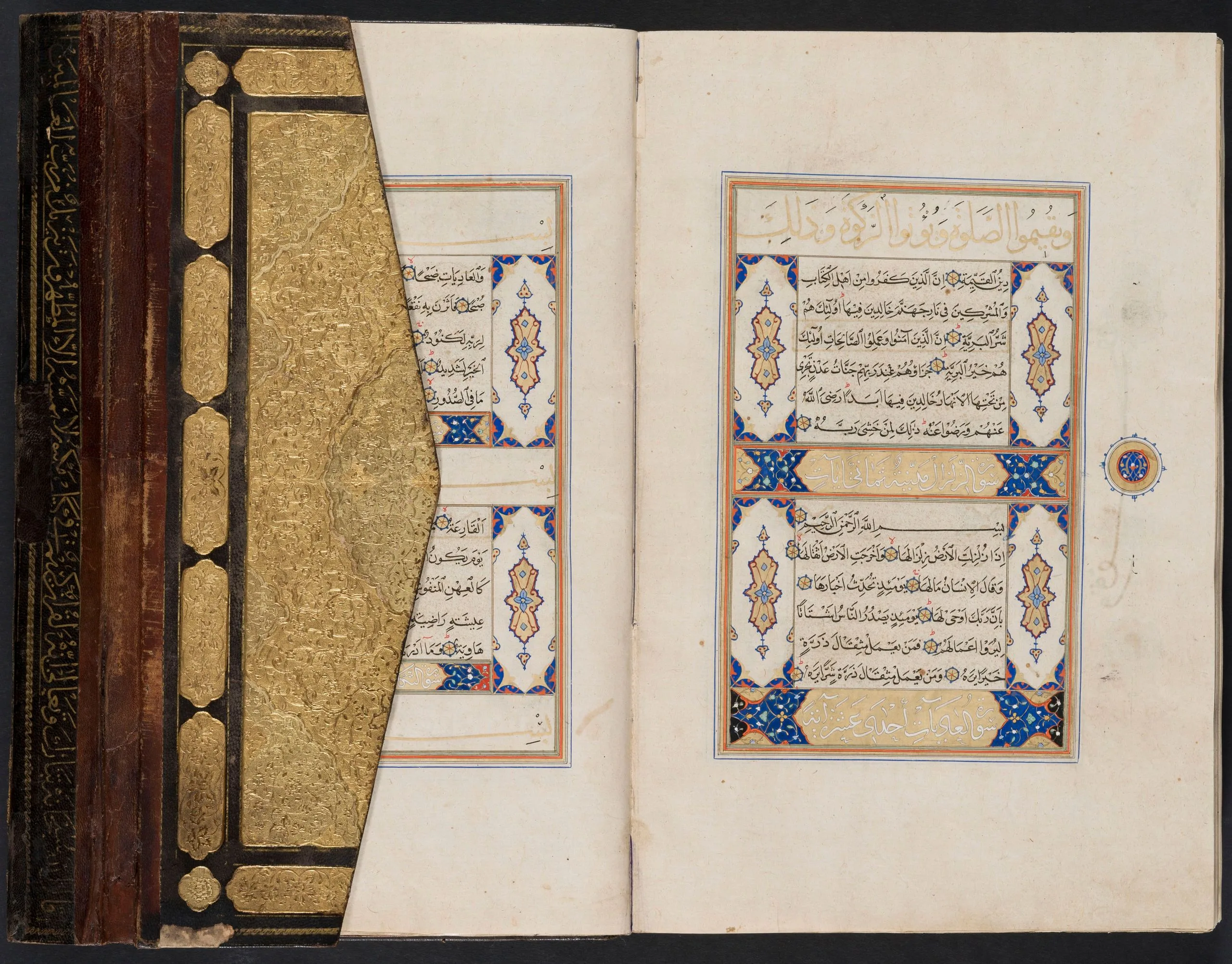
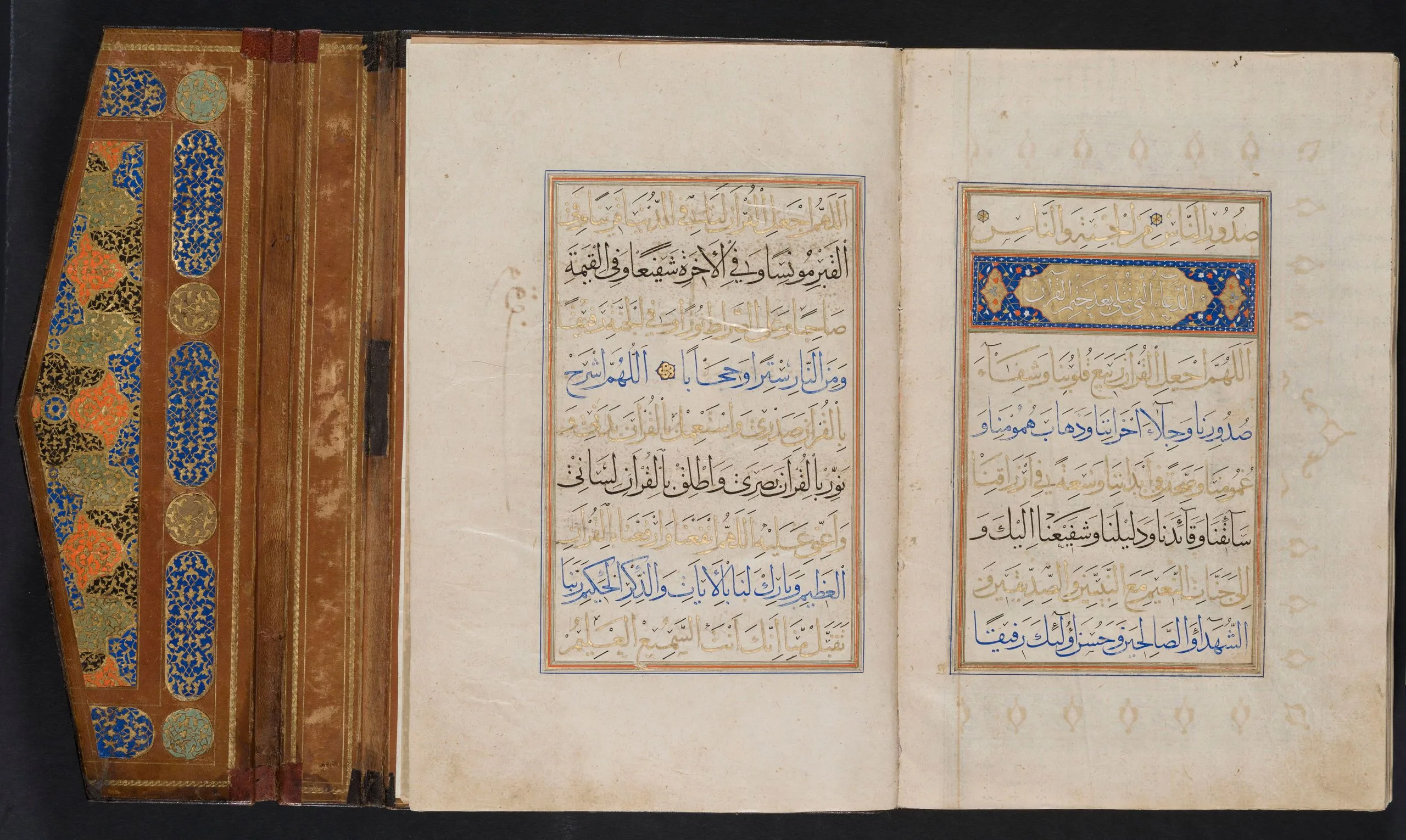
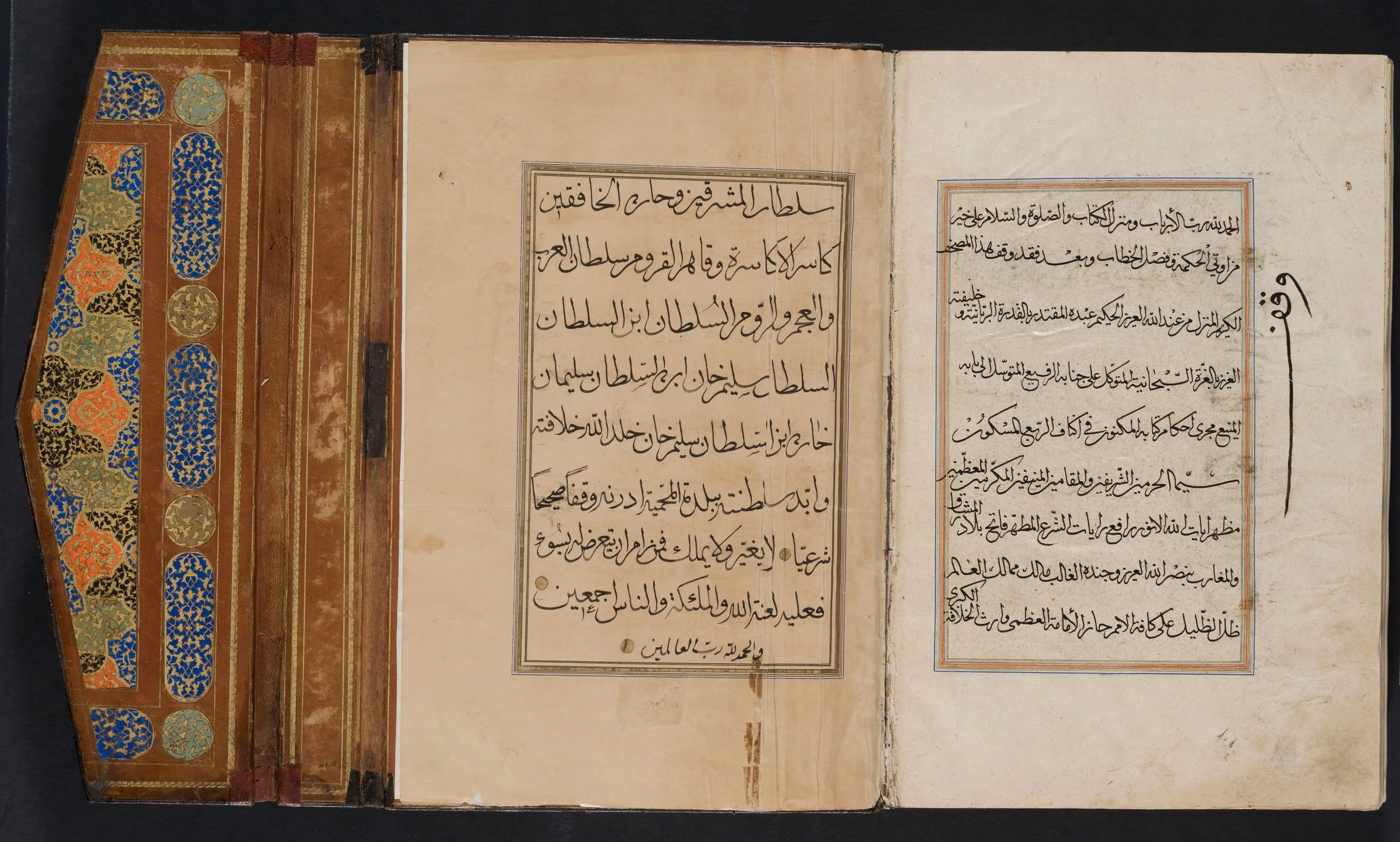
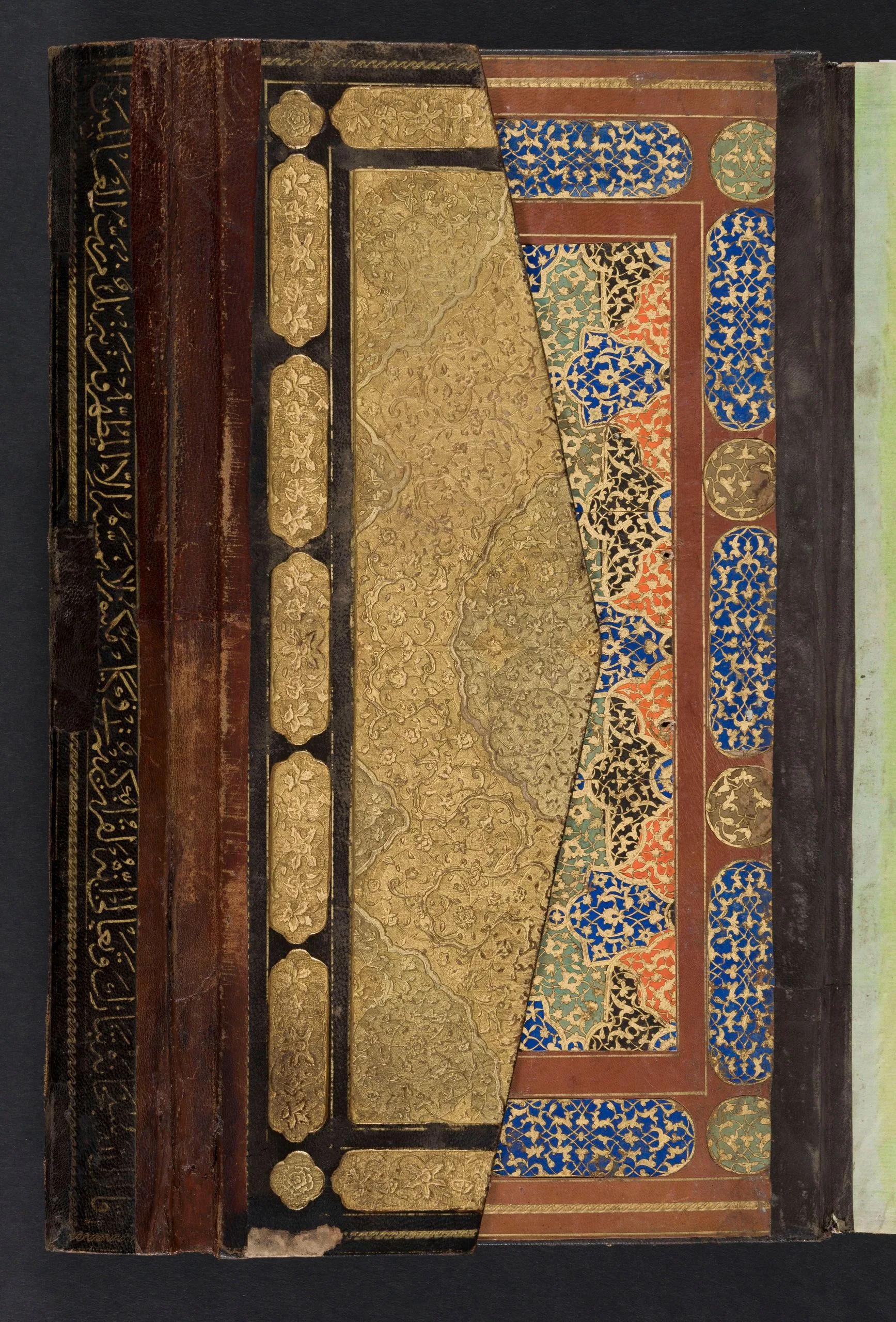
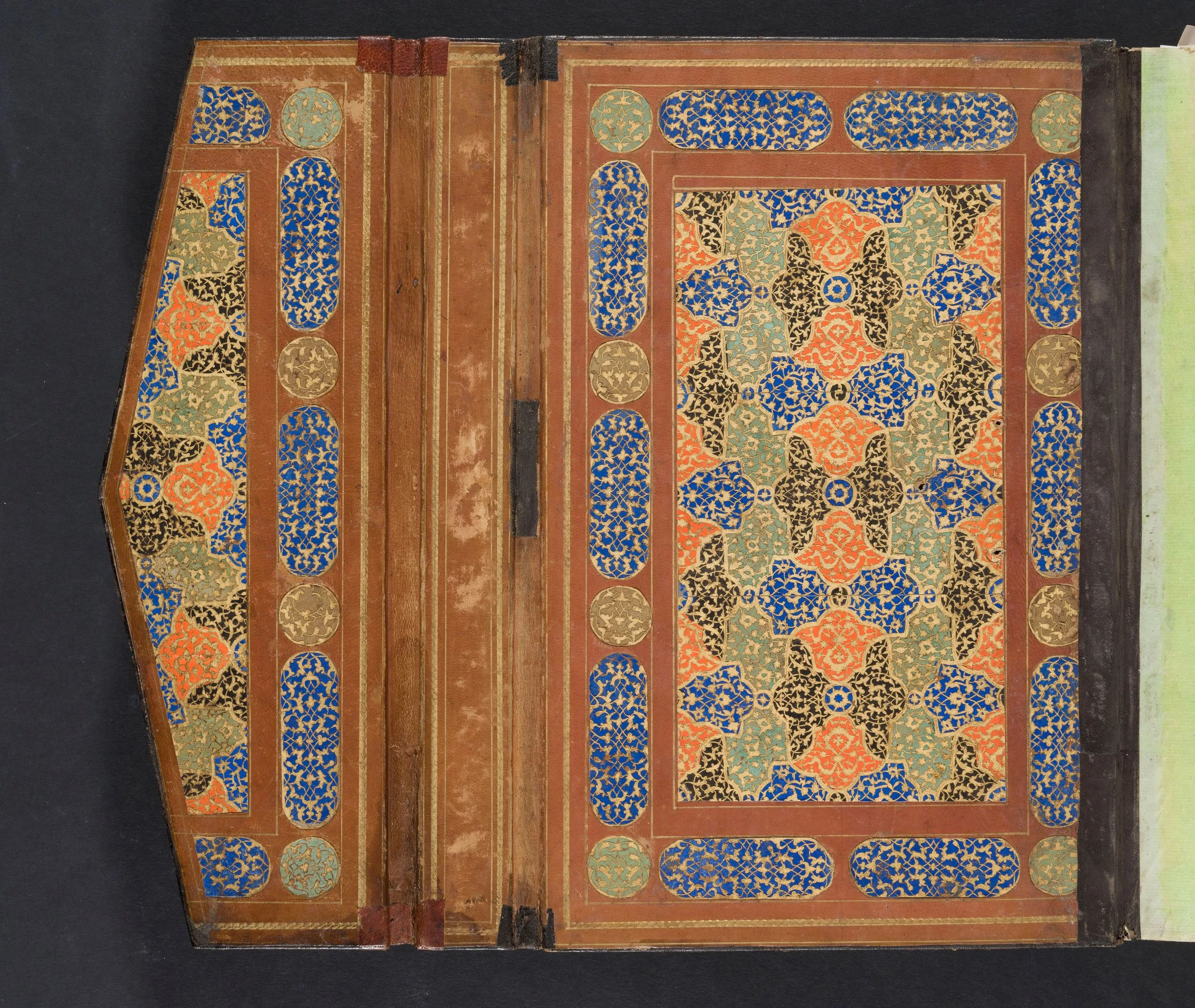
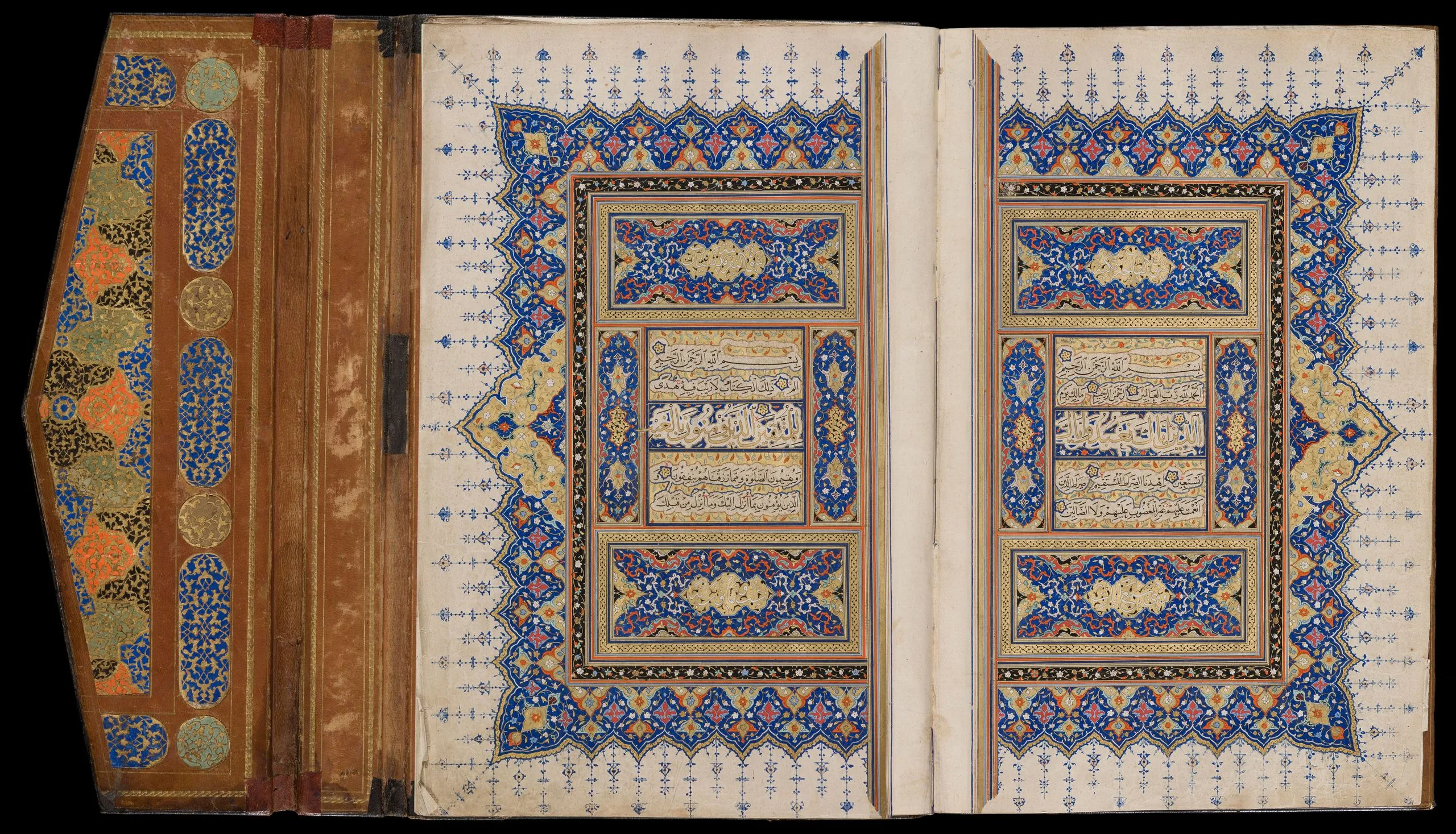
Manuscript of the Qur'an (Complete)3rd quarter of 16th century

Not on view
Vertical book cover in tooled and gilded leather, with dense arabesque floral patterning on the central field and a border of gilt cartouches on a black ground, showing a diagonal crack and wear
Manuscript binding opened flat, showing a doublure flap at left decorated with rows of medallions in blue, orange, black, and gold with intricate floral arabesques, alongside a dark leather cover at right with a central gold-stamped medallion and cartouche border of gilded relief scrollwork on cream ground.
Illuminated manuscript page featuring a large central shamsa medallion with radiating points, densely decorated in cobalt blue, gold, red, and pale turquoise with interlacing floral arabesques, set within a ruled border on aged cream paper.
Illuminated manuscript page with Arabic calligraphy in naskh and thuluth scripts, surrounded by dense floral arabesque borders in cobalt blue, gold, and red; scalloped outer margin with blue ink ruling on cream paper.
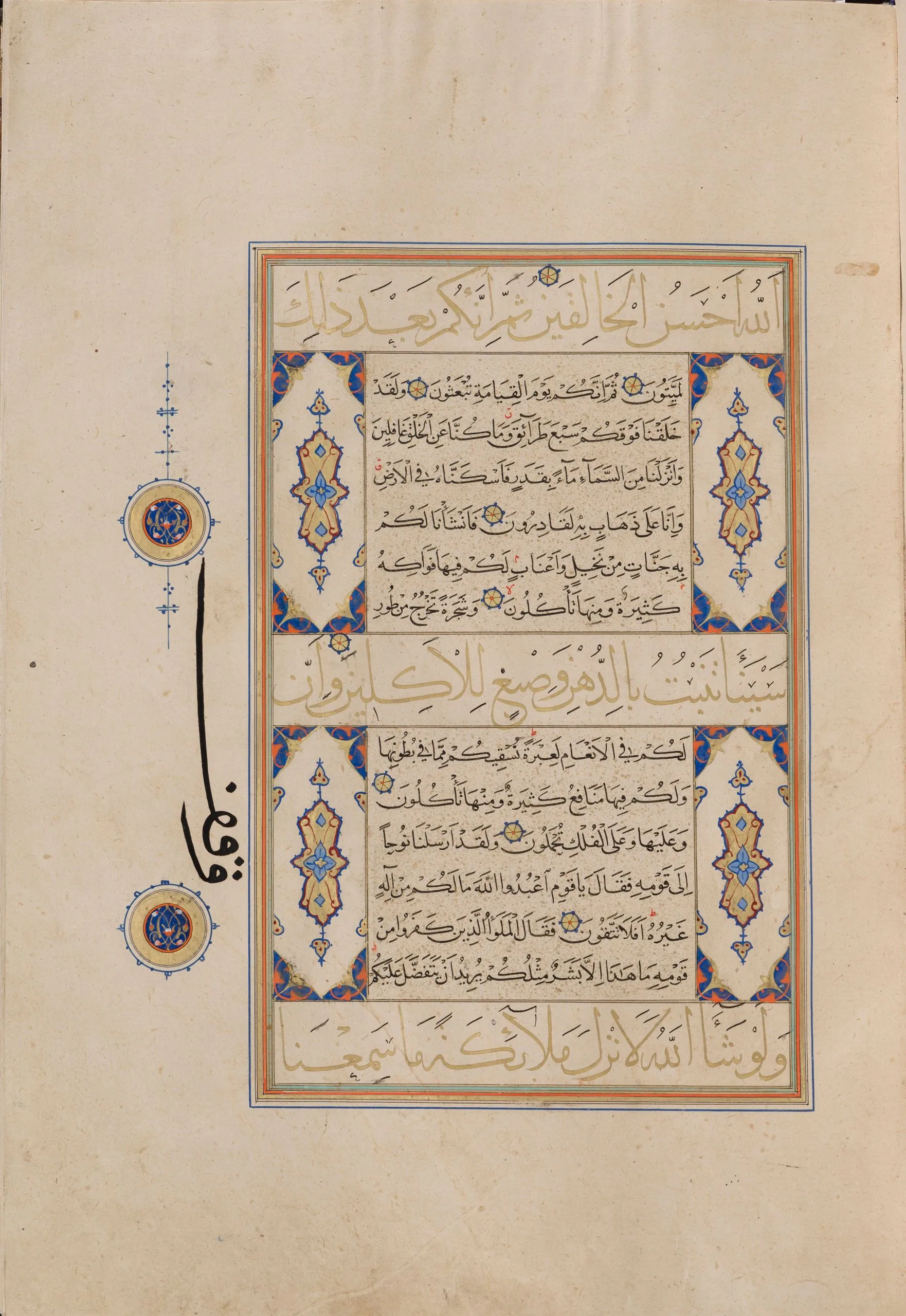
Illuminated manuscript page with Arabic calligraphy arranged in two rectangular text panels framed by ornate borders of interlacing geometric and floral patterns in gold, blue, red, and green. Oversized black script runs vertically along the left margin beside two small circular medallions with blue and gold decoration.
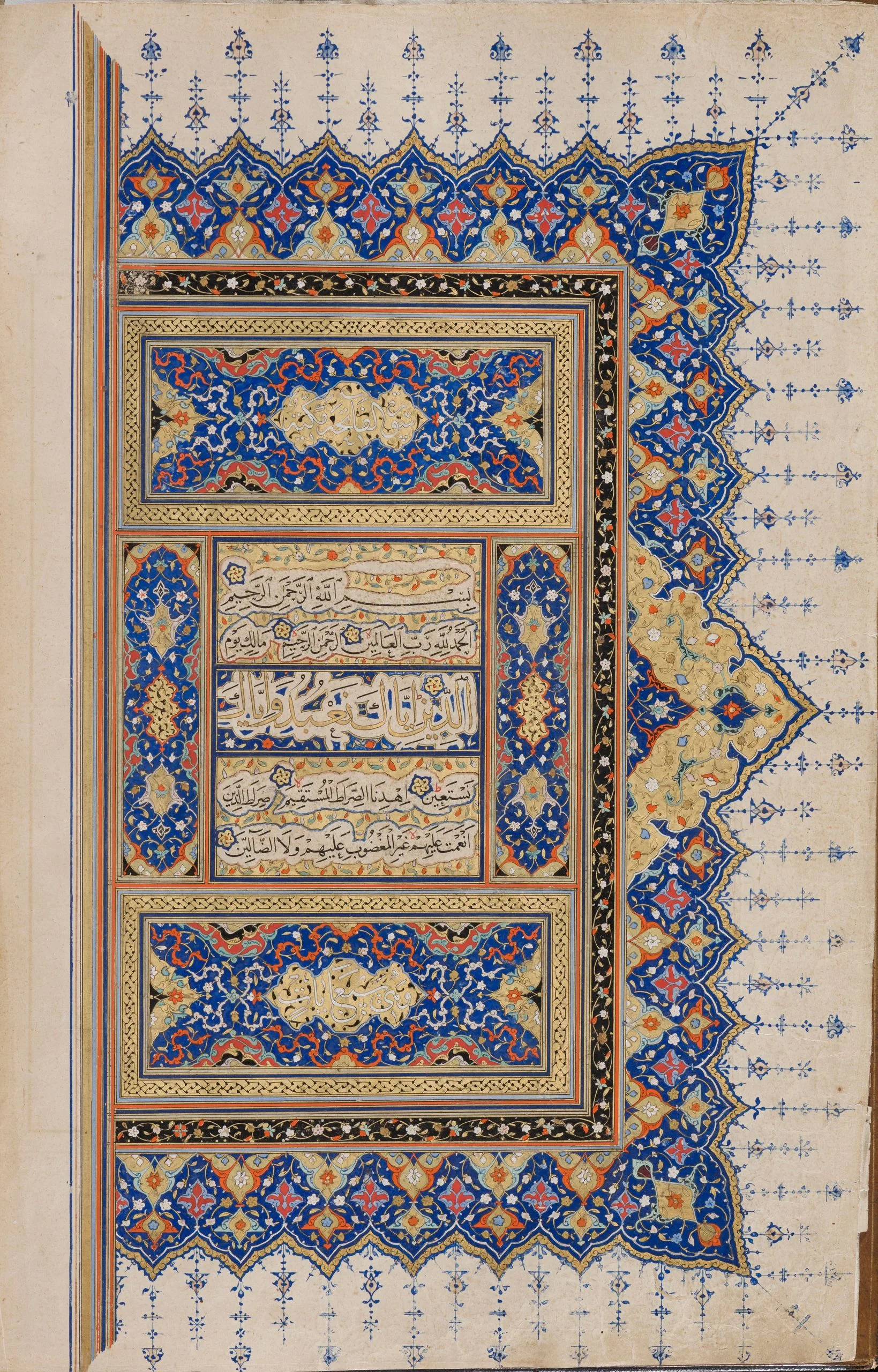
Illuminated manuscript page with Arabic calligraphy in three horizontal panels framed by intricate arabesque borders in cobalt blue, gold, and red; outer margin filled with repeating blue floral motifs on cream ground with scalloped inner edge.
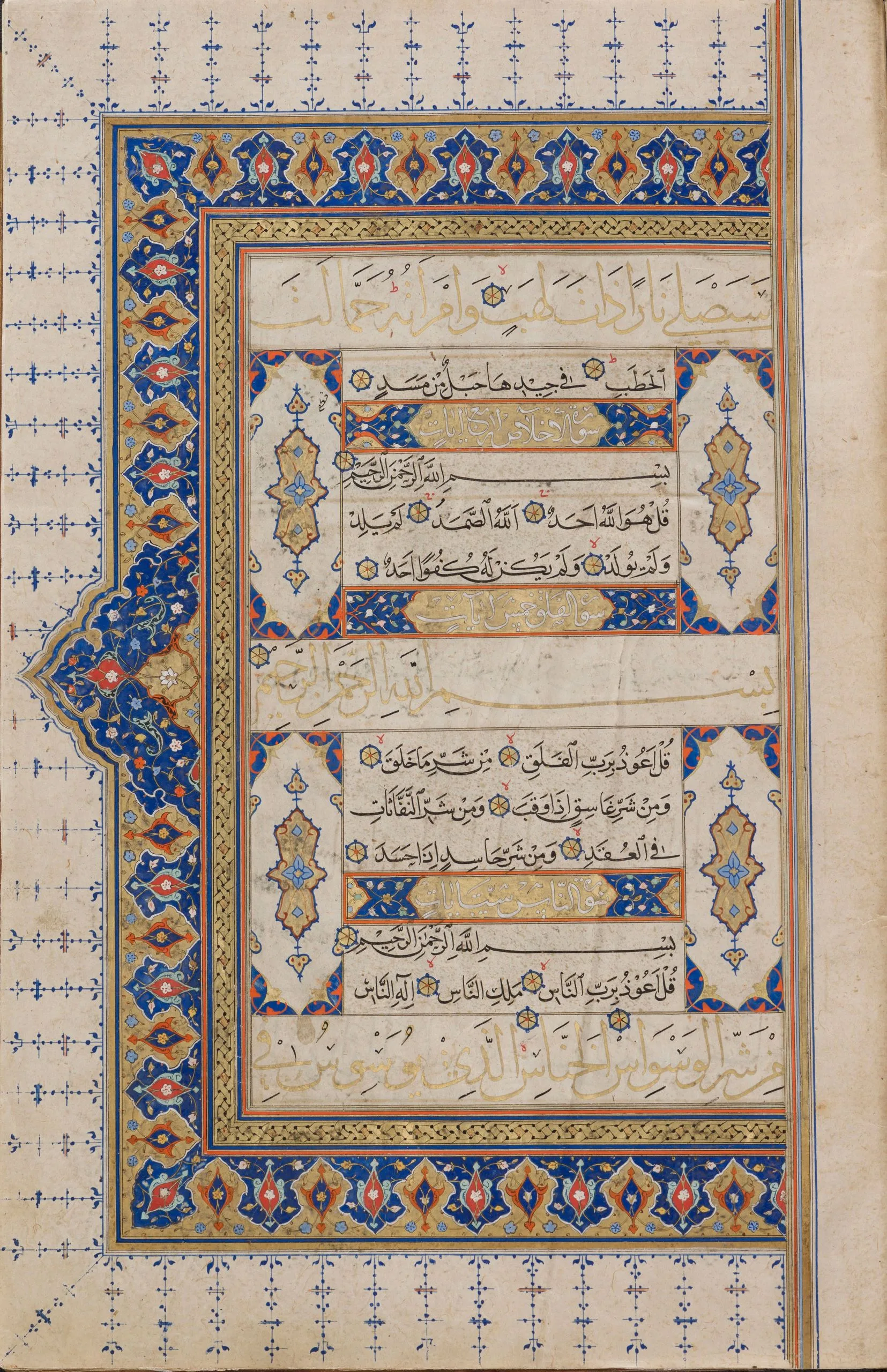
Illuminated manuscript page with Arabic calligraphy in naskh script, arranged in horizontal panels alternating between gold and black ink. Ornate borders feature interlaced geometric and floral designs in cobalt blue, gold, and red. Outer margin decorated with repeated small blue cross motifs on cream ground.
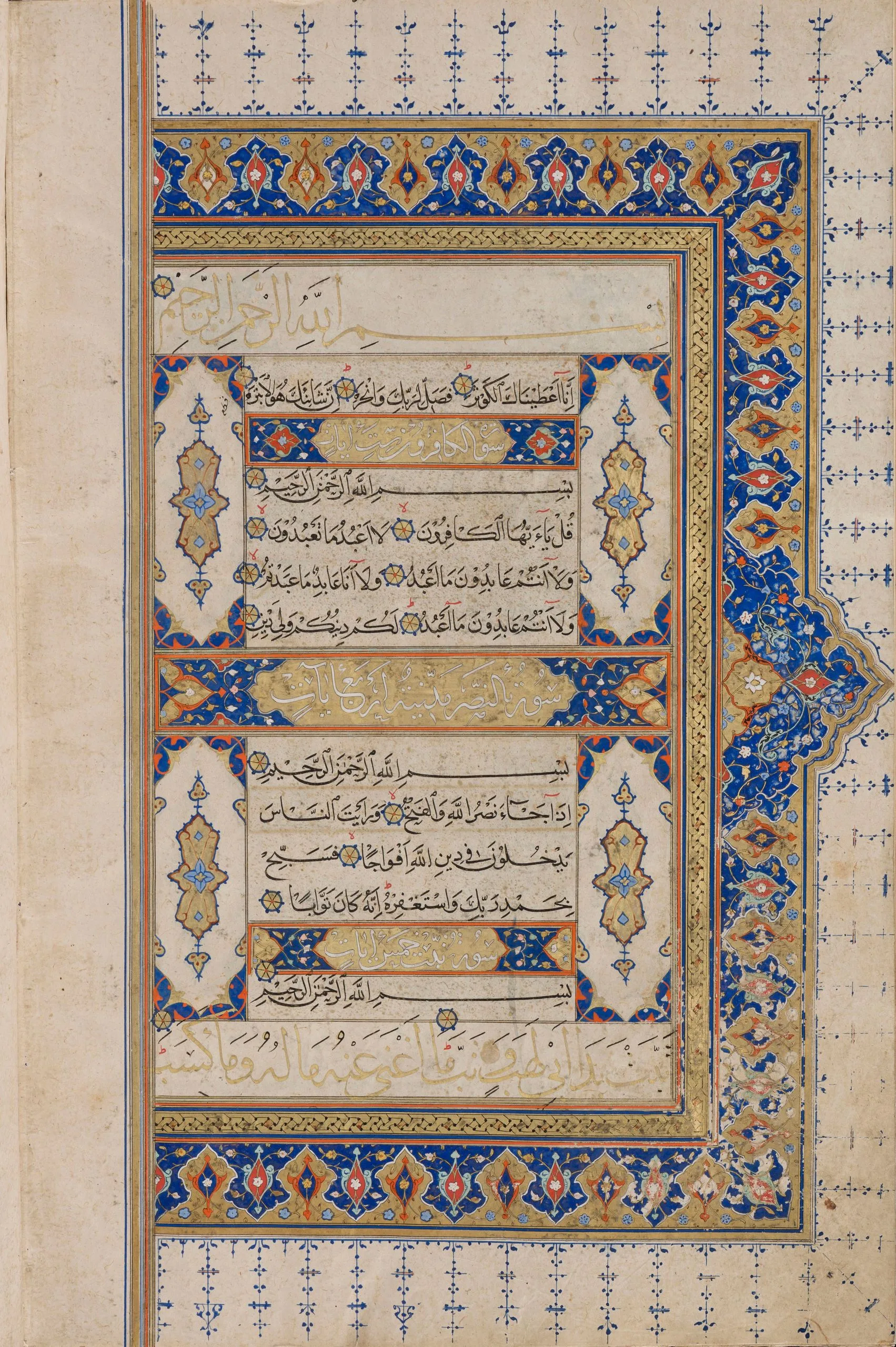
Illuminated manuscript page with Arabic calligraphy arranged in horizontal panels, framed by ornate borders of interlaced floral and geometric motifs in cobalt blue, gold, red, and white. Outer margin features a repeating blue dot pattern on cream ground.
Illuminated manuscript spread open to two decorated pages, with Arabic calligraphy in naskh script arranged in text panels framed by geometric borders in cobalt blue, gold, and red. Ornate cartouches with arabesque designs separate the text blocks. At left, the decorated leather binding flap is visible, featuring alternating oval medallions in green, gold, and blue on an orange ground with gilded arabesques.
Illuminated manuscript open to two pages, with Arabic script in black ink arranged in text blocks framed by geometric borders in cobalt blue, gold, and orange. Decorative medallions with star and lozenge motifs punctuate the columns. The visible cover at left features gold-tooled leather with an oval cartouche panel.
Illuminated manuscript open to two pages of Arabic calligraphy in black ink with gold and blue diacritical marks, framed by thin red and gold ruled borders. Right page features a rectangular illuminated header with blue, gold, and white geometric decoration. At left, the decorated leather binding is visible with alternating geometric medallions in blue, orange, and gold on a dark ground.
Open manuscript with Arabic calligraphy on cream-colored pages; left page framed by a thin gold and blue border, right page with denser text in smaller script; ornate envelope-style flap visible at far left with geometric and floral illuminated borders in gold, blue, orange, and green.
Illuminated manuscript binding with gilt tooled leather spine at left, central panel of embossed gold arabesque decoration, and right panel featuring polychrome lacquered geometric and floral interlace in blue, orange, teal, and gold within a dark brown border with rounded cartouches.
Opened book binding with lacquered doublures, displaying dense interlacing floral and geometric patterns in cobalt blue, orange, sage green, and dark brown on a terracotta ground, with rounded cartouches and medallions along the borders.
Illuminated manuscript opened to a double-page spread, with Arabic or Persian script in gold and black arranged in ruled text panels framed by dense geometric and floral borders in cobalt blue, gold, red, and green. Intricate arabesque cartouches at top and bottom. At left, the decorated binding and envelope flap visible, with medallion motifs on orange and blue leather.
Title
Manuscript of the Qur'an (Complete)
Place Made
Iran (Shiraz)
Date Made
3rd quarter of 16th century
Medium
Ink, opaque watercolor, and gold on paper
Dimensions
14 × 9 3/4 × 2 1/2 in. (35.56 × 24.77 × 6.35 cm)
Credit Line
The Edwin Binney, 3rd, Collection of Turkish Art at the Los Angeles County Museum of Art
Accession Number
M.85.237.19
Classification
Manuscripts
Collecting Area
Art of the Middle East: Islamic
Curatorial Notes

Shiraz was a significant and highly prolific center for the production of luxury manuscripts, including copies of the Qur’an, some of which were intended for export. In fact, there is evidence to suggest that this famed southern Iranian city was a major supplier of deluxe books for Turkey. Manuscripts of the Qur’an produced in Shiraz, including richly illuminated examples, must also have arrived at the Ottoman court as diplomatic gifts. Such was likely the case with this manuscript. According to a notation at the end of the text, part of which is a replacement for the original, perhaps contemporaneous with the eighteenth-century Ottoman binding, Sultan Selim II (r. 1566–74) endowed the manuscript in Edirne, presumably for the magnificent mosque complex he built there in 1568–74.

Selected Bibliography
  • Binney, Edwin, 3rd. "Turkish Arts of the Book in the Binney Collection." Arts of Asia 17, no.6 (Nov/Dec 1987): 97-104.