- Title
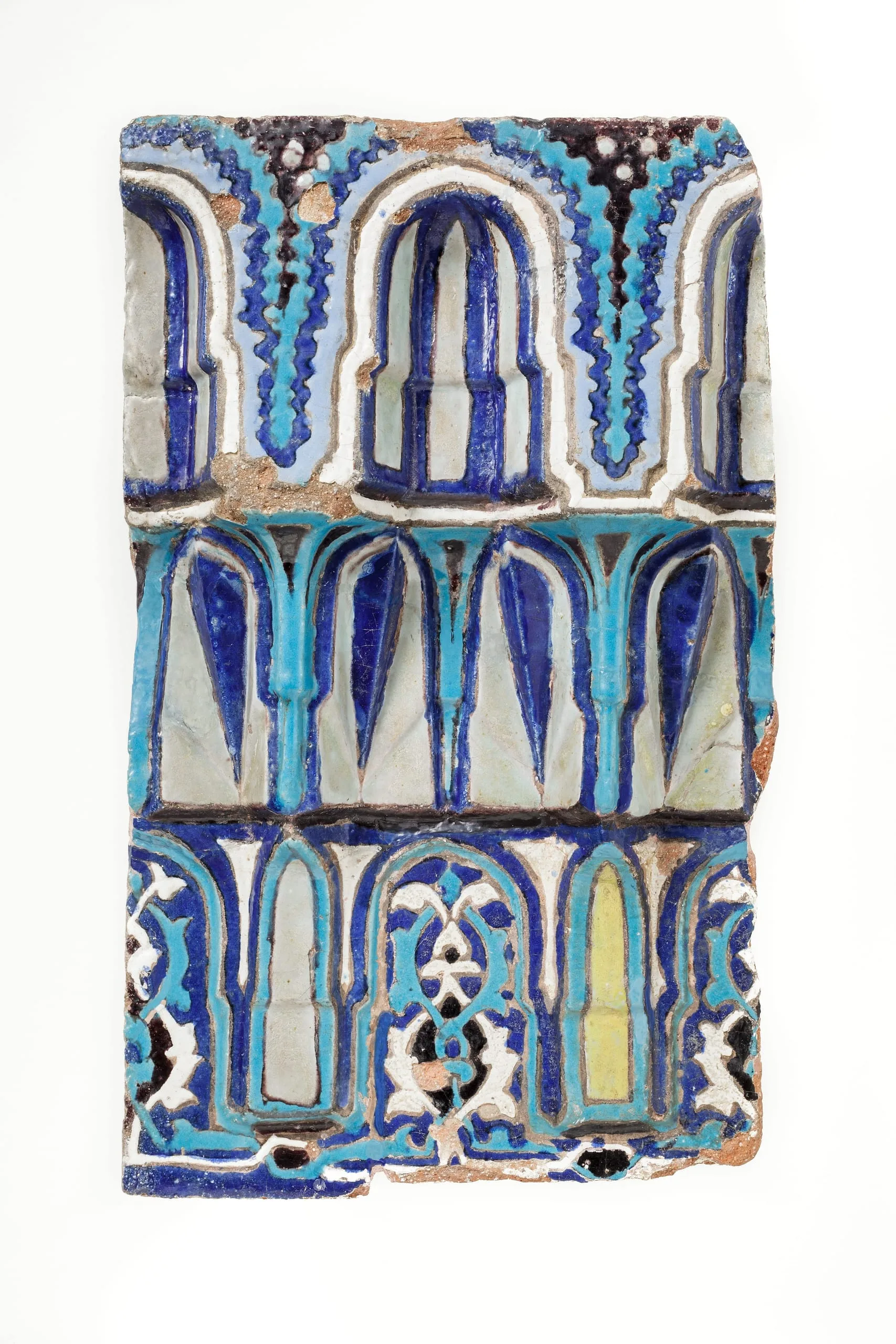
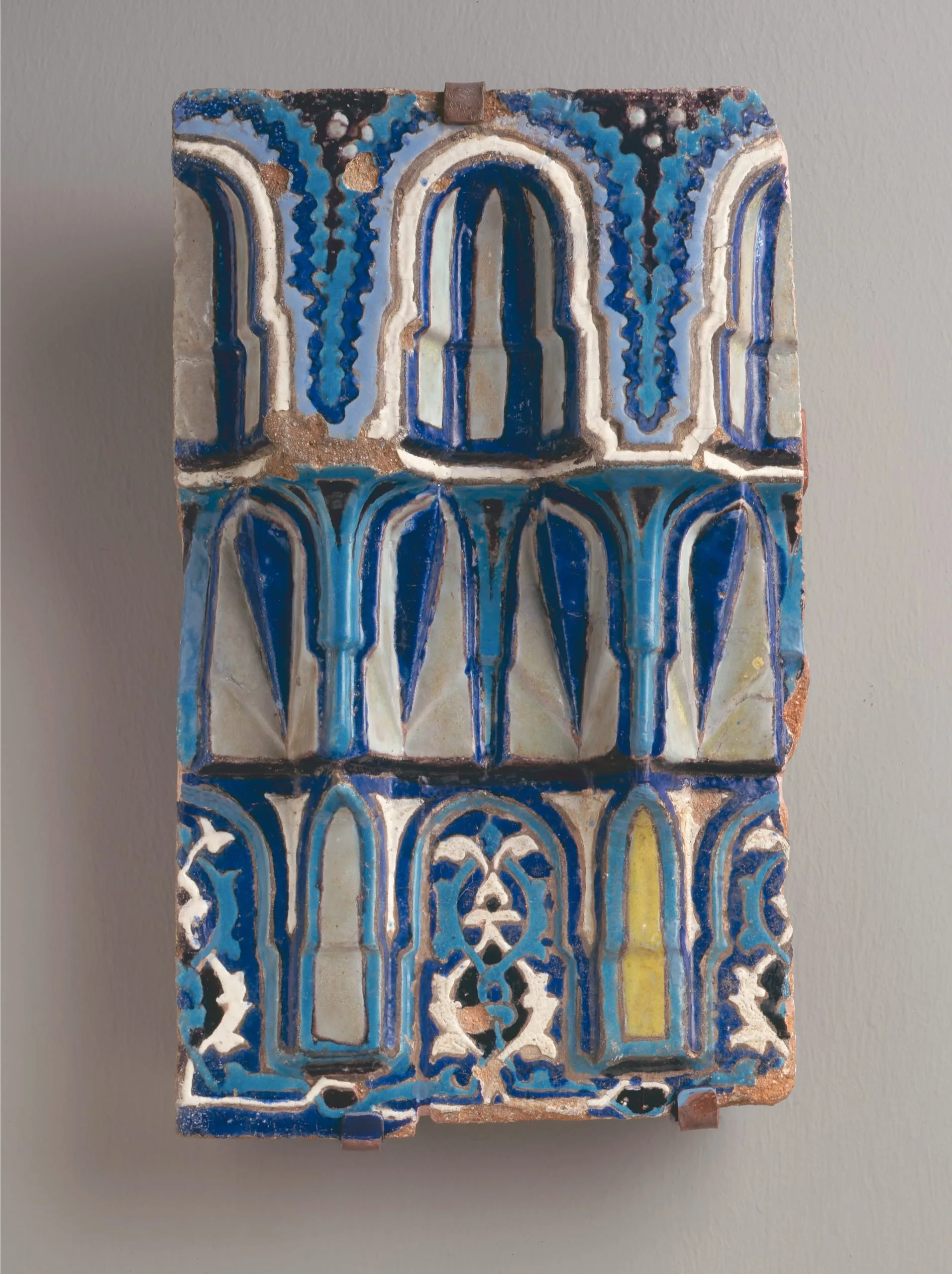
- Muqarnas decoration
- Date Made
- 15th century
- Medium
- Earthenware, cuerda seca technique
- Dimensions
- Height: 13 3/4 in. (34 cm )
- Accession Number
- M.85.237.79
- Curatorial Notes
Specifically associated with Islamic architecture, the muqarnas is a three-dimensional decorative element that resembles a honeycomb or stalactite. From the twelfth-century onward, muqarnas were typically used to decorate entrance portals and especially interior spaces in and around domes. Although a modular unit now separated from its original architectural context, this glazed ceramic muqarnas tile still alludes to the stunning effect it would have had when multiplied within larger ensembles with the play of light and shadow across its projected and recessed surfaces.
- Selected Bibliography
- Atasoy, Nurhan and Julian Raby. Iznik: The Pottery of Ottoman Turkey. London: Alexandria Press, 1989.
- Komaroff, Linda. Islamic Art at the Los Angeles County Museum of Art. Los Angeles: Museum Associates, 2005.
- Denny, Walter B. Turkish Treasures from the Collection of Edward Binney, 3rd. Portland, OR: Portland Art Museum, 1979.
Lo Terrenal y lo Divino: Arte Islámico siglos VII al XIX Colección del Museo de Arte del Condado de Los Ángeles. Santiago: Centro Cultural La Moneda, 2015.
Pal, Pratapaditya, Thomas W. Lentz, Sheila R. Canby, Edwin Binney, 3rd, Walter B. Denny, and Stephen Markel. "Arts from Islamic Cultures: Los Angeles County Museum of Art." Arts of Asia 17, no. 6 (November/December 1987): 73-130.
- Komaroff, Linda. Beauty and Identity: Islamic Art from the Los Angeles County Museum of Art. Los Angeles: Los Angeles County Museum of Art, 2016.
- Collins, Kristen, and Nancy K. Turner, editors. Lumen: The Art and Science of Light, 800-1600. Los Angeles: J. Paul Getty Museum, 2024.