LACMA

ShopMembershipMyLACMATickets
LACMA
Los Angeles County Museum of Art
5905 Wilshire Blvd.
Los Angeles, CA 90036
info@lacma.org
(323) 857-6000
Sign up to receive emails
Subscribe
© Museum Associates 2025

Museum Hours

Monday

11 am–6 pm

Tuesday

11 am–6 pm

Wednesday

Closed

Thursday

11 am–6 pm

Friday

11 am–8 pm

Saturday

10 am–7 pm

Sunday

10 am–7 pm


  • About LACMA
  • Jobs
  • Building LACMA
  • Host An Event
  • Unframed
  • Press
  • FAQs
  • Log in to MyLACMA
  • Privacy Policy
© Museum Associates 2025
Collections

Sayyidi Muhammad ibn Sultan Muhammad al-Tabrizi
Manuscript of the Khamsa (Quintet) of Nizami10 February 1529/A.H. 1 Jumada al-Ukhra 935

Not on view
Persian illustrated manuscript page with central painted scene of mounted riders under a parasol and standing attendants, surrounded by panels of Persian script and a red calligraphic heading
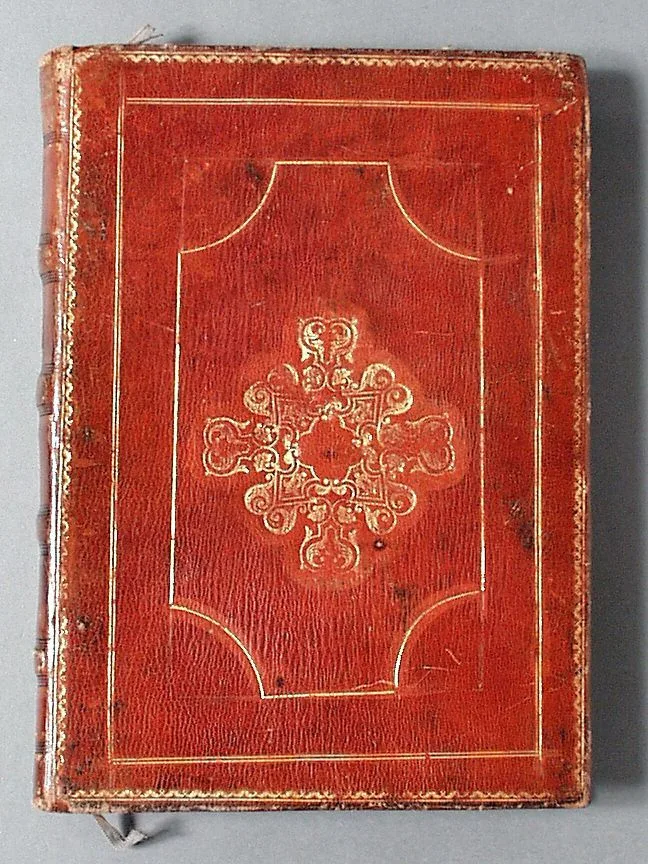
Red leather book binding with gold-tooled decoration: an outer border with dentelle edging frames a central cartouche enclosing a gilt floral and scrollwork ornament. Leather shows age and wear along spine and corners.
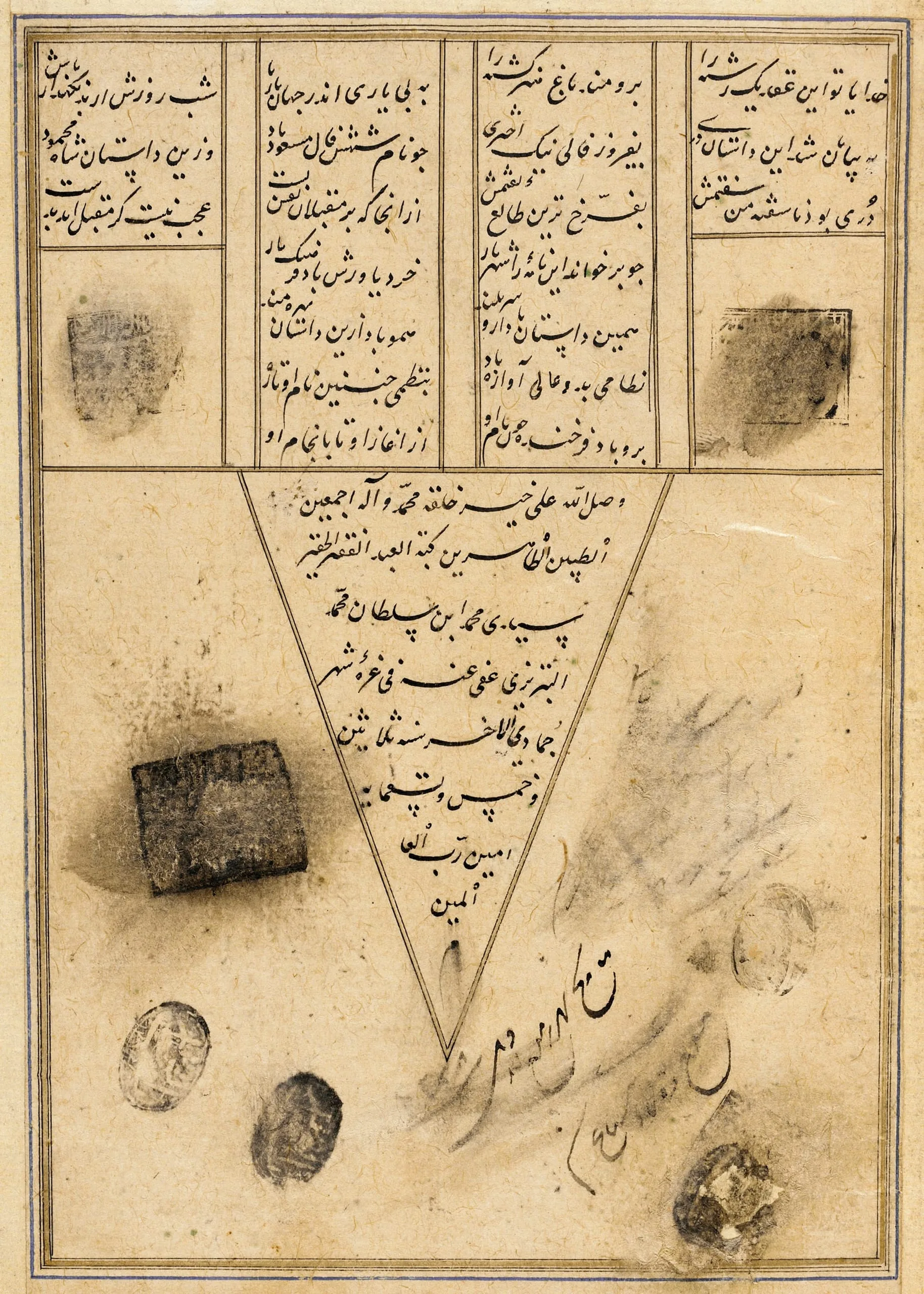
Manuscript page with Persian script arranged in ruled columns across the upper half and a triangular text block in the lower half, on aged cream paper bearing multiple ink stamps and seals of varying sizes.
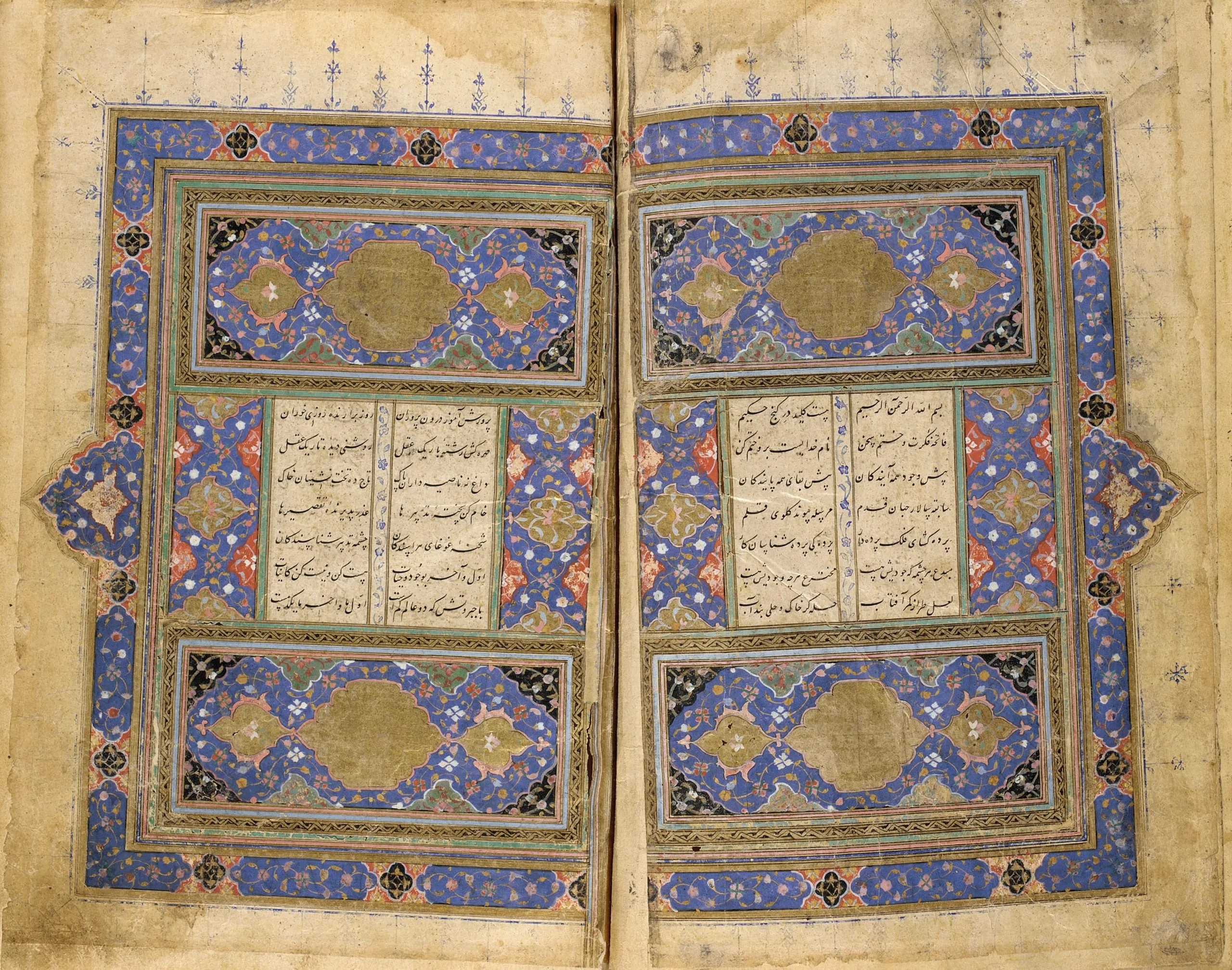
Illuminated manuscript double-page spread with Persian script in central text panels, surrounded by intricate geometric and floral arabesques in cobalt blue, gold, red, and black with gilt borders.
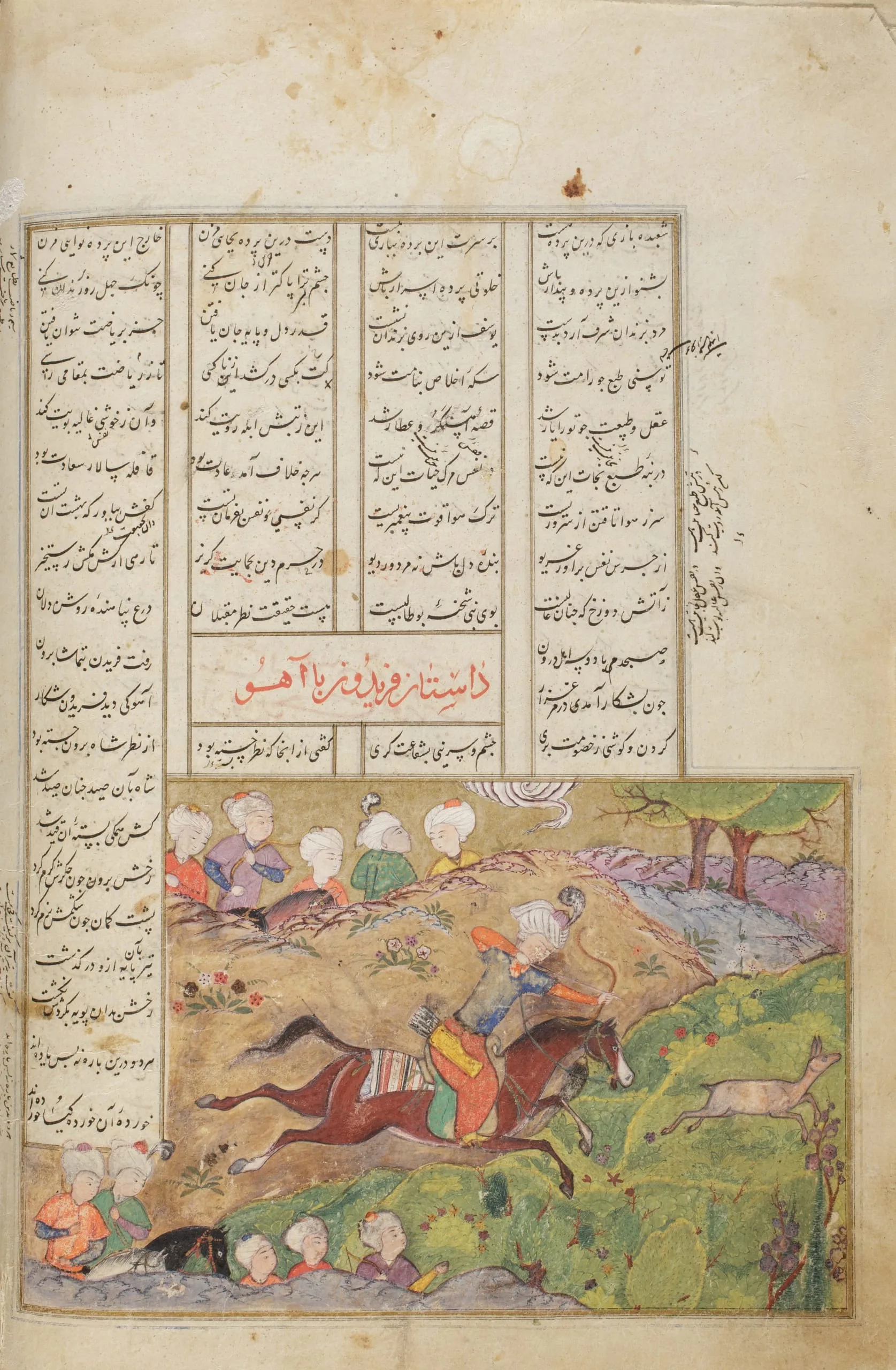
Illustrated manuscript page with Persian script in multiple columns surrounding a rectangular miniature painting depicting a mounted rider on a galloping brown horse pursuing a deer across a hilly landscape, with a group of seated and standing figures watching from rocky terrain; trees and green hills in the background; red heading in Persian script above the illustration.
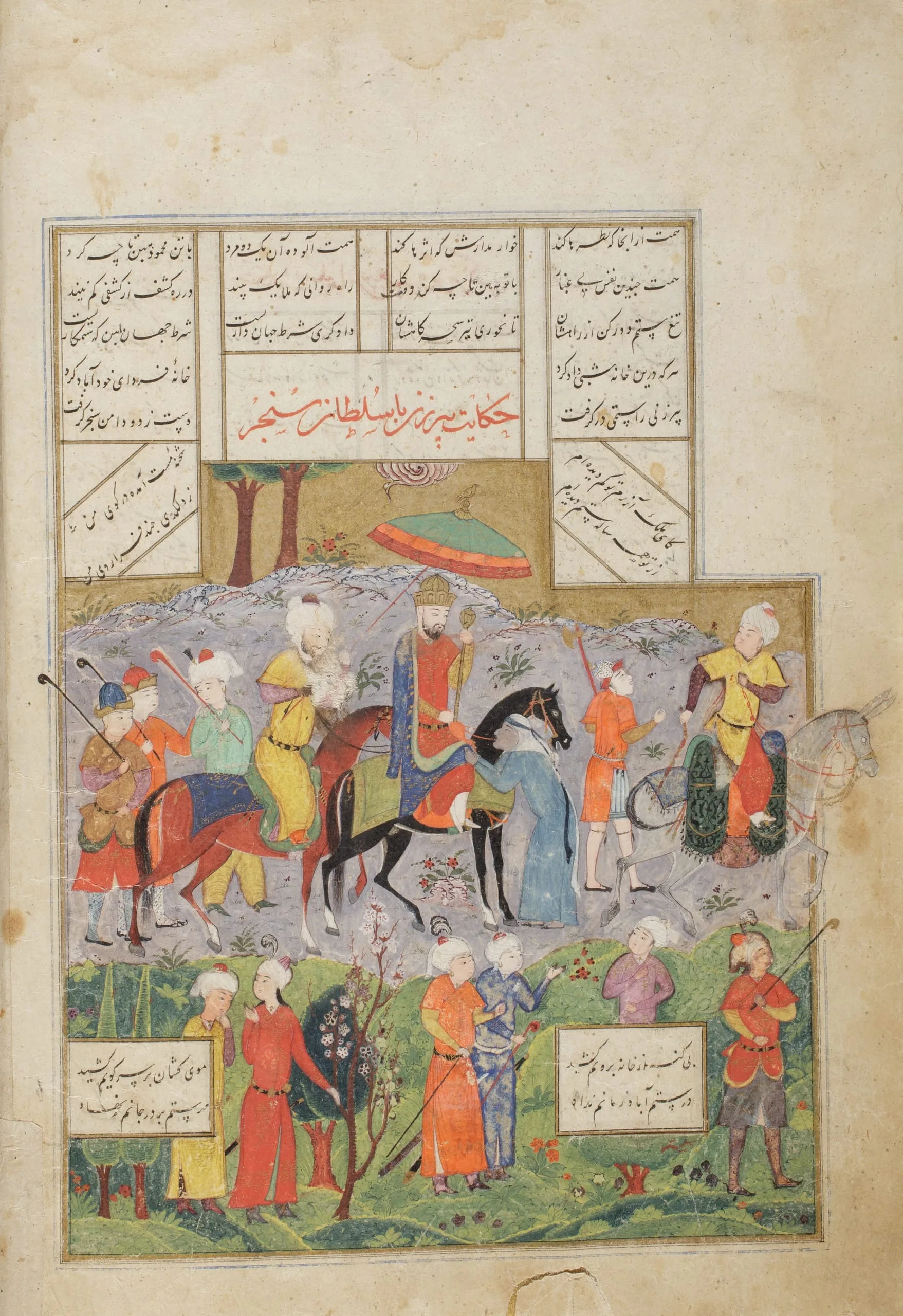
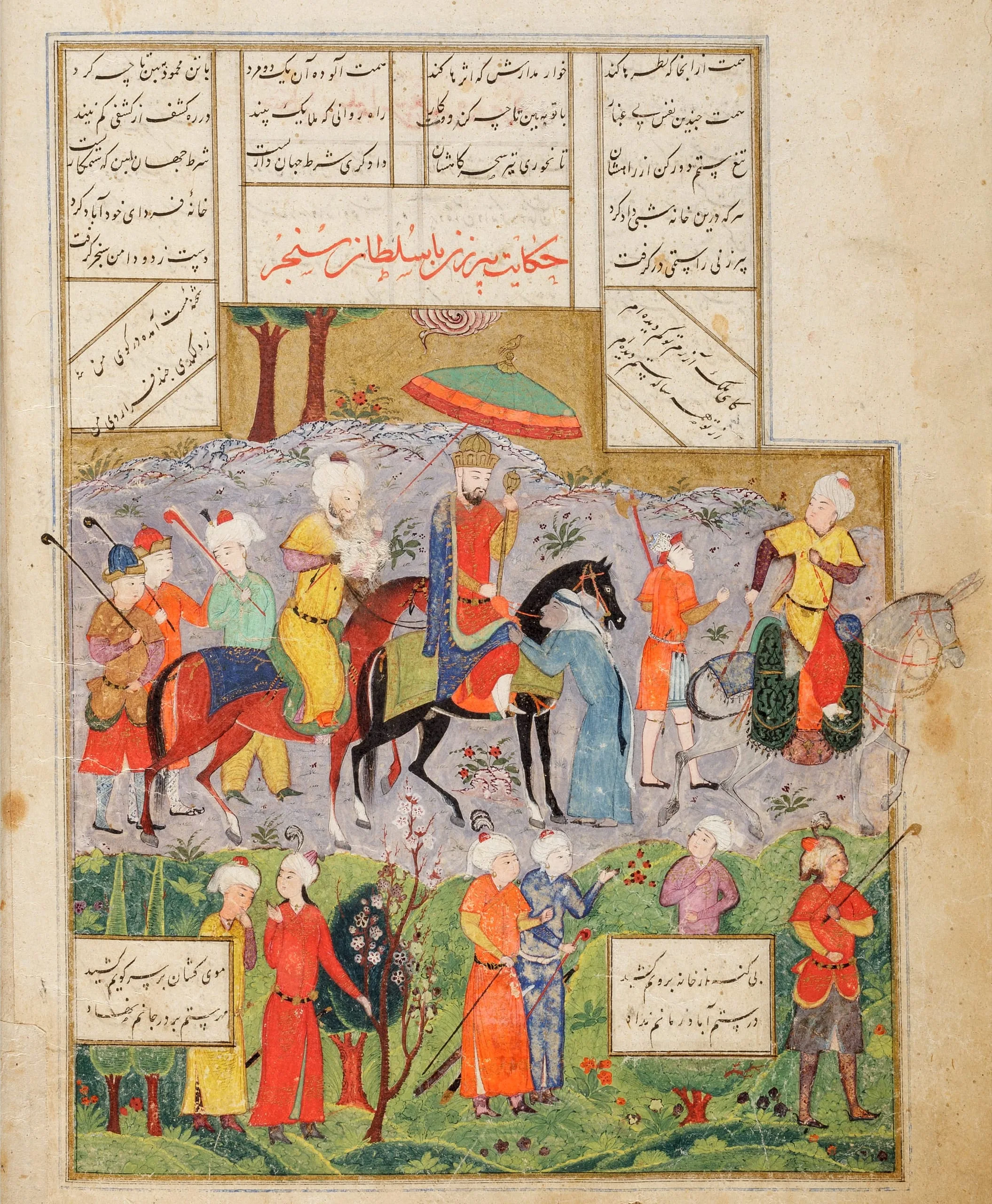
Persian manuscript page with opaque watercolor illustration surrounded by panels of Nastaliq script in black and red ink. A central mounted figure on a black horse holds a parasol, attended by figures in brightly colored robes — yellow, red, orange, and blue — some on horseback, others standing on rocky terrain and green foreground. Small text cartouches appear within the illustration.
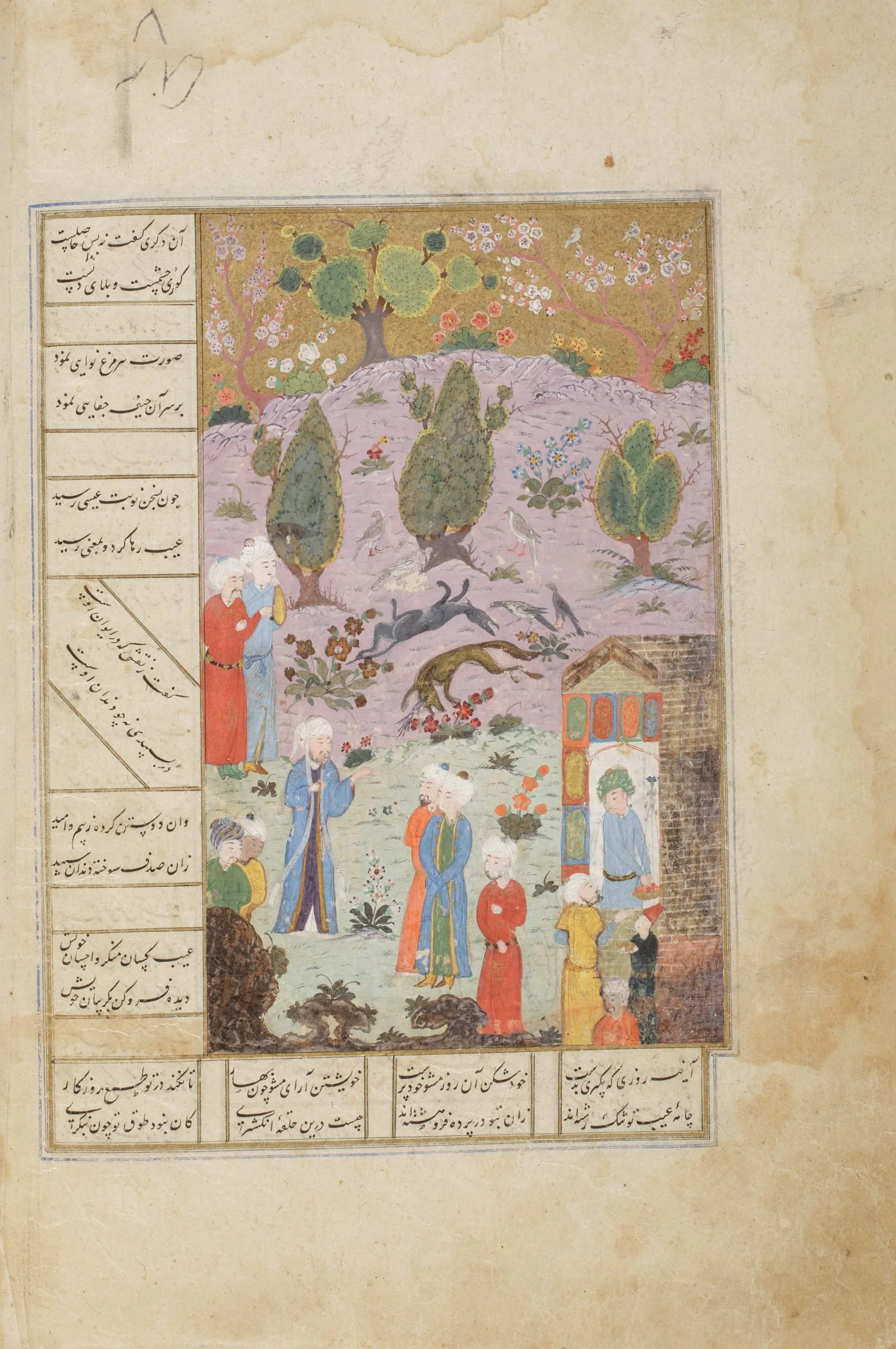
Persian manuscript illustration with gold-accented landscape; a group of robed figures in a garden setting, with cypress and flowering trees on a lavender hillside, deer in the background, and an architectural structure at right; bordered by columns of Persian script in nasta'liq calligraphy.
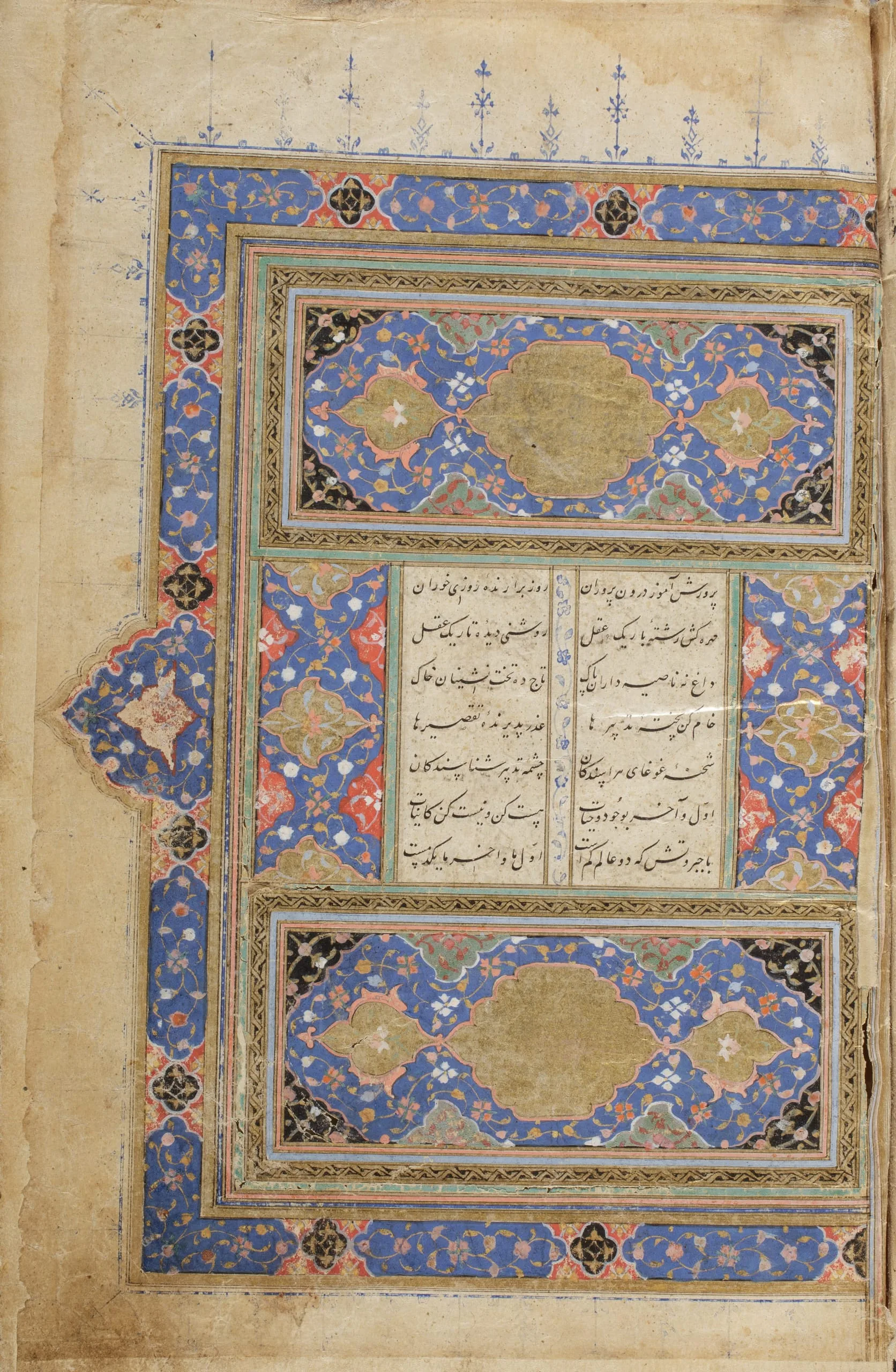
Illuminated manuscript page with Persian script in two central text columns, framed by ornate borders in cobalt blue, red, and gold with floral and geometric interlace patterns; gold medallion cartouches above and below the text panels.
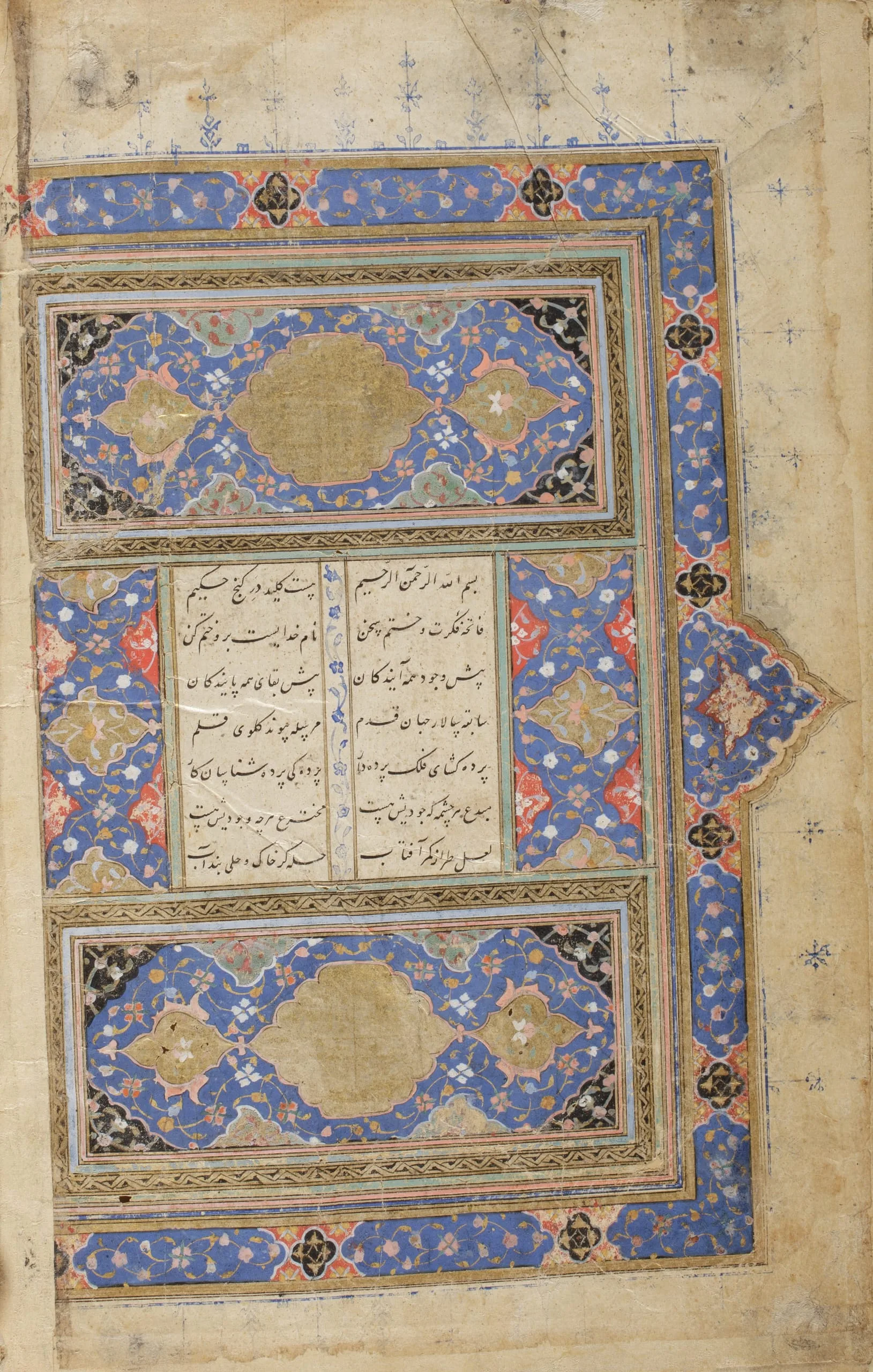
Illuminated manuscript page with three horizontal registers framed by gilt and polychrome borders in cobalt blue, red, and gold. Outer borders feature intricate floral arabesques; upper and lower registers contain gold cartouches on blue grounds. Central register holds two columns of Persian nasta'liq script on cream paper, separated by a vertical panel of floral decoration.
Artist or Maker
Sayyidi Muhammad ibn Sultan Muhammad al-Tabrizi
Title
Manuscript of the Khamsa (Quintet) of Nizami
Place Made
Iran
Date Made
10 February 1529/A.H. 1 Jumada al-Ukhra 935
Medium
Ink, opaque watercolor and gold on paper
Dimensions
f9 11/16 x 7 x 1 1/4 in. (24.6 x 17.8 x 3.2 cm)
Credit Line
The Edwin Binney, 3rd, Collection of Turkish Art at the Los Angeles County Museum of Art
Accession Number
M.85.237.16
Classification
Manuscripts
Collecting Area
Art of the Middle East: Islamic
Curatorial Notes

After Firdawsi’s Shahnama (Book of Kings), the most widely illustrated text of the Persian literary canon is the Khamsa (Quintet) of the poet Nizami of Ganja (d. 1209). Its five long poems include some of the best-known tales from Persian literature, such as the tragic romances "Layli and Majnun" and "Khusraw and Shirin." When the calligrapher of this Khamsa manuscript completed the text in 1529, he left more than ninety spaces for illustrations; however, only three paintings were ever completed, all accompanying the first poem of the quintet, titled "The Treasury of Mysteries."
Selected Bibliography
  • Lo Terrenal y lo Divino: Arte Islámico siglos VII al XIX Colección del Museo de Arte del Condado de Los Ángeles. Santiago: Centro Cultural La Moneda, 2015.