LACMA

ShopMembershipMyLACMATickets
LACMA
Los Angeles County Museum of Art
5905 Wilshire Blvd.
Los Angeles, CA 90036
info@lacma.org
(323) 857-6000
Sign up to receive emails
Subscribe
© Museum Associates 2026
  • About LACMA
  • Jobs
  • Building LACMA
  • Host An Event
  • Unframed
  • Press
  • FAQs
  • Log in to MyLACMA
  • Privacy Policy
© Museum Associates 2026
Collections

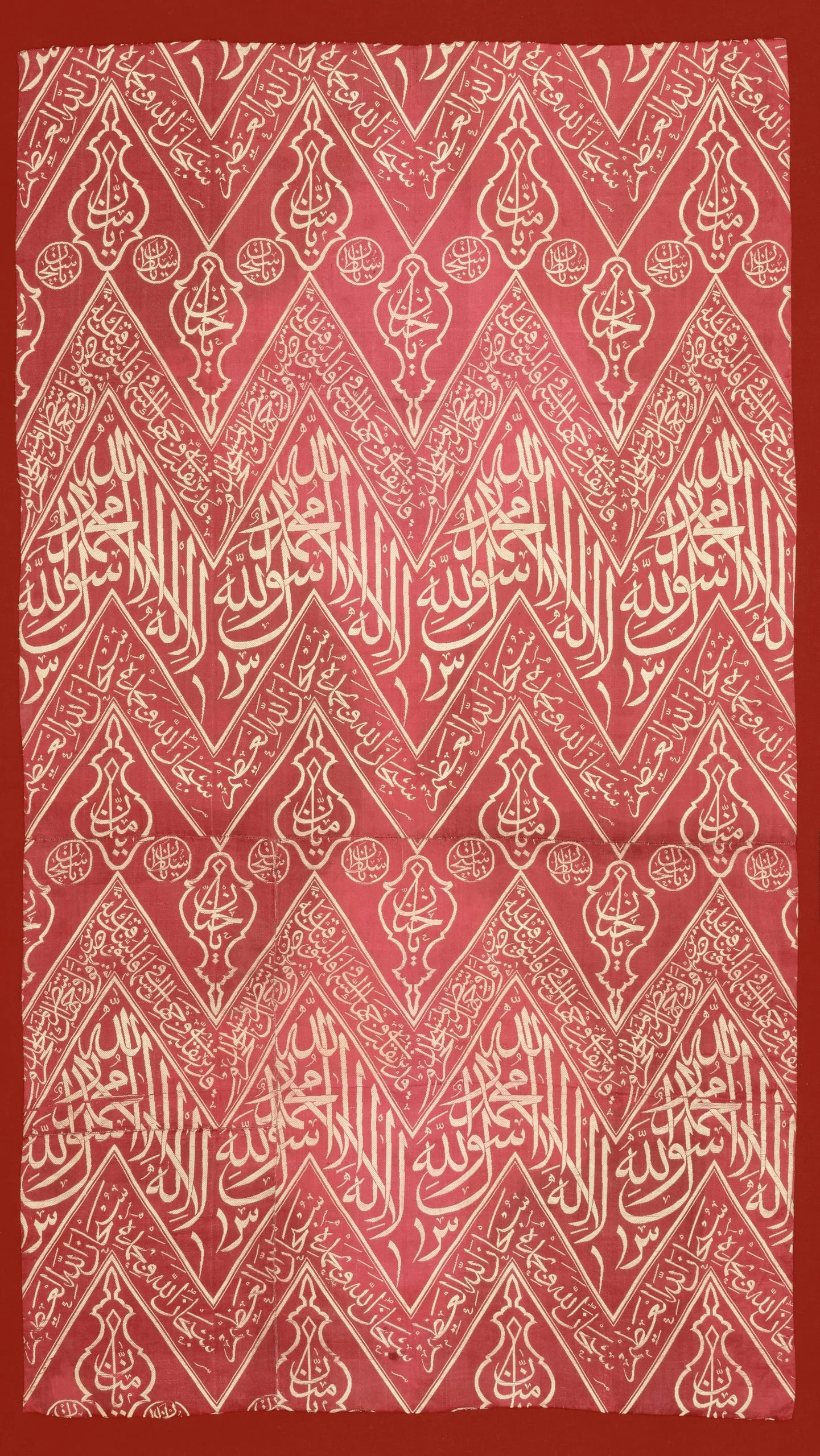
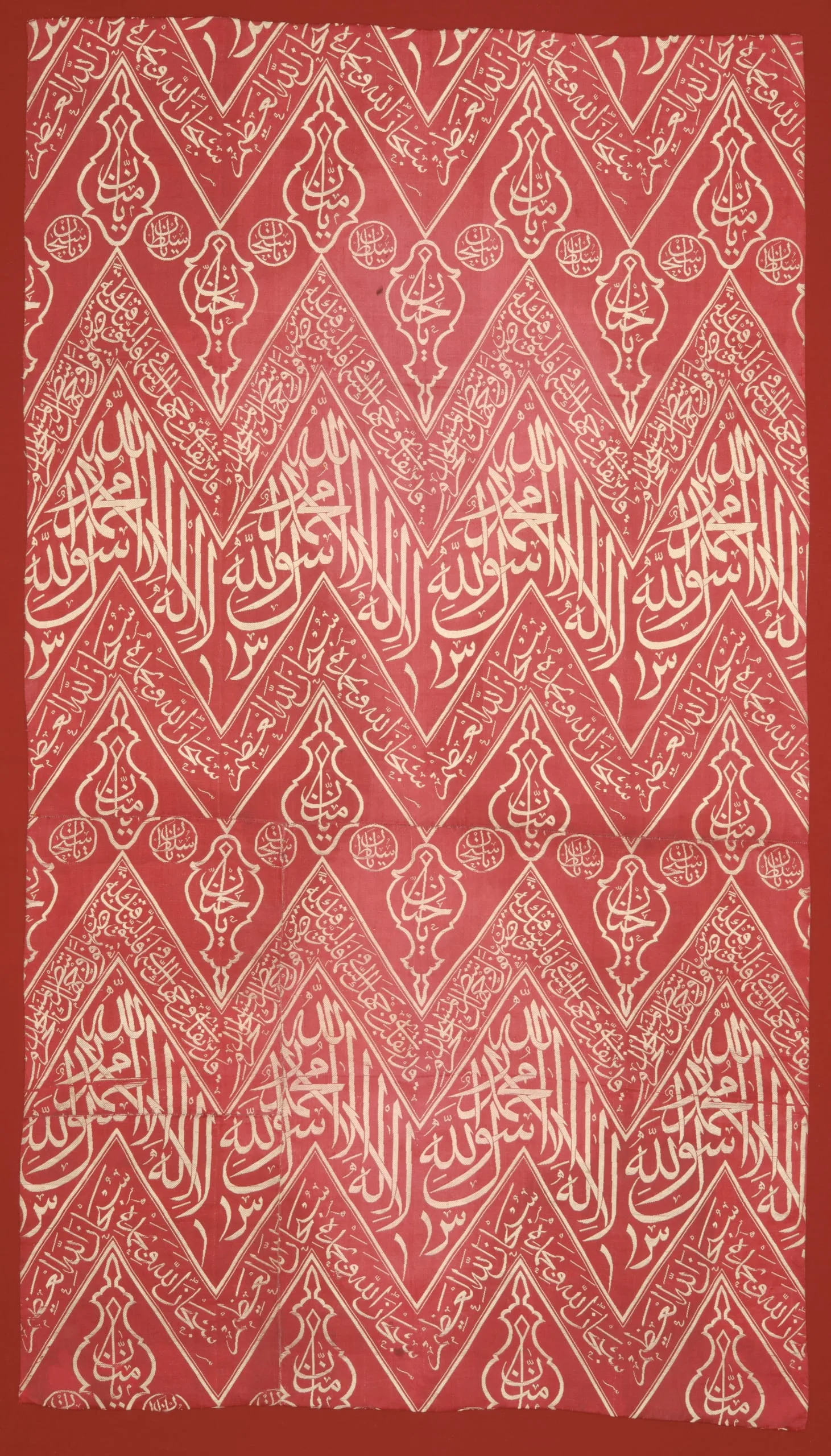
Textile Hanging from the Interior of the Ka'aba, Reused as Cenotaph Cover17th - 18th century

On view:
Geffen Galleries
Vertical crimson textile with an allover pattern of interlocking cream diamonds filled with large Arabic-script calligraphy and framed by a narrow red border
Textile panel with deep red ground covered in an allover diamond and chevron lattice pattern, filled with Arabic calligraphy in cream, with circular medallions at intersecting points.

Unknown, Textile Hanging from the Interior of the Ka'aba, Reused as Cenotaph Cover, 17th - 18th century, Los Angeles County Museum of Art, The Edwin Binney, 3rd, Collection of Turkish Art at the Los Angeles County Museum of Art, photo © Museum Associates/LACMA

Title
Textile Hanging from the Interior of the Ka'aba, Reused as Cenotaph Cover
Place Made
Turkey, Probably Istanbul
Date Made
17th - 18th century
Period
Ottoman (1281-1924)
Medium
Silk satin with silk supplementary-weft patterning bound in twill (lampas)
Dimensions
45 1/8 × 25 1/2 in. (114.62 × 64.77 cm)
Credit Line
The Edwin Binney, 3rd, Collection of Turkish Art at the Los Angeles County Museum of Art
Accession Number
M.85.237.10
Classification
Textiles
Collecting Area
Costume and Textiles
Curatorial Notes

In Muslim cultures, words are used not only to communicate but to decorate. Because it is through writing that the Qur’an is transmitted, scripts in the Arabic alphabet were devised and perfected to be worthy of divine revelation. On this account, calligraphy became the most important art form regardless of the text. This concern with beautiful writing extended beyond the page to inscriptions on buildings as well as objects of all sorts, including metalwork, coins, ceramics, stone, glass, wood, and textiles, as here.

Of the many sumptuous silk textiles produced in the Islamic world, perhaps none are more precious and prestigious than the ones used to drape the Ka‘ba, in Mecca, inside and out. This section is from the internal kiswa, or covering. The bright red color and chevron-patterned calligraphic bands with pendants and circles in the interstices are all typical of Ottoman-era Ka‘ba textiles, as are the associated texts, including a Qur’anic verse from Sura Al-Baqara (2:144) and the shahada, or profession of faith, along with other pious invocations. Unlike the great exterior kiswa, which was renewed yearly in conjunction with the hajj (pilgrimage), the interior wall coverings were changed to celebrate the accession of a new sultan. Whenever the kiswa was replaced, the old ones were often circulated as gifts; the internal curtains, in either red or green, were often converted into a cenotaph cover such as this one.
Selected Bibliography
  • Komaroff, Linda. Beauty and Identity: Islamic Art from the Los Angeles County Museum of Art. Los Angeles: Los Angeles County Museum of Art, 2016.