- Title
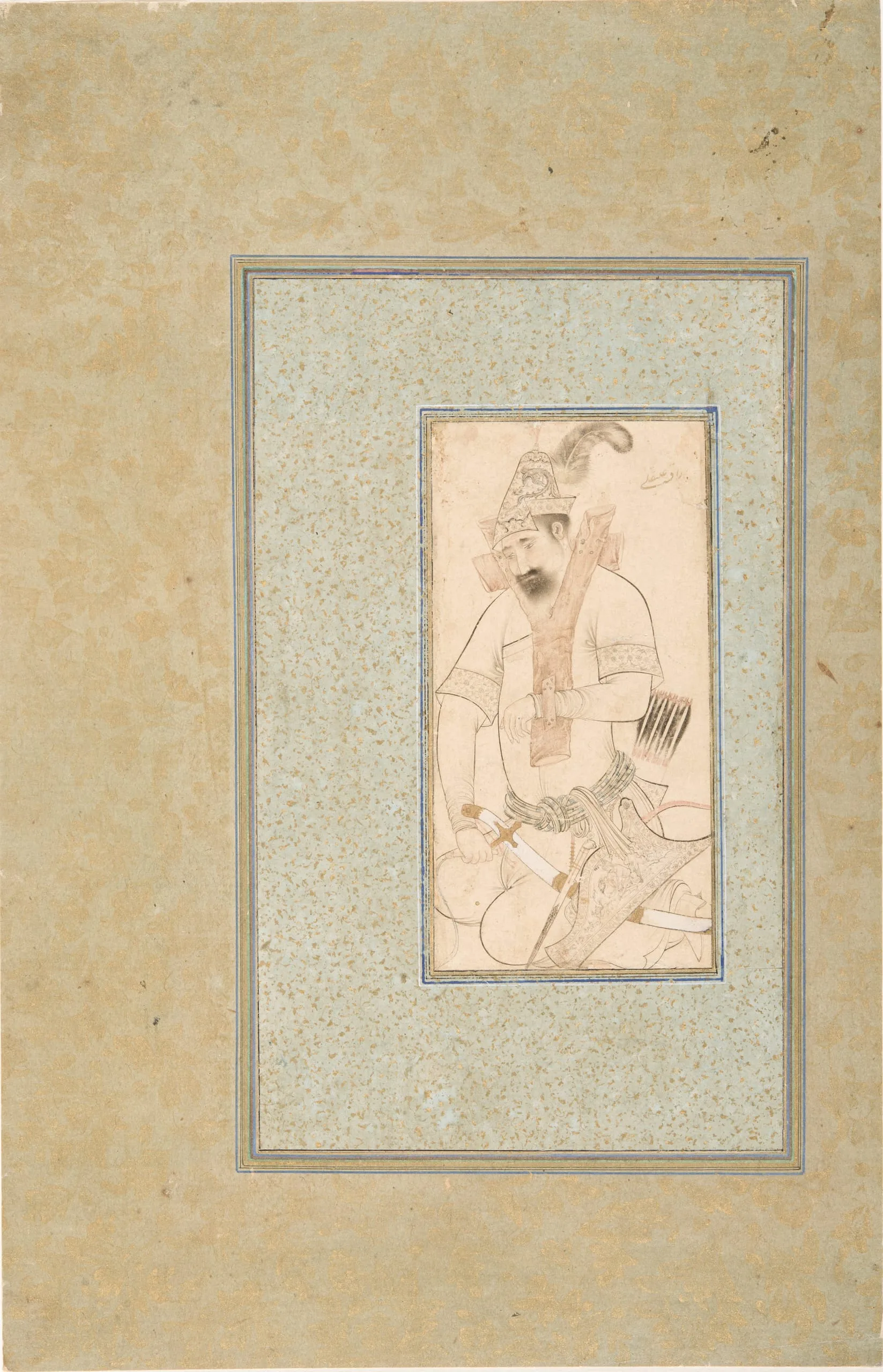
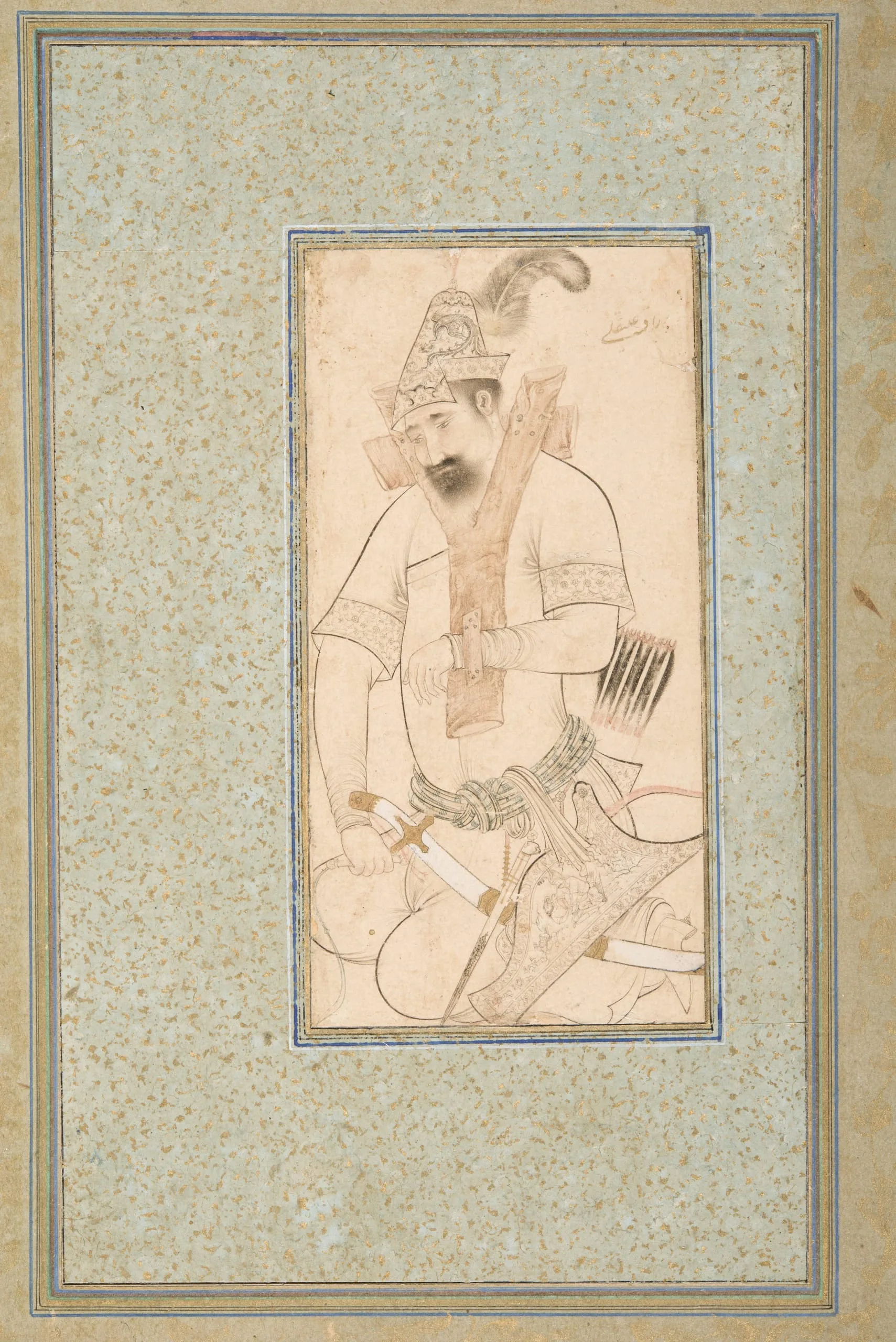
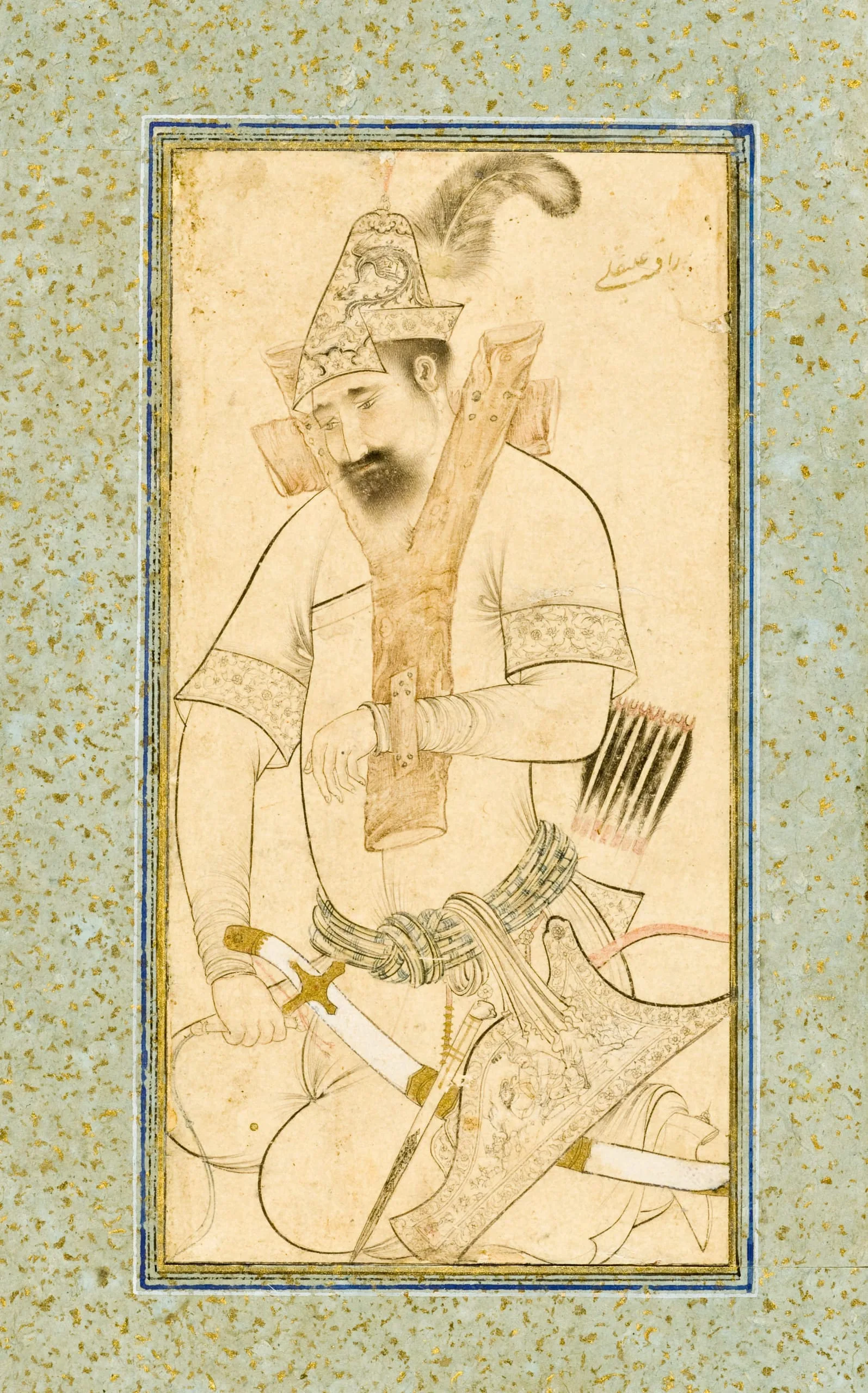
- Turkoman Prisoner
- Date Made
- first half of 17th century
- Medium
- Ink, opaque watercolor, and gold on paper
- Dimensions
- 5 × 2 1/2 in. (12.7 × 6.35 cm)
Frame: 20 × 15 × 1 1/2 in. (50.8 × 38.1 × 3.81 cm)
- Accession Number
- M.85.237.28
- Curatorial Notes
The Turkoman prisoner is a common subject in Iranian art (also see M.2000.135). The motif was copied and subtly interpreted in both drawings and paintings, which were probably intended for placement in albums. The prisoner depicted here, as in all such representations, is fettered by a palahang, a device made from a forked branch, to which one wrist is attached by an additional band of wood or metal. A crossbar at the back of the prisoner’s neck completes the restraint.
- Selected Bibliography
- Denny, Walter B. Turkish Treasures from the Collection of Edward Binney, 3rd. Portland, OR: Portland Art Museum, 1979.
- Taylor, Alice. Book Arts of Isfahan: Diversity and Identity in Seventeenth-Century Persia. Malibu, CA: J. Paul Getty Museum, 1995.
- Overton, Keelan. "A History of Ottoman Art History Through the Private Database of Edward Binney, 3rd." Journal of Art Historiography 6 (2012): 1-19.
Lo Terrenal y lo Divino: Arte Islámico siglos VII al XIX Colección del Museo de Arte del Condado de Los Ángeles. Santiago: Centro Cultural La Moneda, 2015.
Pal, Pratapaditya, Thomas W. Lentz, Sheila R. Canby, Edwin Binney, 3rd, Walter B. Denny, and Stephen Markel. "Arts from Islamic Cultures: Los Angeles County Museum of Art." Arts of Asia 17, no. 6 (November/December 1987): 73-130.
- Binney, Edwin, 3rd. "Turkish Arts of the Book in the Binney Collection." Arts of Asia 17, no.6 (Nov/Dec 1987): 97-104.