- Title
- Manuscript of the Qur'an
- Date Made
- 1854-55/A.H. 1271
- Medium
- Ink, opaque watercolor and gold on paper
- Dimensions
- 7 3/8 x 5 x 3/4 in. (18. 7 x 12.7 x 2 cm)
- Accession Number
- M.85.237.52
- Curatorial Notes
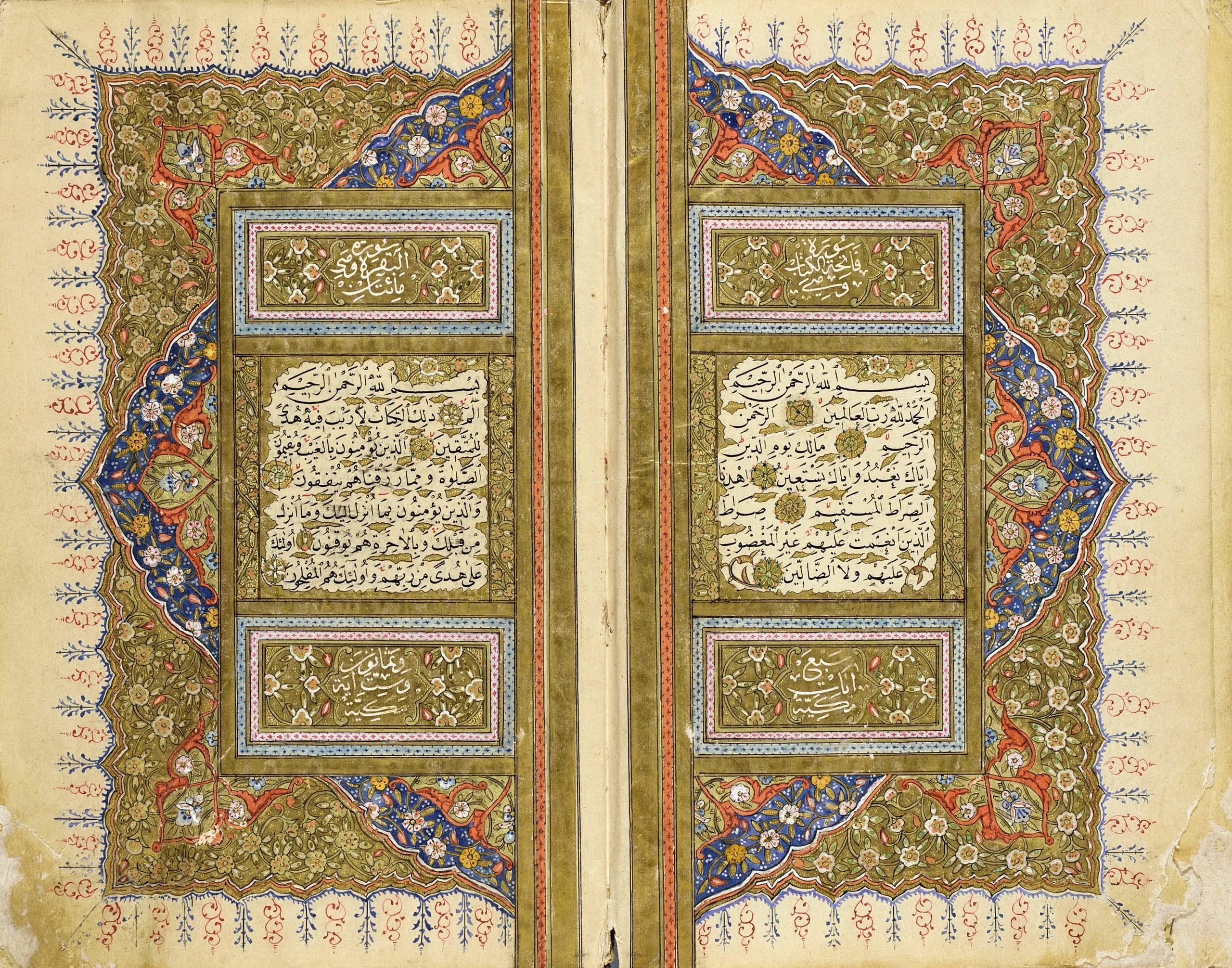
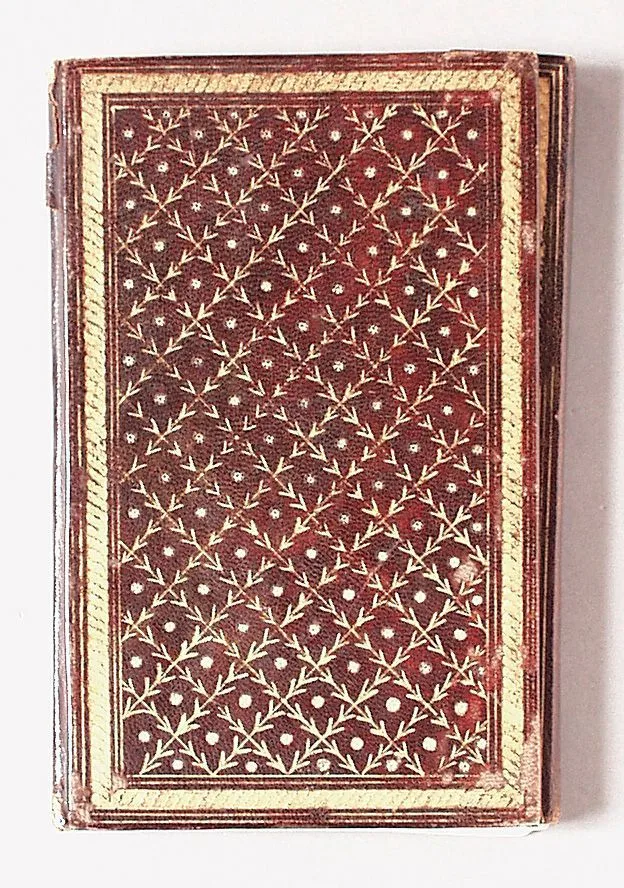
In Islam, the Qur’an is the revealed word of God shared with the Prophet Muhammad in the early seventh century. As the religion’s foundational scripture, it is not only an important spiritual resource for Muslims but often also a key component in their artistic expression. Artists and architects use Qur’anic texts as inscriptions on objects and buildings, while manuscript calligraphers and illuminators beautify complete written copies of the Qur’an, known as masahif (sing. mushaf), with fine writings and rich decoration often in precious metals such as gold and silver. Despite the emergence of Muslim-operated printing presses in the Ottoman Empire during the eighteenth century, the traditions of writing and illuminating Qur’ans by hand remained the preferred method of production into the modern era, as demonstrated by this nineteenth-century manuscript. It was written in naskh script by Shaykh Hasan Kashfi al-Khalwati, who, as his name indicates, was a member of the Khalwati order of Sufis.
- Selected Bibliography
- Denny, Walter B. Turkish Treasures from the Collection of Edward Binney, 3rd. Portland, OR: Portland Art Museum, 1979.