- Title
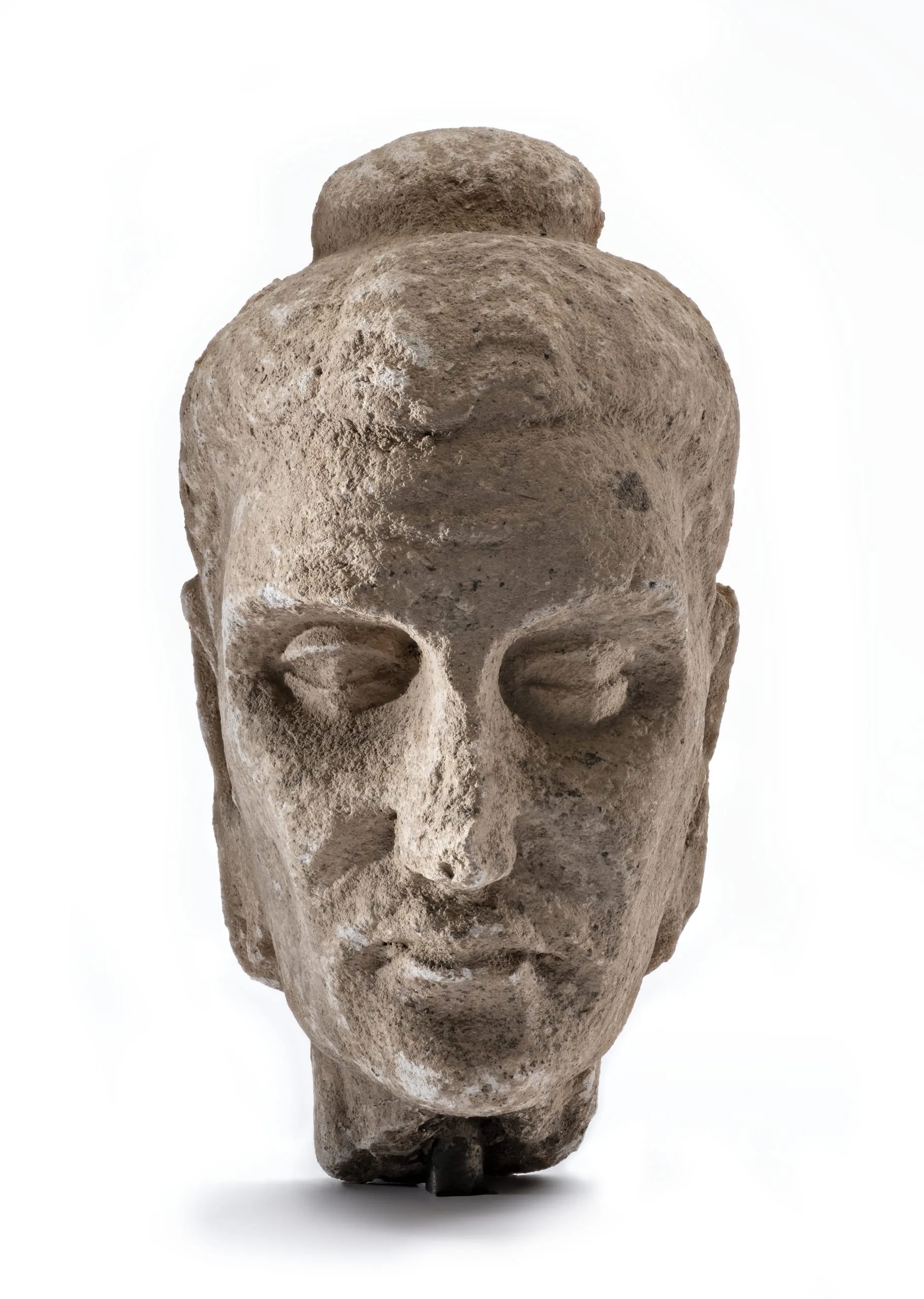
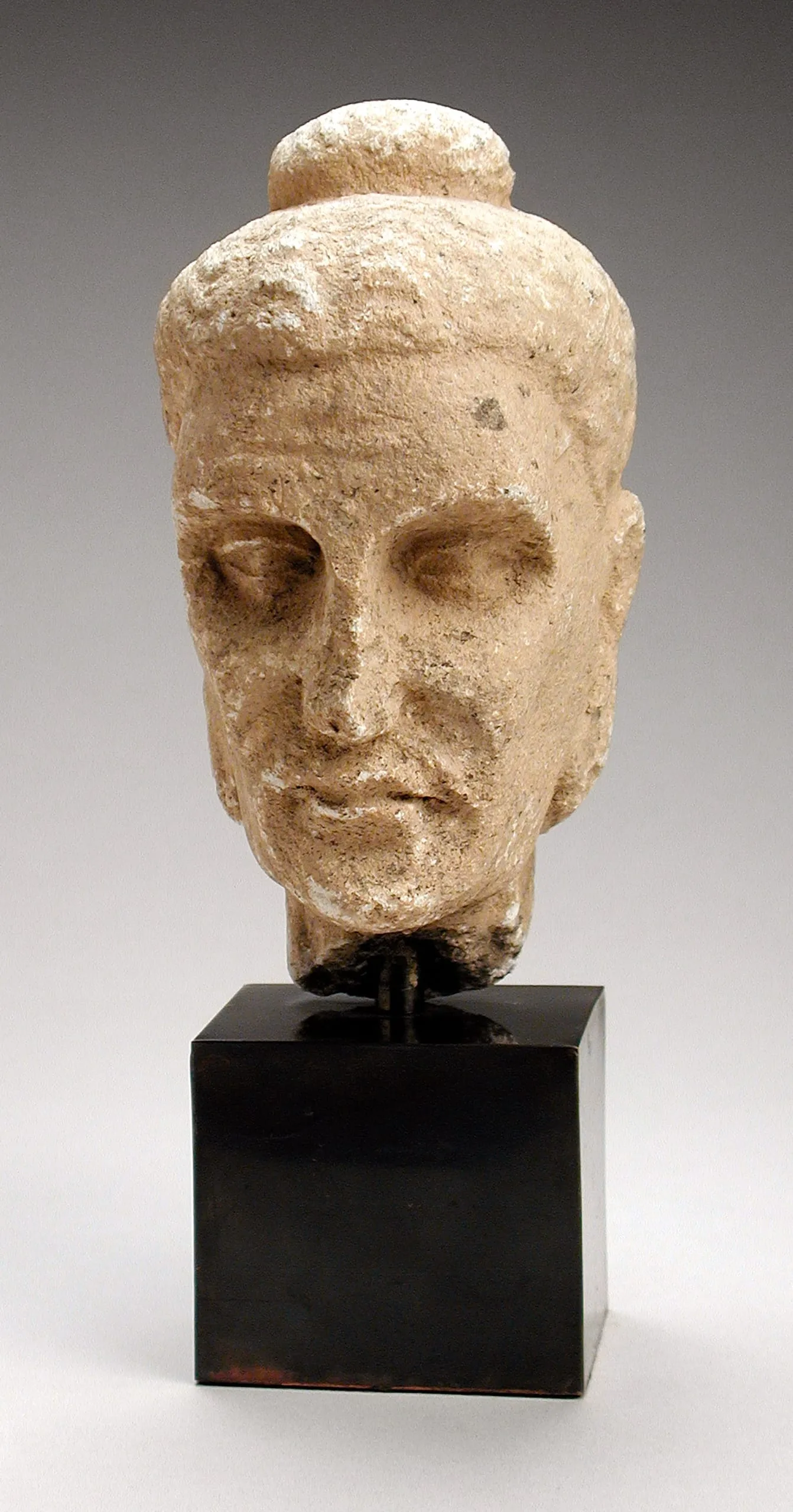
- Head of the Emaciated Buddha
- Date Made
- 4th century
- Medium
- Stucco
- Dimensions
- 5 1/2 x 3 1/8 x 5 1/4 in. (13.97 x 7.94 x 13.34 cm)
- Accession Number
- M.85.213.3
- Curatorial Notes
Deriving their artistic style from the imported Greco-Roman tradition of realism, schist and rarely stucco sculptures of an emaciated Siddhartha Gautama, commonly identified as the future Buddha Shakyamuni, portray him at the end of a six-year period of ascetic fasting and self-mortification immediately preceding his final Enlightenment at Bodhgaya. South Asian images of the emaciated or fasting Buddha were, for the most part, produced only in ancient Gandhara (present-day northwestern Pakistan and northeastern Afghanistan). The most famous rendition of this iconic theme is in the Lahore Museum (2099).
With his hair tied up in an ascetic’s bun, this dramatic visage features a somber, gaunt face with sunken eyes, high cheekbones, and a furrowed brow.
- Selected Bibliography
- Pal, Pratapaditya. Indian Sculpture, vol.1. Los Angeles: Los Angeles County Museum of Art; University of California Press, 1986.
- Little, Stephen, Tushara Bindu Gude, Karina Romero Blanco, Silvia Seligson, Marco Antonio Karam. Las Huellas de Buda. Ciudad de México : Instituto Nacional de Antropología e Historia, 2018.
- Little, Stephen, and Tushara Bindu Gude. Realms of the Dharma: Buddhist Art across Asia. Los Angeles: Los Angeles County Museum of Art, 2025.