- Title
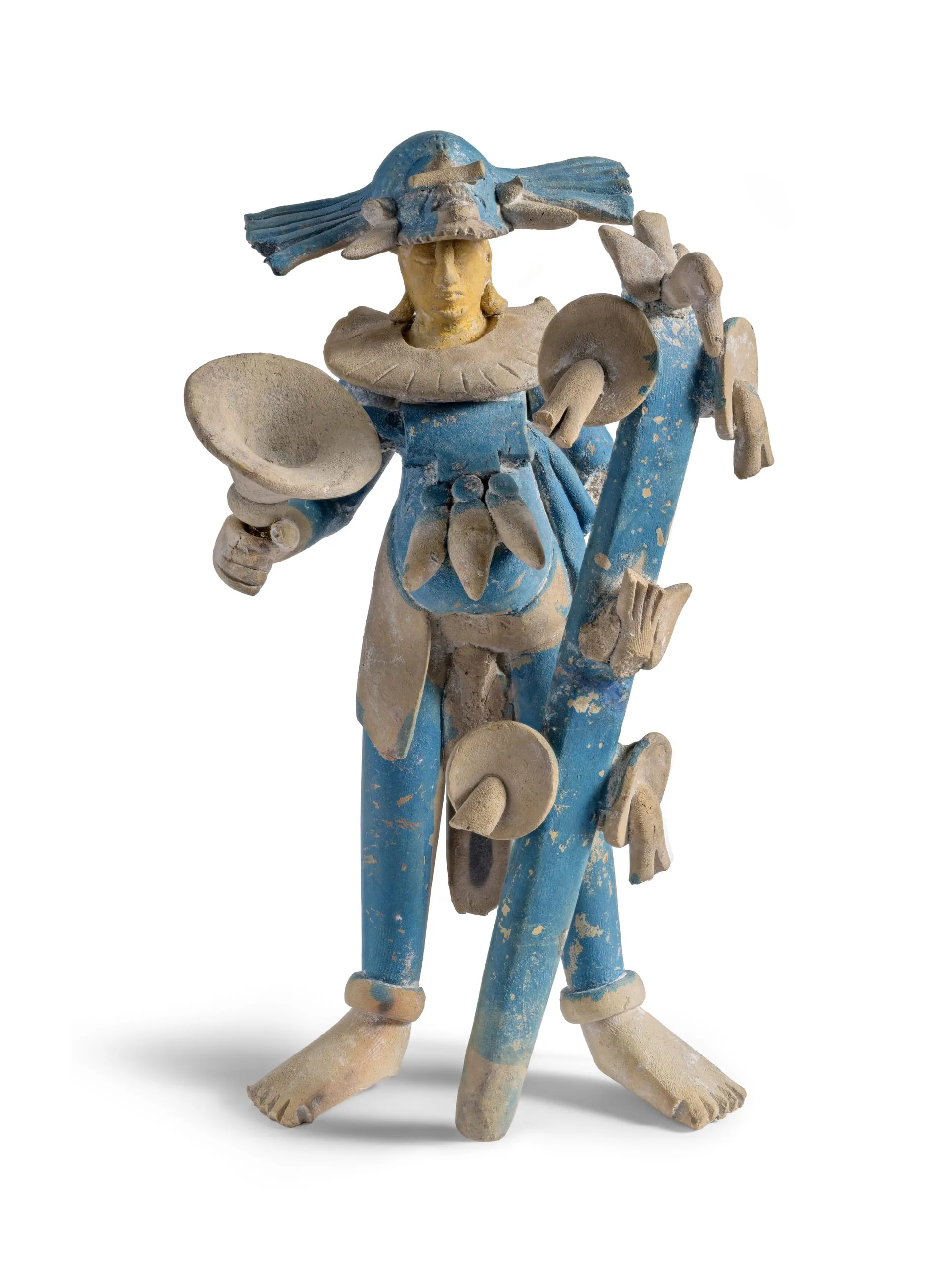
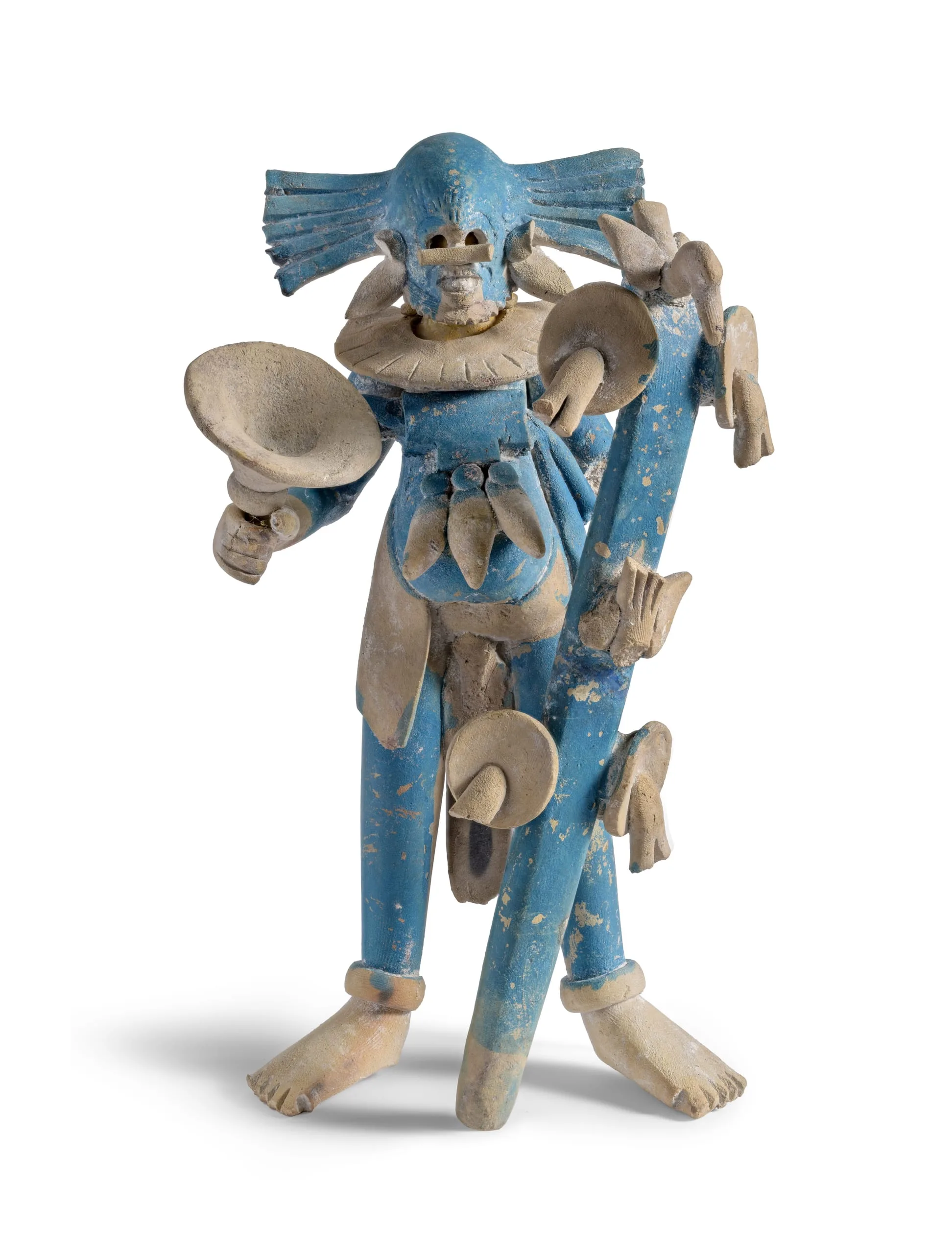
- Masked Male Figure with Dance Staff
- Date Made
- 700–900 CE
- Medium
- Ceramic with post-fire applied pigment
- Dimensions
- a) Figure: 7 1/4 x 4 1/2 x 2 3/4 in. (18.42 x 11.43 x 6.99 cm); b) Headdress: 1 3/4 x 2 3/4 x 7/8 in. (4.45 x 6.99 x 2.22 cm); c) Staff: 7 x 2 x 1 3/8 in. (17.78 x 5.08 x 3.49 cm)
- Accession Number
- M.76.157a-d
- Curatorial Notes
This ceramic figurine, wearing an elaborate costume with a detachable feathered mask, holds a staff where two birds perch. Similar staffs appear in Classic Maya depictions of ceremonial dances that commemorate important occasions, such as a ruler’s accession to the throne. Dance fosters social bonds within Maya communities both past and present, allowing participants to assume the guise of ancestors, deities, and other figures in order to re-create and reenact legendary events.
The blue paint that decorates the figurine’s costume and staff may be the famed Maya blue pigment. Maya blue is obtained through a technically sophisticated process of dyeing palygorskite, a white clay, with indigo, and it was prized among Classic Maya artists and by society at large. The pigment confers preciousness on the items it adorns.
Alyce de Carteret
2024
- Selected Bibliography
- Berjonneau, Gérald, and Jean-Louis Sonnery. Rediscovered Masterpieces of Mesoamerica: Mexico-Guatemala-Honduras. Boulogne: Editions Arts, 1985.
- Magaloni, Diana, Davide Domenici, and Alyce de Carteret. We Live in Painting: the Nature of Color in Mesoamerican Art. Los Angeles: Los Angeles County Museum of Art, 2024.