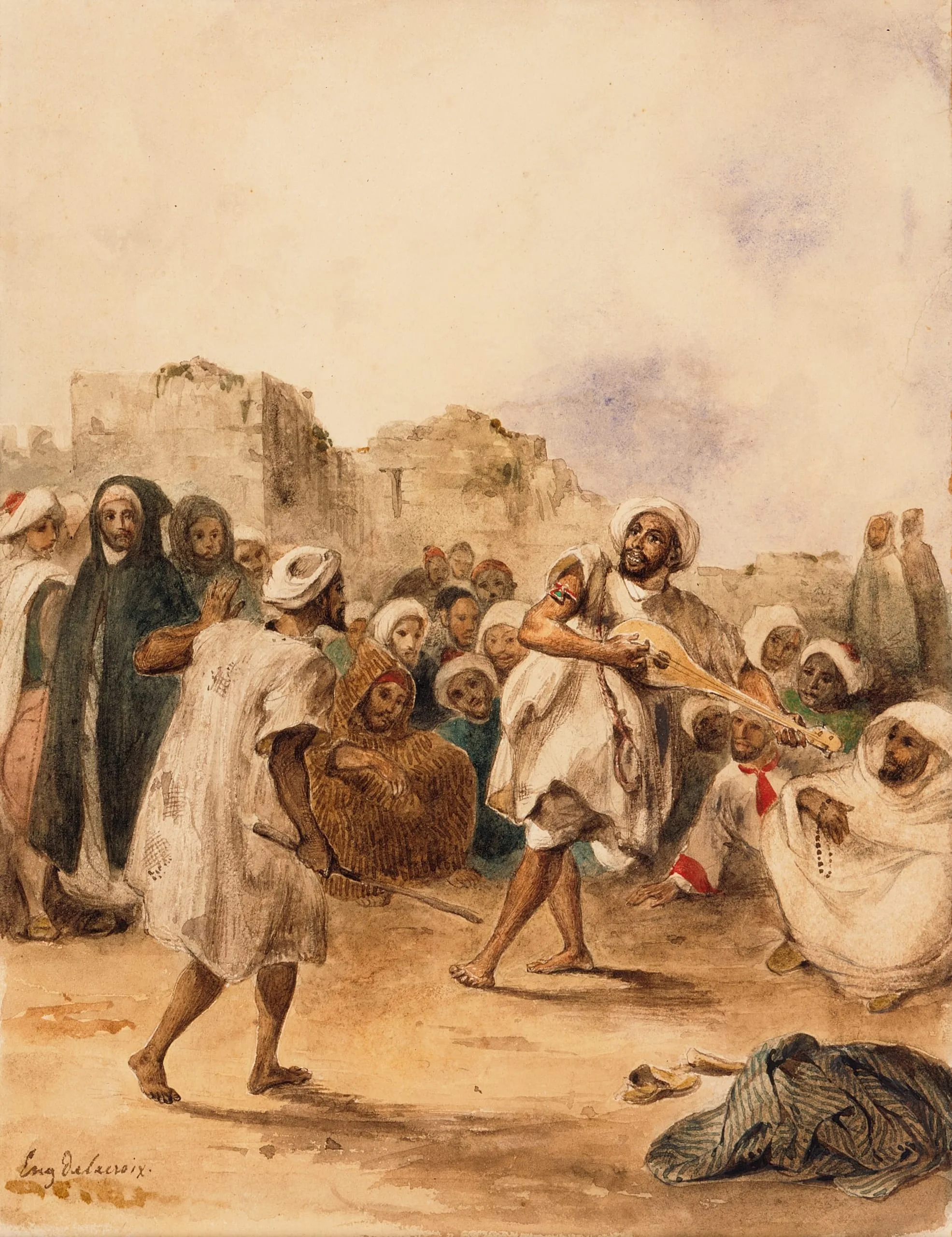
The Orient exercised a powerful appeal for Eugène Delacroix and many other romantic artists and writers. The sensuality of light-drenched color, dusky women, and exotic locales appealed to their taste for heightened sensory and emotional experiences. The painting salons of early to mid nineteenth-century France included subjects associated with the East, ranging from fabulous horses to violent men.
Delacroix's paintings are perhaps the most memorable of this exotic genre. When in 1826 he painted his ambitious Death of Sardanapalus, depicting the death of an Assyrian king, he had never traveled outside France. Five years later, however, Delacroix was invited to go to Morocco to record the principal events of a diplomatic mission. Led by Count Charles de Mornay, the group sailed to Tangiers and eventually traveled overland to Meknes. During four months abroad Delacroix filled sketchbooks with what he had witnessed, producing a body of material that he drew upon for the rest of his career. This was the sole journey he ever made to northern Africa.
Delacroix painted this watercolor upon his return to France, while temporarily detained in quarantine because of a cholera outbreak. He produced an album of eighteen watercolors as a memento of the expedition for de Mornay, of which this work is one. This scene of strolling players captures both the immediacy and exoticism of Morocco's customs.