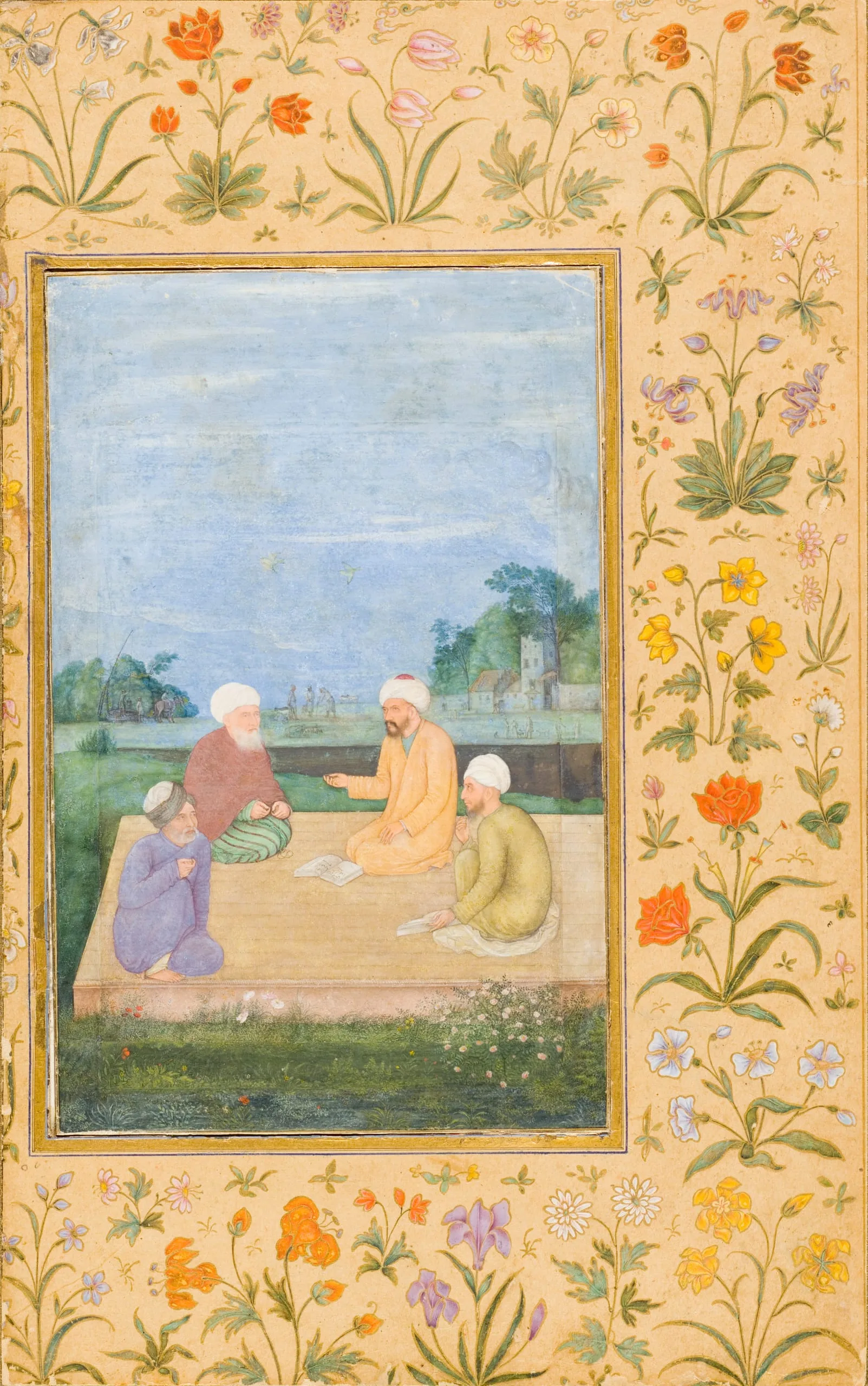
Orthodox Islamic theologians (mullahs), such as those represented here, are honored for their profound knowledge of the Qur'an and their interpretation of Islamic law based on the teachings of Muhammad. Revered for their erudition and integrity, mullahs were extremely influential at the Mughal court and served as advisors to the emperor and as ambassadors to foreign courts.
Seated upon a platform in a meadow, a bearded mullah explicates a passage from a book, in which the first line has the name of Emperor Shah Jahan (r. 1628-1658). (Translation by B. N. Goswamy.) Another mullah at the far right strokes his beard as he rationally considers what he hears. The mullah to the speaker’s right stares out into the distance while fingering his rosary, as though transported by the speaker’s words. The mullah at the far left stares intently at the speaker.
The painting is attributed to the Mughal artist Govardhan (active 1596-circa 1645). In his sophisticated works, a central theme is introduced and individual responses to it are explored. The figures are subtly shaded in the European manner and often set in front of Dutch or Flemish-inspired landscapes employing aerial perspective, in which distant objects are portrayed as if viewed through an atmospheric haze. The three sheep herders in the distant center reappear in another painting attributed to Govardhan in the Cleveland Museum of Art (1971.79).
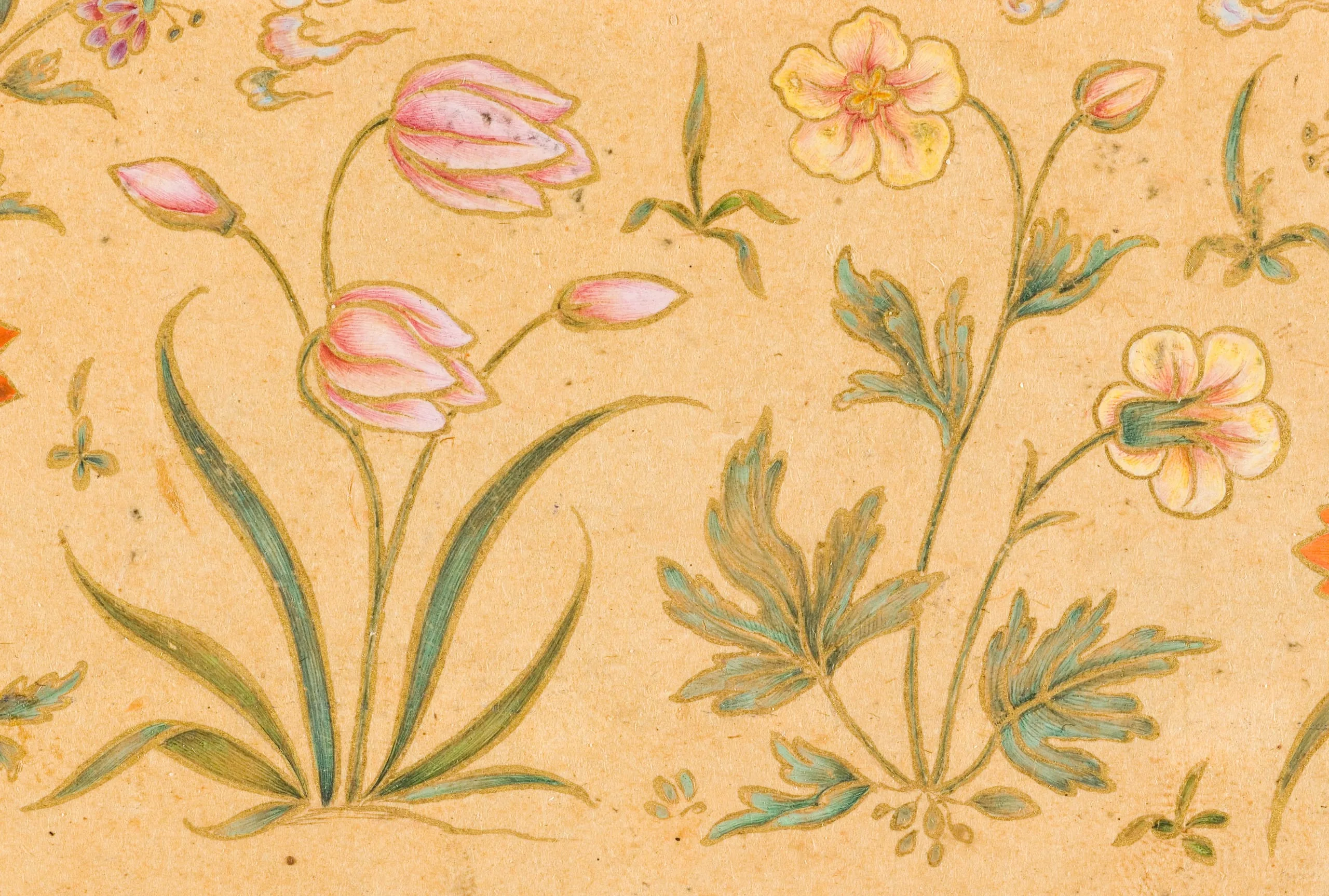
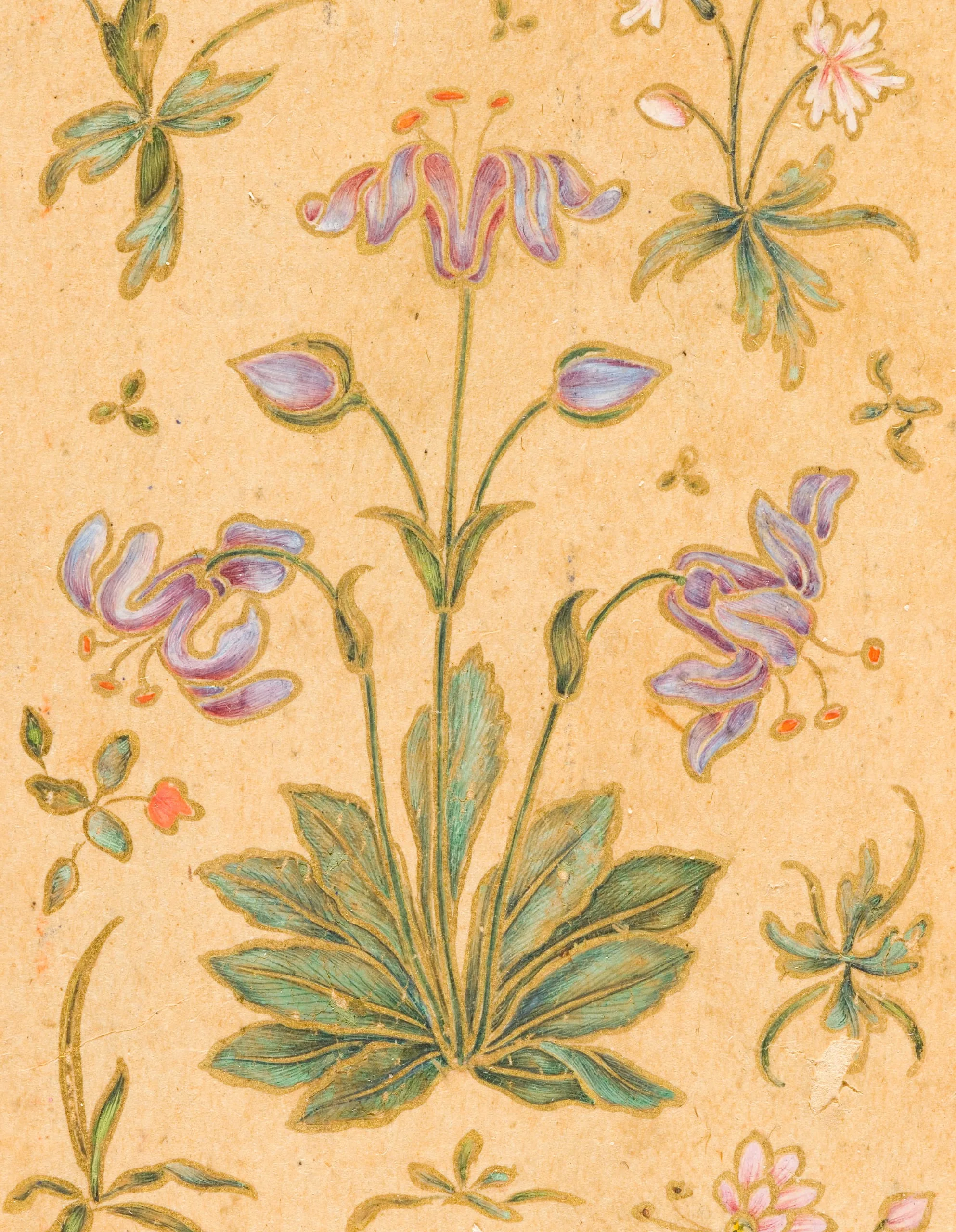
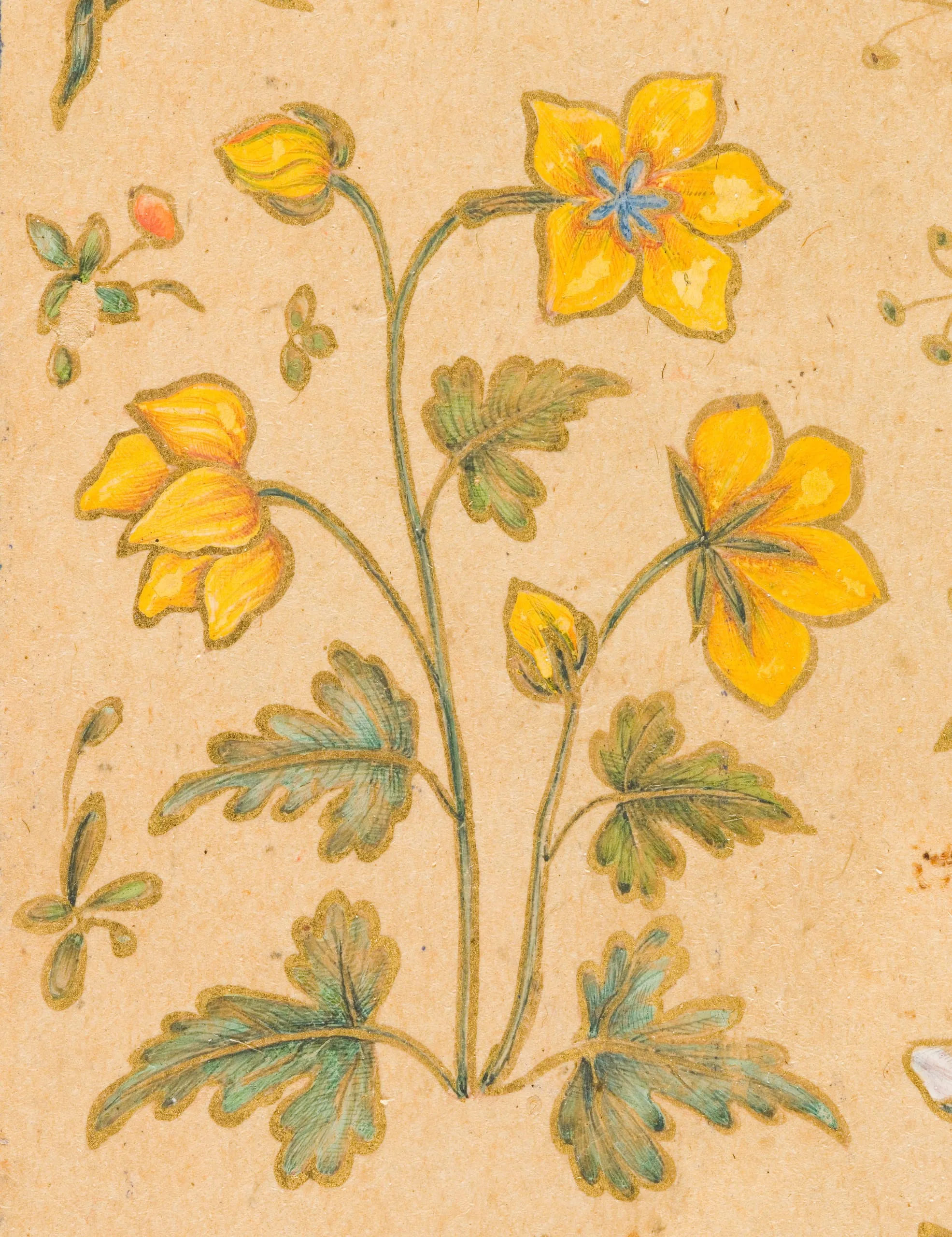
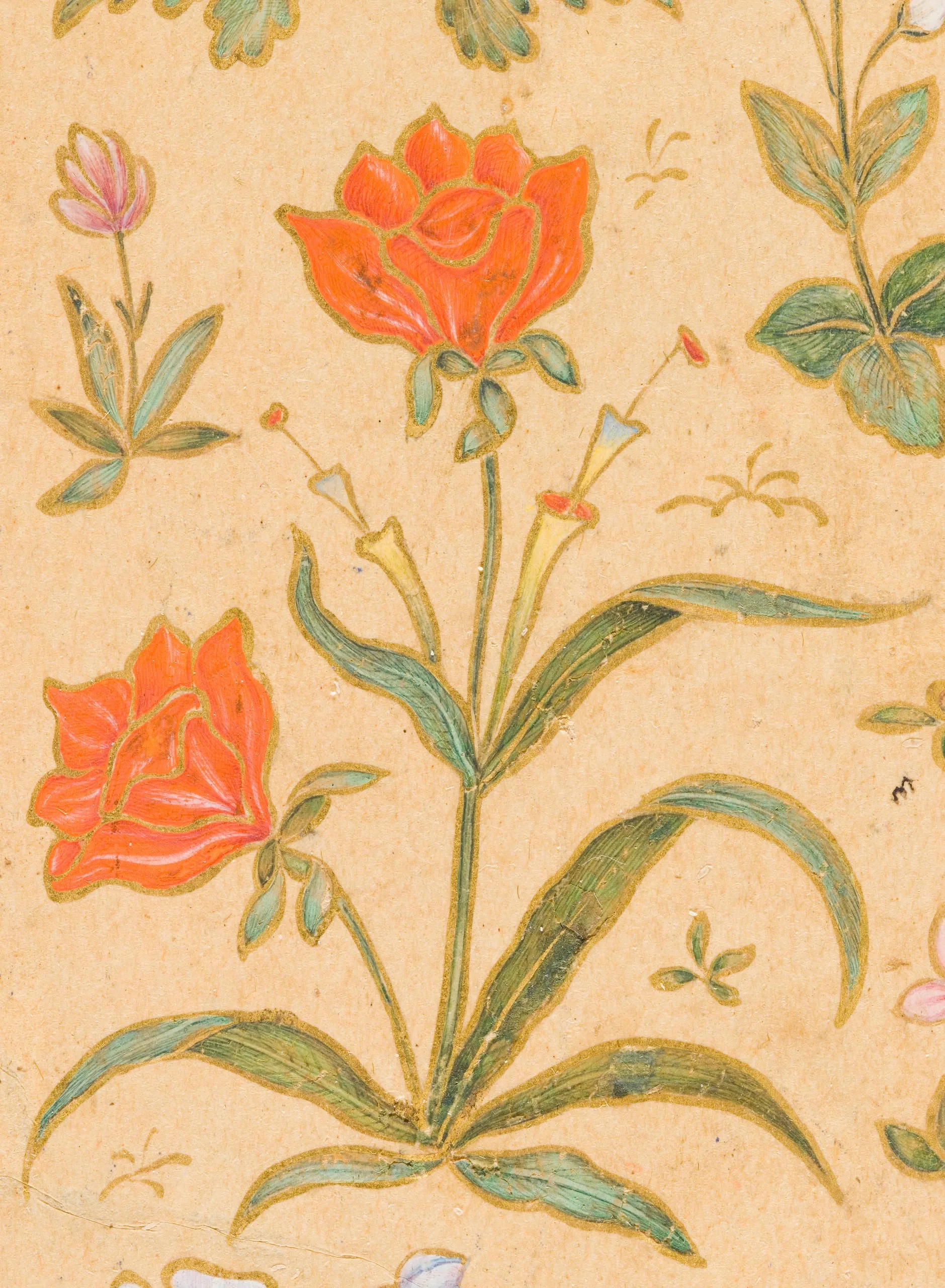
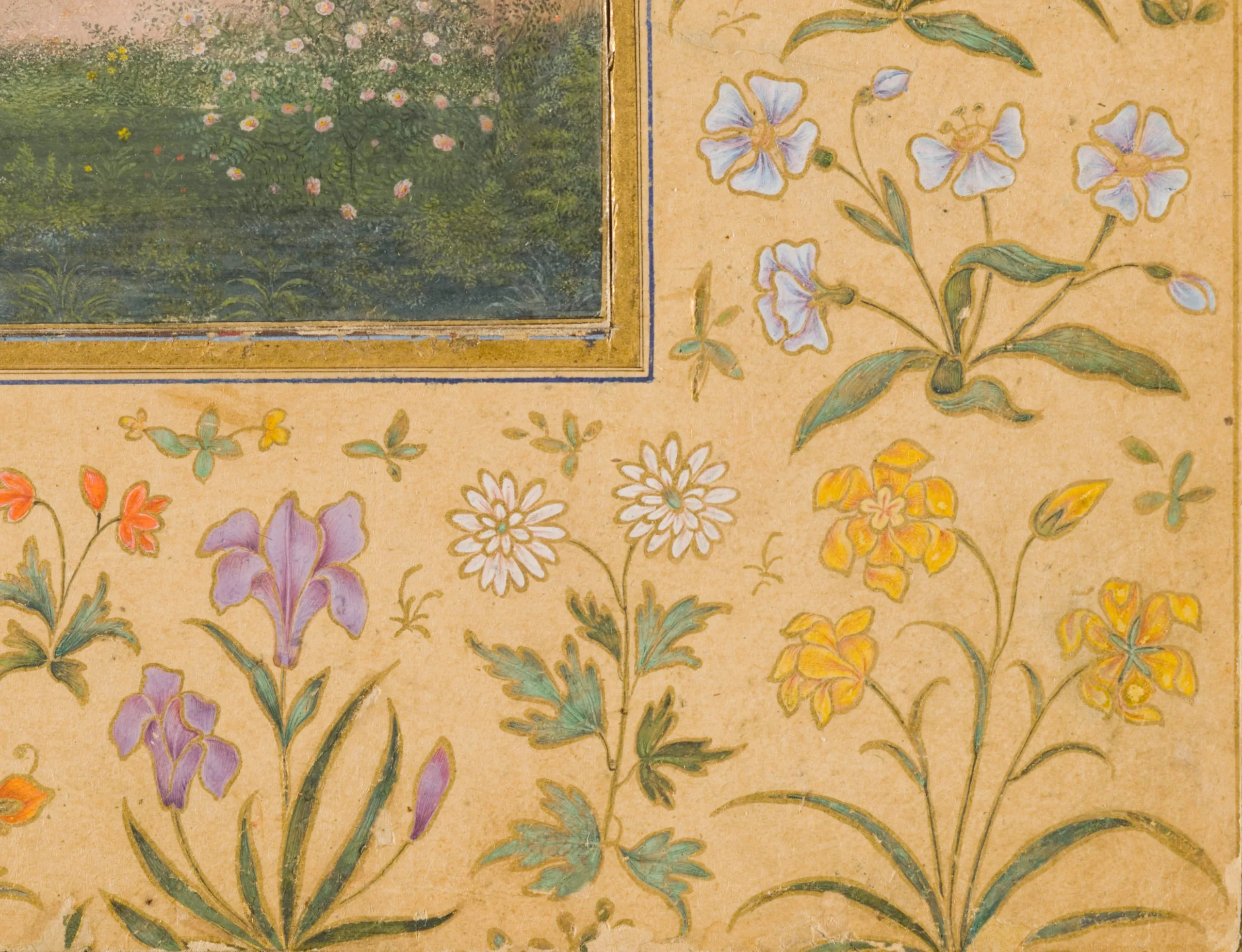
The painting was enlarged and later remounted into a Shah Jahan-period floral border.