LACMA

ShopMembershipMyLACMATickets
LACMA
Los Angeles County Museum of Art
5905 Wilshire Blvd.
Los Angeles, CA 90036
info@lacma.org
(323) 857-6000
Sign up to receive emails
Subscribe
© Museum Associates 2025

Museum Hours

Monday

11 am–6 pm

Tuesday

11 am–6 pm

Wednesday

Closed

Thursday

11 am–6 pm

Friday

11 am–8 pm

Saturday

10 am–7 pm

Sunday

10 am–7 pm


  • About LACMA
  • Jobs
  • Building LACMA
  • Host An Event
  • Unframed
  • Press
  • FAQs
  • Log in to MyLACMA
  • Privacy Policy
© Museum Associates 2025
Collections

Unknown
Ewercirca 1500

Not on view
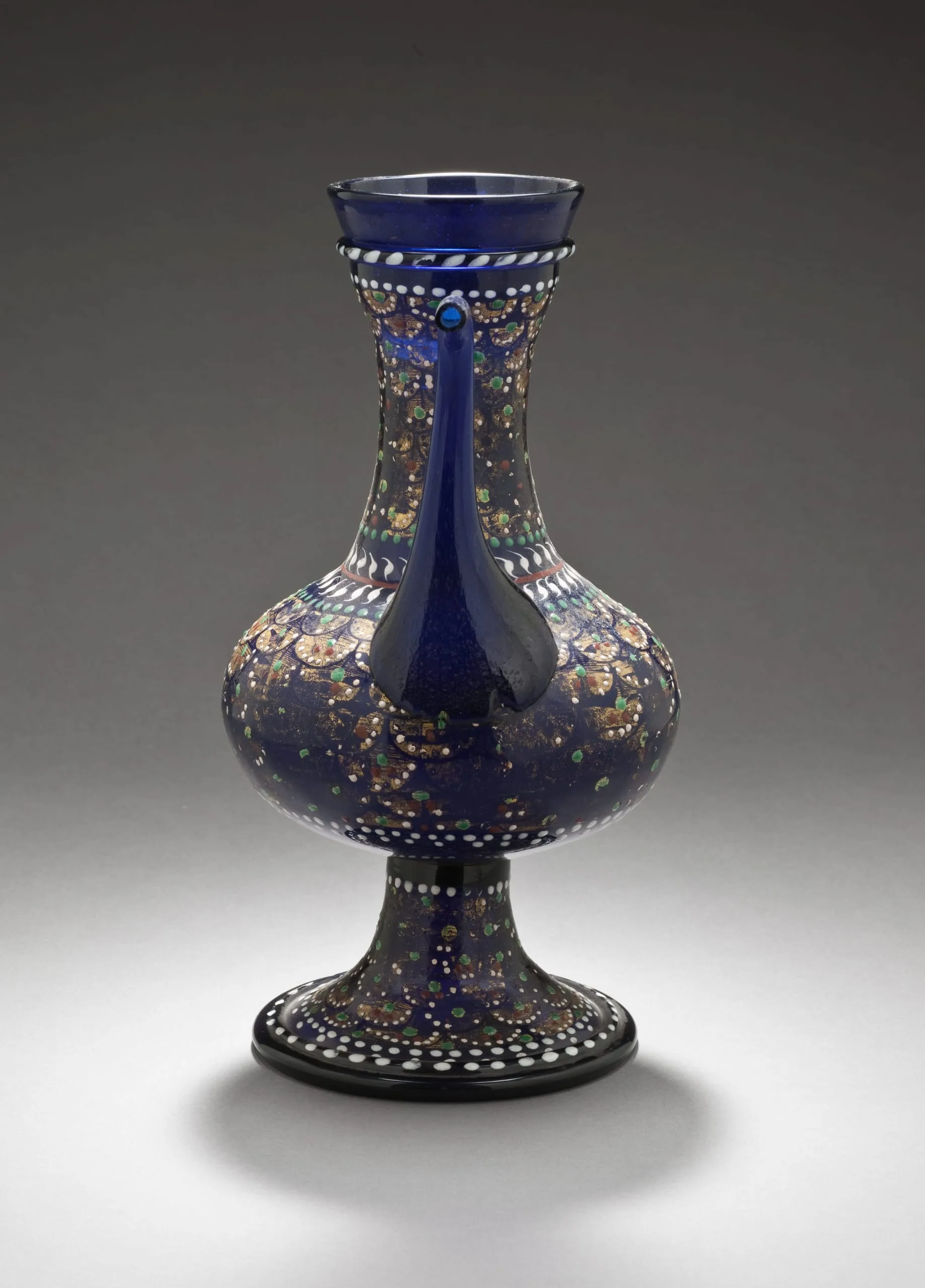
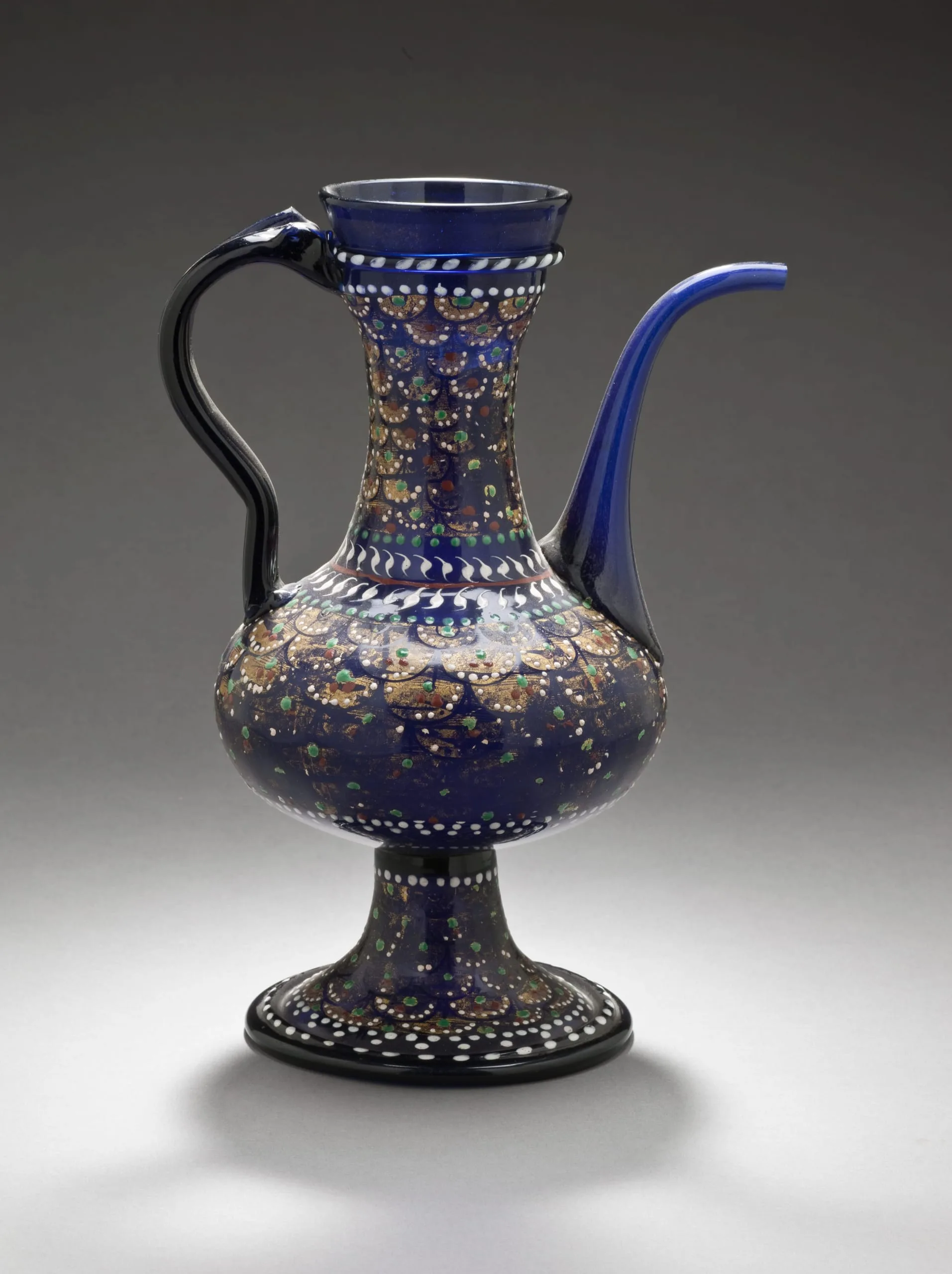
Cobalt blue glass ewer on a pedestal foot, densely decorated with gilt, enamel, and white dot patterns in scalloped bands across the body and neck
Enameled glass vase with deep cobalt blue ground, bulbous body tapering to a slender neck with flared rim, raised on a circular foot. Surface decorated with dense multicolored enamel dot work and gilded floral scrolls, with a single loop handle and white dotted borders at neck and foot.
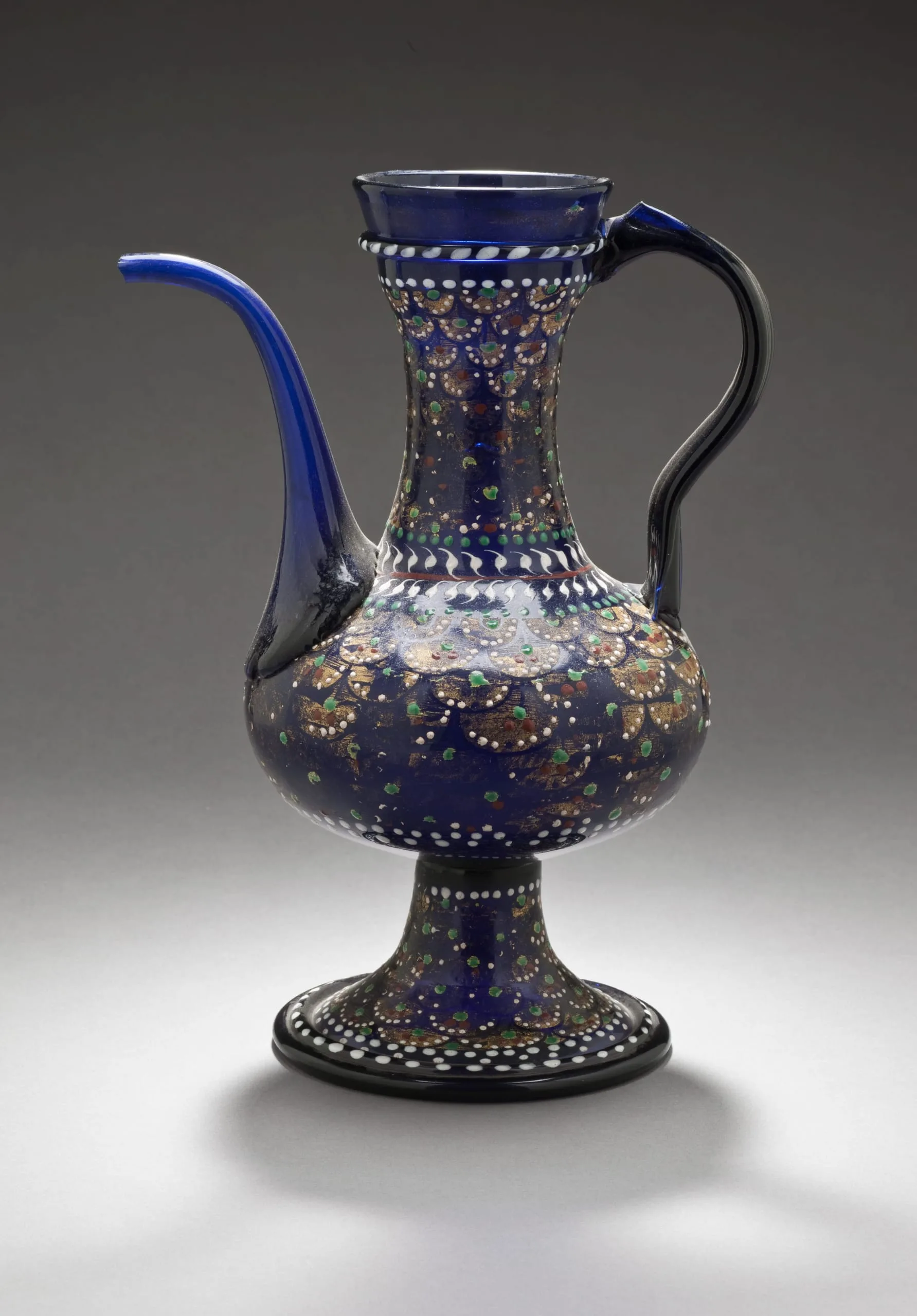
Enameled glass ewer with deep cobalt blue ground, bulbous body on a flared foot, long curved spout, and arched handle, decorated overall with gilded medallions, white dot borders, and multicolored enamel floral motifs.
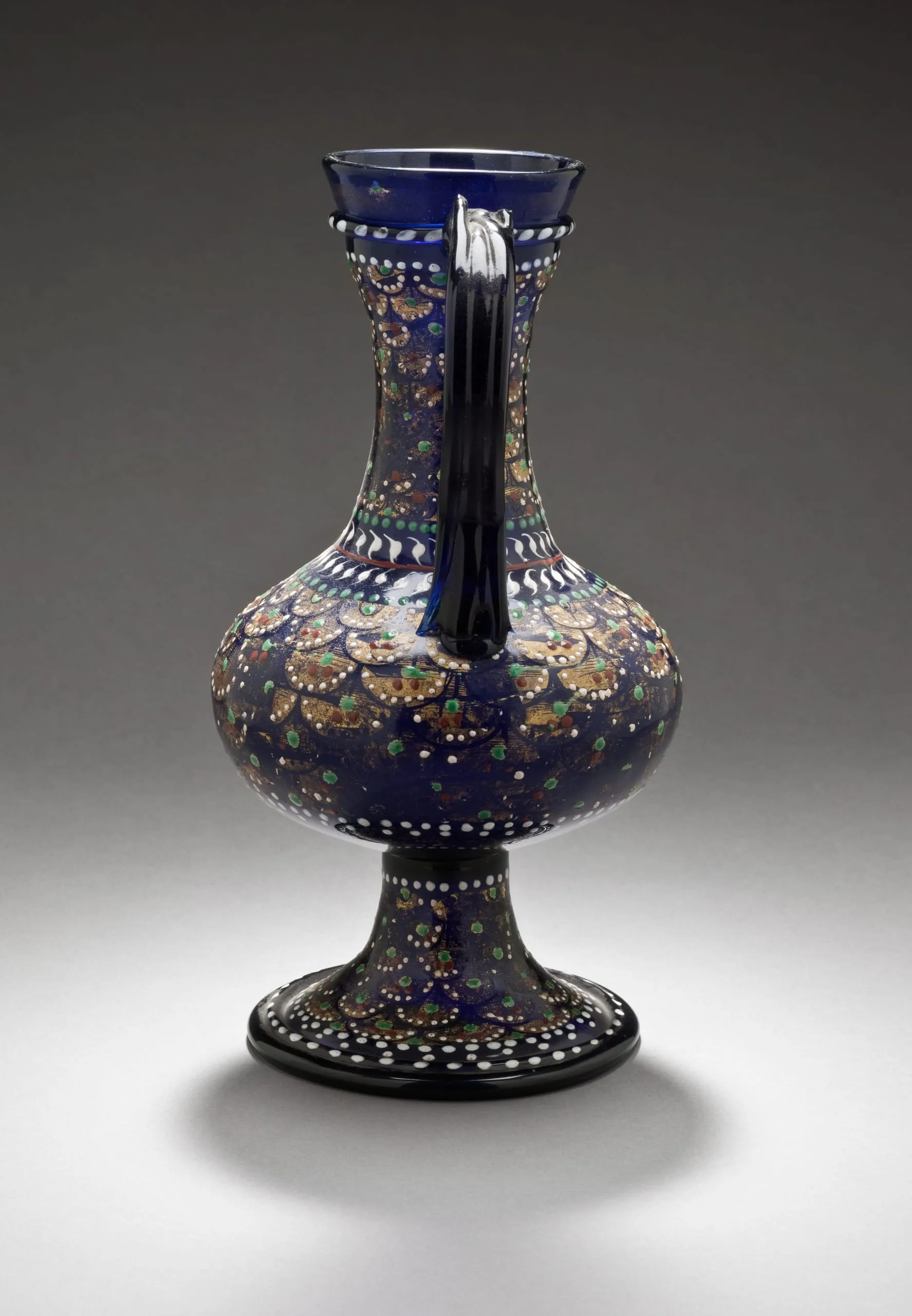
Blown glass ewer with deep cobalt blue body, bulbous lower form on a flared foot, tall narrow neck, and applied handle; decorated overall with dense polychrome enamel and gilt dotted and scalloped patterns in white, red, green, and gold.
Artist or Maker
Unknown
Title
Ewer
Place Made
Italy, Venice
Date Made
circa 1500
Medium
Glass, gilt, enamel
Dimensions
10 × 8 × 5 in. (25.4 × 20.32 × 12.7 cm) Height: 10 in. (25.4 cm) Diameter (Diameter): 5 in. (12.7 cm)
Credit Line
Purchased with funds provided by William Randolph Hearst by exchange, Decorative Arts Council Acquisition Fund, Decorative Arts Curatorial Discretionary Fund, Mrs. Lorna Hammond, the William A. Dinneen Estate, Mrs. Edwin Greble, Mrs. Walter Barlow, Mr. and Mrs. Allan C. Balch Collection, Allan Ross Smith, and Mrs. Wesley Heard
Accession Number
84.2.1
Classification
Furnishings
Collecting Area
Decorative Arts and Design
Curatorial Notes
Although surviving Venetian glass dates only from the Renaissance, early archaeological and documentary evidence shows that glass was produced in Venice as early as the seventh century on the island of Torcello and in the city proper by the tenth century. In 1291, because of fire hazard, the glassworks of Venice were relocated to the island of Murano , where they remain today.
Venetian glassmakers came to rely heavily on Islamic vessel forms and decoration; by 1500 Venice had become the prime source of common and luxury glass for both Europe and the East.
The strong ties Venice established with the East are evident in this sumptuous gilded and enamel-decorated ewer. Its shape imitates Eastern metal prototypes. It is one of a group of ten glass vessels of identical shape but differing decoration. Assembled from four pieces (body, spout, handle, foot), the ewer is characteristically Venetian in concept and execution, but Islamic influences appear in the form of the body and in the band of white flame-patterned enamel on the neck. The shell gilding with red, green, and yellow enamel dots is typical of Venetian luxury glass of this period and was meant to imitate gem-encrusted vessels of gold or silver.
Selected Bibliography
  • Hess, Catherine. The Arts of Fire: Islamic Influences on Glass and Ceramics of the Italian Renaissance. Los Angeles: J. Paul Getty Trust, 2004.
  • Price, Lorna. Masterpieces from the Los Angeles County Museum of Art. Los Angeles: Los Angeles County Museum of Art, 1988.