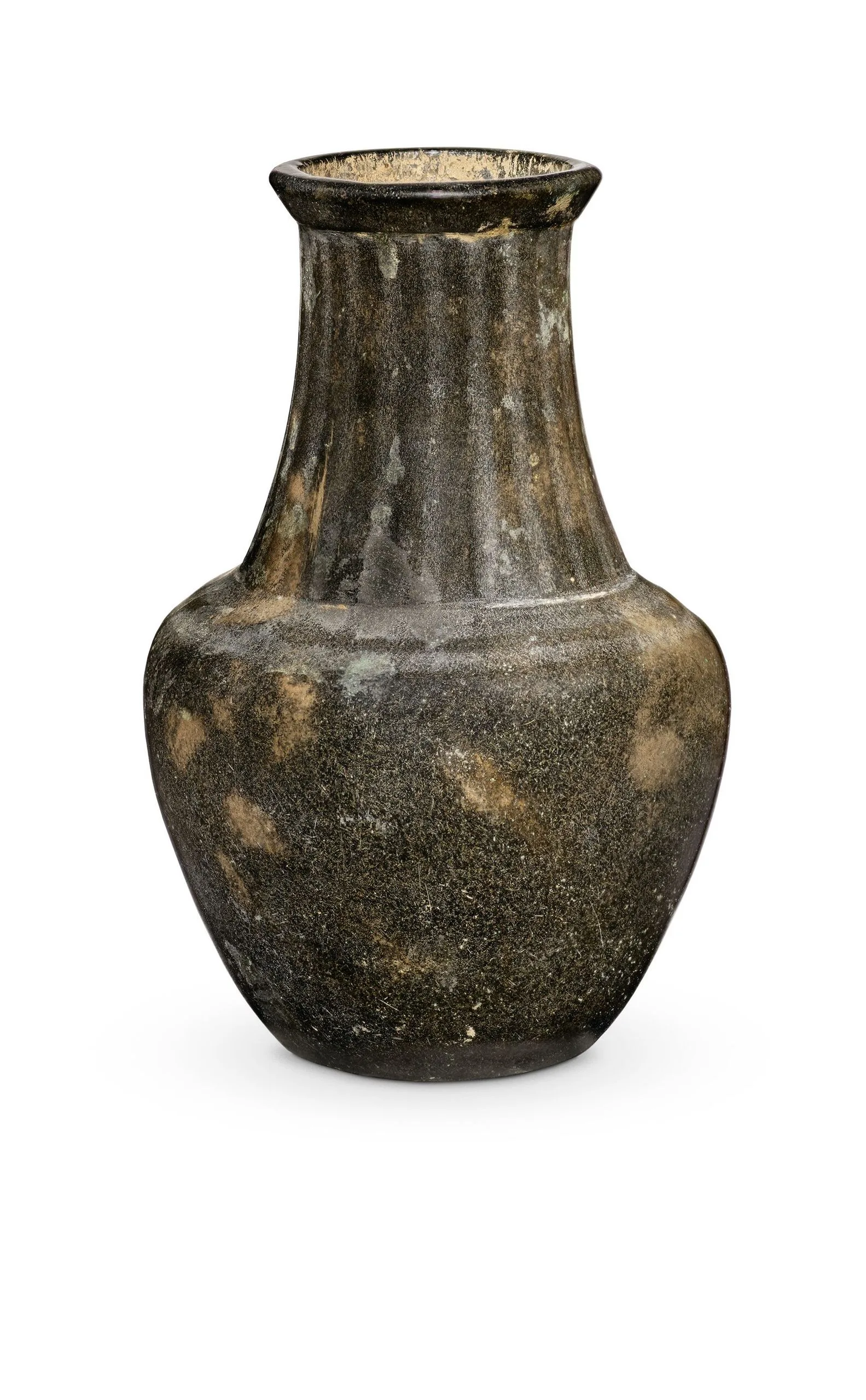
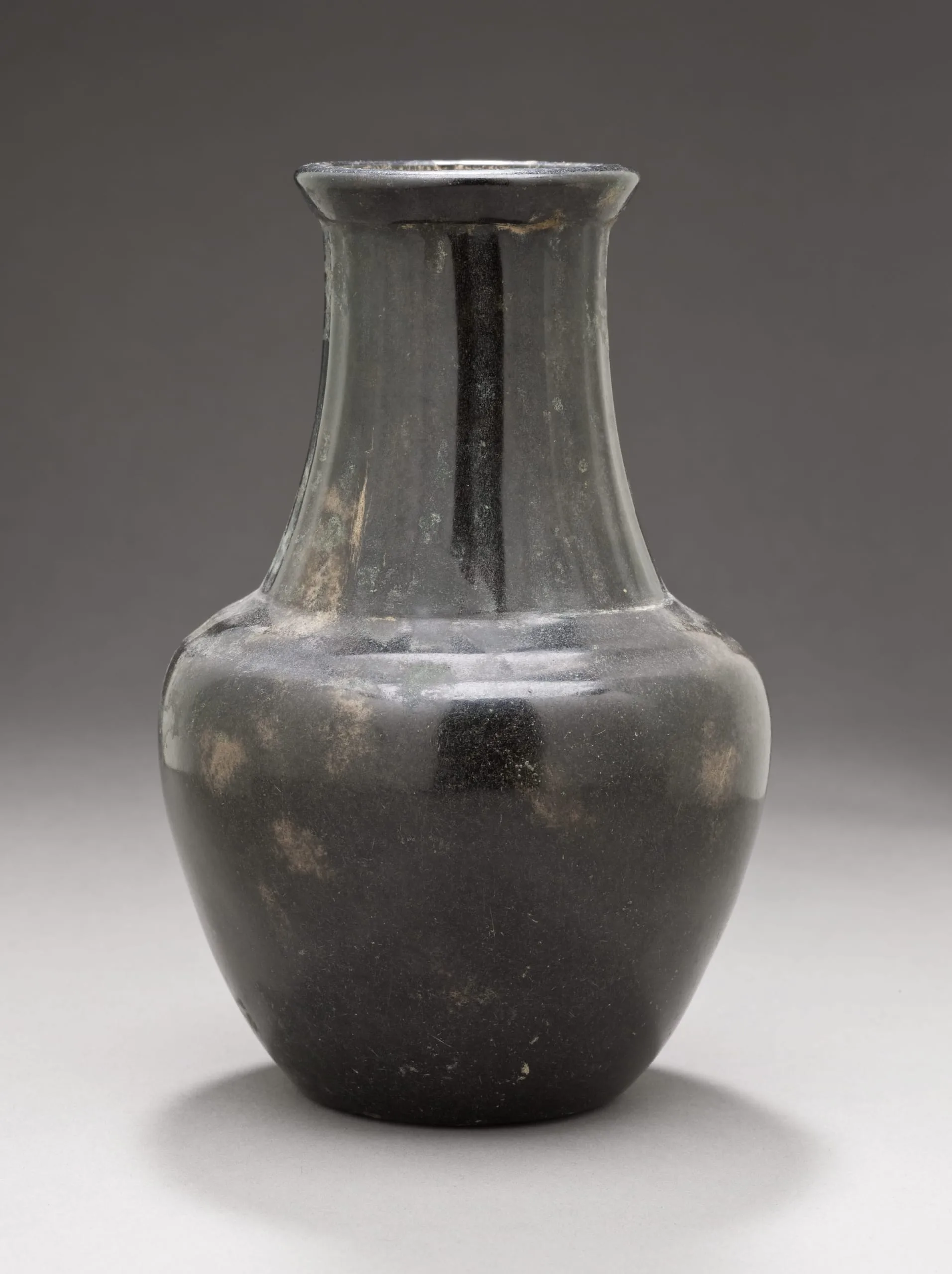
This bronze vessel, with a rounded body and tall waisted neck, possibly functioned as a small bottle. Its high tin content may have initially given it a silvery color that blackened over time. This object was likely made as a less costly substitute for a silver vessel.
In Sasanian Iran (224–651), silver was the primary material used to create deluxe vessels for elite feasting (see AC1992.152.82, and M.76.174.8). Toward the end of this period, however, metalworkers began experimenting with nonprecious metals to replicate the desired color and radiance of silver. An alloy of bronze with a high tin content offered such an alternative. Developed during the final decades of Sasanian rule and continuing into the early centuries of Islam, high-tin bronze pieces provided a more affordable option for a broader range of patrons (see M.76.97.379 and M.2002.1.568).