The region of Gandhara in present-day northwestern Pakistan and northeastern Afghanistan was an important nexus of the ancient Silk Routes and the transmission of Buddhism and Buddhist art during the Kushan Dynasty (1st–3rd century). Sirkap is an UNESCO World Heritage Site near the city of Taxila that was excavated by Sir John Marshall (1876–1958) in 1912–1930 and Sir Mortimer Wheeler (1890–1976) in 1944–45. Near Peshawar, Charsadda, formerly Pushkalavati (Lotus City), was the capital of Gandhara (6th century BCE–2nd century CE).
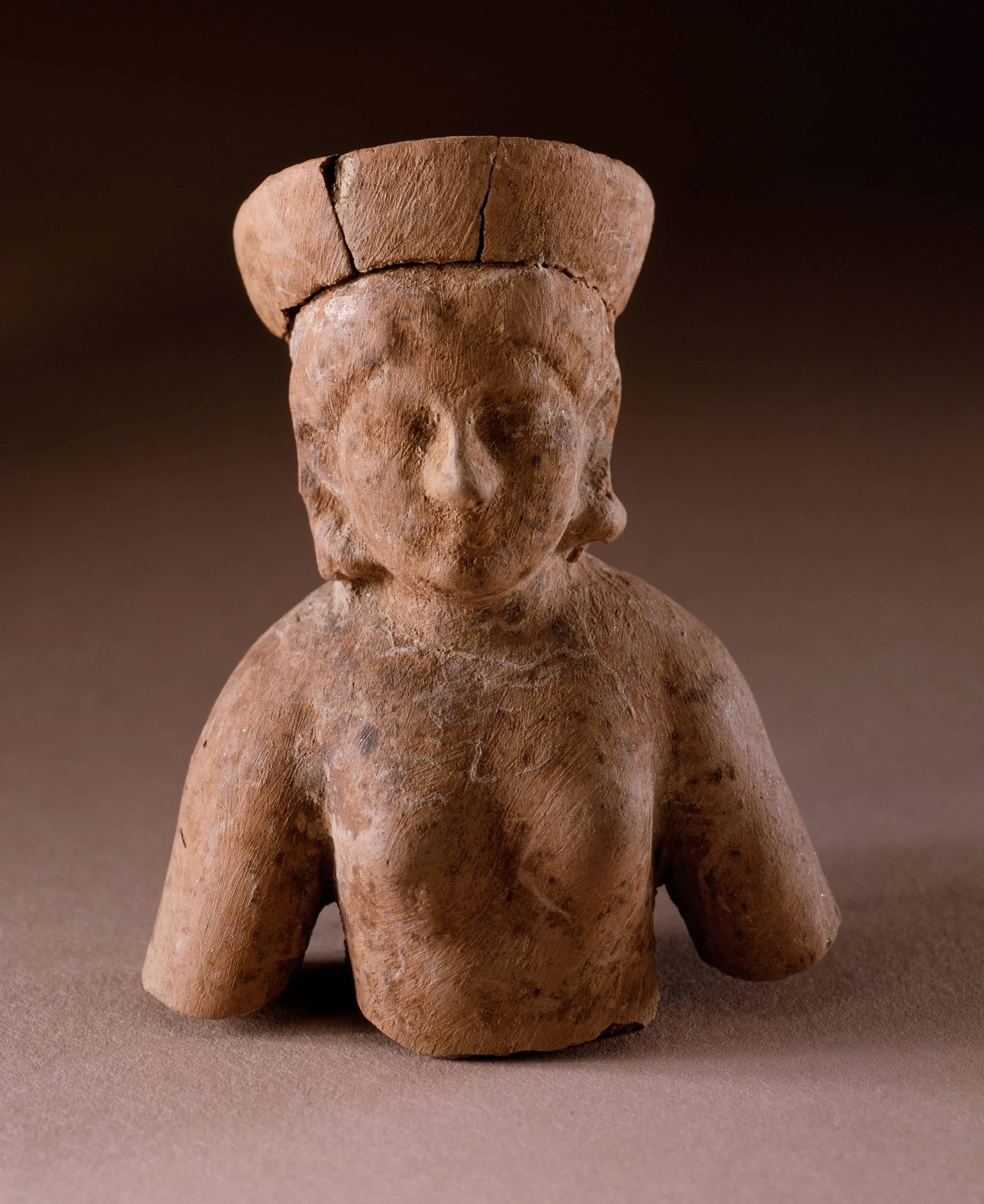
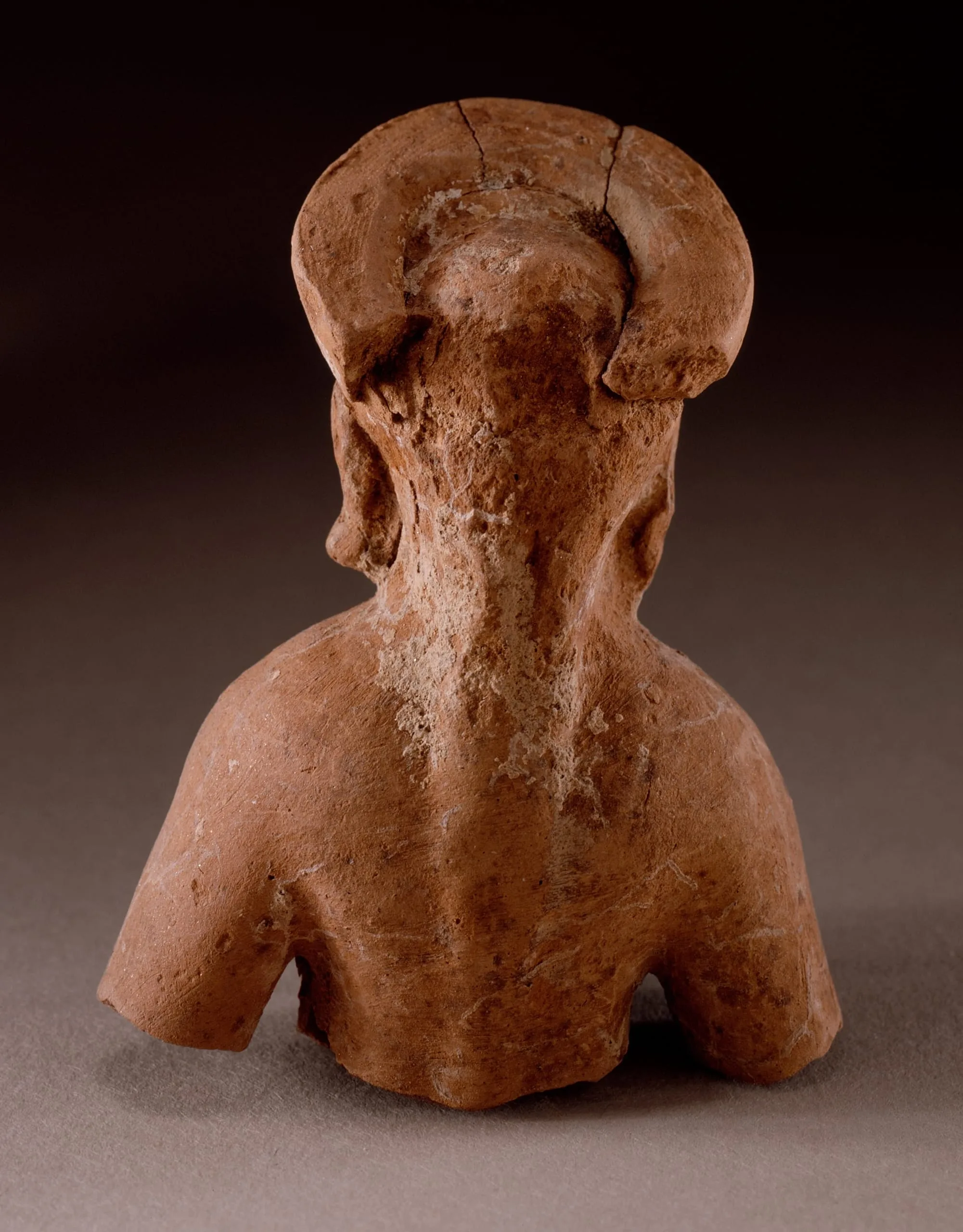
Believed to have been stylistically modelled on Greco-Roman marble sculptures of the goddess Aphrodite, earthenware fertility goddesses were discovered at Buddhist water tanks (kunds) where they were venerated in fertility and childbirth rituals by the Buddhist laity. They are sensitively fashioned in the Hellenistic style with bare breasts, slightly protruding abdomens, full hips, heavy thighs, and legs joined together. They each have a thick ponytail hanging down their back to the buttocks. Some wear a filet or wreath, which was made with a plain surface decorated with carved leaves applied separately. The figures were made in a double mode and are at least partially solid.
LACMA has five fertility goddesses from Sirkap or Charsadda (M.89.130.1–.5). Two figures are near complete (.1 and .2). The remaining three figures survive as busts only (.3–.5). One figure wears a plain filet (.4).
Comparable Fertility Goddesses are in the Cleveland Museum of Art (1977.58); and published in Amy G. Poster, From Indian Earth: 4,000 Years of Terracotta Art (Brooklyn: Brooklyn Museum, 1986), pp. 15, 117, pl. 5, no. 51