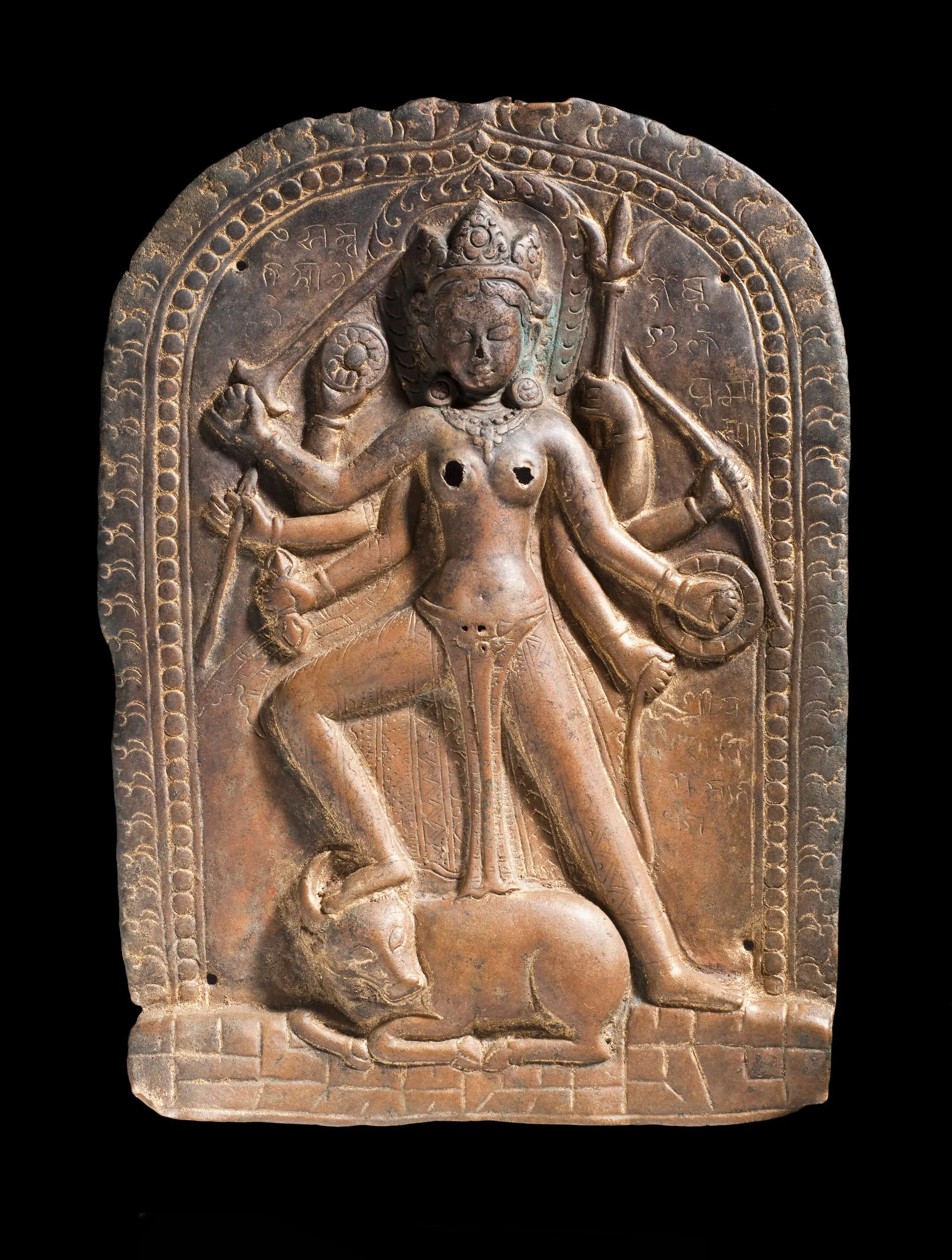
This inscribed repoussé copper alloy plaque was likely originally a metal sheath for a stone, wood, or earthenware image (kosha or kavaca). It depicts one of the most popular female deities in Hinduism, Durga (Unconquerable), in her aspect as the slayer of Mahisha, the buffalo demon. She is the powerful goddess of the battlefield who plays a vital role in the eternal struggle between good and evil. Durga was traditionally invoked by warriors before they went into battle. When the gods were unable to conquer the powerful Mahisha, who had received a boon from the god Brahma that he could only be killed by a woman, Durga was created from the energy of the gods’ combined anger to fight for them. Each god gave her a portion of his powers, and she carries their various weapons in her multiple arms, including the trident of Shiva, the discus of Vishnu, and the spear of Karttikeya. The myth of Durga's slaying of the buffalo demon may be interpreted primarily in sectarian terms, as proclaiming the powers of the goddess over those of the gods; anthropologically, however, it may also represent the assimilation into mainstream Hinduism of a totemistic buffalo cult.
The nimbate crowned goddess stands goddess stands triumphantly over the buffalo demon in a militant posture (alidha asana) with her right foot subduing his head. She has eight arms that carry her attributes of a thunderbolt (vajra), arrow, sword, discus, trident, bow, and shield (clockwise from the lowermost right hand). Her lowermost left hand holds the tail of the placid buffalo that functions visually as her mount seated on a mountainous landscape representing the Himalayas rather than as her slain enemy combatant. This iconographic feature is unusual for Nepalese representations and parallels the more benign portrayals of the buffalo in Indonesian art (see a Central Javanese stone image attributed to the 9th-10th century, M.79.7). A flaming aureole (prabhavali) with a pearl border surrounds the image.
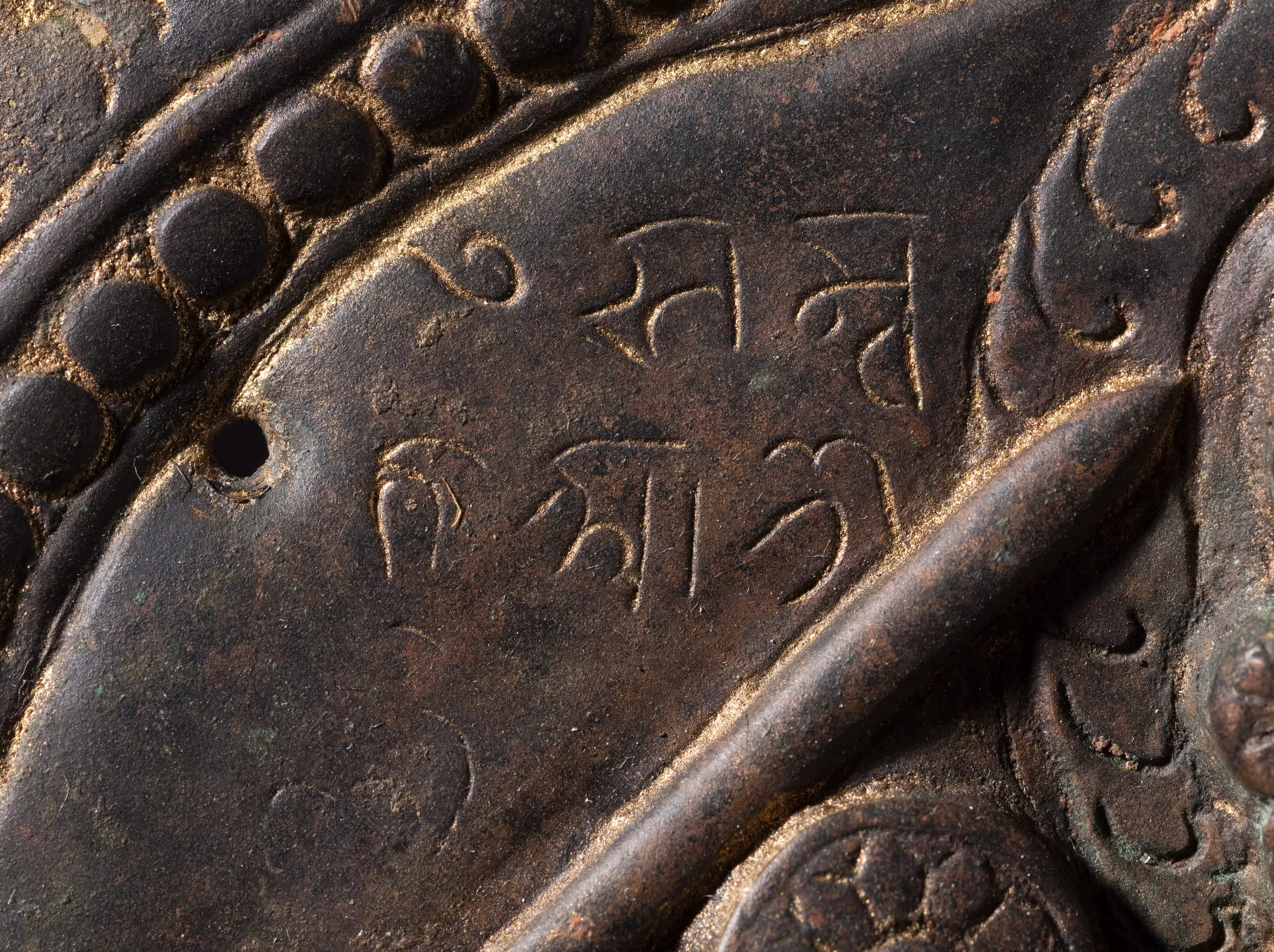
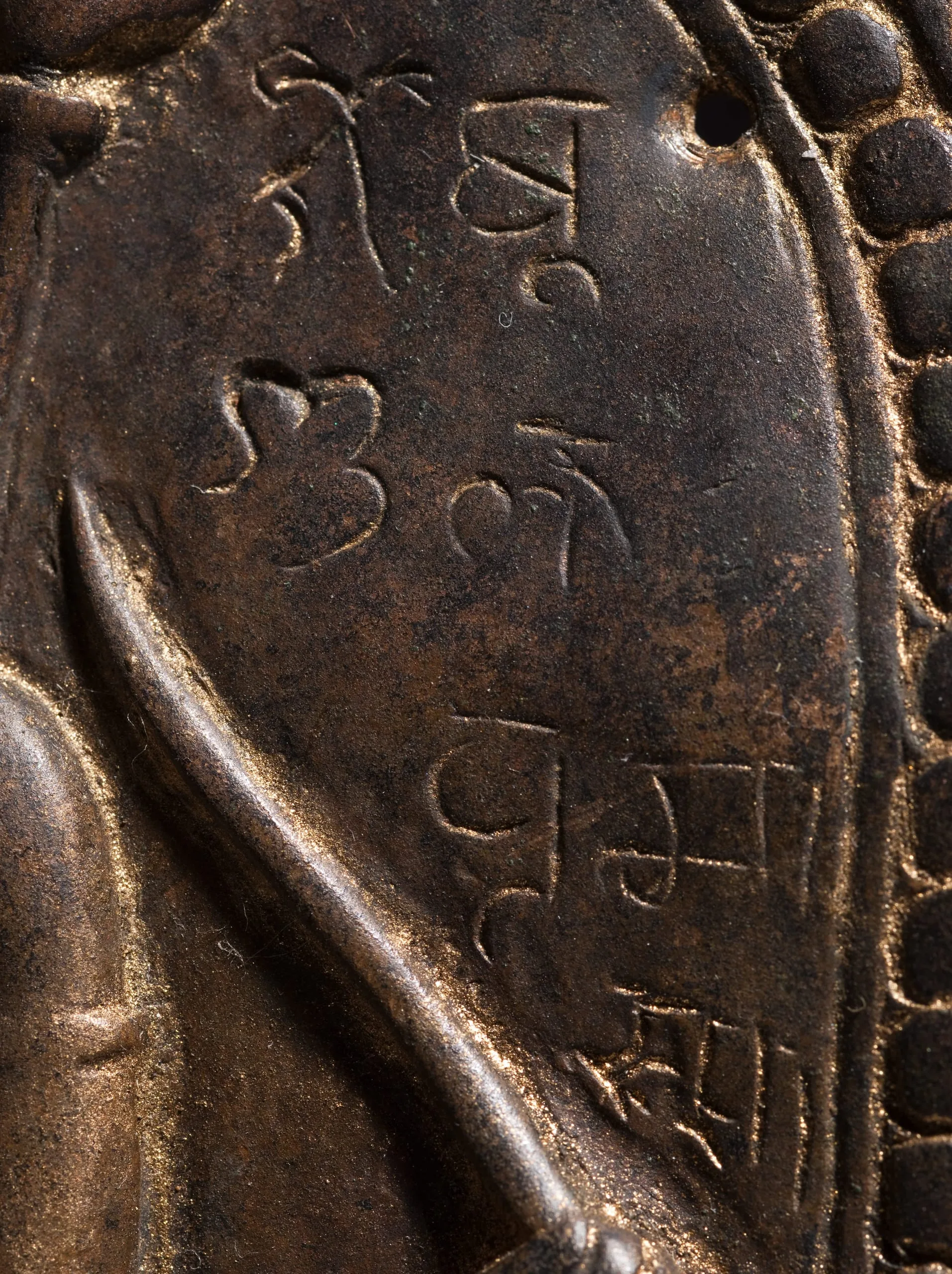
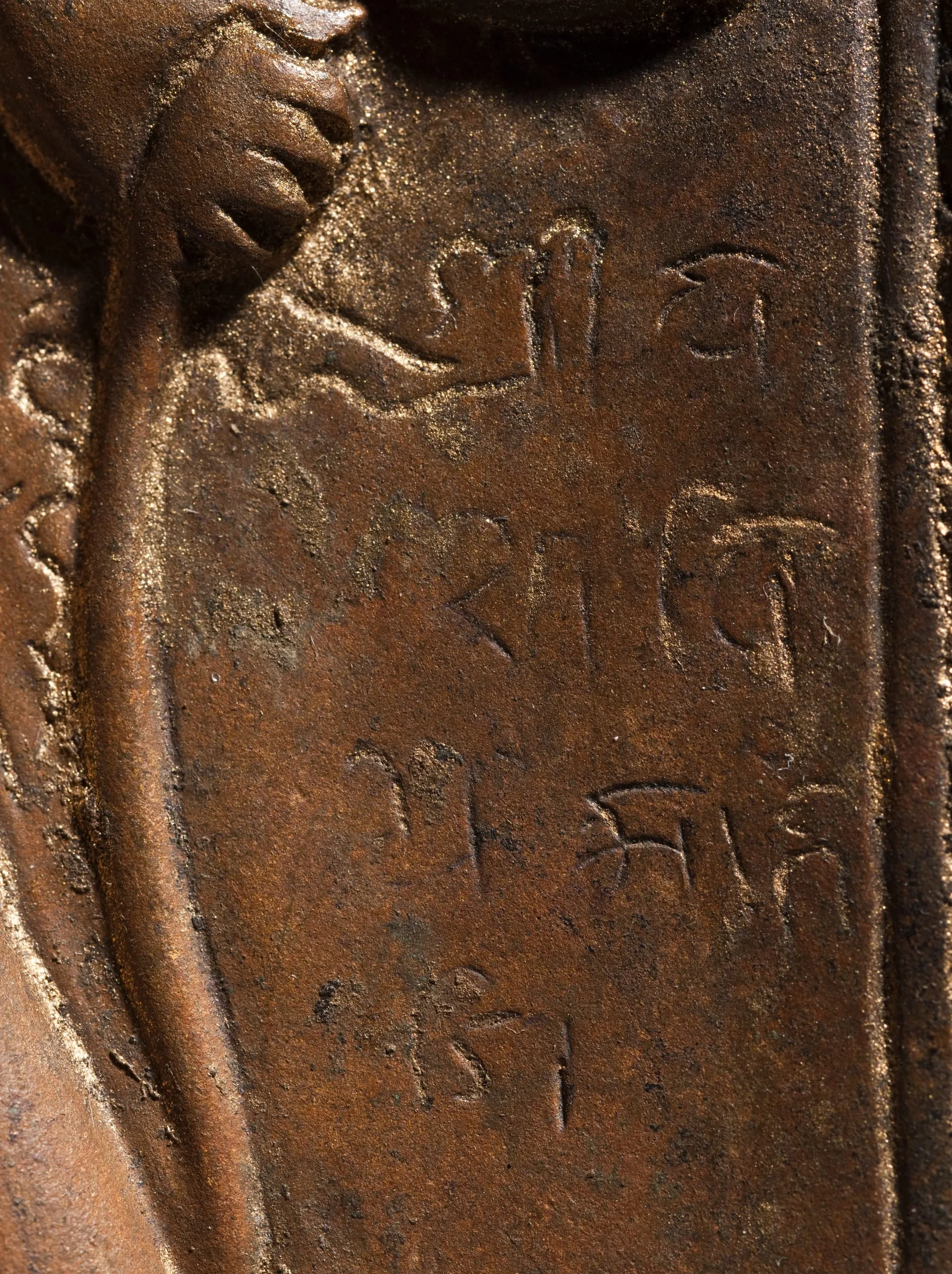
A devanagari inscription on the aureola’s plain inner area beside her head and left leg furnishes a date of (Nepal samvat) 310, corresponding to 1090 CE. The donor’s name is illegible. (See Ian Alsop, "Repousse in Nepal," Orientations 17: 7 (July 1986), pp. 17-18, Fig. 4.)
See also M.80.187 and M.85.125.