LACMA

ShopMembershipMyLACMATickets
LACMA
Los Angeles County Museum of Art
5905 Wilshire Blvd.
Los Angeles, CA 90036
info@lacma.org
(323) 857-6000
Sign up to receive emails
Subscribe
© Museum Associates 2026
  • About LACMA
  • Jobs
  • Building LACMA
  • Host An Event
  • Unframed
  • Press
  • FAQs
  • Log in to MyLACMA
  • Privacy Policy
© Museum Associates 2026
Collections

Antonio Montauti
The Triumph of Neptune and Europacirca 1735-1740

On view:
Geffen Galleries, floor 2
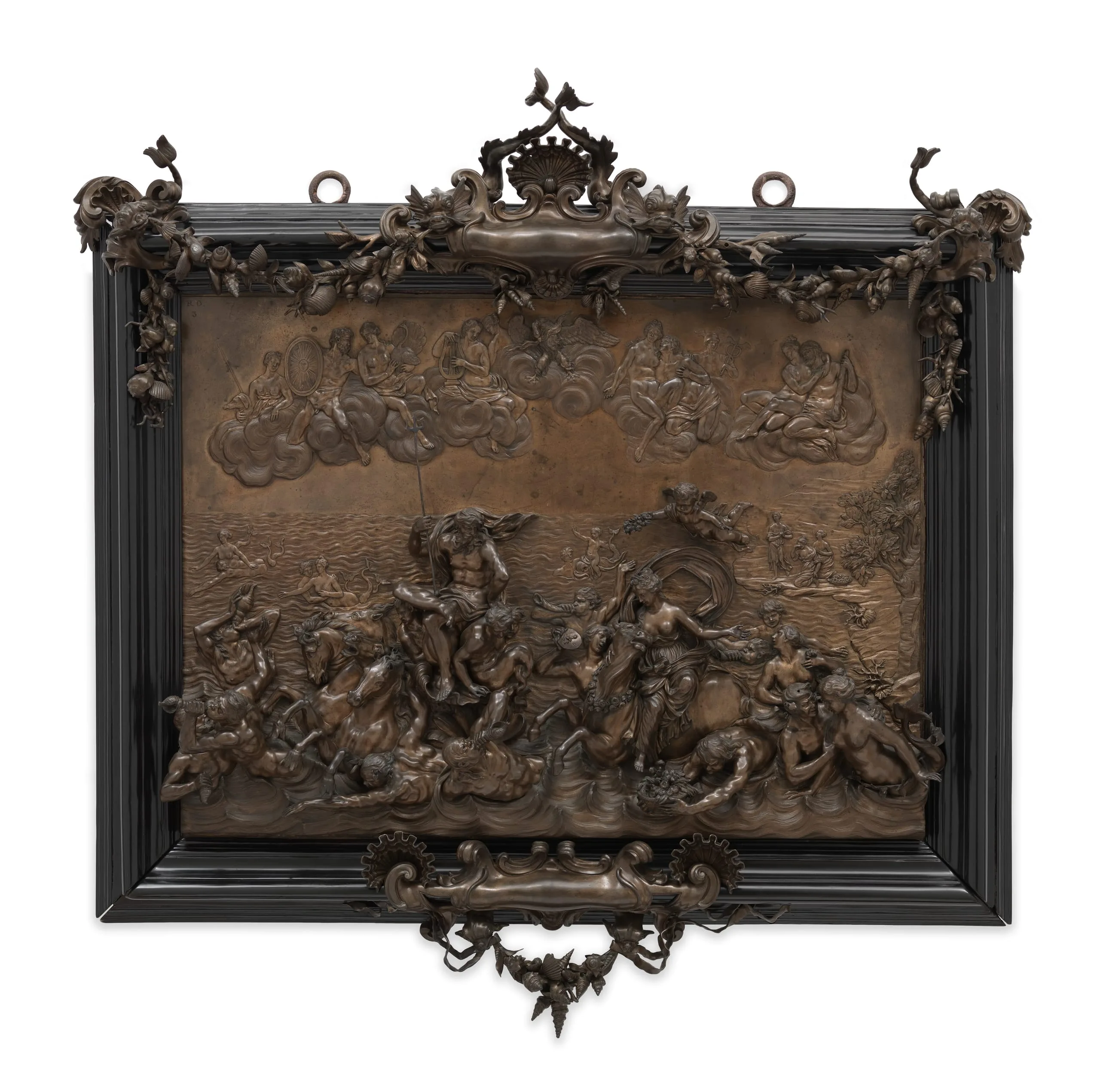
Large bronze relief plaque in an ebonized frame, depicting a sea deity with trident amid surging waves, tritons, and nymphs, with figures reclining on clouds above

Antonio Montauti, The Triumph of Neptune and Europa, circa 1735-1740, Los Angeles County Museum of Art, Purchased with funds provided by Anna Bing Arnold, photo © Museum Associates/LACMA

Artist or Maker
Antonio Montauti
Italy, Florence, circa 1685-after 1740
Title
The Triumph of Neptune and Europa
Date Made
circa 1735-1740
Medium
Bronze relief in modern ebonized wood frame with bronze mounts
Dimensions
Overall with frame: 40 1/2 × 41 3/4 × 6 7/8 in. (102.87 × 106.05 × 17.46 cm)
Credit Line
Purchased with funds provided by Anna Bing Arnold
Accession Number
M.83.52
Classification
Sculpture
Collecting Area
European Painting and Sculpture
Curatorial Notes

The Triumph of Neptune and Europa is inspired by a story in classical Greek mythology in which Zeus, king of the gods, becomes infatuated with the princess Europa. Variations of the myth recount that Zeus either sent a bull to seduce her or disguised himself as a bull to abduct her. The Florentine artist Antonio Montauti, trained as a medalist, constructed a dense composition in which Neptune, the Roman god of water, leads Zeus and Europa through a parade in supposed triumph. High- and low-relief surfaces direct focus toward the central figures of Neptune and Europa, who are rendered with near-sculptural three-dimensionality. In the eighteenth century, Florentine artists were renowned for their facility with bronze. Here, in addition to the figural reliefs, Montauti produced the elaborate bronze mounts on the wood frame. The maritime theme is emphasized by dolphins encircling the central cartouche and by the decorative elements at the top corners, which include seashells and draped ribbons. Though the cartouche is uninscribed, its inclusion and placement underscore the object’s prominence.

Executed between 1735 and 1740, The Triumph of Neptune and Europa may have been created for Pope Clement XII of the Corsini family. The lively and amorous depiction of mythological figures, including Tritons, Nereids, and Olympian deities, suggests that the relief was commissioned to celebrate a marriage in the pope’s family.

2024
Selected Bibliography
  • Schaefer, Scott, and Peter Fusco. European Painting and Sculpture in the Los Angeles County Museum of Art: an Illustrated Summary Catalogue. Los Angeles: Los Angeles County Museum of Art, 1987.
  • Phil Freshman. Los Angeles County Museum of Art Report, July 1, 1981-June 30, 1983. Los Angeles: Los Angeles County Museum of Art, 1984.
  • Schmidt, Eike D., Sandro Bellesi, and Riccardo Gennaioli, editors. Plasmato dal fuoco: la Scultura in Bronzo nella Firenze degli Ultimi Medici. Firenze: Galleria degli Uffizi, 2019.

Related Unframed

This Weekend at LACMA: Visions of the South Opens, Art Meets Science in Talk with Yale Professor, Second Week of Hacienda Heights Art+Film Lab, and More!
  • February 28, 2014
A Grand Tour of LACMA
  • July 8, 2010