- Artist or Maker
- Ruknuddin
India, active circa 1650-1697 - Title
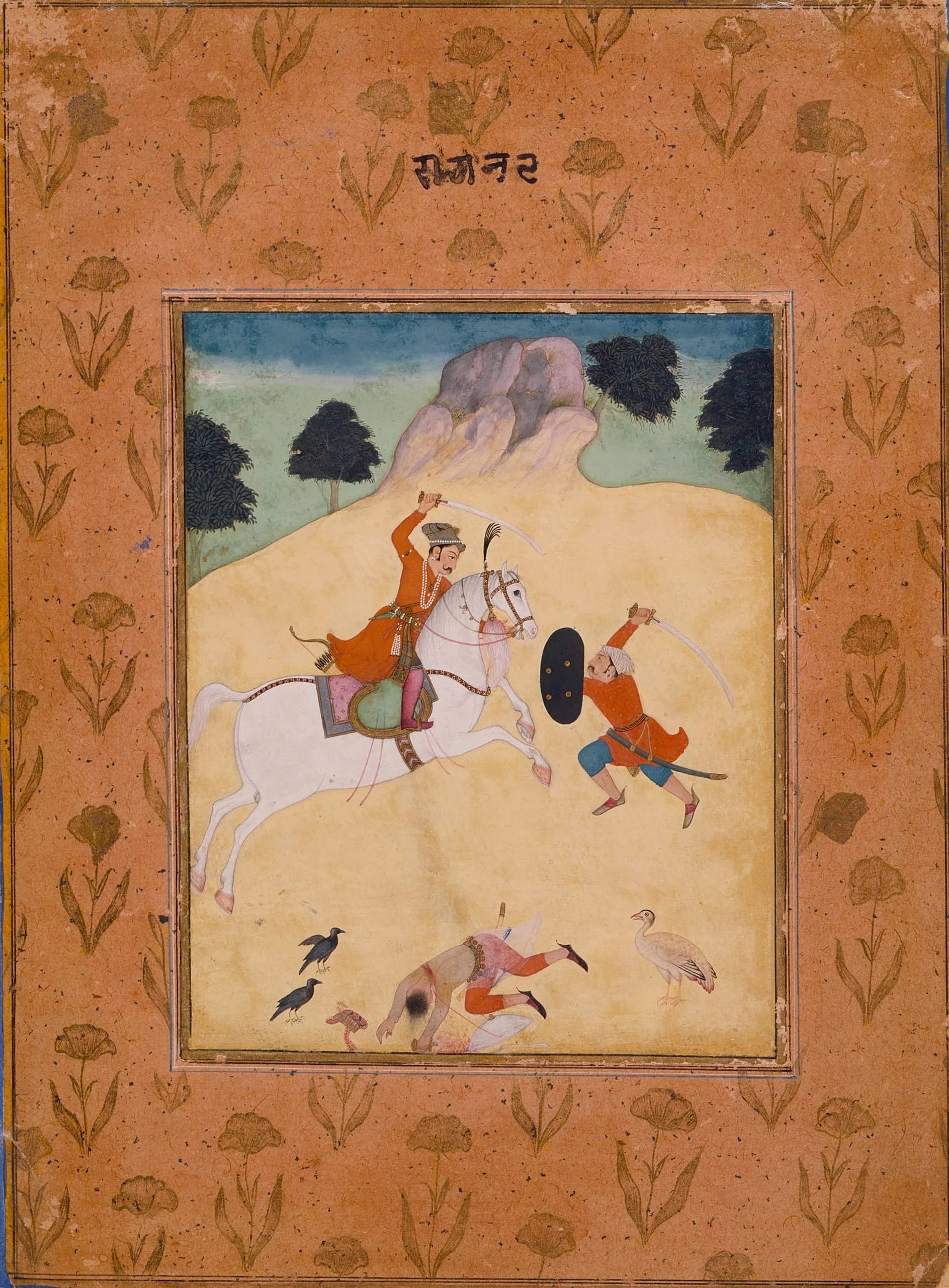
- Nata Ragini, Second Wife of Bhairava Raga, Folio from a Ragamala (Garland of Melodies)
- Date Made
- circa 1675
- Medium
- Opaque watercolor, gold, and ink on paper
- Dimensions
- Image: 5 15/16 x 4 11/16 in. (15.08 x 11.9 cm); Sheet: 10 1/2 x 7 1/8 in. (26.67 x 18.09 cm)
- Accession Number
- M.83.105.15
- Curatorial Notes
Although two inscriptions identify the subject as “Nata Raga” (upper border and on the reverse), it is characterized as a feminine melody (ragini) in the predominant ragamala (garland of melodies) classification system generally known as the Rajasthani system. It is a heroic melody evoking a martial spirit, hence its imagery of a battling warrior or warriors. It is associated with late afternoon or early evening and Summer (May–July). The ostensive gender disparity between a feminine melody and male combatants resulted in some pictorial traditions depicting the warrior as female. (For example, see Nata Raginis in the Philadelphia Museum of Art, 1987-52-3, and National Museum, New Delhi, 60.811). It also underlies the mislabeling of the melody as a male (Nata Raga), such as done here, as Nata is not one of the six Ragas of the primary ragamala classification systems.
Here, a male Rajput warrior on a rearing white stallion raises his sword to strike a swordsman on foot. A nearly decapitated swordsman lies fallen on the ground beside his broken sword. Two crows and a waterfowl observe his plight. Another Bikaneri depiction of Nata Ragini featuring an identical composition, apart from the embellishments of the stream at the bottom and city in the distance, is in Metropolitan Museum of Art, New York (1980.526.2). Painted in 1714 by Mohamed (active early 18th century), it is a later copy of this work inscribed to the celebrated master artist Ruknuddin (active circa 1650-1697).
- Selected Bibliography
- Rosenfield, John. The Arts of India and Nepal: The Nasli and Alice Heeramaneck Collection. Boston: Museum of Fine Arts, Boston, 1966.