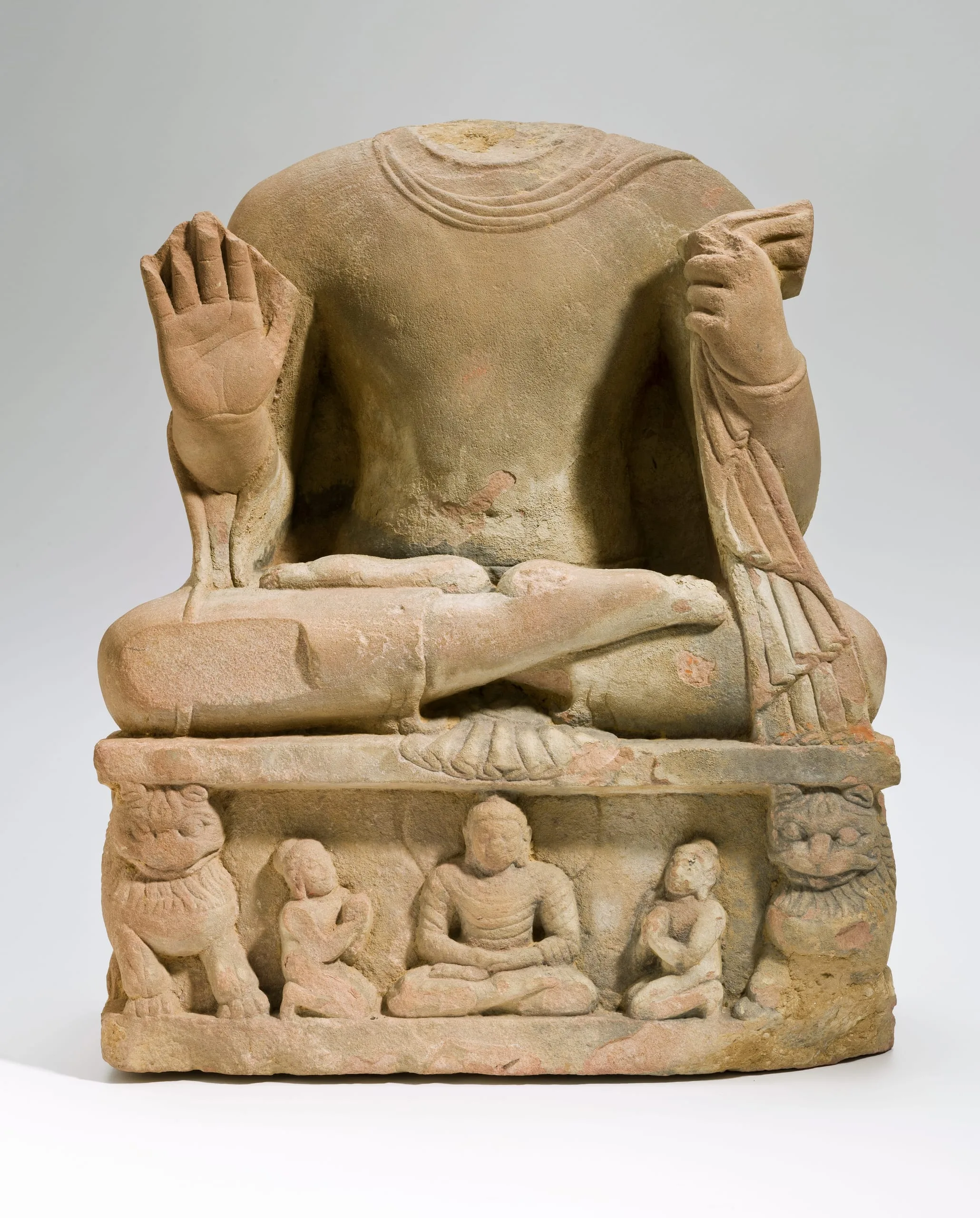
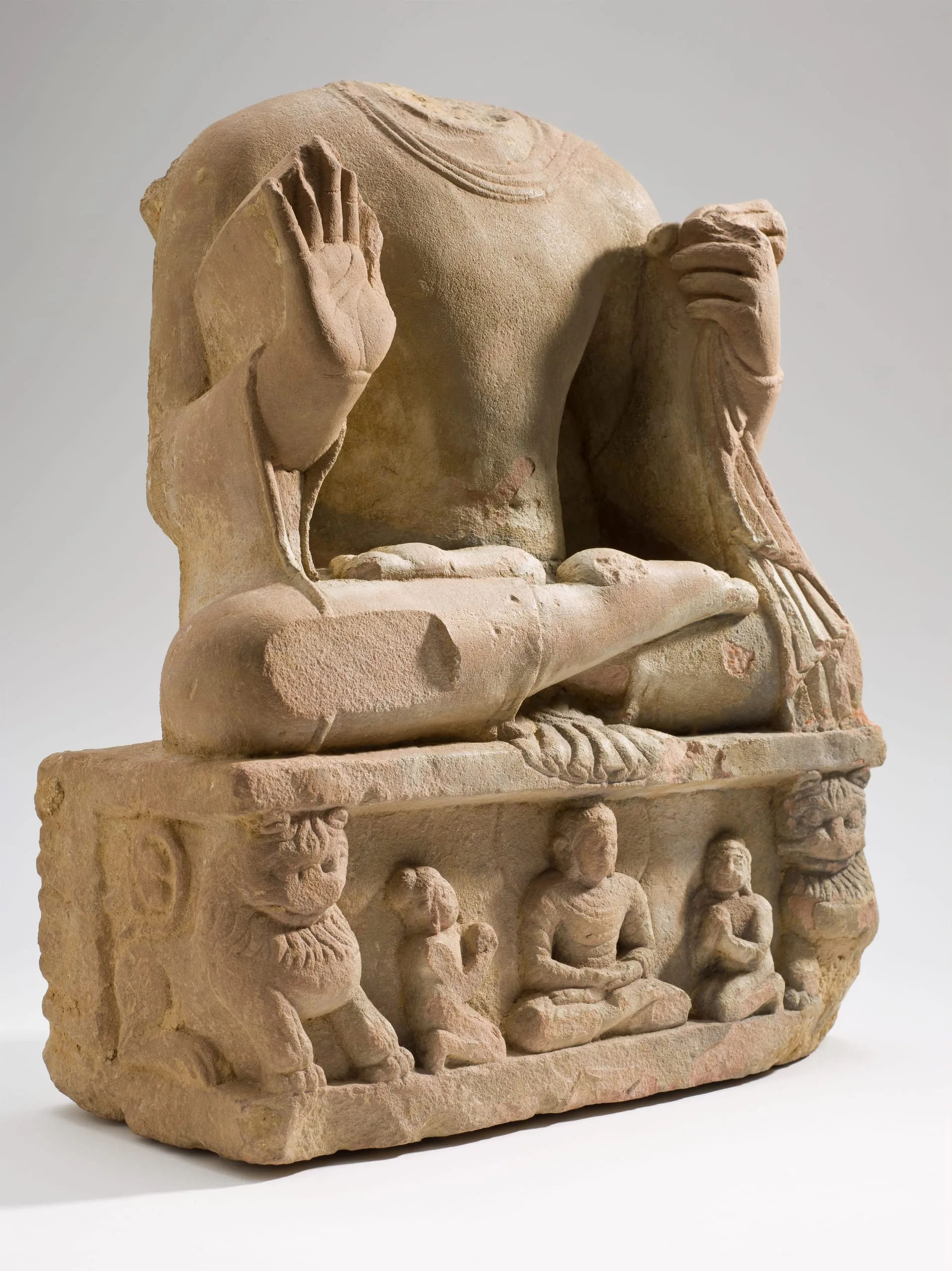
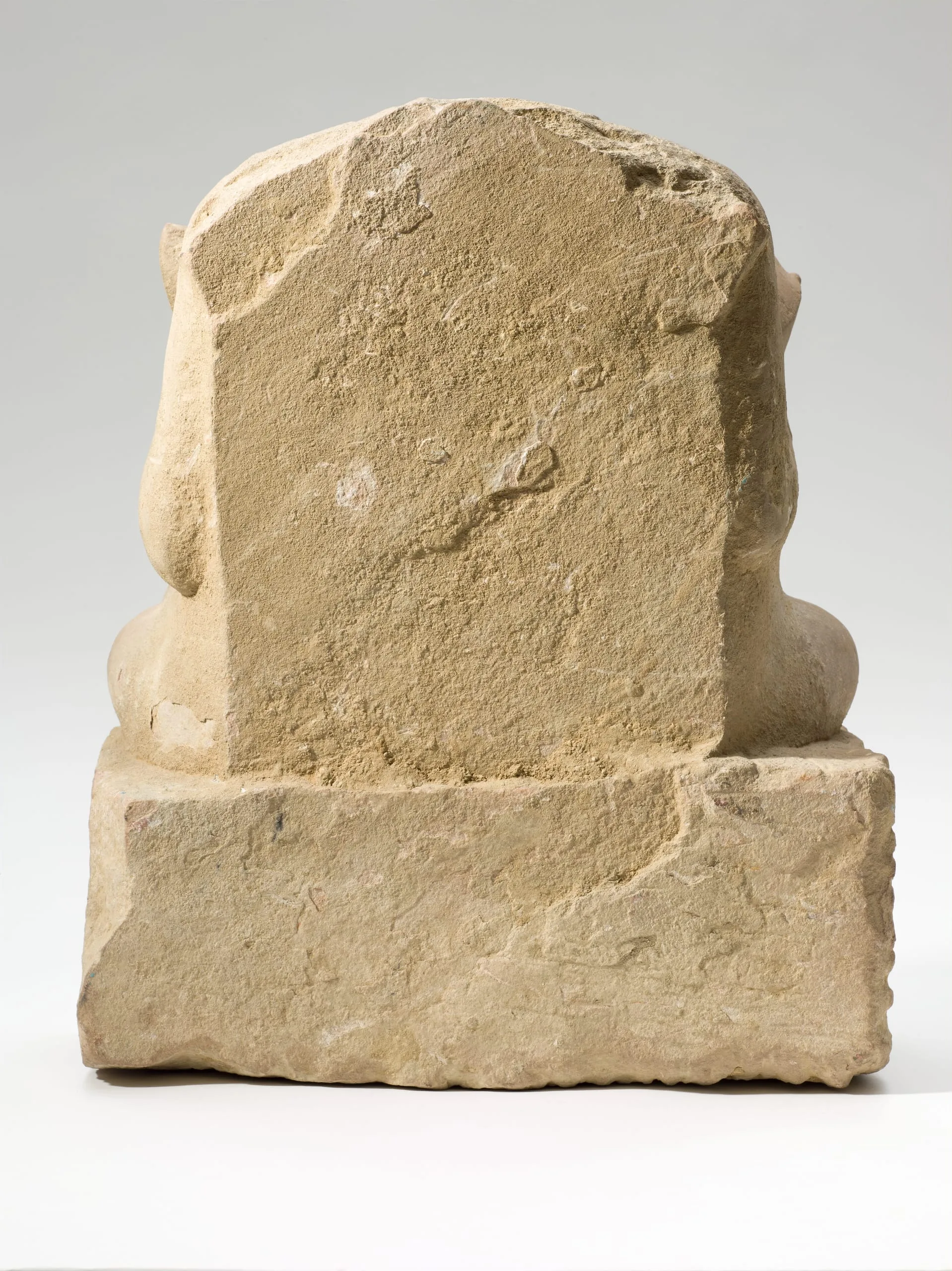
This now-headless image of Buddha Shakyamuni was attributed to Mathura, 350-400 by Pratapaditya Pal on stylistic grounds and that he believed the medium to be buff sandstone, as with several Buddha images recovered in 1976 from the site of Govindnagar in the western suburbs of Mathura (Pal 1986, pp. 238-239, no. S115). A technical analysis performed by LACMA’s Conservation Department in 2015, however, determined that the medium of the LACMA Buddha is actually pink sandstone with cream-colored surface accretions (quartz arenite with recrystallized calcite accrual due to burial). Moreover, the stone used for the principal Govindnagar Buddha used in Pal’s analysis, now in the Government Museum, Mathura (76.26), is made of the renowned buff-colored sandstone with black inclusion spots commonly but incorrectly identified as "Chunar" sandstone. (See Stephen Markel, "Reattribution of an Important Early Indian Buddha Image in the Los Angeles County Museum of Art," in Temple Architecture and Imagery of South and Southeast Asia. Prasadanidhi: Papers Presented to Professor M.A. Dhaky, ed. P. Dhar and G. Mevissen (New Delhi: Aryan Books International, 2016), pp. 263-264, and 271, nt. 16.) Thus, while the exact origin of the pink sandstone used for the LACMA Buddha has yet to be discovered, the sculpture’s predominant Mathura stylistic characteristics must be given more analytical weight in analyzing its place of carving than the specific origin of its atypical stone. See also M.79.83.
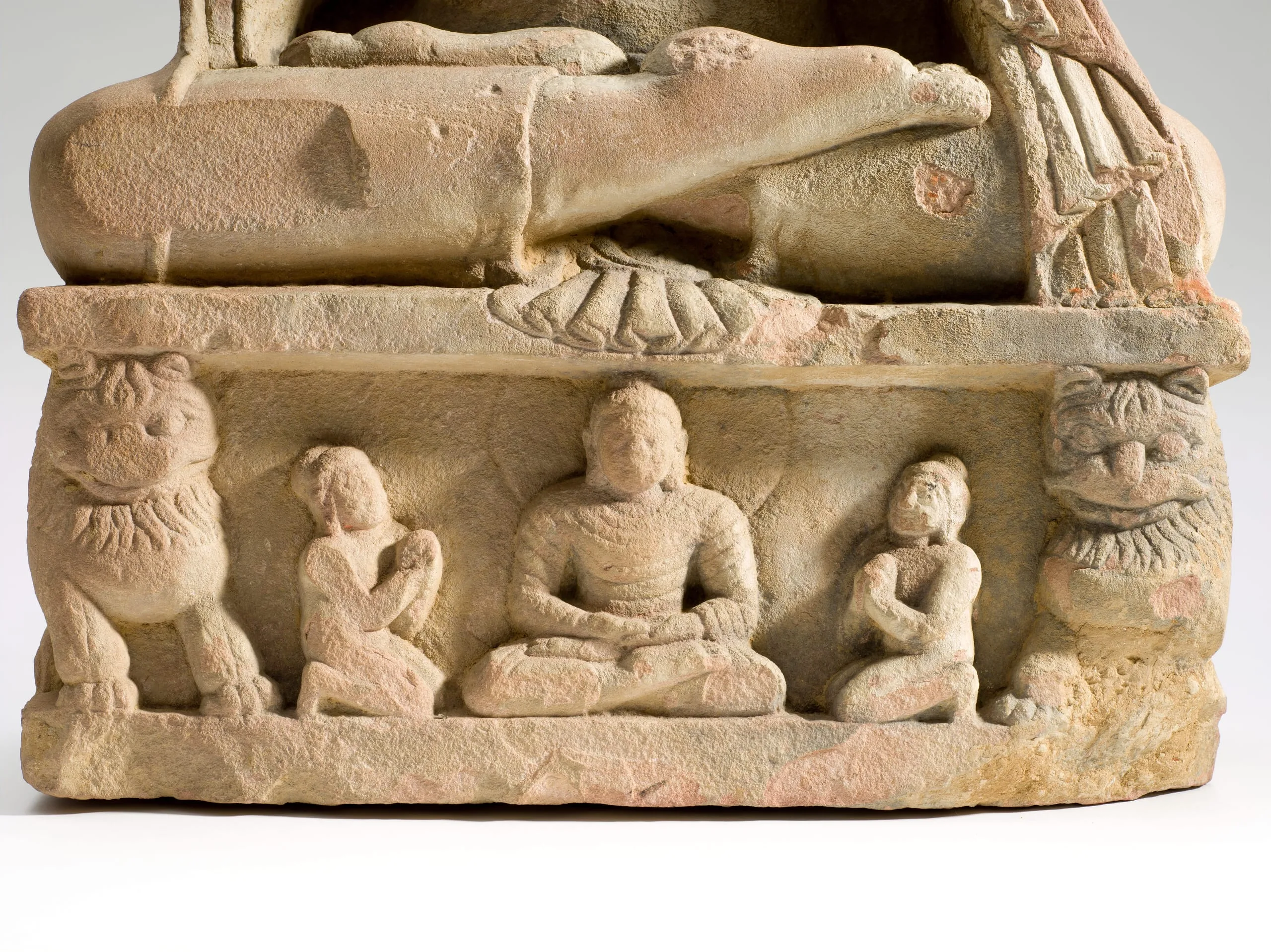
The LACMA Buddha is stylistically incongruous in that it features two disparate styles of drapery used for the Buddha’s clothing. The principal Buddha’s robe is transparent and contours to the body, resulting in the famous "wet look" associated with Gupta sculptures made at Sarnath, Uttar Pradesh, as well as those unearthed at Govindnagar. This Buddha displays his right hand in the gesture of reassurance (abhaya mudra). He holds the hem of his garment in his left hand. In contrast, the smaller Buddha seated in the meditation posture (padma asana) on the lion throne pedestal wears a pleated robe typical of Mathura sculptures made of the distinctive mottled red Sikri sandstone. He may represent the future Buddha, Maitreya. He is flanked by two worshippers.