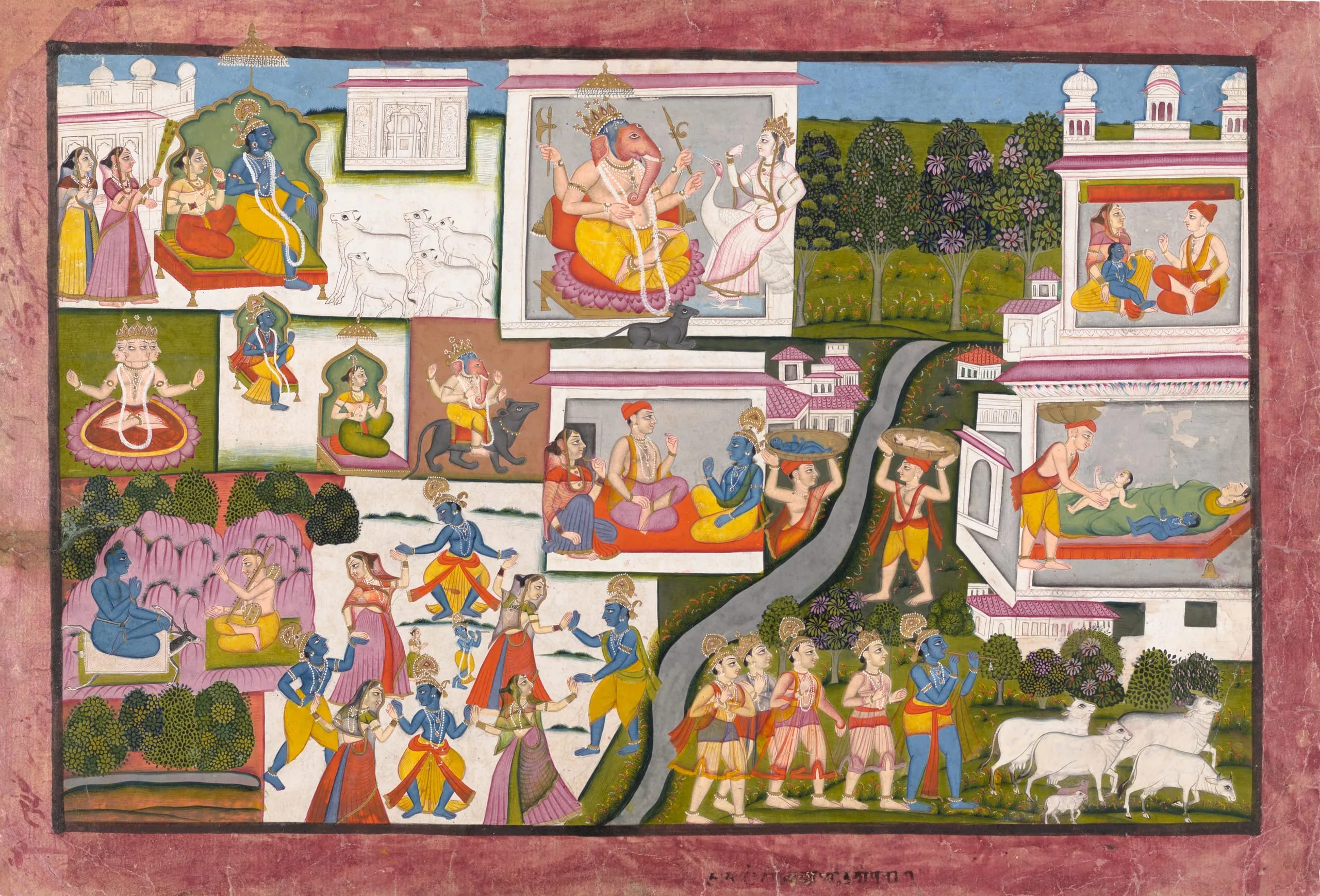
The Bhagavata Purana (Ancient Stories of the Lord) is traditionally ascribed to the legendary poet-sage Vyasa in the 8th-10th century CE. It stresses the path of devotion (bhakti) to Krishna, the eighth incarnation of Vishnu, the Hindu God of Preservation. To fulfill his role as the guardian of the world and savior of humanity, Vishnu appears as a succession of heroic animals and semi-mortal saviors, called avatars, through which he intervenes in times of crisis or unrighteousness.
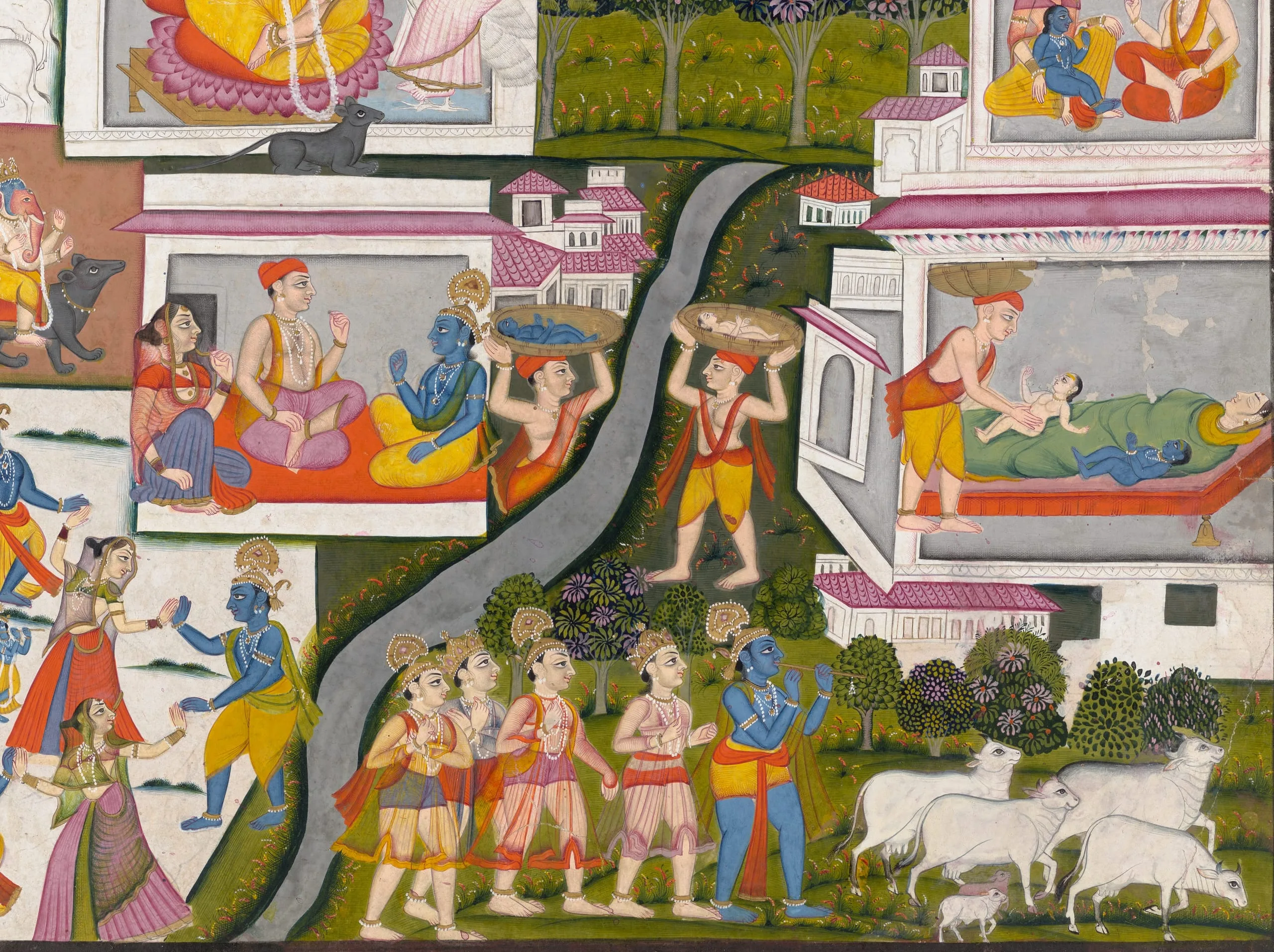
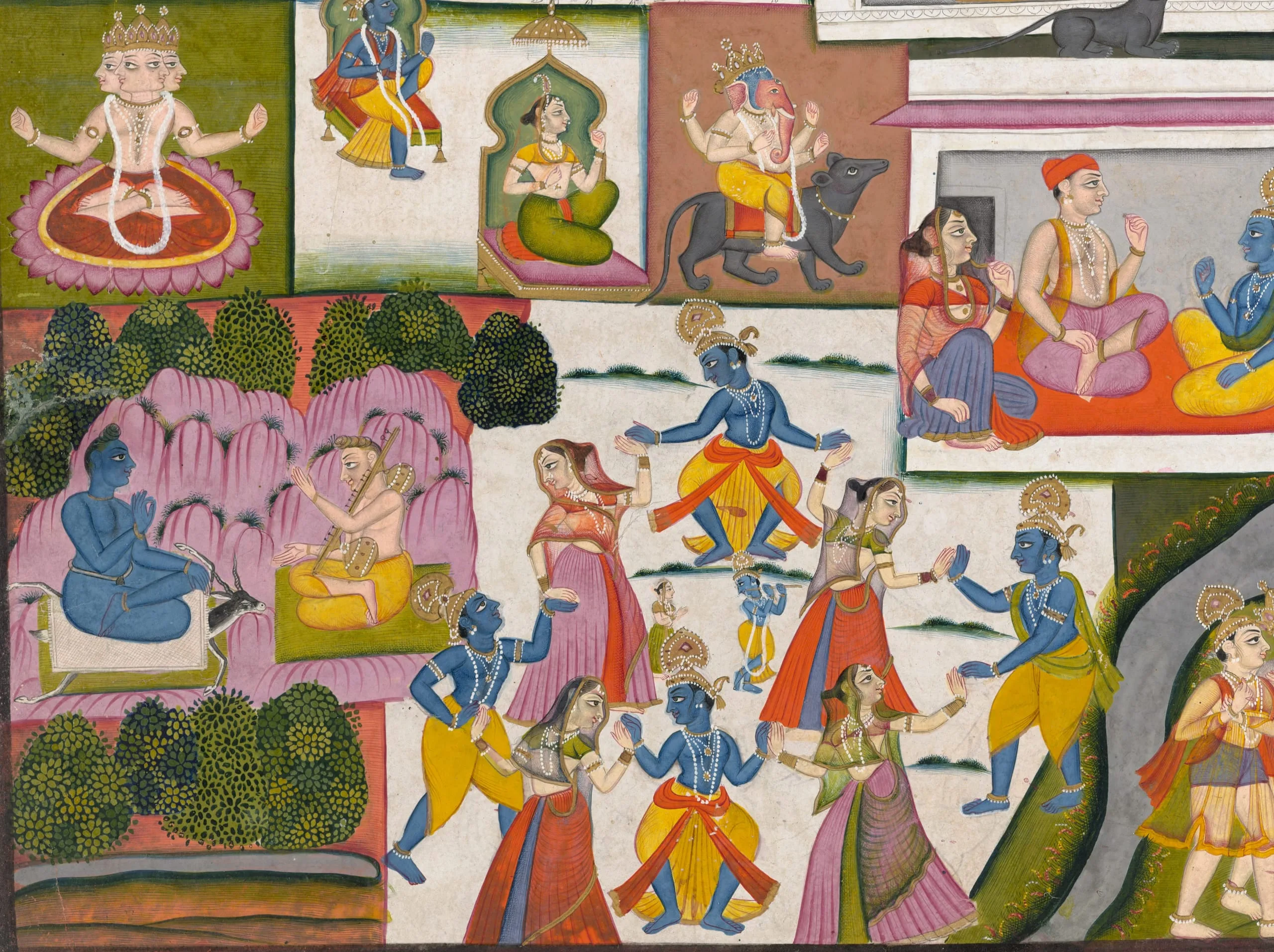
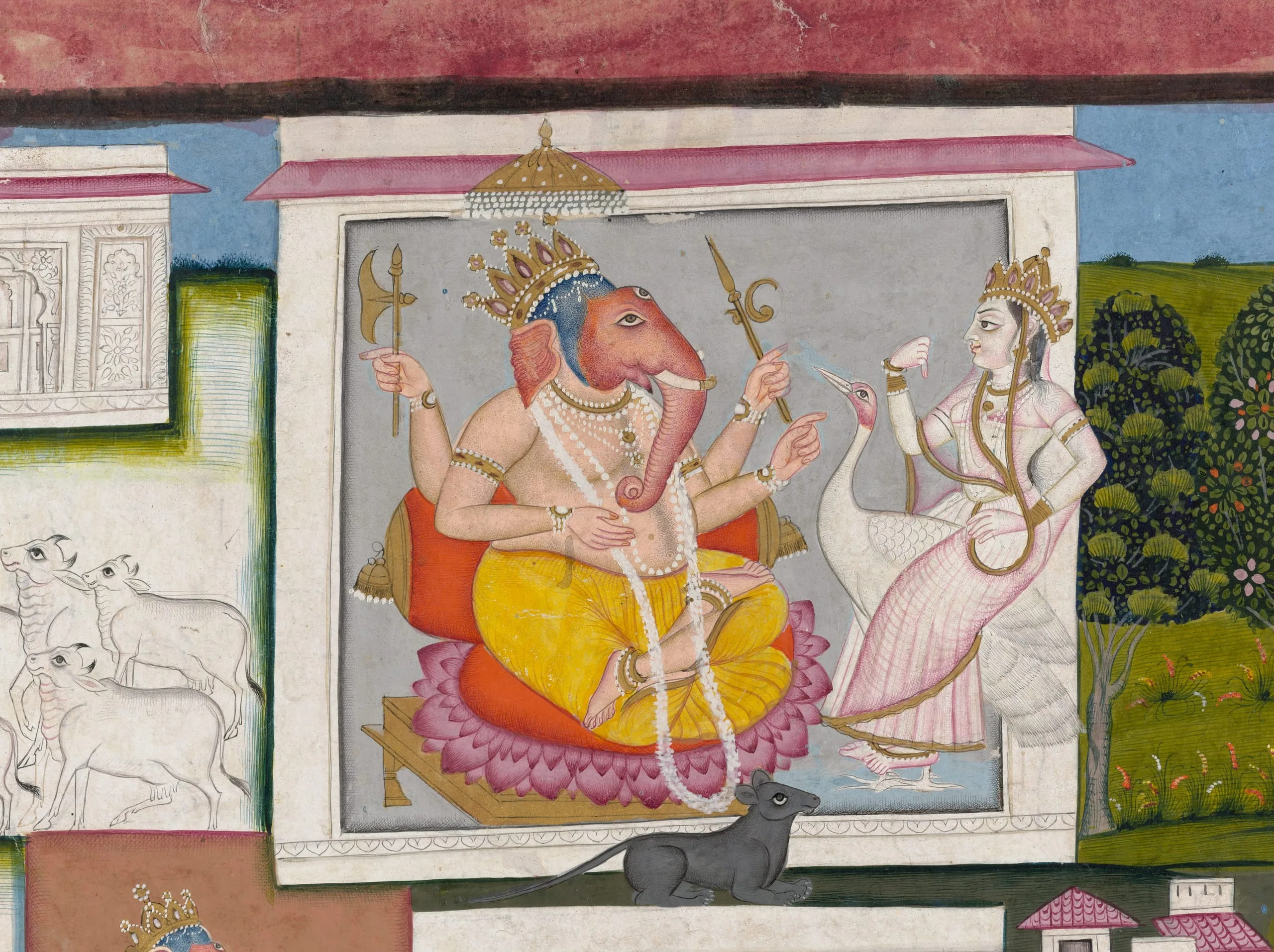
This multi-vignette illustration depicts several episodes from the life of Krishna, including the exchange of baby Krishna for Yashoda’s daughter by Krishna’s father Vasudeva fording the Yamuna River (center and right), Krishna fluting with the cowherds (gopas) in Vrindavan (lower right), Krishna's Dance of Delight (Rasa Lila) (lower center), and Krishna enthroned with Radha (upper left). The visual invocatory deities, the elephant-headed Ganesha and Sarasvati riding her swan mount, are in conversation in a pavilion (upper center). On the left area the four-headed Brahma seated on a lotus and an ascetic listening to a musician in a landscape.
Folios from comparable dispersed Bhagavata Purana series attributed to Datia, circa 1780-1800, are in the Art Gallery of New South Wales, Sydney (110.2021), Ashmolean Museum, Oxford University (EA1985.13), Chhatrapati Shivaji Maharaj Vastu Sangrahalaya, Mumbai (L82.2/4), and Museum Rietberg, Zurich (2010.7).