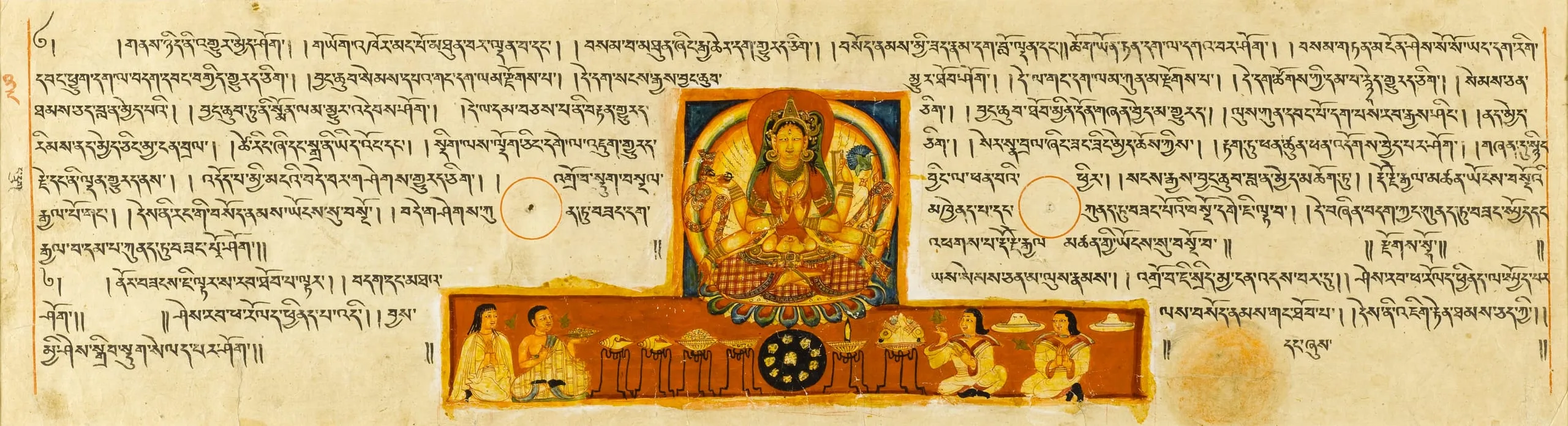
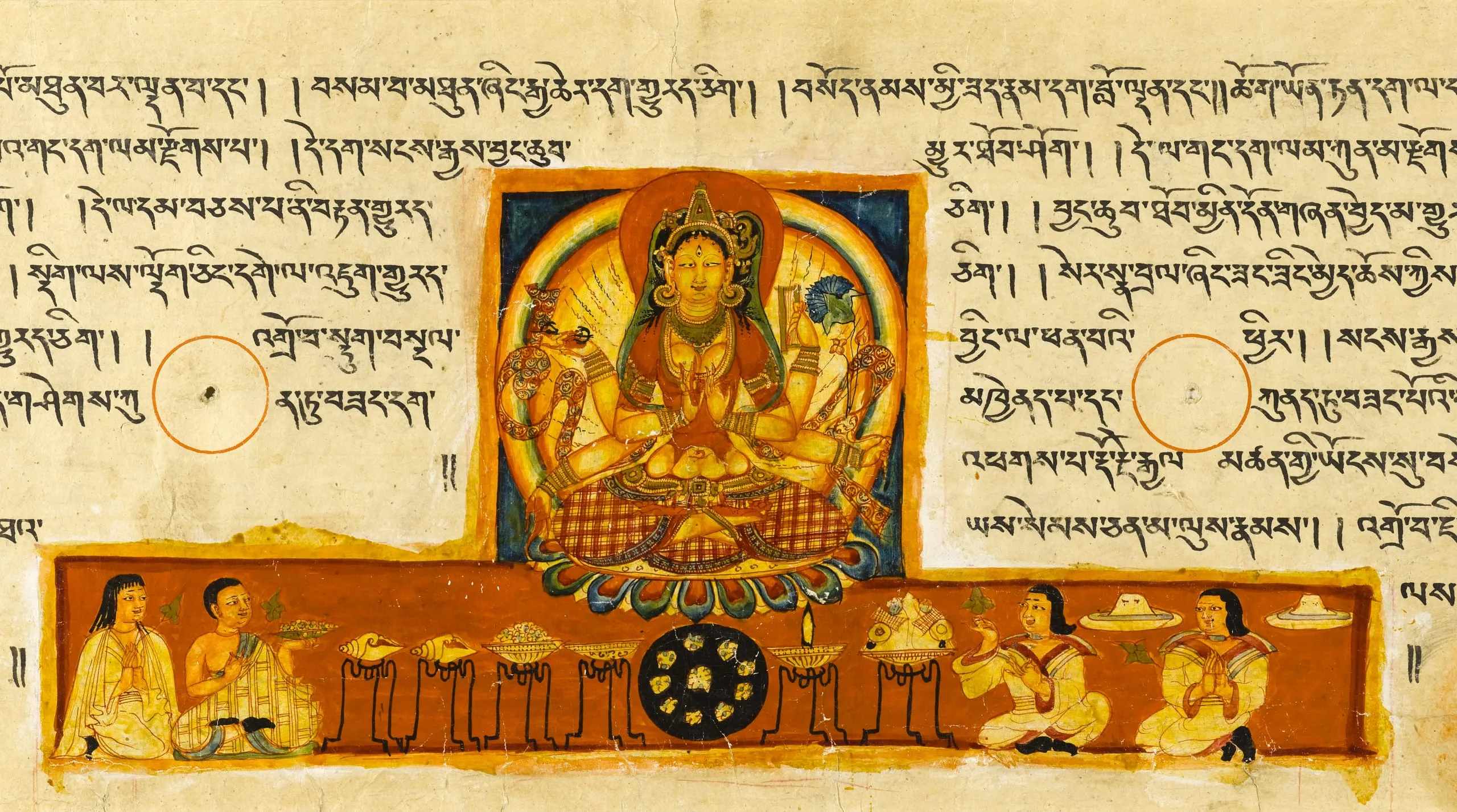
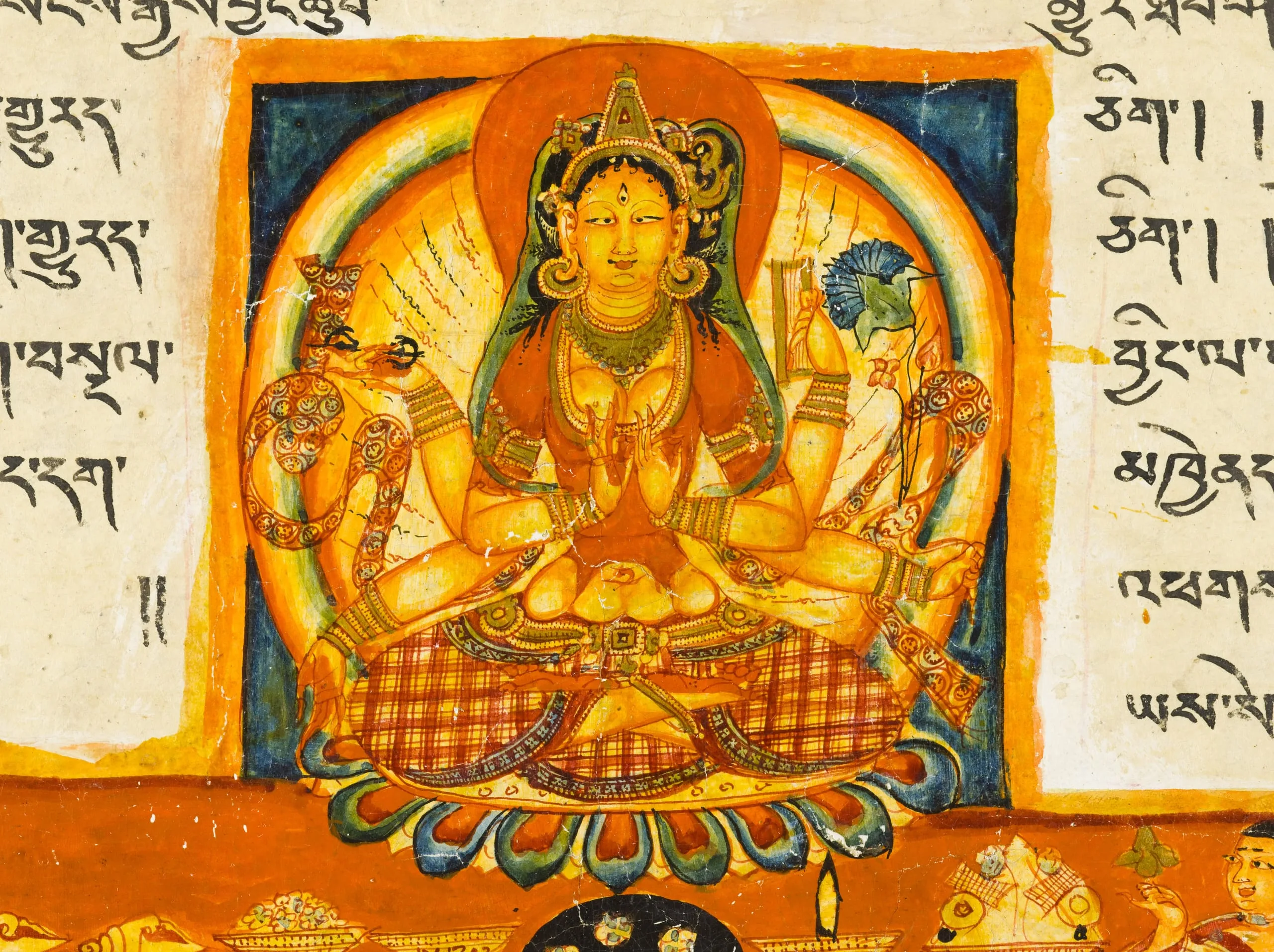
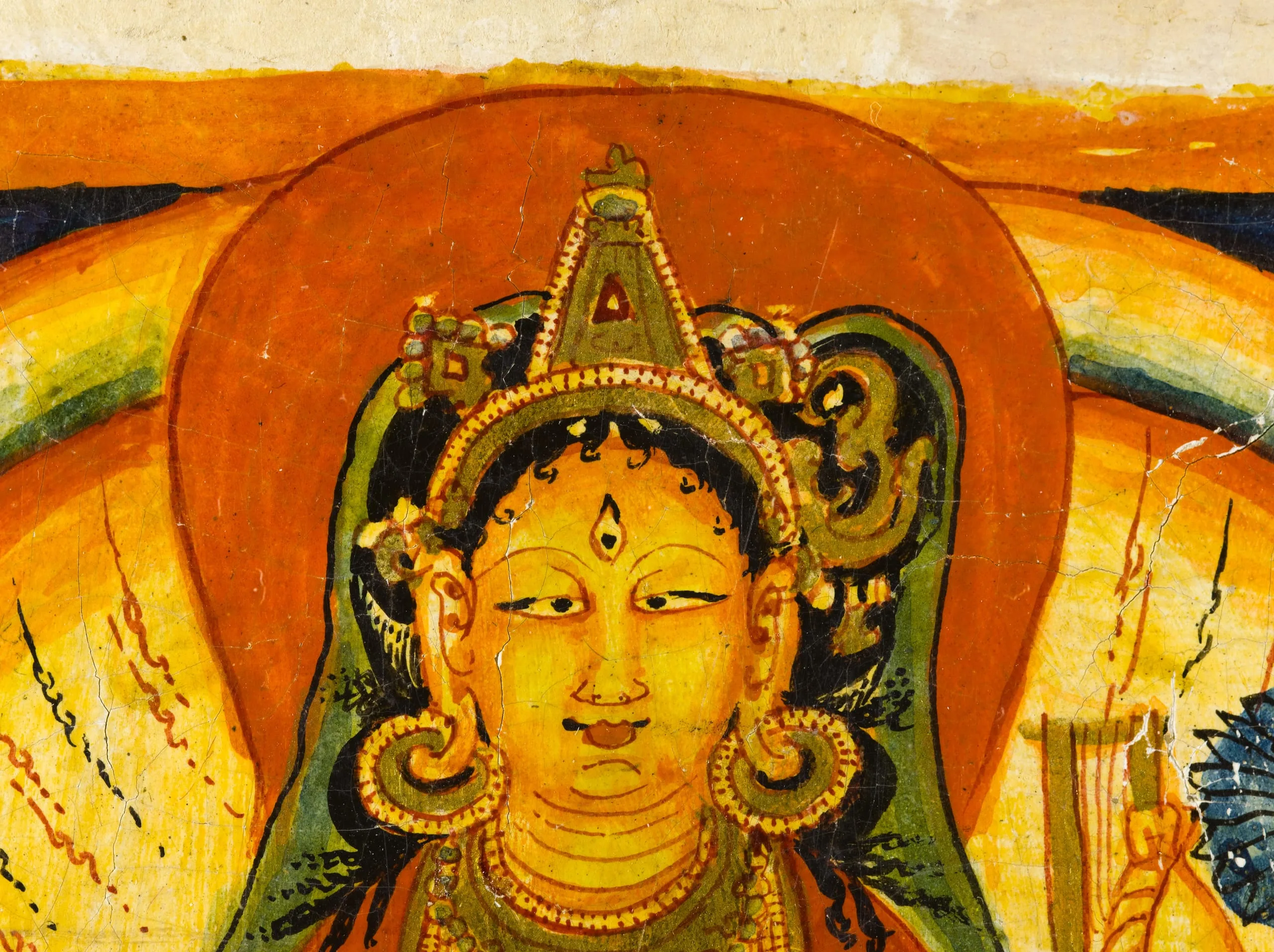
This folio, and its series mates M.81-90-7-.17, are among the earliest examples of Tibetan manuscript painting that have yet come to light. They were discovered by the renowned Tibetologist Guiseppe Tucci (1894-1984), who recovered them in the ruins of the great monastic complex at Tholing in western Tibet. Tholing was founded in the 10th century by one of the most important figures of the Second Propagation of the Buddhist Faith, Rincen Zangpo (958-1055), who studied Buddhism in Kashmir and brought Kashmiri artists back with him to western Tibet.
The text o9f thte manuscript had previously been identified as the Ashtasahasrika Prajnaparamita (The Perfection of Wisdom in 8,000 Verses) (Pal (1983) 1990, 123-126), but in 2006 was reidentified by Paul Harrison as being the Shatasahasrika Prajnaparamita (The Perfection of Wisdom in 100,000 Verses). Also known as the Large Sutra on the Perfection of Wisdom, it is classified as one of the "Maha [Large] Prajnaparamita Sutras." The Prajnaparamita Sutras are a family of Mahayana Buddhist texts that are grouped by length: Short (18,000 lines), Medium (25,000 lines), or Large (100,000 lines). They exhibit linguistic and doctrinal relationships, both similarities and differences, to the core Ashtasahasrika Prajnaparamita (The Perfection of Wisdom in 8,000 Verses) dating from at least the 1st century BCE.
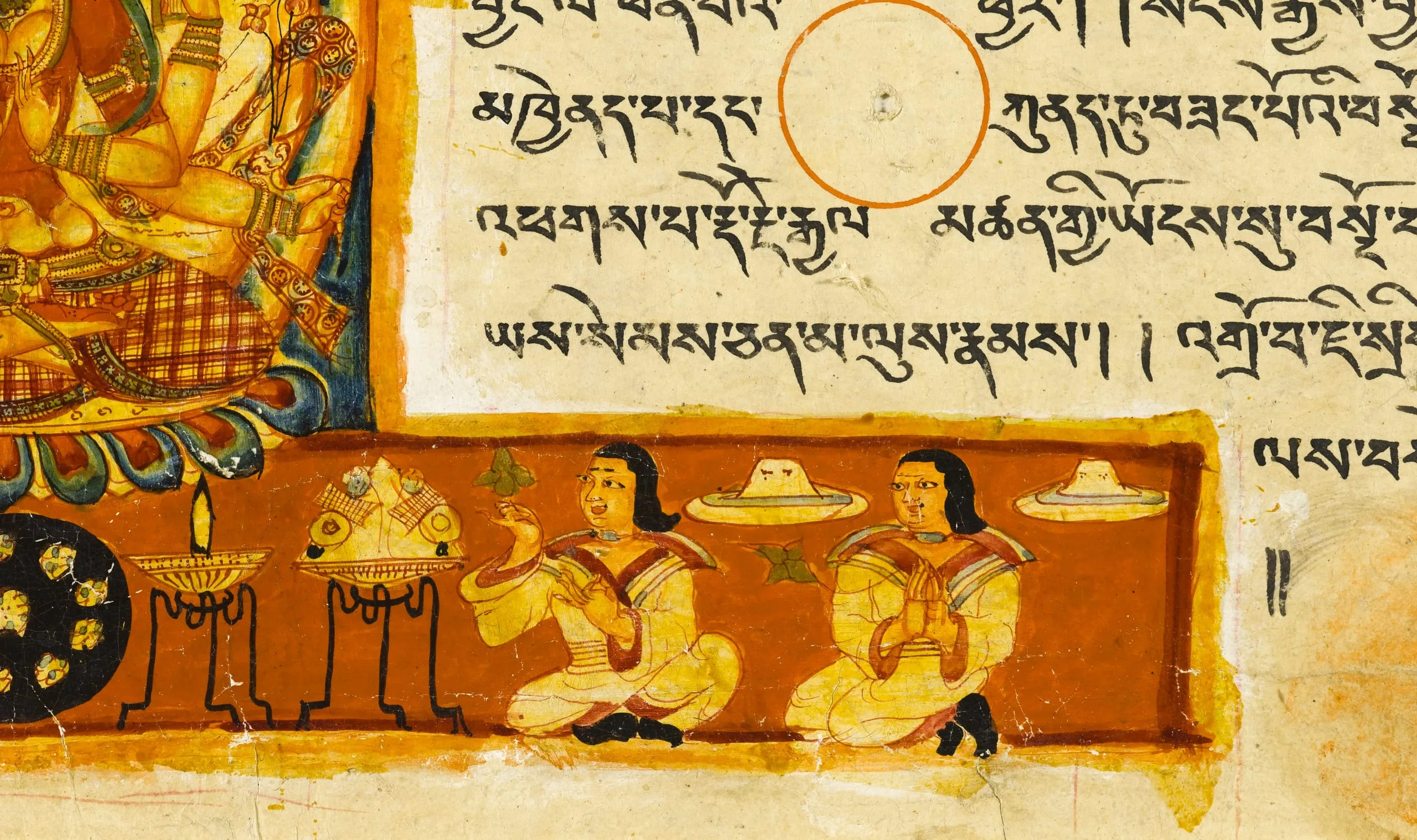
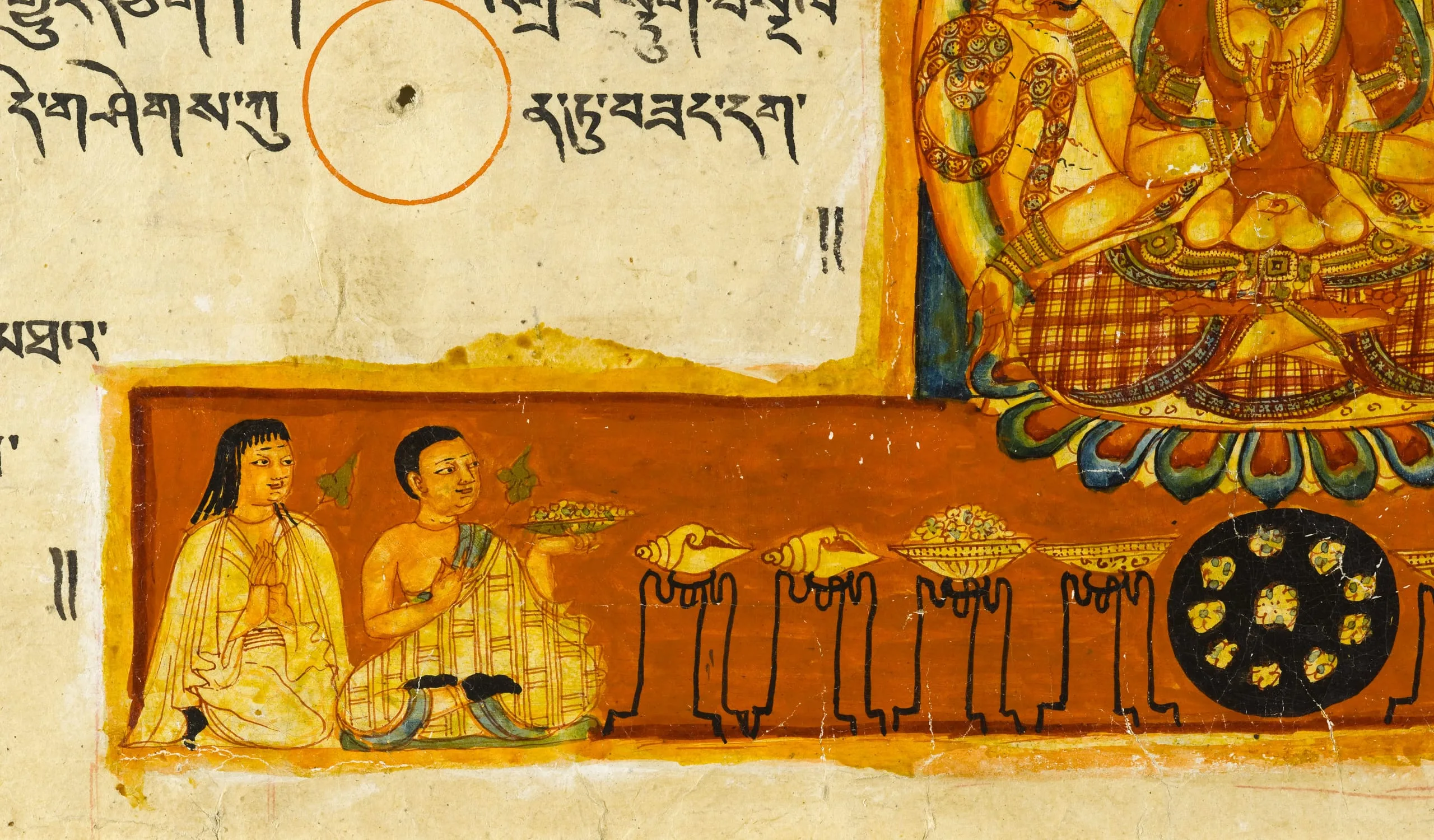
Early western Tibetan manuscripts exhibit a preference for brilliant colors, often highlighted with gold. As in eastern Indian painting, volume is indicated by shading. The particular oval shape of the head with the hair descending in a widow's peak in front, distinct figural forms with attenuated waists, and an interest in patterned textiles are derived from the Buddhist art of Kashmir. Though made of paper, each folio continues the traditional palm leaf-manuscript format by having two holes for string bindings. Unlike many eastern Indian and Nepalese manuscripts, the illustrations in this manuscript relate directly to the associated text. The illuminations are also unusual in presenting personifications of esoteric concepts.