LACMA

ShopMembershipMyLACMATickets
LACMA
Los Angeles County Museum of Art
5905 Wilshire Blvd.
Los Angeles, CA 90036
info@lacma.org
(323) 857-6000
Sign up to receive emails
Subscribe
© Museum Associates 2025

Museum Hours

Monday

11 am–6 pm

Tuesday

11 am–6 pm

Wednesday

Closed

Thursday

11 am–6 pm

Friday

11 am–8 pm

Saturday

10 am–7 pm

Sunday

10 am–7 pm


  • About LACMA
  • Jobs
  • Building LACMA
  • Host An Event
  • Unframed
  • Press
  • FAQs
  • Log in to MyLACMA
  • Privacy Policy
© Museum Associates 2025
Collections

Unknown
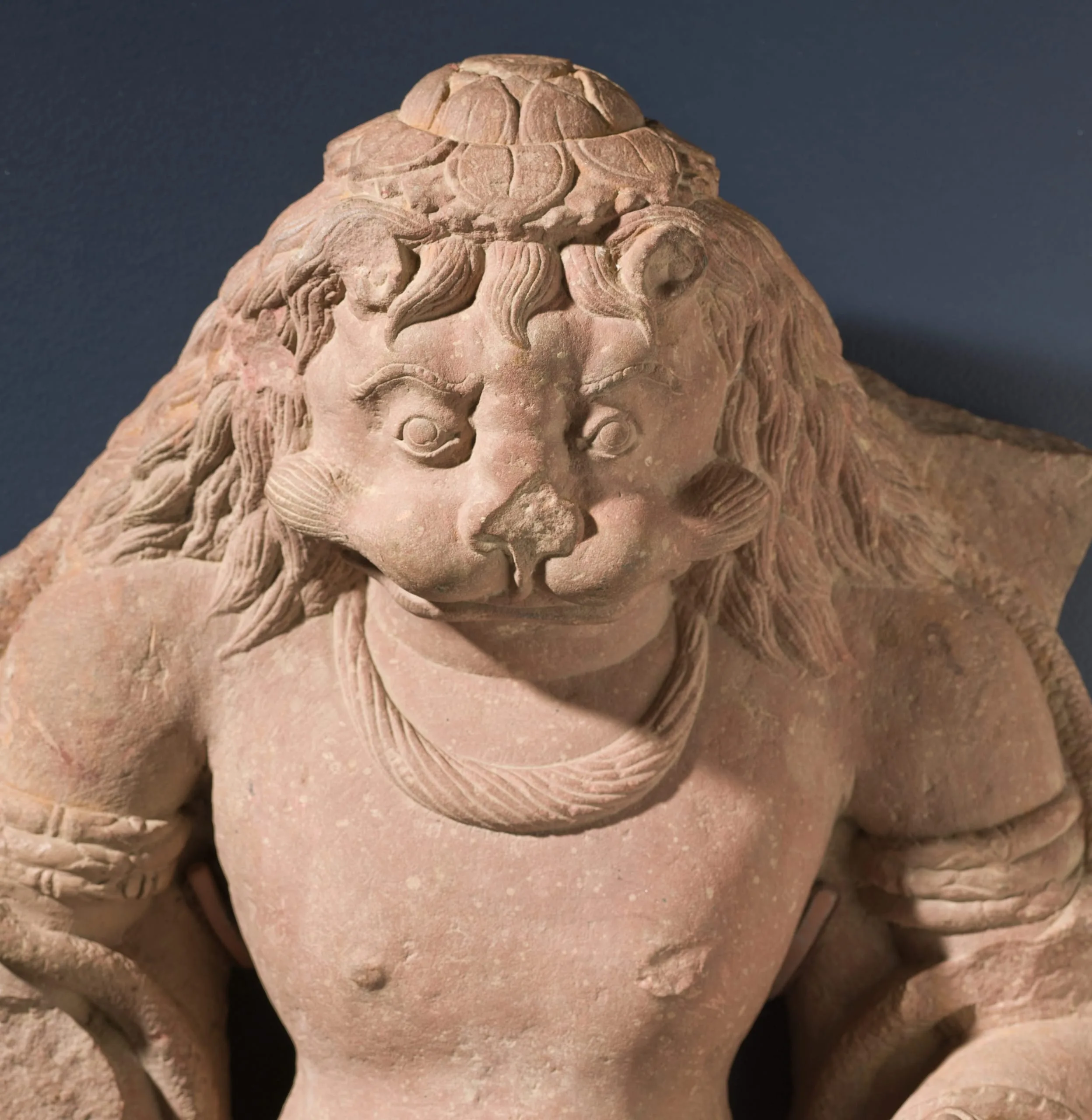
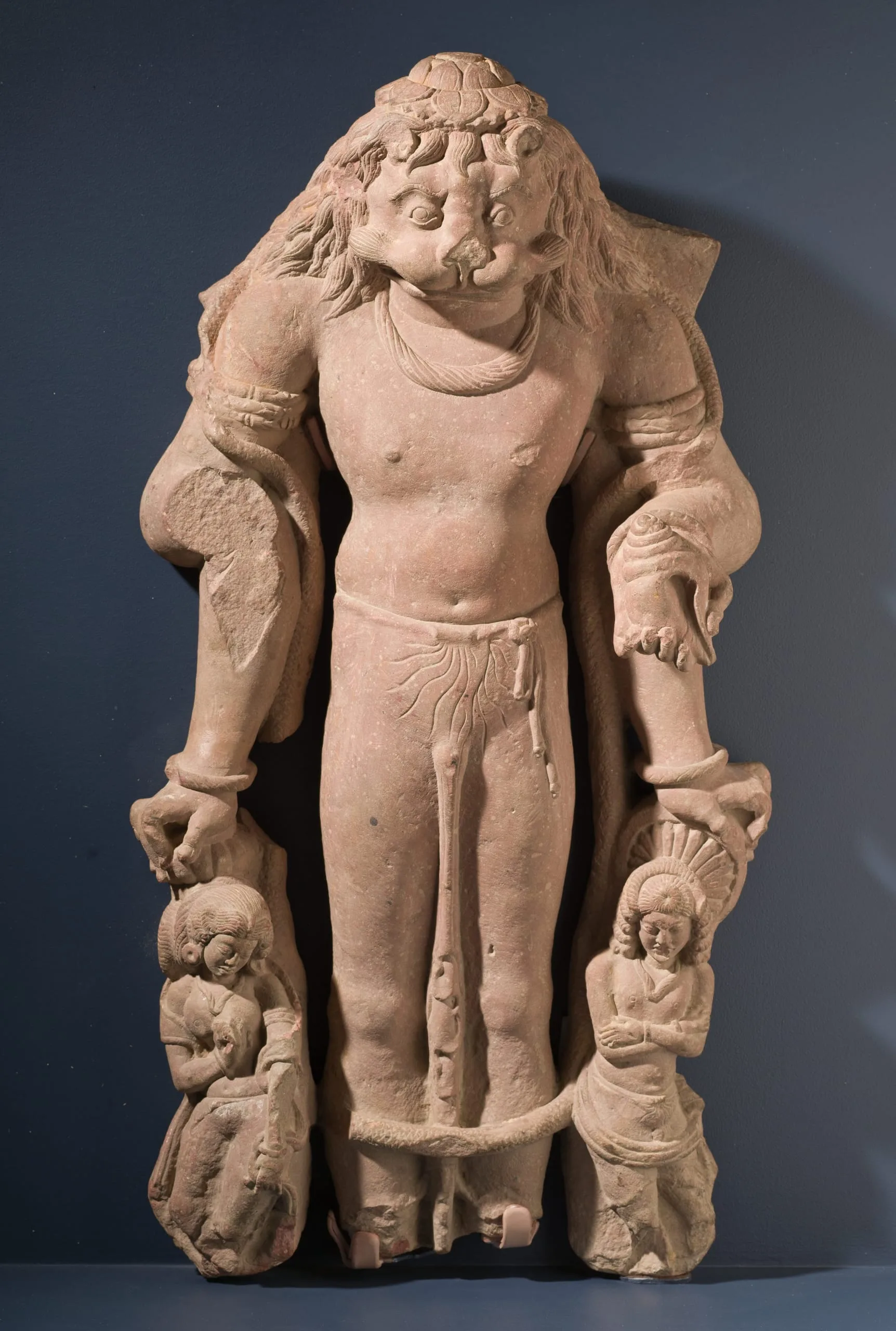
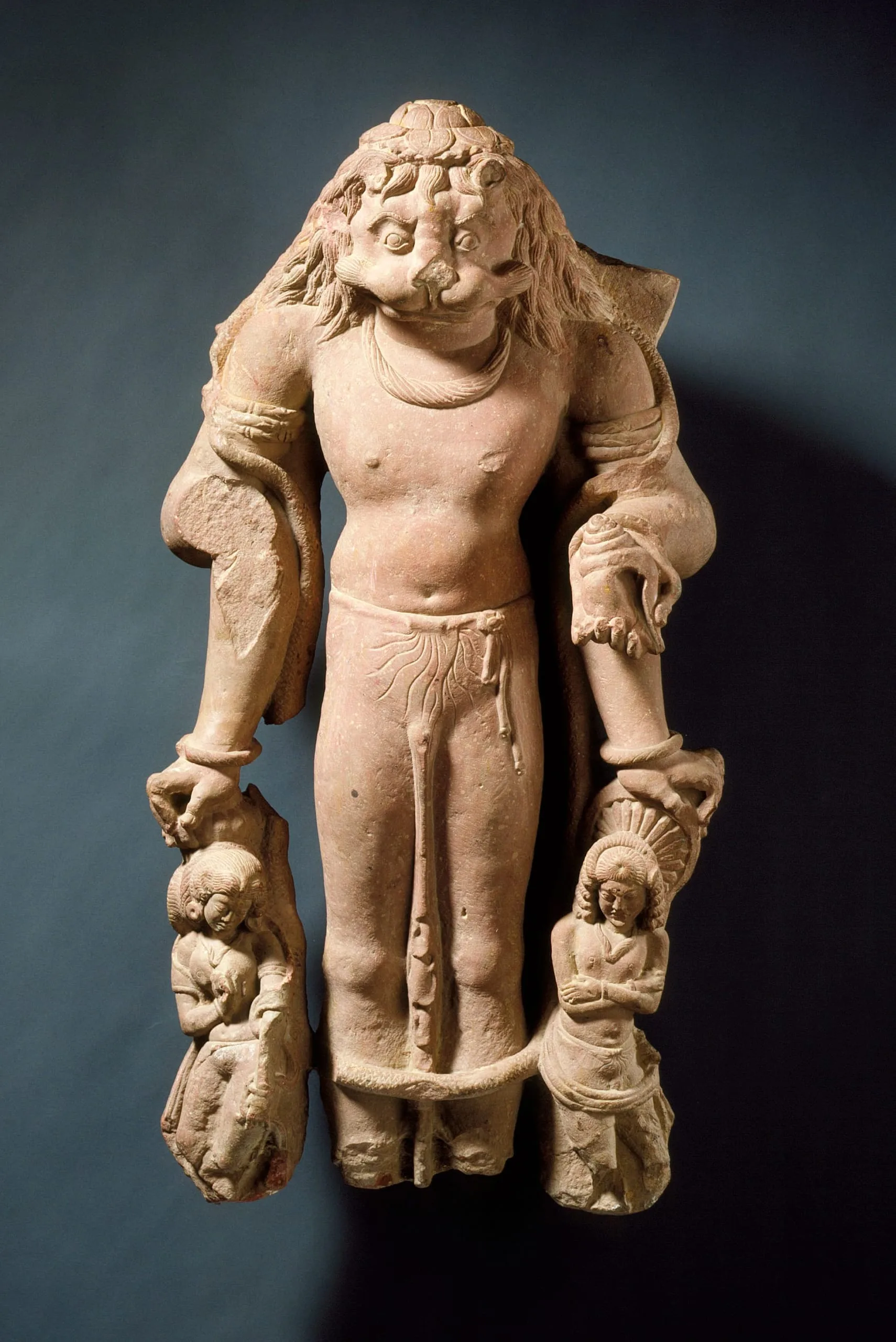
Narasimha, the Man-Lion Avatar of Vishnumid-6th century

Not on view
Sandstone sculpture of a large lion-headed standing figure with a bare torso and draped lower body, flanked by two small crouching human figures at the base
Sandstone sculpture of a standing figure with a lion head, bare-chested, wearing a draped lower garment. Two small attendant figures flank the legs at lower left and right. Warm tan stone with weathered surface.
Sandstone sculpture fragment, close-up of a deity with a lion head and human torso, carved mane framing the face, lotus crown at top, wearing a necklace, detailed surface carving in warm pinkish-beige stone.
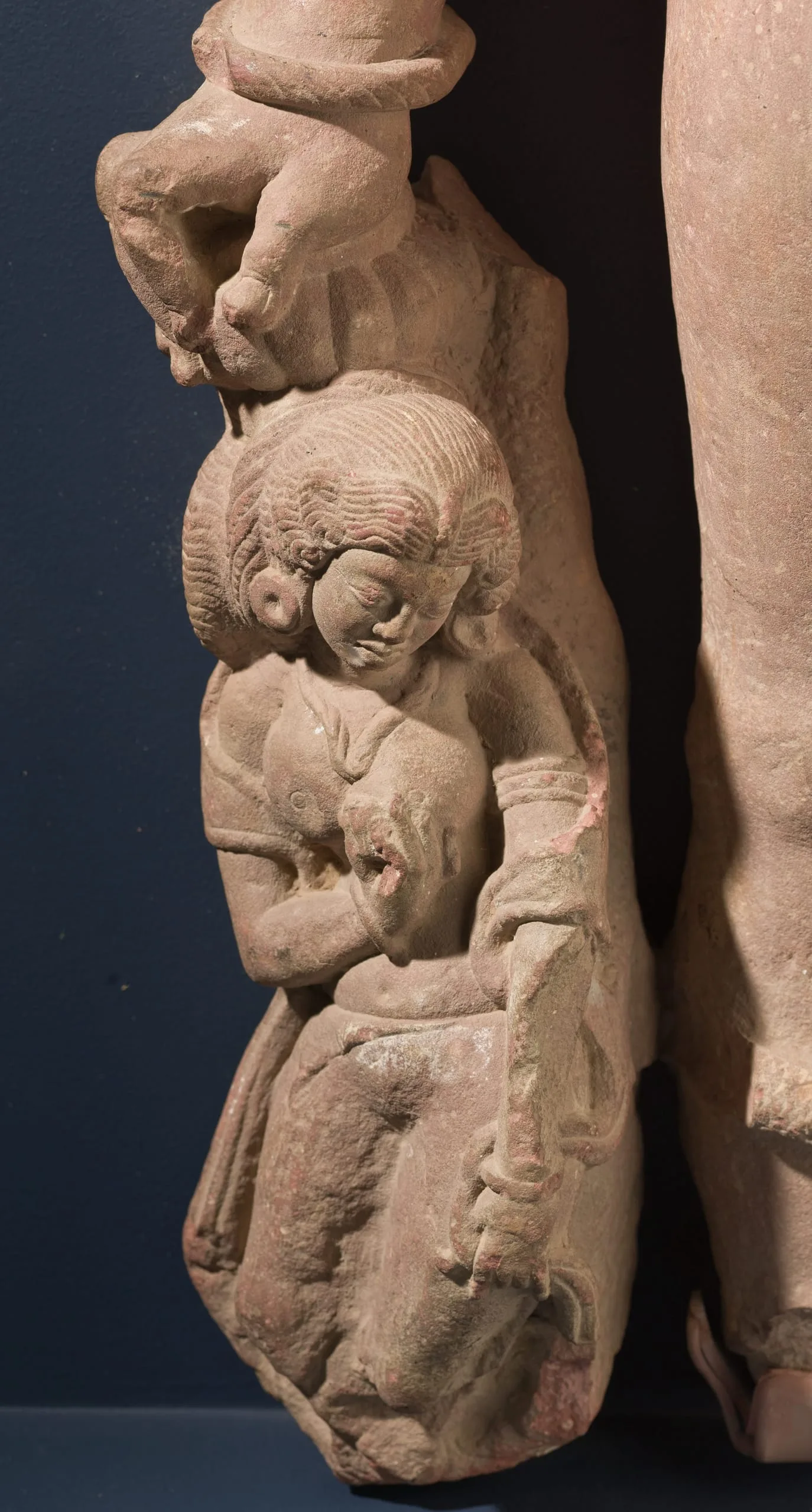
Sandstone sculptural fragment showing a small crouching figure with curly hair, carved in relief against a larger form, with traces of pink pigment remaining on the weathered surface.
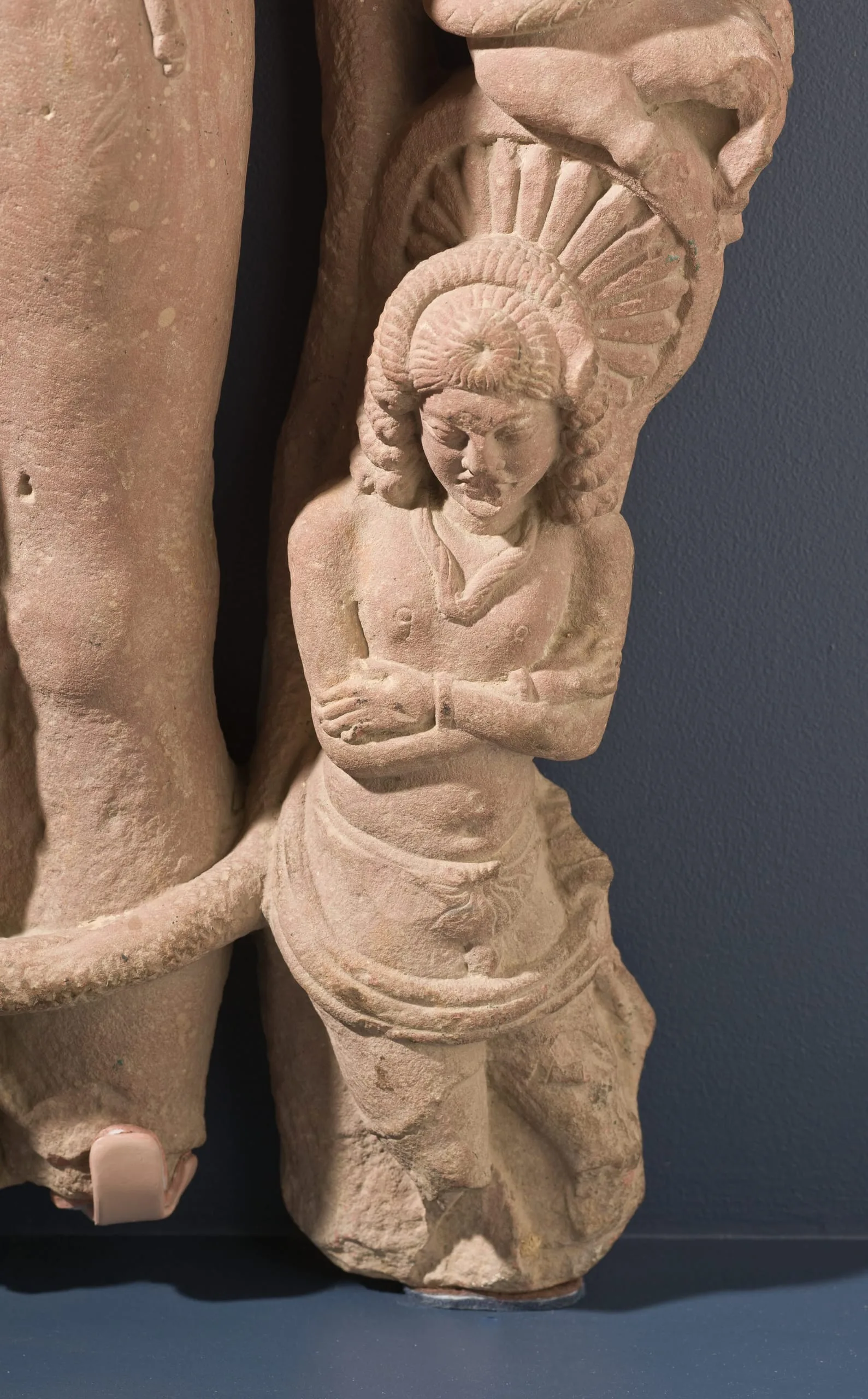
Stone relief fragment depicting a small standing figure with a radiate crown and wavy hair, bare-chested with a draped lower garment, arms crossed, carved in low relief against a larger sculptural element.
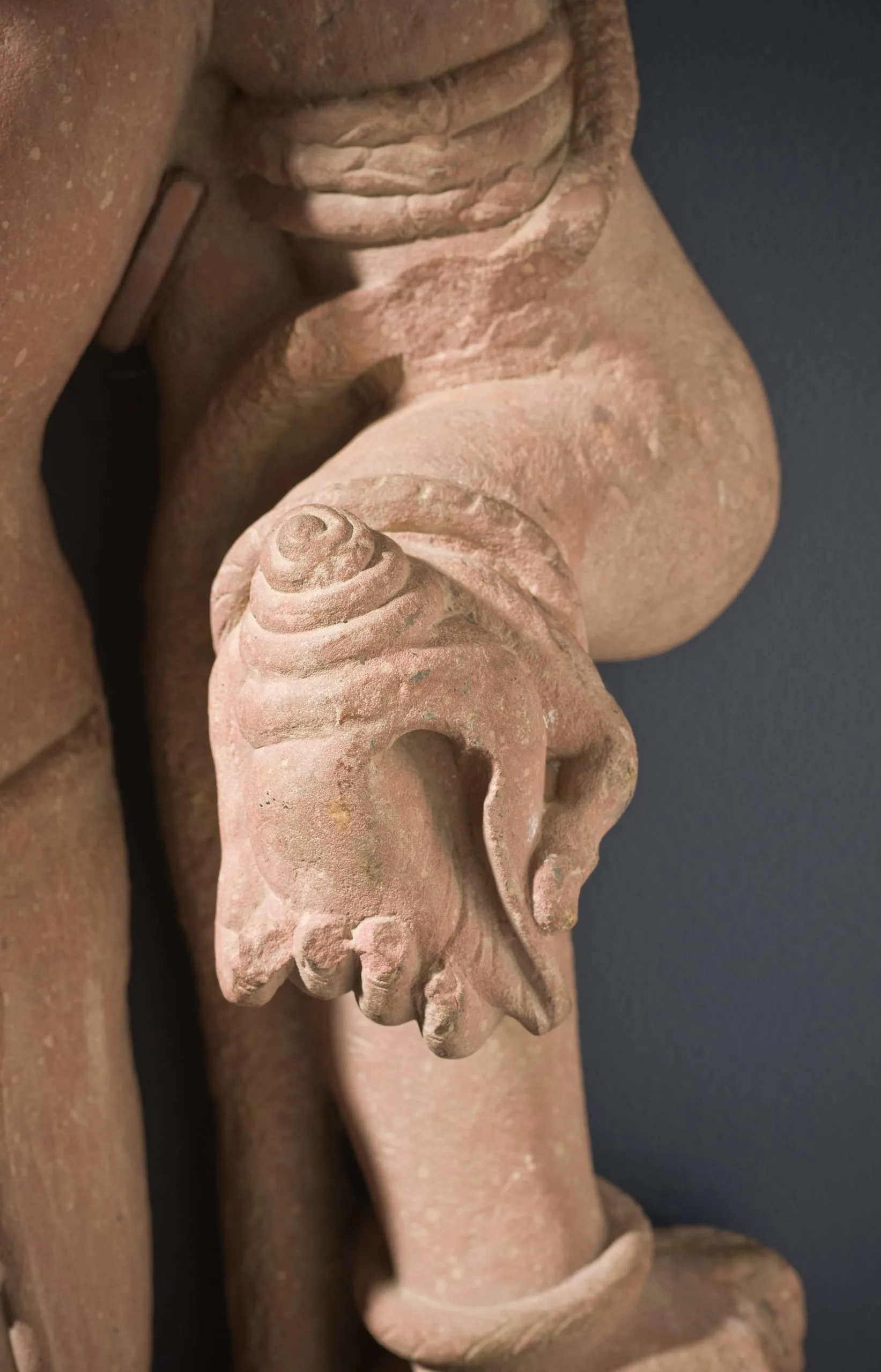
Close-up detail of a sandstone sculpture showing a hand holding a conch shell, with finely carved spiral ridges and fingers curled around the base, warm pinkish-tan stone surface.
Artist or Maker
Unknown
Title
Narasimha, the Man-Lion Avatar of Vishnu
Place Made
India, Uttar Pradesh, Mathura region
Date Made
mid-6th century
Medium
Mottled red sandstone
Dimensions
33 1/4 x 18 1/2 x 7 1/2 in. (84.46 x 46.99 x 19.05 cm)
Credit Line
From the Nasli and Alice Heeramaneck Collection, purchased with funds provided by the Jane and Justin Dart Foundation
Accession Number
M.81.90.20
Classification
Sculpture
Collecting Area
South and Southeast Asian Art
Curatorial Notes

As the guardian of the earth, the Hindu god Vishnu assumes a succession of heroic animals and semi-mortal saviors, called avatars, through which he intervenes in times of crisis or unrighteousness. In his fourth avatar, Vishnu manifested as Narasimha (man-lion) to save the pious Prahlada from his bigoted father, the Demon King Hiranyakashipu, to whom the god Brahma had given a boon making him invulnerable to man or beast, unable to be killed indoors or outdoors, and unconquerable in day or night. To subvert the boon, Vishnu ingeniously assumed a form that was half-man and half-lion (neither man nor beast), and he attacked while his foe was standing on a porch (neither indoors nor outdoors) during the twilight hour (neither day nor night).

Narasimha has a lion’s head with a long mane and flaring whiskers. His head is crowned by a lotus. Originally, he had a large nimbus that is now mainly missing. He wears a twisted necklace, armlets in the form of a makara (mythical aquatic creature), a long forest garland (vanamala) that hangs below his knees, and a dhoti with drapery folds between his legs. He has four arms that hold his symbolic attributes. In his upper left hand, he holds a conch. His upper right hand is now broken but may have originally held a myrobalan fruit or a lotus. His two lower hands rest on personified attributes. The discus is on his left and the mace is on his right. The mace is represented as a female because the Sanskrit word for mace (gada) is feminine in gender.
Selected Bibliography
  • Pal, Pratapaditya. The Ideal Image : The Gupta Sculptural Tradition and Its Influence. New York : Asia Society in association with J. Weatherhill, 1978.
  • Rosenfield, John. The Arts of India and Nepal: The Nasli and Alice Heeramaneck Collection. Boston: Museum of Fine Arts, Boston, 1966.
  • Pal, Pratapaditya. Indian Sculpture, vol.1. Los Angeles: Los Angeles County Museum of Art; University of California Press, 1986.