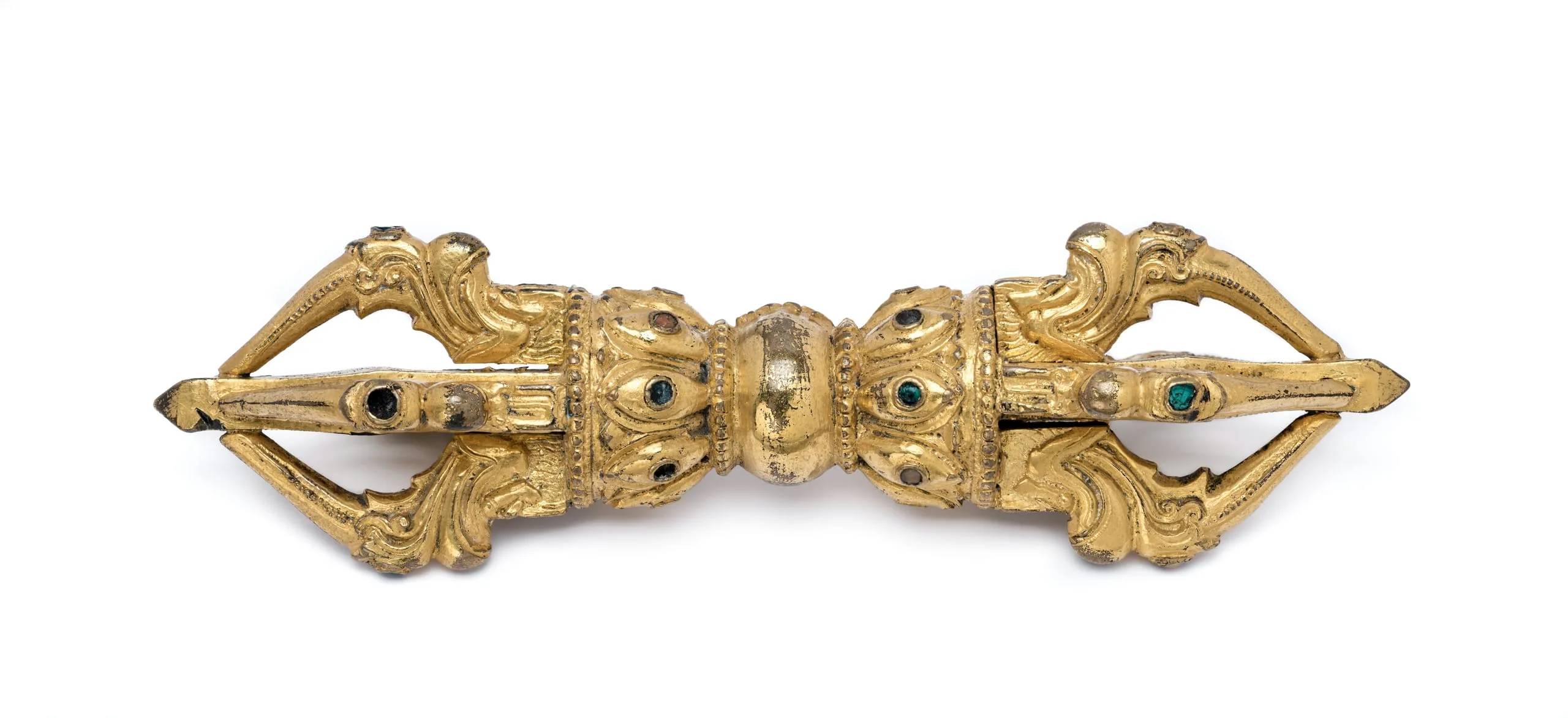
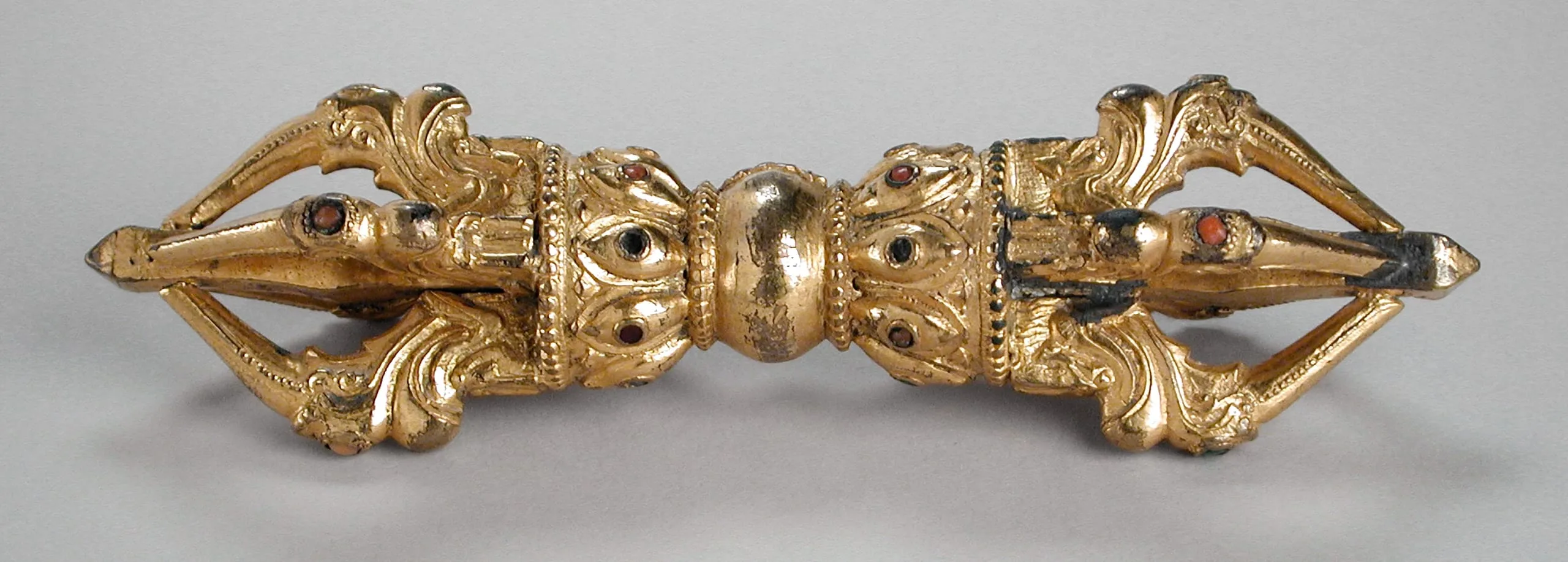
The thunderbolt (Adamantine Scepter; Sansksrit: vajra; Tibetan: dorje) is the ritual implement par excellence of all three major forms of Buddhism. It is especially renowned as the primary symbol of Vajrayana Buddhism, in which it symbolizes the indestructibility and invincibility of the Tantric path. When it is paired with the ritual bell (Sanskrit: ghanta; Tibetan: drilbu; see M.2001.158.2), together they symbolize the non-duality of enlightenment and the coincident perfection of compassion and wisdom. The thunderbolt represents compassion/male/skillful means while the bell signifies wisdom/female/nothingness. The number of prongs a thunderbolt has is symbolic. Five prongs (four outer and central) denote the five Jina Buddhas and the transcendental insights they personify. Nine prongs also portray the five Jina Buddhas, with the addition of four female Buddha-prajnas (Wisdom of [all] Buddhas) who are represented by the four additional intermediary prongs. The thunderbolt is a primary attribute of the Bodhisattva Vajrapani (Vajra Holder). It is also prominent in Hinduism, in which it is often used as a weapon, especially by Indra, the god of thunder and lightning.
This thunderbolt has five prongs at each end. The four outer prongs each issue out of the mouth of a stylized mythical aquatic animal (makara). The ellipsoid-shaped grip in the center is unadorned. Matching bands of eight lotus petals form the junction to the prongs.
See also M.91.232.5, AC1994.116.5, AC1994.116.6, AC1994.176.1, and M.2001.158.1.