- Title
- Punch Bowl
- Date Made
- circa 1780
- Medium
- Porcelain, overglaze enamel, gilt
- Dimensions
- Height: 7 in. (17.78 cm); Diameter: 15 1/2 in. (39.37 cm)
- Accession Number
- M.80.56
- Curatorial Notes
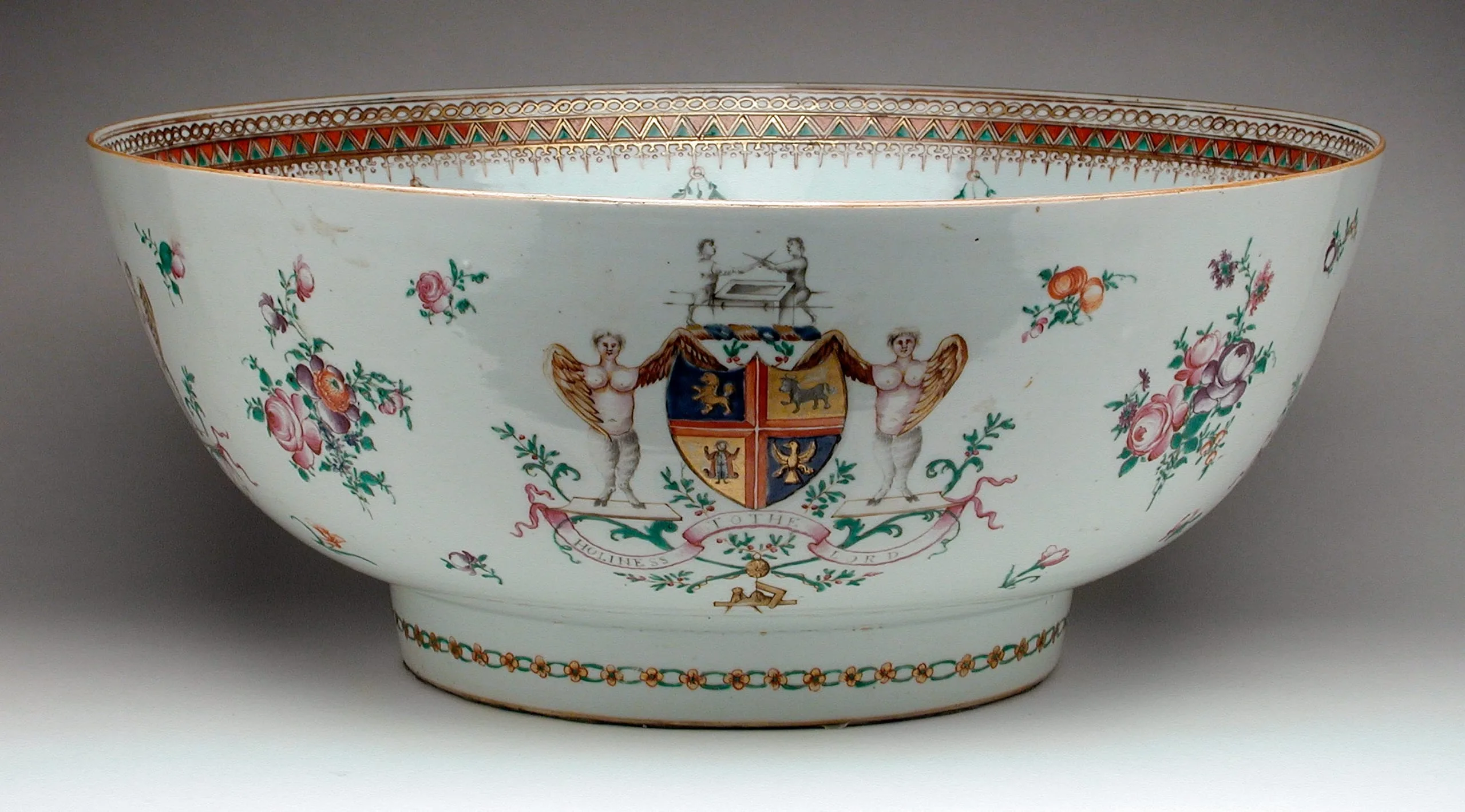
This large punch bowl is decorated with a hand-painted coat of arms of the “Most Ancient and Honorable Fraternity of Free and Accepted Masons” in London. Subsequently known as the Ancient Grand Lodge, the organization was founded in 1751 in opposition to London’s existing grand lodge, which increasingly excluded ordinary workers from membership. The competing lodges finally reconciled and merged in 1813. Owning costly Chinese porcelain added to the prestige of any lodge, and drinking toasts was an important part of Masonic ceremonies. Most meetings ended with a banquet where large bowls like this one were useful for serving liquid refreshments. The coat of arms incorporates a variety of Masonic symbols, including a pair of winged cherubim, the Ark of the Covenant, a shield quartered with symbols of the four Evangelists, and a square and compass, or builder’s tools. The design is based directly on the title page of the Book of Constitutions of this Grand Lodge (1756). Conveniently pocket-sized, the book easily could have been sent to China to serve as a model for Chinese artists to copy for a custom order like this porcelain bowl. Around the time it was commissioned, the rise of English ceramic production meant that inexpensive earthenware with transfer-printed decoration was becoming more widely available and would soon eclipse the fashion for imported Chinese porcelain.