LACMA

ShopMembershipMyLACMATickets
LACMA
Los Angeles County Museum of Art
5905 Wilshire Blvd.
Los Angeles, CA 90036
info@lacma.org
(323) 857-6000
Sign up to receive emails
Subscribe
© Museum Associates 2025

Museum Hours

Monday

11 am–6 pm

Tuesday

11 am–6 pm

Wednesday

Closed

Thursday

11 am–6 pm

Friday

11 am–8 pm

Saturday

10 am–7 pm

Sunday

10 am–7 pm


  • About LACMA
  • Jobs
  • Building LACMA
  • Host An Event
  • Unframed
  • Press
  • FAQs
  • Log in to MyLACMA
  • Privacy Policy
© Museum Associates 2025
Collections

Unknown
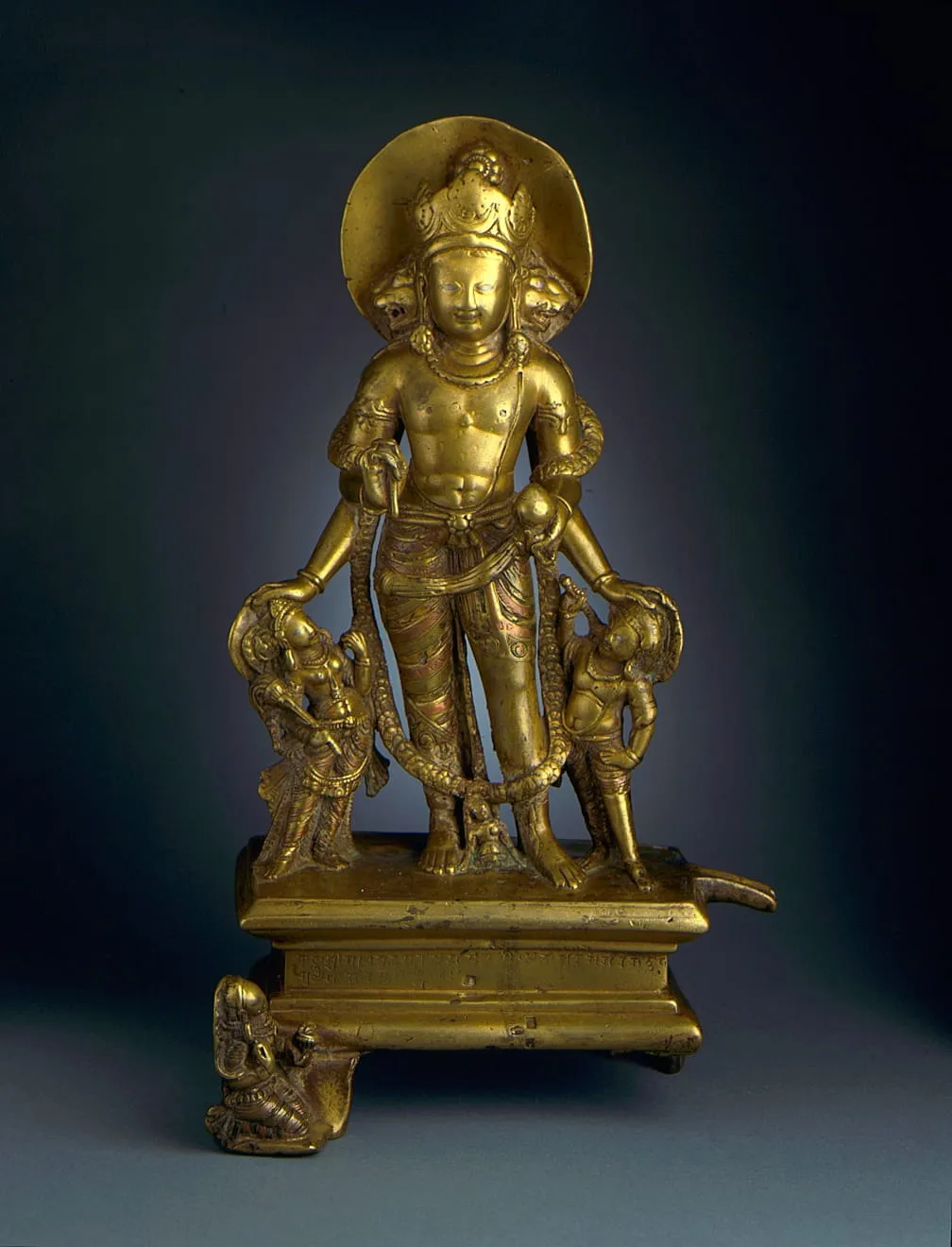
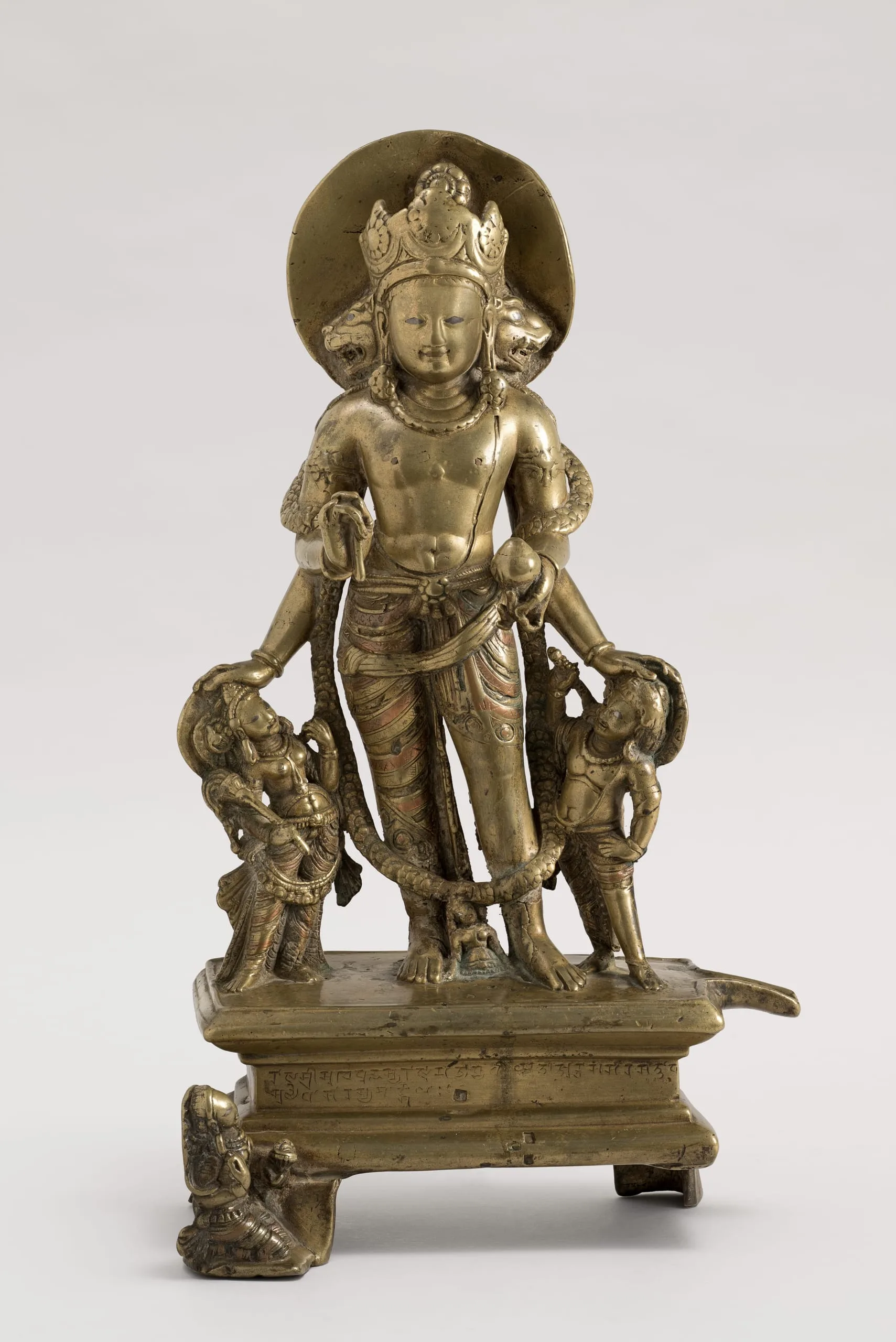
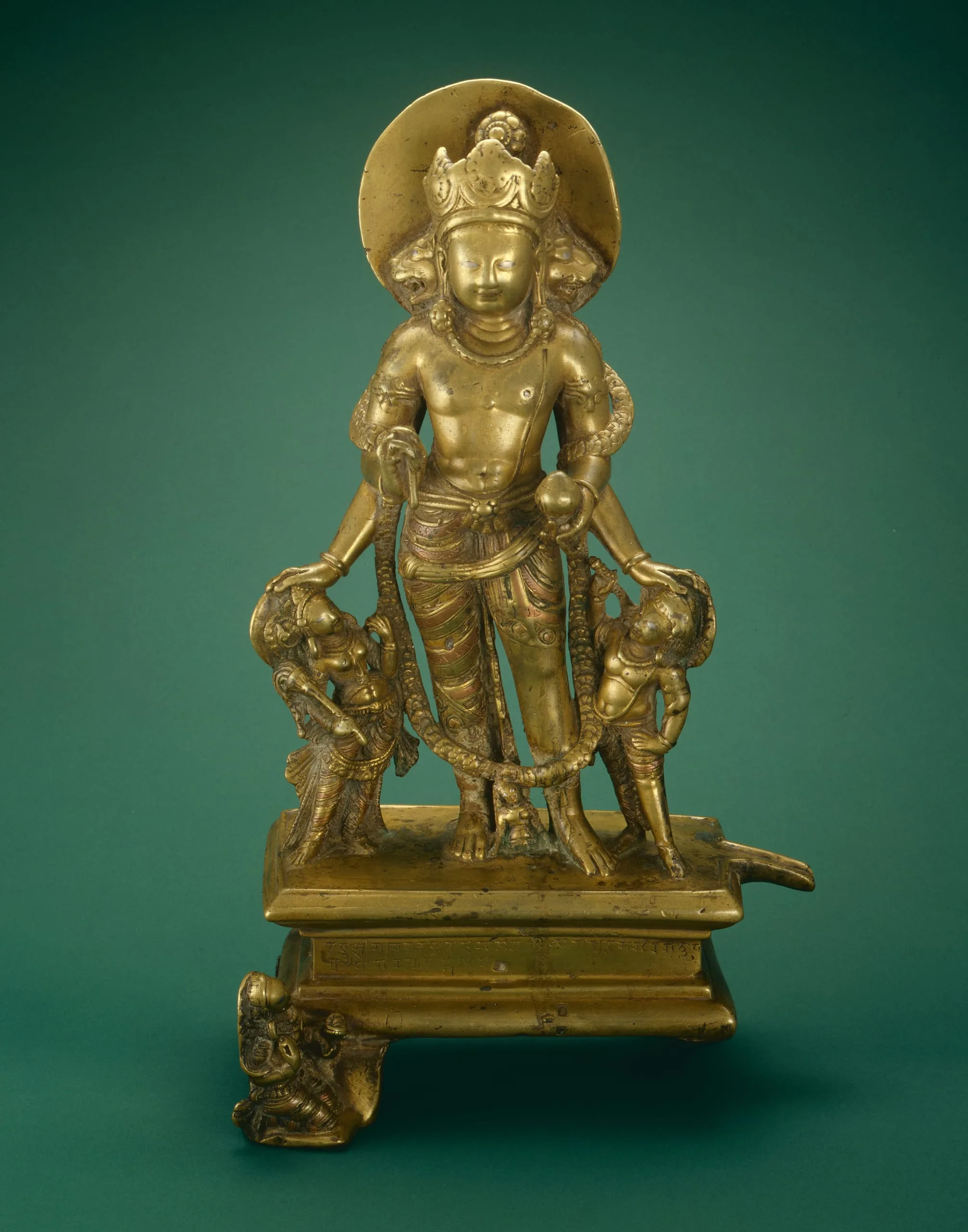
The Hindu God Vishnucirca 850

Not on view
Brass-gold bronze sculpture of a standing crowned deity with halo, flanked by two smaller attendant figures, on a stepped rectangular base with an inscribed band
Gilt bronze sculpture of a standing four-armed deity wearing a crown and circular halo, draped from the waist down, flanked by two smaller crouching attendant figures on a tiered rectangular pedestal with decorative base.
Gilt bronze sculpture of a standing multi-headed deity with a circular halo, adorned with a crown and jewelry, flanked by two smaller attendant figures on a tiered rectangular base with a crouching figure at the front.
Artist or Maker
Unknown
Title
The Hindu God Vishnu
Place Made
India, Jammu and Kashmir, Kashmir region
Date Made
circa 850
Medium
Brass inlaid with copper and silver
Dimensions
18 1/4 x 11 x 6 1/8 in. (46.36 x 27.94 x 15.55 cm)
Credit Line
From the Nasli and Alice Heeramaneck Collection, Museum Associates Purchase
Accession Number
M.80.6.2
Classification
Sculpture
Collecting Area
South and Southeast Asian Art
Curatorial Notes

In Kashmiri sculpture the Hindu god Vishnu is typically represented in his four-faced aspect, with a central human face, the profile heads of a boar and a lion flanking it, and the face of a demon on the back of his head. Various interpretations were postulated by different religious and philosophical sects devoted to Vishnu and his preeminent avatar, Krishna. The Pancharatra sect considered the lion, boar, and demon faces to be emanations of Vishnu that respectively symbolize his divine power, sovereignty, and cosmic energy. Another interpretation purports that Vishnu’s lion and boar faces also refer to his Narasimha and Varaha avatars (see M.81.90.20 and M.72.53.8 respectively).

Vishnu's two lower hands rest upon his personified weapons, the club and the discus. In his two upper hands, he carries a long-stemmed lotus (now broken) and a conch shell. Vishnu is depicted as a regal figure with a tall crown, a garland of flowers, and an auspicious ornament on his chest. The earth goddess Prithivi is between his feet, A female donor making an offering kneels at the corner of the base.
Selected Bibliography
  • Pal, Pratapaditya. "Some Kashmiri-style bronzes and problems of authenticity." In Indian Art & Connoiseurship: Essays in Honour of Douglas Barrett, edited by John Guy, 86-98. Middletown, NJ: Grantha, 1995.