LACMA

ShopMembershipMyLACMATickets
LACMA
Los Angeles County Museum of Art
5905 Wilshire Blvd.
Los Angeles, CA 90036
info@lacma.org
(323) 857-6000
Sign up to receive emails
Subscribe
© Museum Associates 2025

Museum Hours

Monday

11 am–6 pm

Tuesday

11 am–6 pm

Wednesday

Closed

Thursday

11 am–6 pm

Friday

11 am–8 pm

Saturday

10 am–7 pm

Sunday

10 am–7 pm


  • About LACMA
  • Jobs
  • Building LACMA
  • Host An Event
  • Unframed
  • Press
  • FAQs
  • Log in to MyLACMA
  • Privacy Policy
© Museum Associates 2025
Collections

Unknown
Royal Peacock Bargelate 19th century

Not on view
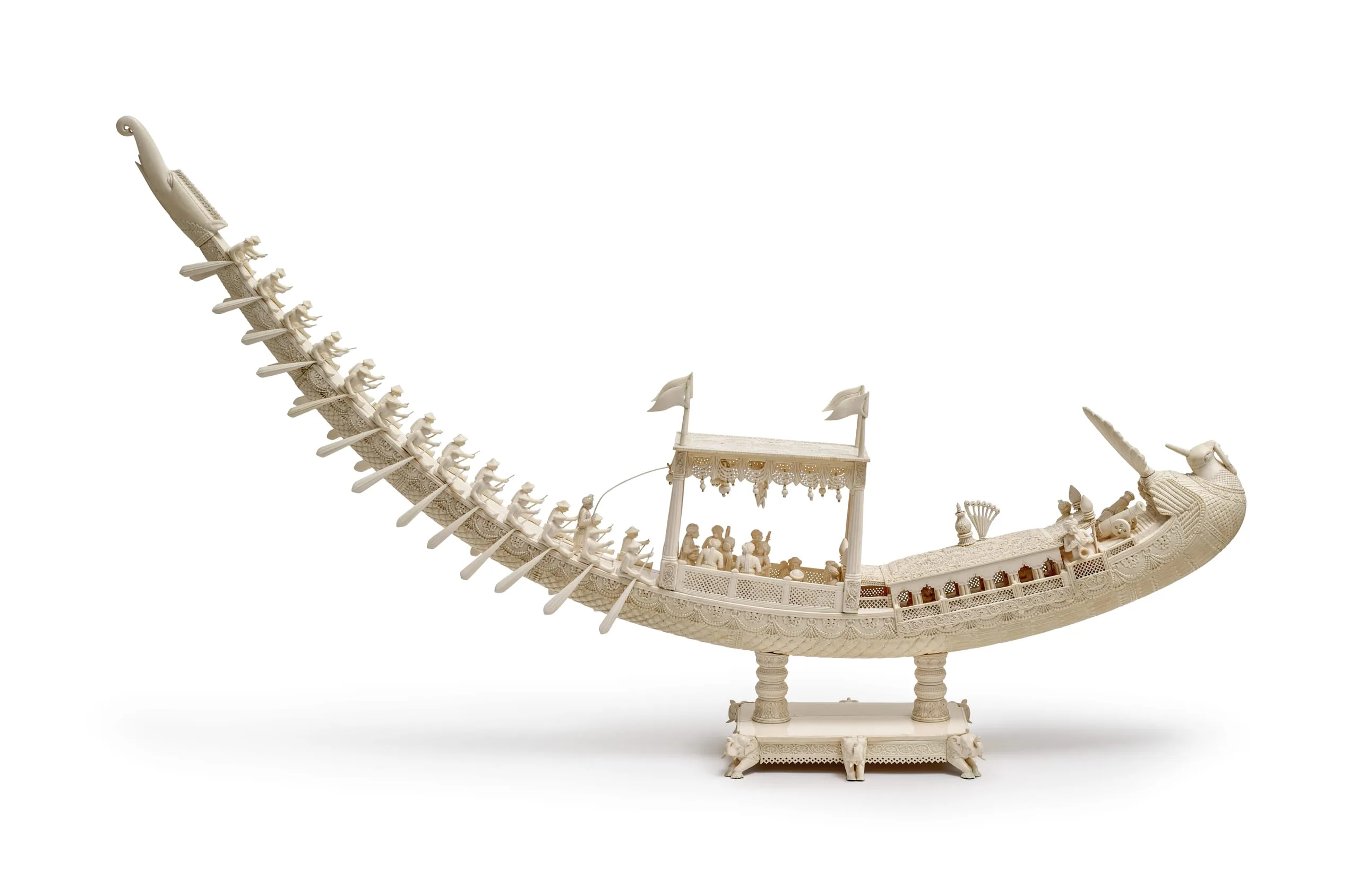
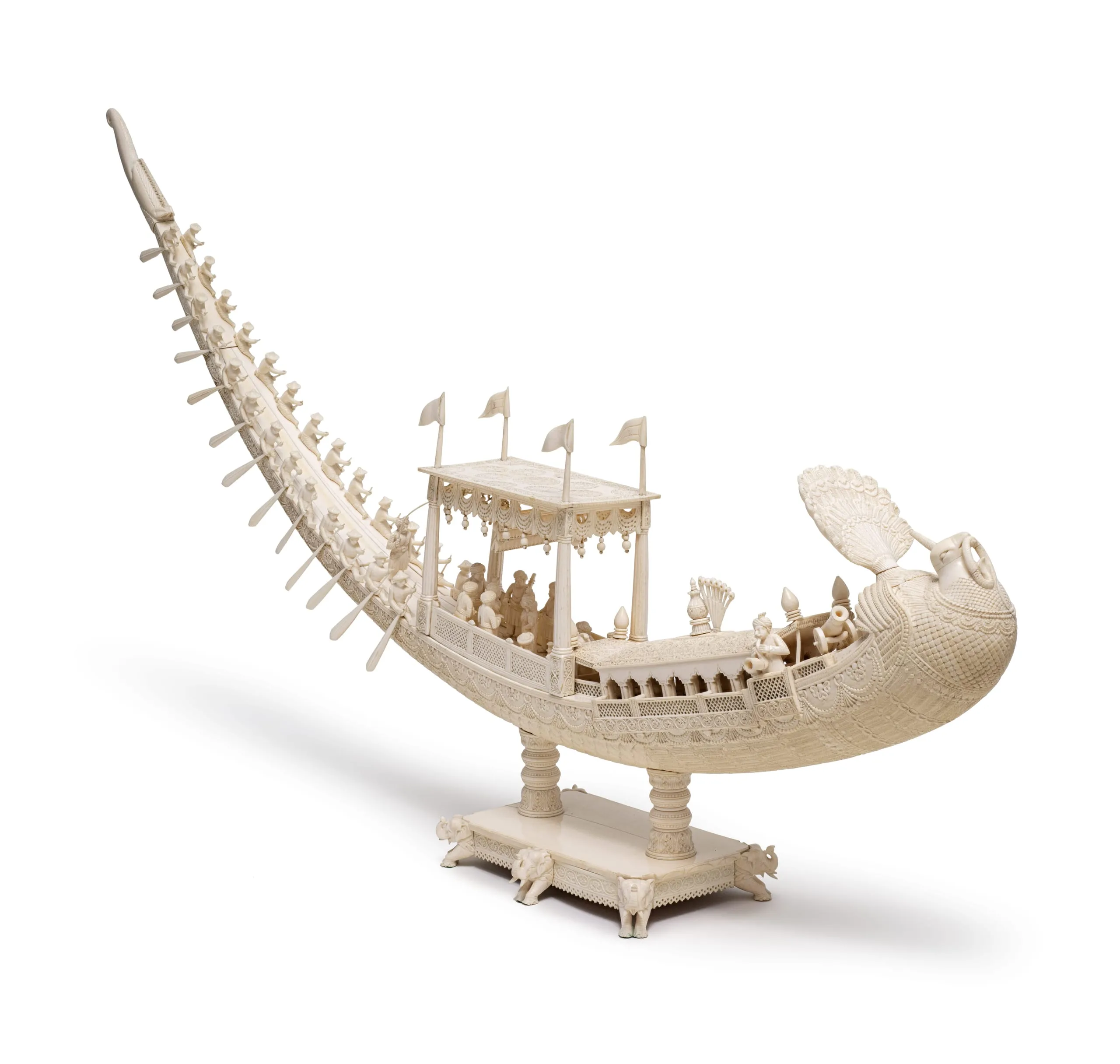
Finely carved ivory-white ceremonial boat sculpture with a dramatically arched prow, openwork lattice hull, rows of small figures, and a canopied pavilion at center, mounted on a column-supported rectangular base
Ivory carving of a ceremonial royal barge with a dramatically curved prow sweeping upward, the hull decorated with intricate lattice and floral relief carving. Multiple small figures populate the deck beneath a canopied pavilion with small flags. The bird-headed prow features a fan-shaped crest, and the whole rests on a rectangular pedestal supported by small elephant figures.
Artist or Maker
Unknown
Title
Royal Peacock Barge
Place Made
India, West Bengal, Murshidabad
Date Made
late 19th century
Medium
Ivory
Dimensions
24 3/8 x 42 x 6 1/2 in. (61.91 x 106.68 x 16.51 cm)
Credit Line
Gift of Cynthia and Ken Boettcher, Laguna Niguel, California
Accession Number
M.82.154
Classification
Sculpture
Collecting Area
South and Southeast Asian Art
Curatorial Notes

The largest South Asian ivory object in LACMA’s collection—utilizing an entire tusk plus additional segments—is a model of a royal pleasure boat mounted on a display stand. It was made in the late 19th century in Murshidabad, the principal Bengali center of ivory carving. Called "peacock barges" (mayūra-pankhī or morpankhī) because the bow is shaped like a peacock, royal pleasure boats were particularly enjoyed by Siraj ud-Daulah, the governor of Bengal (r. 1756–57), and his guests during festivals on the Ganges river. Ivory models of varying sizes depict these elaborate barges in detail, and they typically feature one or two covered pavilions in the forward section for entertainers and a communal hookah. A number of servants are often in attendance, including one responsible for pulling the cord of the swinging ceiling fan. In the stern are several pairs of rowers and a helmsman.

Intriguingly, these boats could be customized for a Hindu clientele by replacing the fan servant with a small shrine of the Hindu goddess Durga slaying the Buffalo Demon. Once graced with the divine image, the boats would be suitable for ritual immersion during the annual Durga Puja festival. This dual use is evident by the shallow, recessed rectangle in the LACMA boat, exactly where a Durga shrine could be added; there is no other apparent purpose for this prominently indented area. Other religious configuration variables include interchangeable finials and pendants.
Selected Bibliography
  • Markel, Stephen. Mughal and Early Modern Metalware from South Asia at LACMA: An Online Scholarly Catalogue. Los Angeles: Los Angeles County Museum of Art, 2020. https://archive.org/details/mughal-metalware (accessed September 7, 2021).