- Title
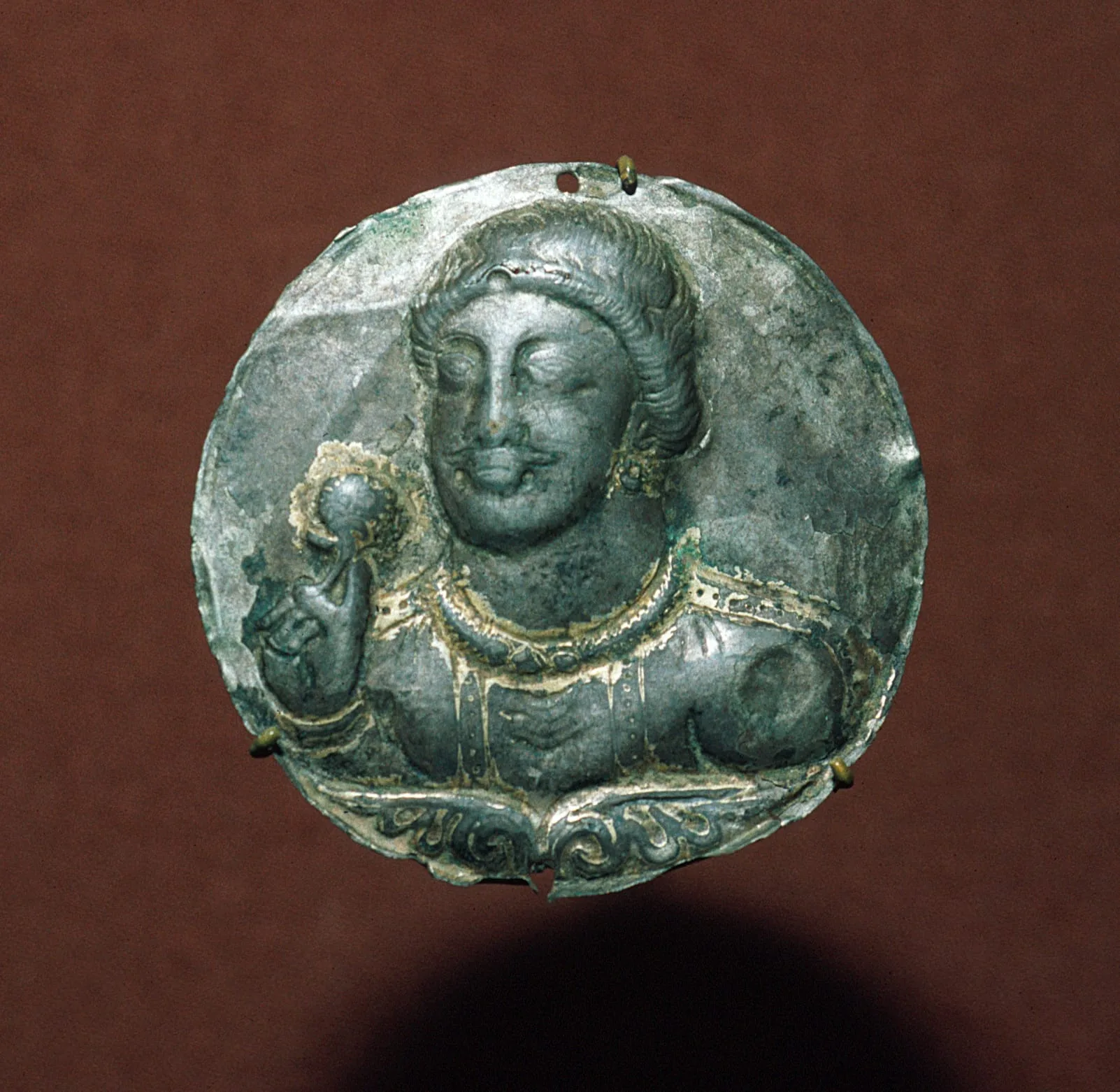
- Medallion with a Portrait of a Hun (Huna)
- Date Made
- late 5th century
- Medium
- Repoussé silver with traces of gilding
- Dimensions
- Diameter: 2 1/4 in. (5.72 cm)
- Accession Number
- M.82.159.1
- Curatorial Notes
The Hunas (also known as the White Huns or Hephthalites) were Central Asian warrior tribes who invaded South Asia through the Khyber Pass in 458 and again around 470. They destroyed Buddhist monasteries and stupas in Taxila in ancient Gandhara (located in parts of present-day Pakistan and Afghanistan) and sacked important cities in India, including Pataliputra (modern Patna, Bihar), Ujjain and Eran in Madhya Pradesh, and Kaushambi in Uttar Pradesh. They were defeated by a coalition of Indian rulers in 528 and forced to withdraw out of India. Their incursions significantly contributed to the decline of the Gupta Empire (circa 240- 579).
This bust portrait depicts a mustachioed prince wearing jewelry and smelling a nosegay. See also M.77.56.3.
- Selected Bibliography
- Pal, Pratapaditya. Indian Sculpture, vol.1. Los Angeles: Los Angeles County Museum of Art; University of California Press, 1986.