- Title
- Ritual Dagger (Phurpa)
- Date Made
- 17th century
- Medium
- Bone, silver, and carnelian
- Dimensions
- 8 1/2 x 1 3/4 x 1 3/4 in. (21.59 x 4.44 x 4.44 cm)
- Accession Number
- M.82.27
- Curatorial Notes
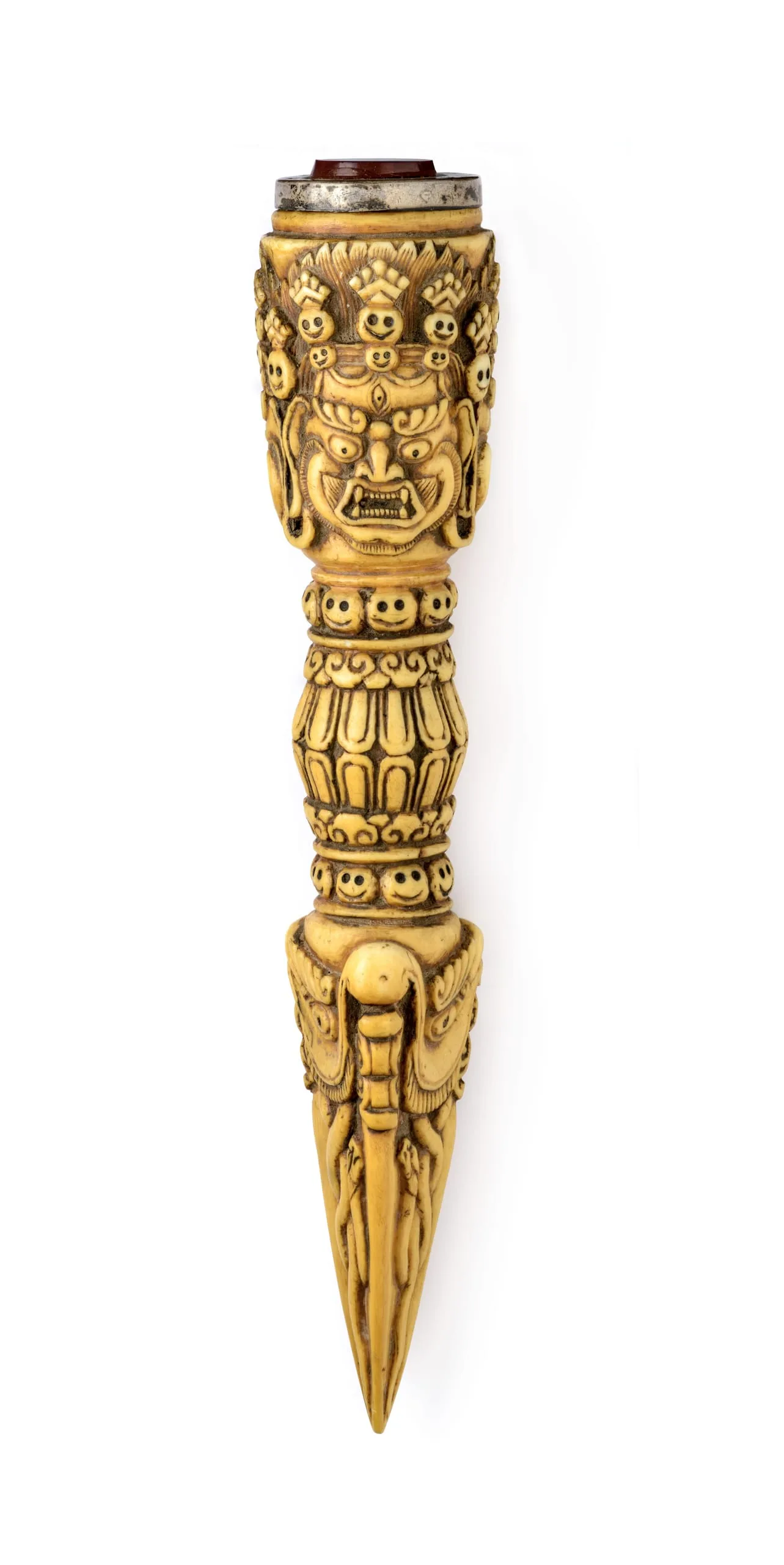
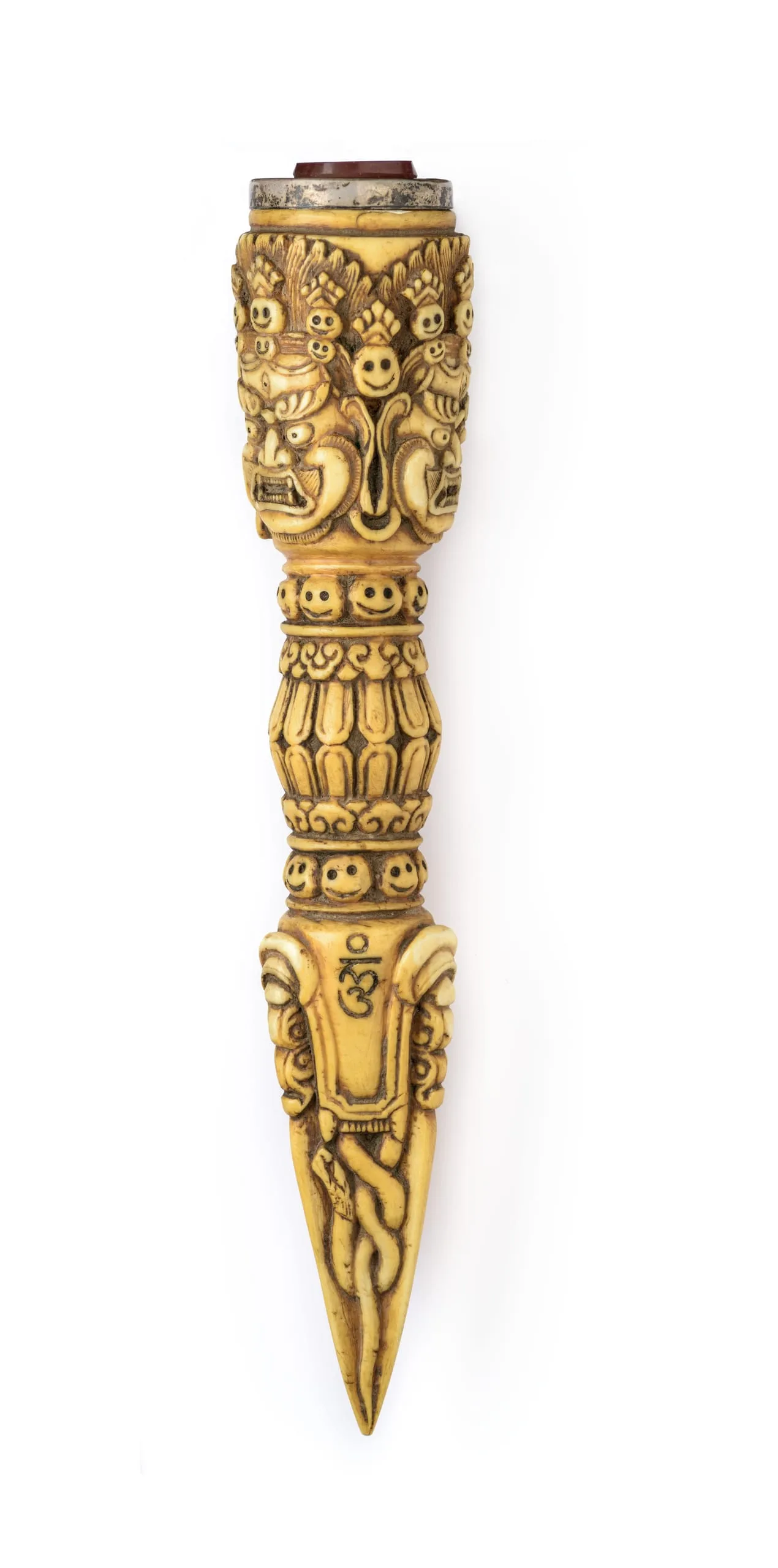
The Tibetan ritual dagger (phurpa or Sanskrit: kila) is a three-sided peg-like implement that is used in diverse rites ranging from exorcism to meditation to blessings. Its primary association is with the Vajrayana meditational deity Dorje Phurpa (also known as Vajrakilaya, see M.70.1.6). Phurpas are distinguished by various terminals, often multi-headed deities. In this bone example from Eastern Tibet (?), the terminal is a polished slab of carnelian set in silver. Carnelian is purportedly used as a symbolic substitute for a thunderbolt (vajra). The upper section is adorned with the three wrathful heads of Dorje Phurpa, who is the personification of the phurpa. The middle section, used as the hilt, has two symmetrical segments of grinning skulls, trefoil motifs, and lotus petals. The tip is decorated with mythical aquatic animals (makaras) and entwined serpent coils. Beneath the junction of the middle section and the tip, the symbolic syllable hum is inscribed.
A comparable phurpa is reportedly in the Field Museum, Chicago.
- Selected Bibliography
- Pal, Pratapaditya. Art of Tibet. Los Angeles; Berkeley, CA: Los Angeles County Museum of Art; University of California Press, 1983.
- Pal, Pratapaditya. Art of Tibet. Expanded edition. Los Angeles: Los Angeles County Museum of Art, 1990.
- Pal, Pratapaditya. Elephants and Ivories in South Asia. Los Angeles: Los Angeles County Museum of Art, 1981.
- Little, Stephen, and Tushara Bindu Gude. Realms of the Dharma: Buddhist Art across Asia. Los Angeles: Los Angeles County Museum of Art, 2025.