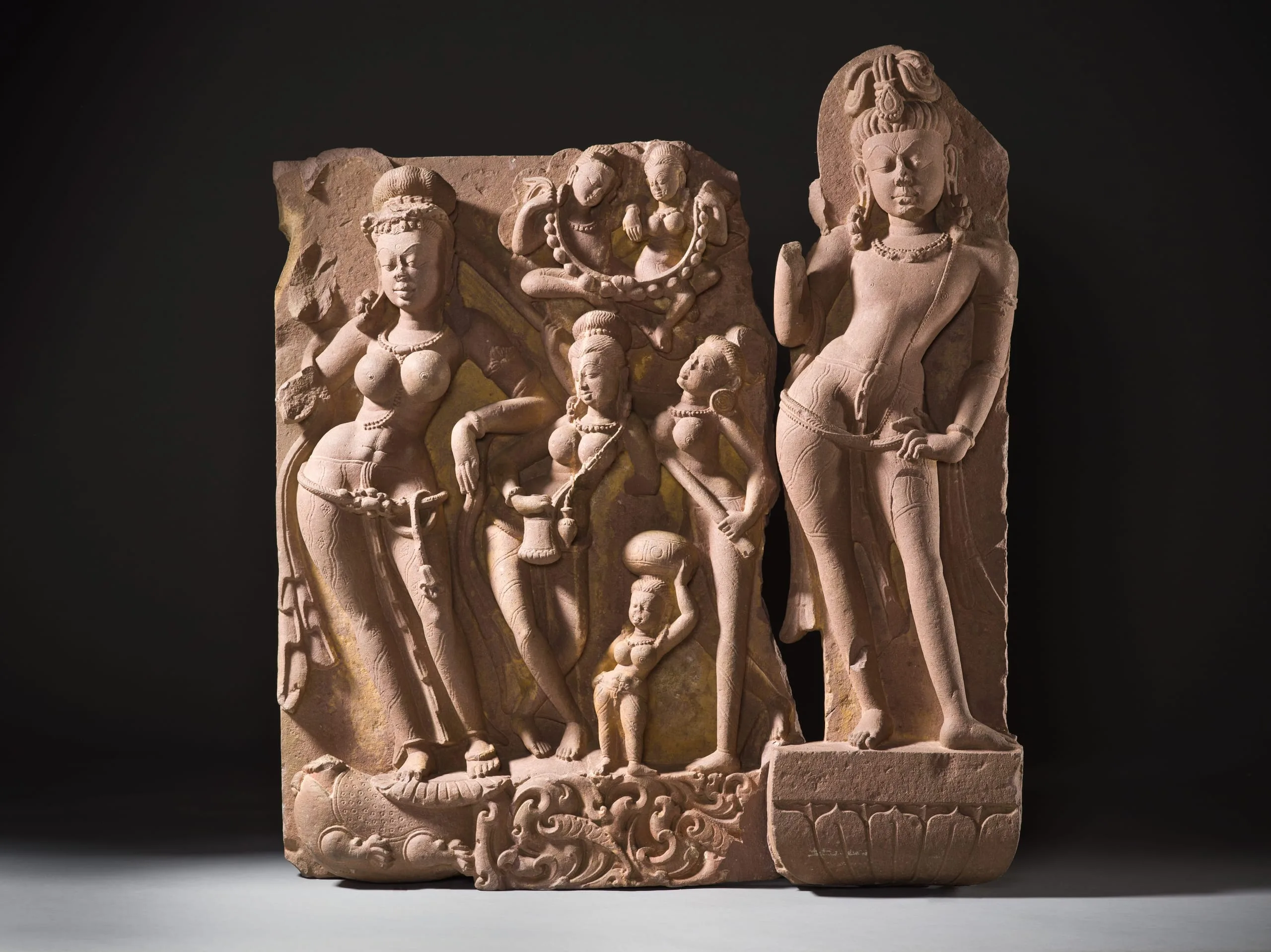
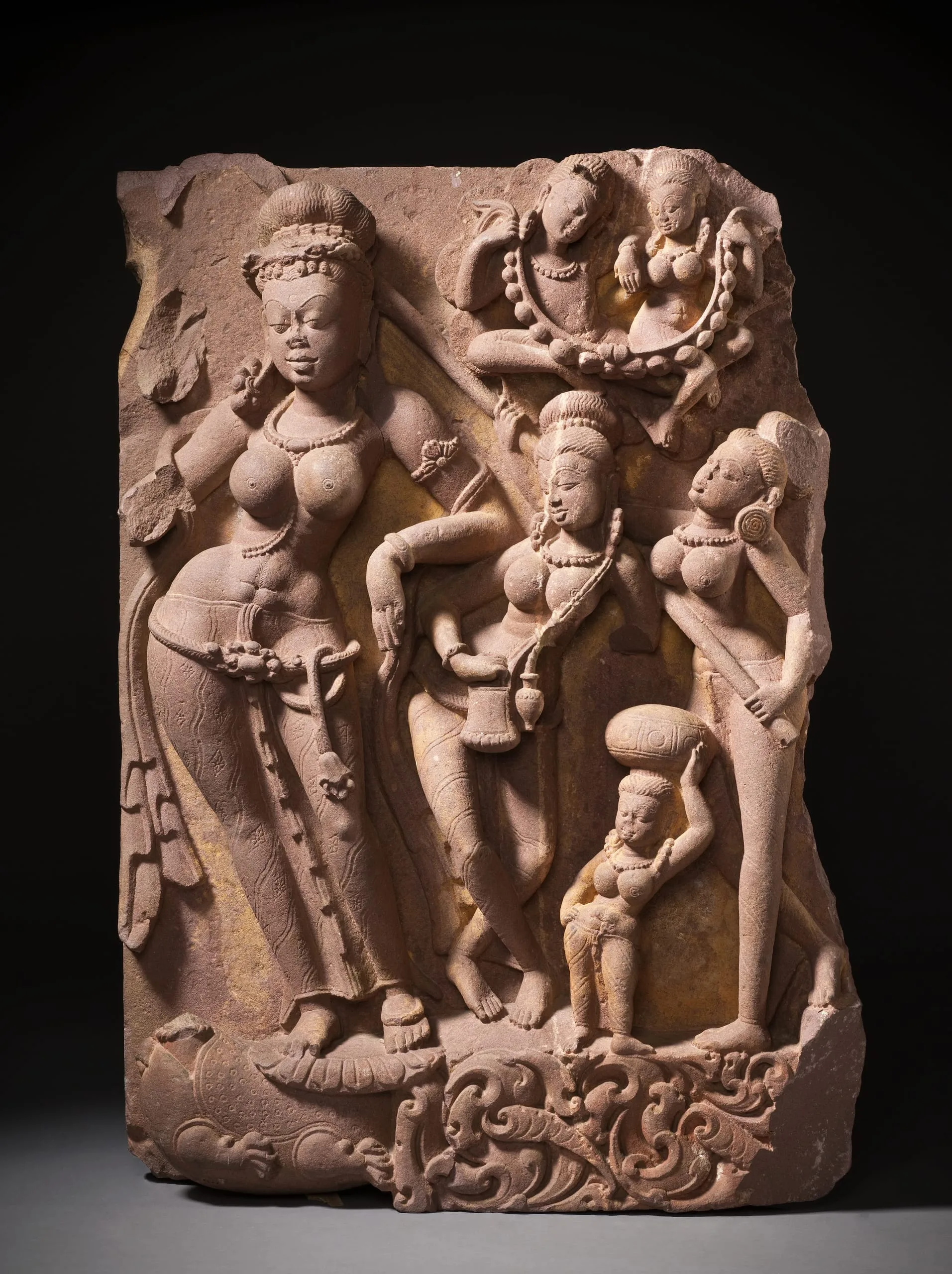
Beginning as early as the renowned Gupta Dynasty (319-467 CE) and continuing through the early medieval period (6th-13th century), the door jambs of northern and central Indian Hindu temples are typically graced with deified personifications of the Indian rivers Ganga (Ganges River) and Yamuna (formerly Jumna River). At first, they were place near the lintel but were later shifted to the base of the door jamb. The goddesses serve to demarcate the threshold into the sacred space within and to purify the worshippers who enter the sanctum.
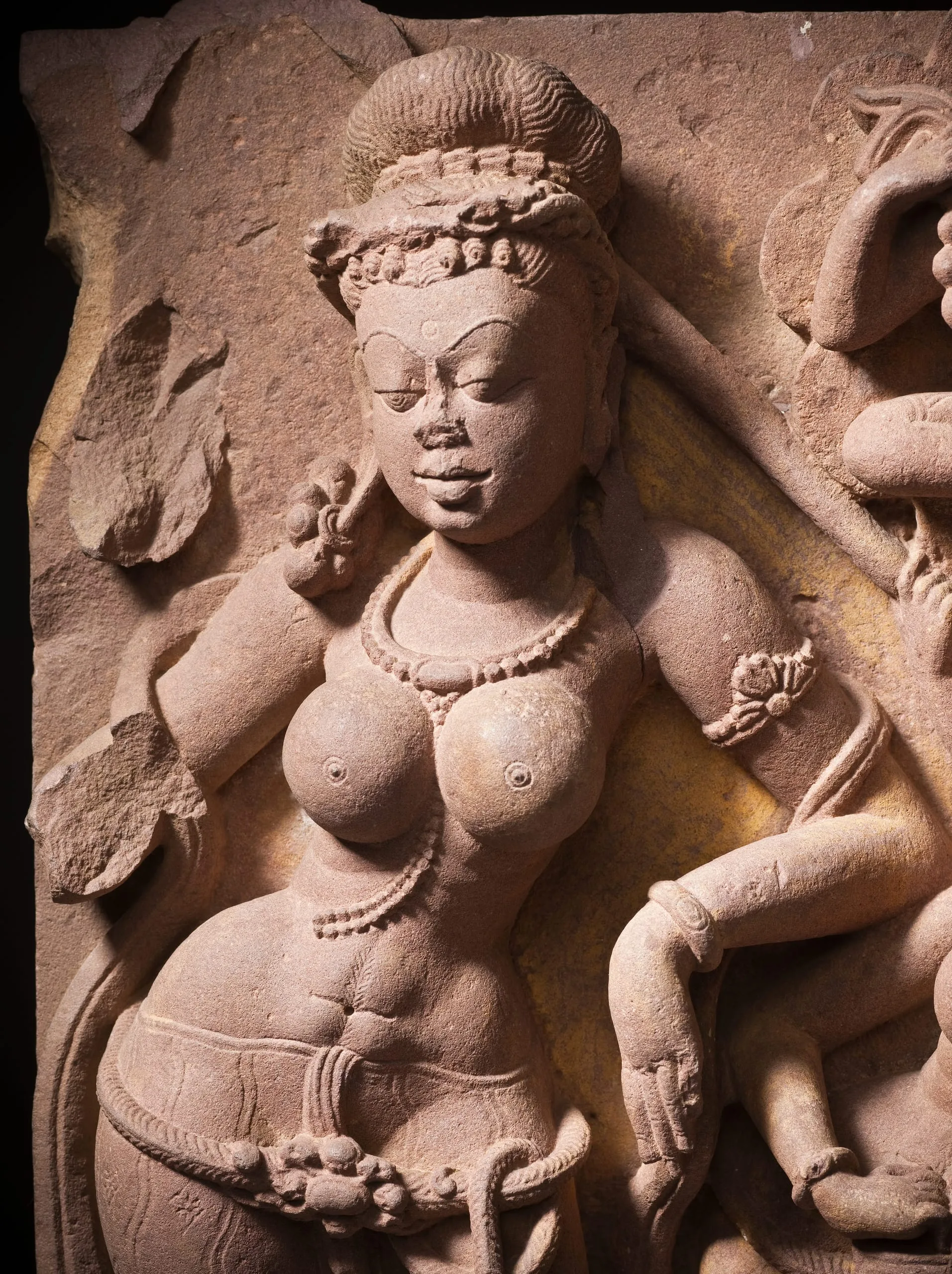
The Yamuna is the main tributary of the Ganges River, joining it at the pilgrimage site of Prayag near Allahabad, Uttar Pradesh. Mythologically, Yamuna is the daughter of the sun god Surya and the cloud goddess Sanjna, and the twin sister of the god of death Yama.
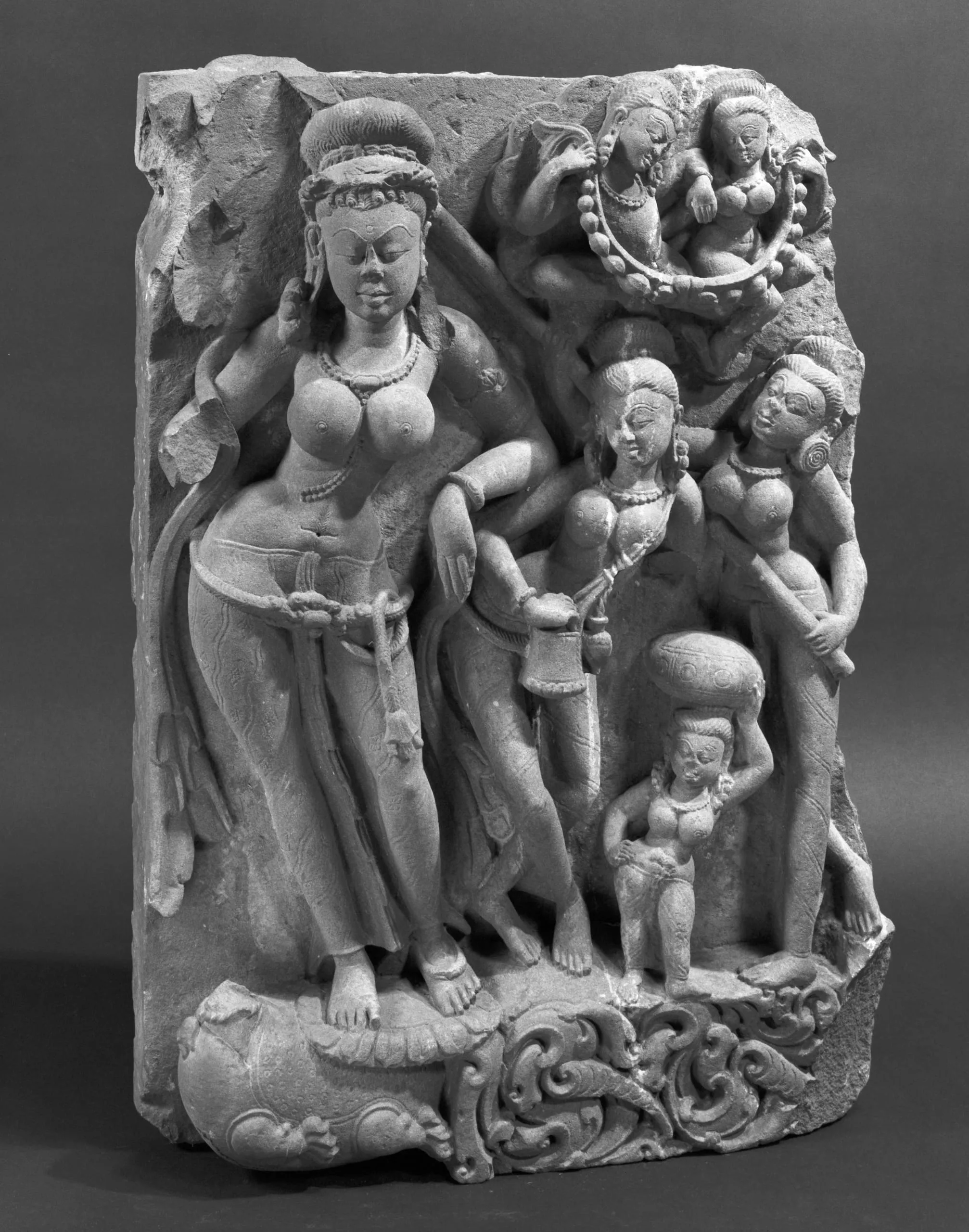
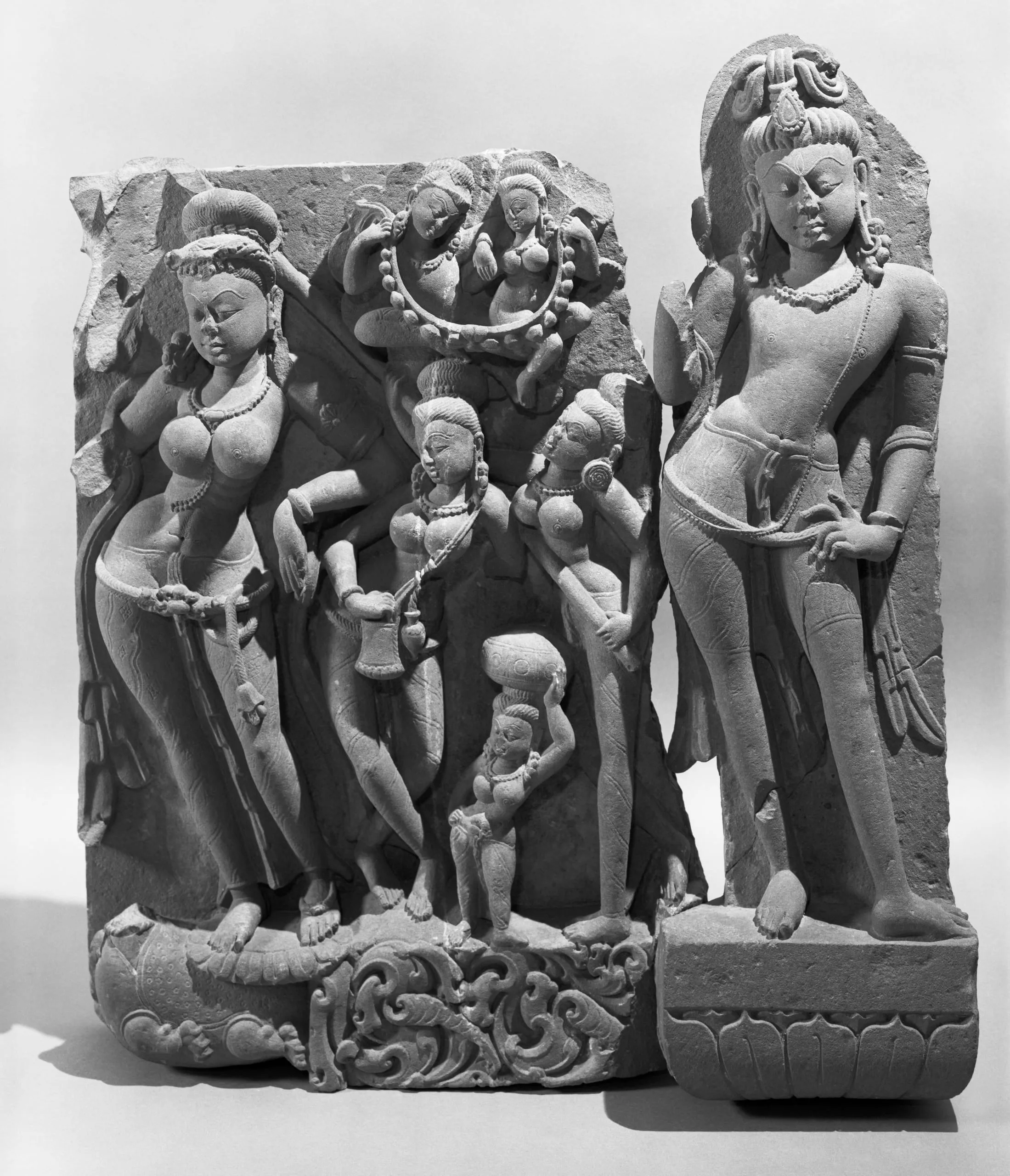
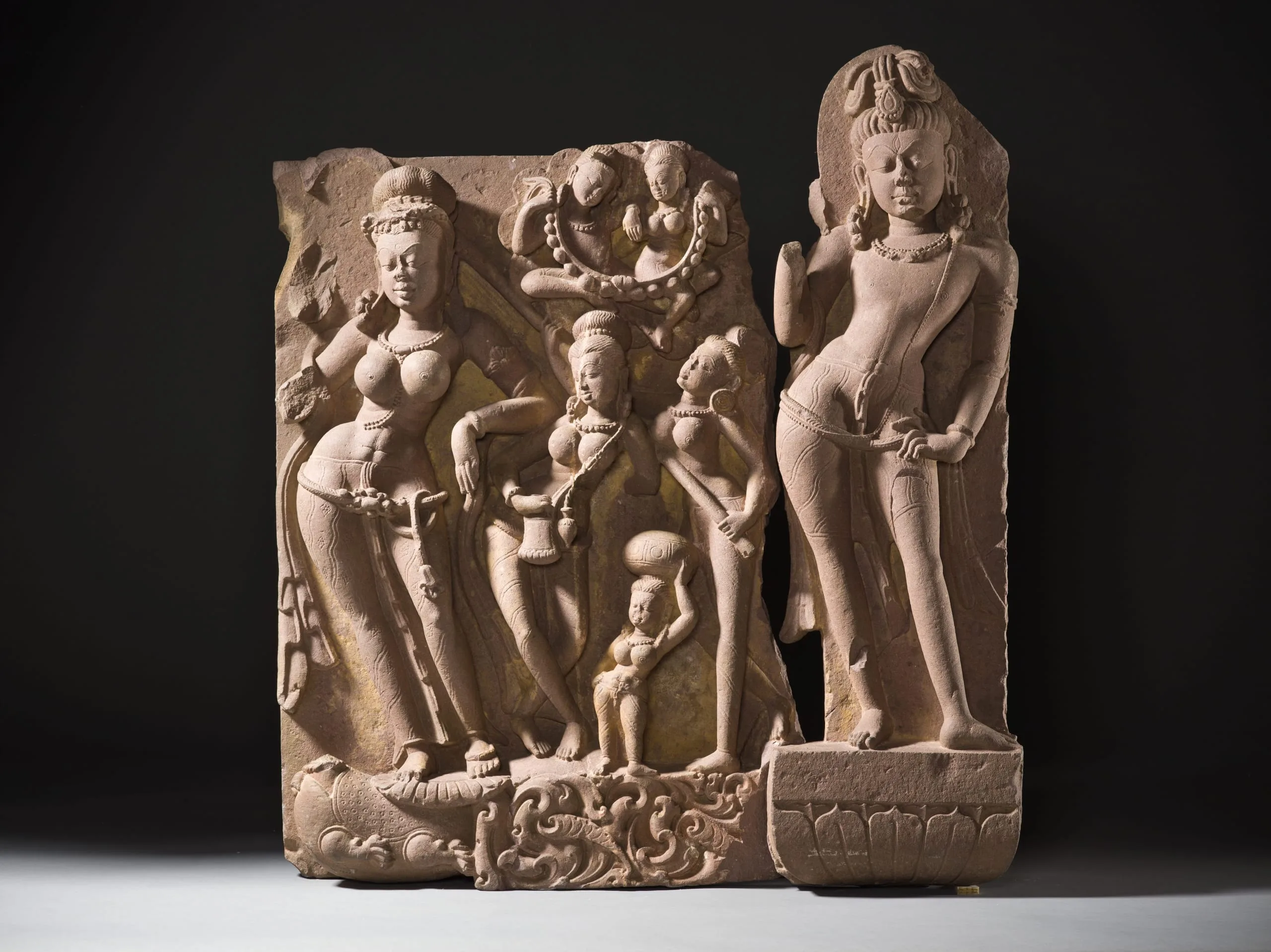
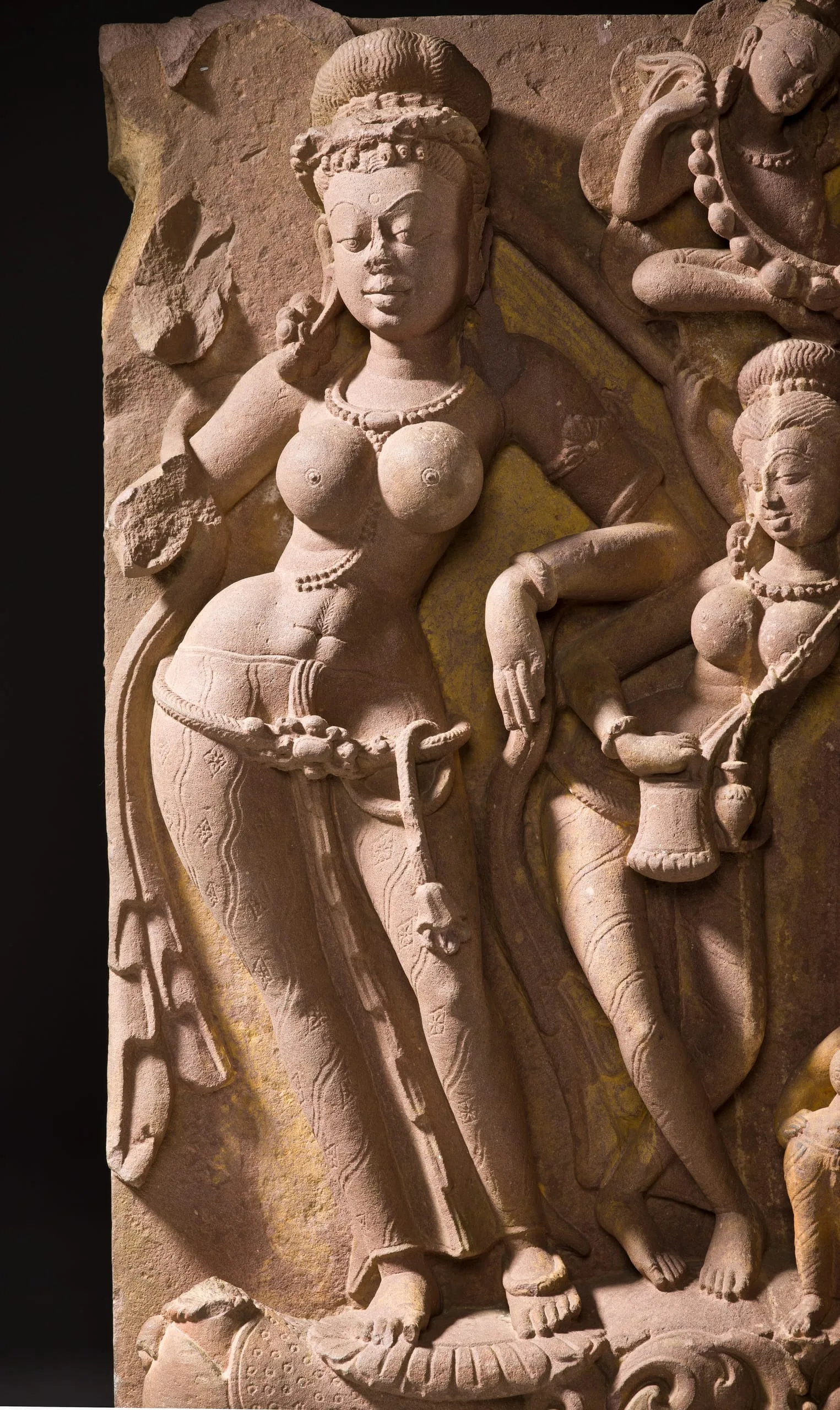
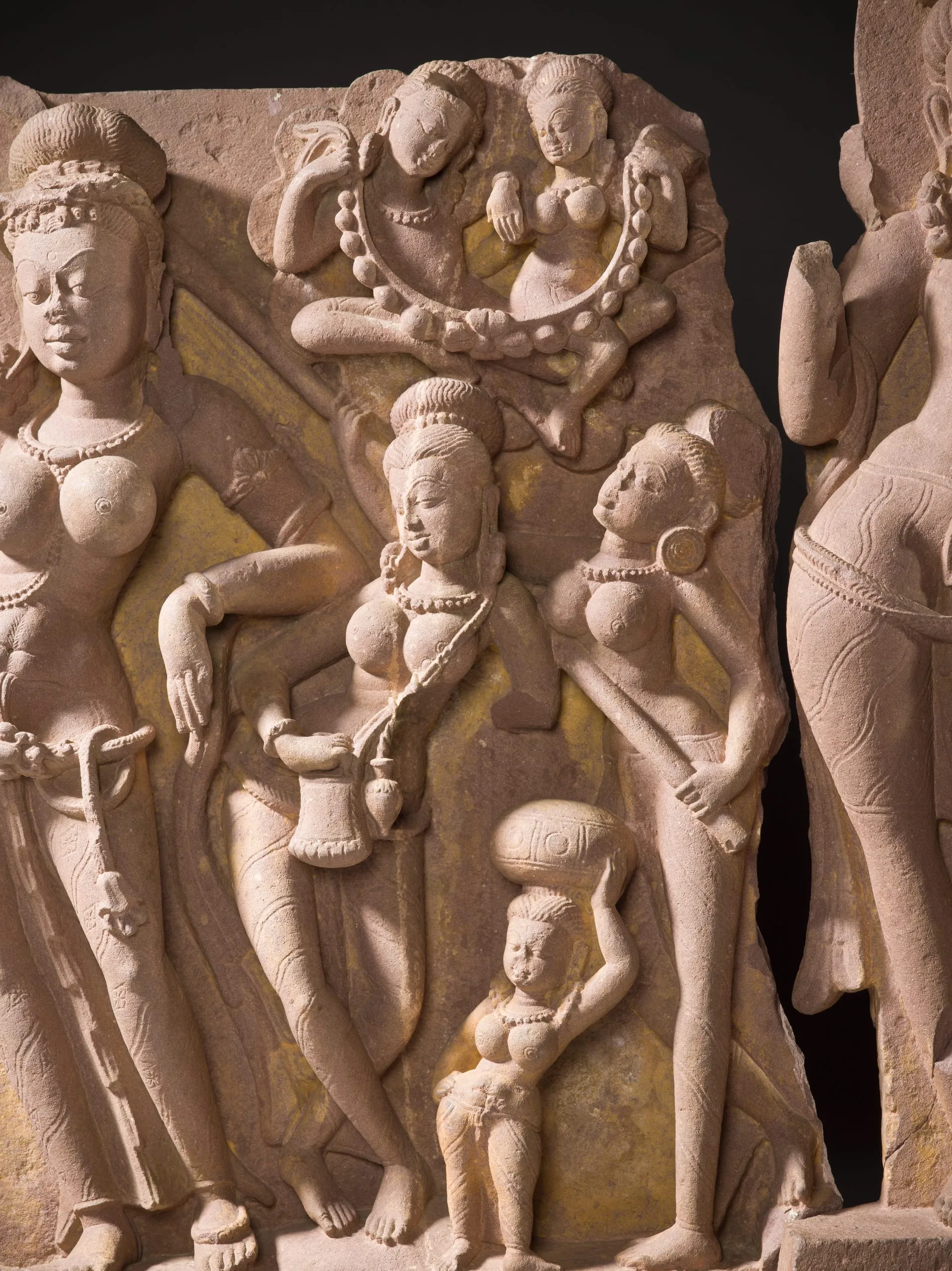
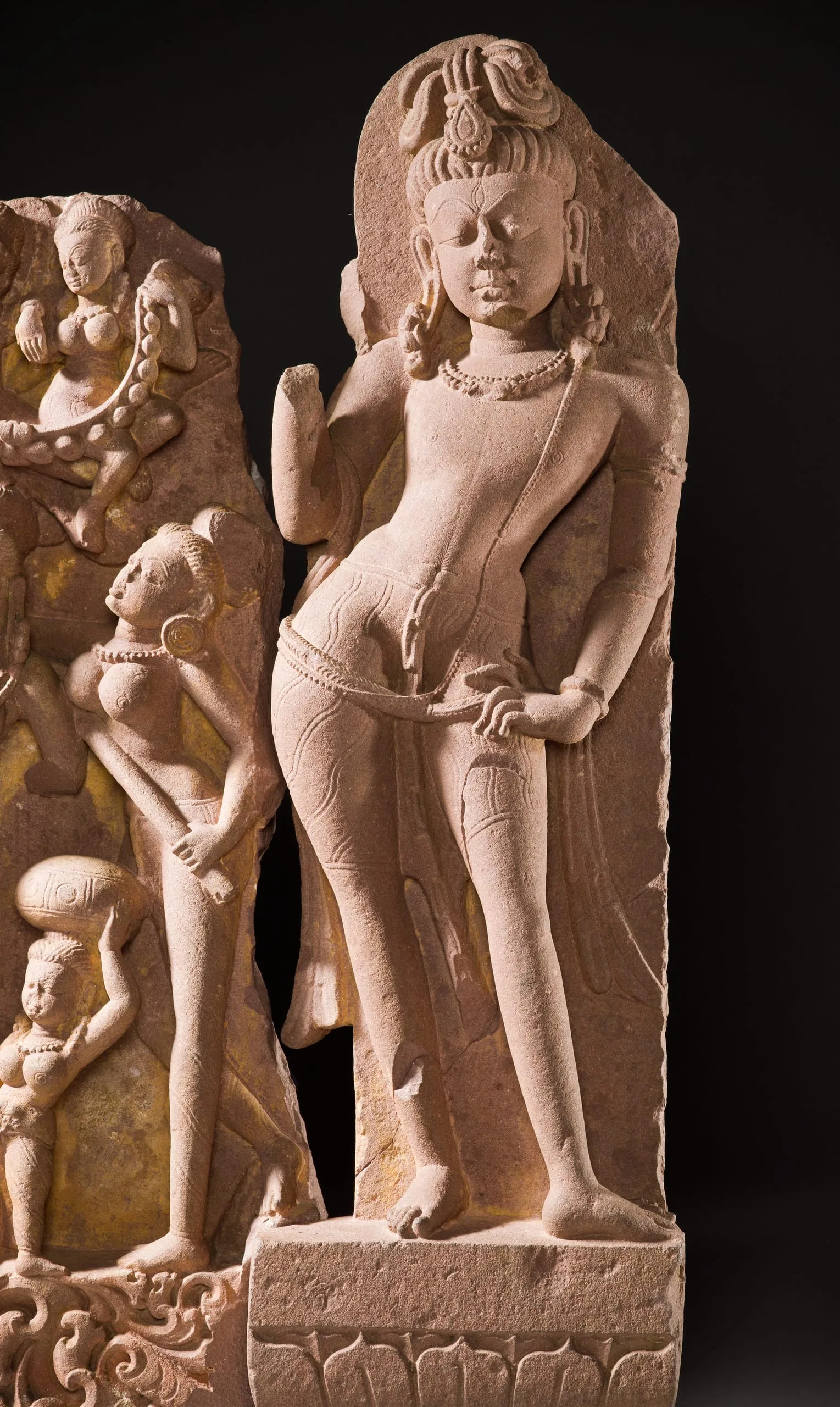
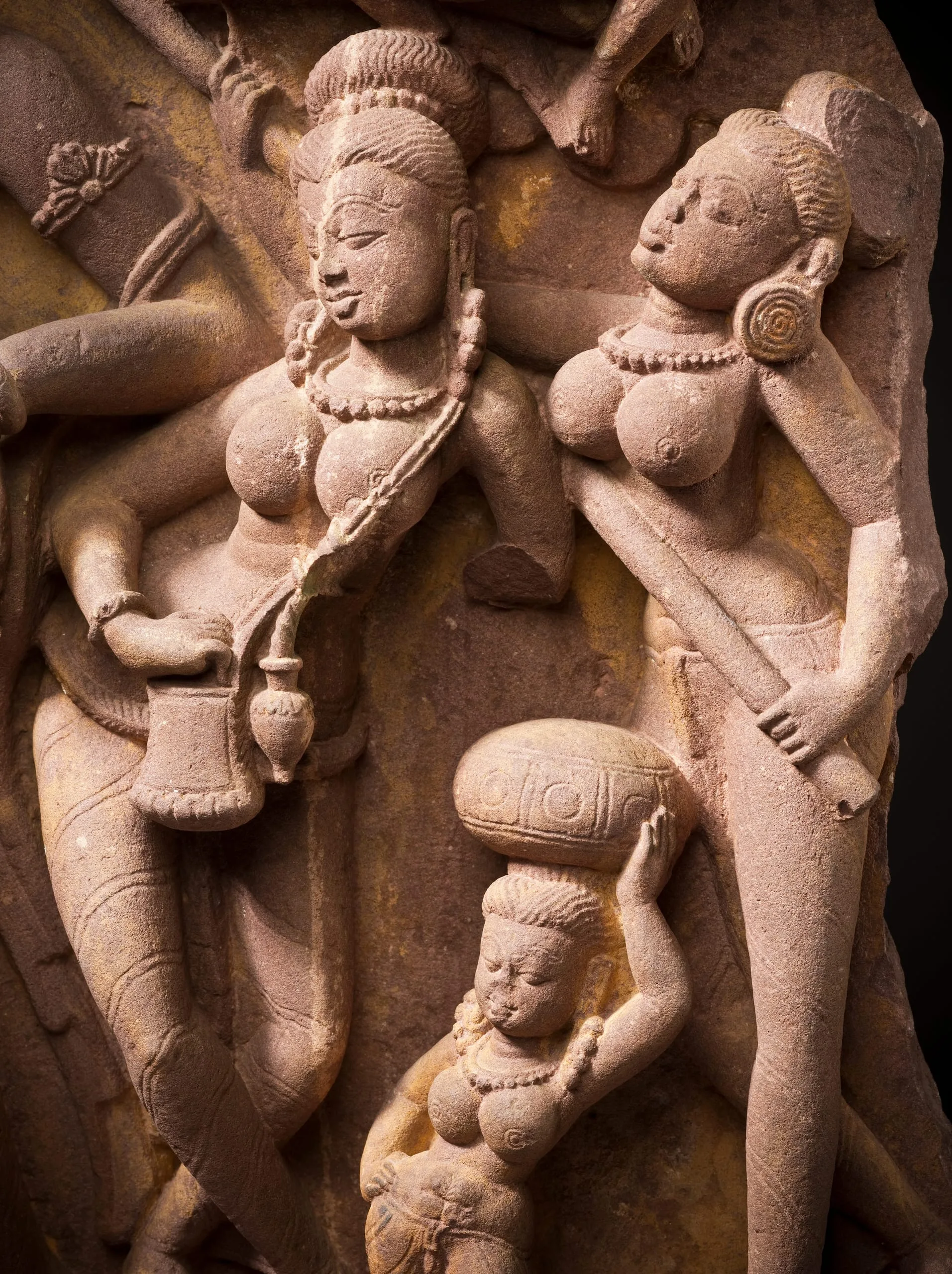
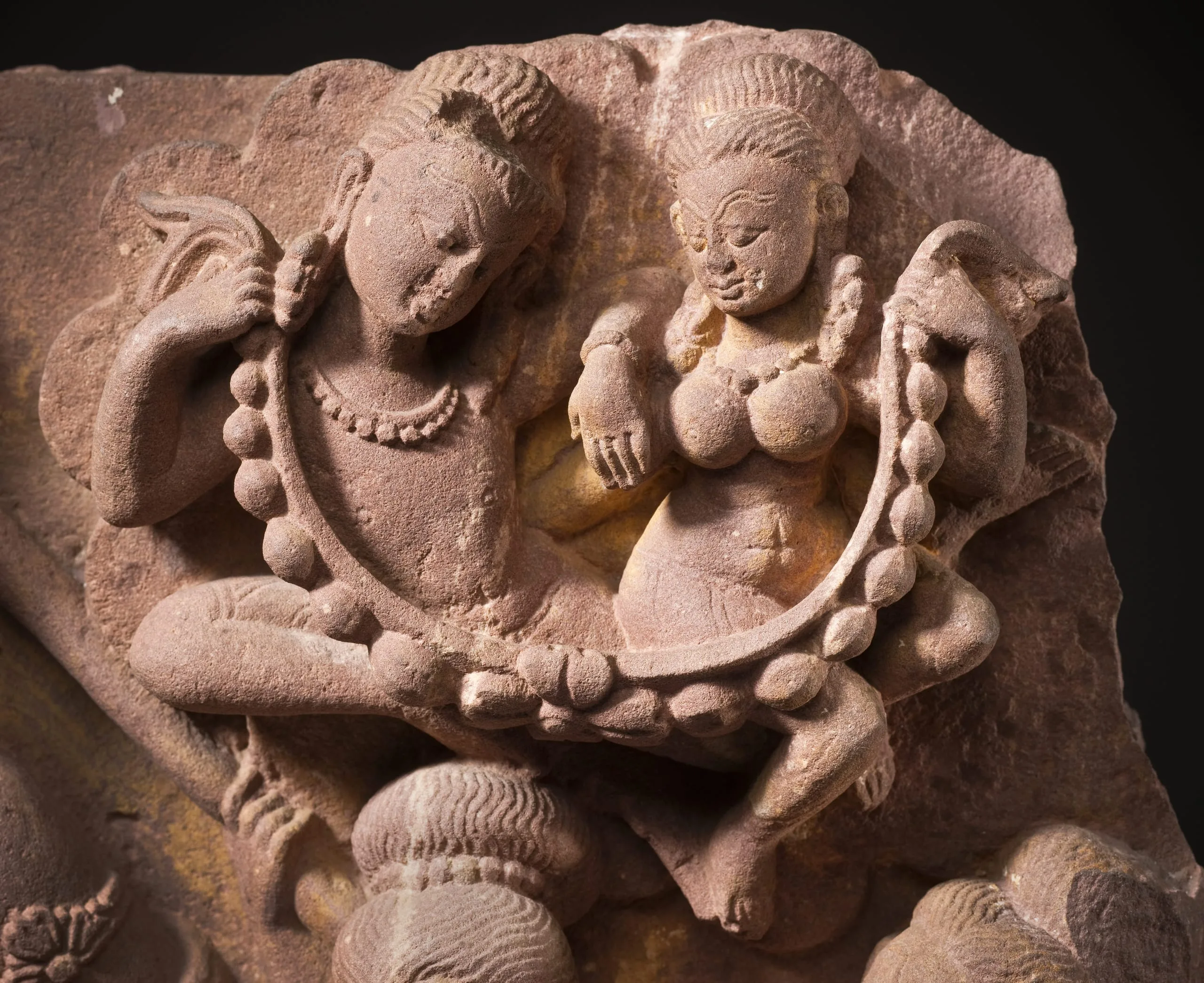
Yamuna stands on her mount, a tortoise. She is accompanied at the opposite end of the relief by a Shaiva door guardian bearing Shiva’s ascetic hairstyle and third eye of wisdom. Between them are female attendants of the goddess’s retinue and two flying celestials carrying an honorific floral garland.
See the paired sculpture of Ganga (M.79.9.10.1).