LACMA

ShopMembershipMyLACMATickets
LACMA
Los Angeles County Museum of Art
5905 Wilshire Blvd.
Los Angeles, CA 90036
info@lacma.org
(323) 857-6000
Sign up to receive emails
Subscribe
© Museum Associates 2025

Museum Hours

Monday

11 am–6 pm

Tuesday

11 am–6 pm

Wednesday

Closed

Thursday

11 am–6 pm

Friday

11 am–8 pm

Saturday

10 am–7 pm

Sunday

10 am–7 pm


  • About LACMA
  • Jobs
  • Building LACMA
  • Host An Event
  • Unframed
  • Press
  • FAQs
  • Log in to MyLACMA
  • Privacy Policy
© Museum Associates 2025
Collections

Nure
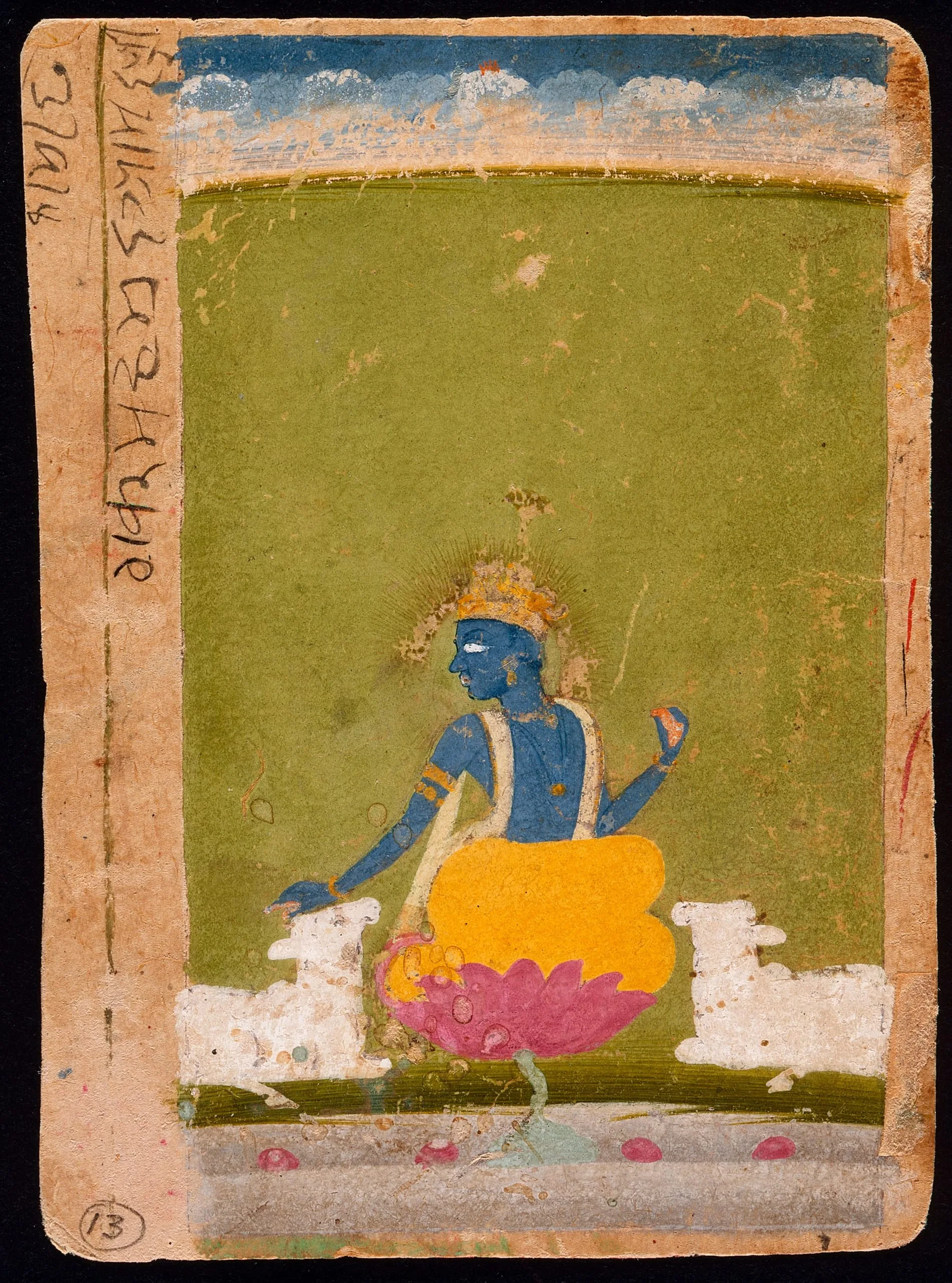
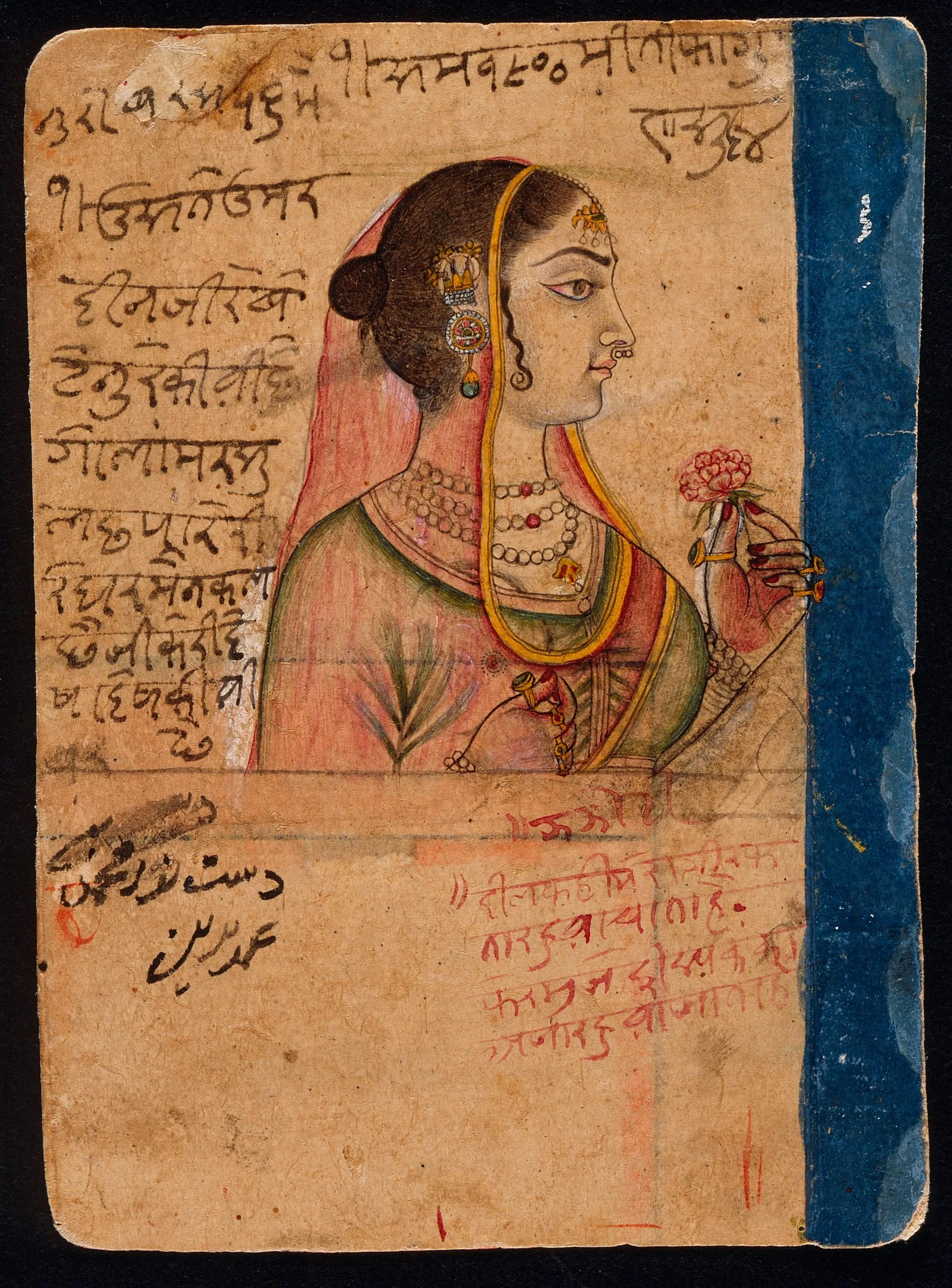
Portrait of a Woman (recto), Nazar Painting of Krishna (verso)1743 (recto), circa 1750 or later (verso)

Not on view
Indian manuscript painting of a four-armed, blue-skinned divine figure seated on a pink lotus, flanked by two white animals, against an olive-green background with script inscription along the left border
Opaque watercolor manuscript page, bust-length profile portrait of a woman in a pink dupatta and green garment, wearing pearl necklaces, earrings, and nose ring, holding a pink flower; surrounded by columns of Devanagari and Persian script in black and red ink.
Artist, obverse
Nure
India, active mid-18th century
Artist, reverse
Mahmud
India, active 1750-1800
Title
Portrait of a Woman (recto), Nazar Painting of Krishna (verso)
Place Made
India, Rajasthan, Bikaner
Date Made
1743 (recto), circa 1750 or later (verso)
Medium
Opaque watercolor and ink on paper
Dimensions
Image: 5 1/8 x 3 3/4 in. (13.01 x 9.52 cm)
Credit Line
Gift of Paul F. Walter
Accession Number
M.79.191.9
Classification
Drawings
Collecting Area
South and Southeast Asian Art
Curatorial Notes

Recto: According to the long contemporaneous devanagari Hindi inscription in black ink, this alluring portrait by the Bikaner artist Nure was painted in 1743 when he was sixteen years old and visiting the home of a textile printer where he saw an earlier portrait that he then copied.

“[Done by] Nure [Nuruddin] at the age of 16.
Leaf 1, Dated 4th [day] of the bright half of the Phalguna [February-March] month, V.S. 1800 [A.D. 1743]
Leaf 1, executed by Nure, son of Usta Umardin. A copy [of an earlier such portrait] is in
Gulam Rasul Chhipa [textile printer]’s house which he [Nure] saw and after seeing that he executed it.” (Translation by Naval Krishna.)

The Arabic inscription in black ink confirms Nure as the artist. The Urdu couplet in red, which was perhaps added later by a collector to convey the spirit of the portrait, reads: “My heart somewhere [with the woman in the portrait] is being captured and thus I begin to get fever of love.” (Translation by Naval Krishna.)

Contrary to the specific information furnished in the inscriptions, there is no known son of Umardin named Nure according to the published genealogies of the Bikaner painters and the date of 1743 does not fall within Nure’s generally accepted dates of 1690-1715. Thus, the full backstory of this evocative portrait remains an enigma.

Verso: Bikaneri artists created small portraits to present (nazar) to their patrons during festivals. Images of Krishna, such as this example, were the most favored subjects.
Selected Bibliography
  • Markel, Stephen. "The Enigmatic Image: Curious Subjects in Indian Art." Asianart.com, July 28, 2015. http://asianart.com/articles/enigmatic.