LACMA

ShopMembershipMyLACMATickets
LACMA
Los Angeles County Museum of Art
5905 Wilshire Blvd.
Los Angeles, CA 90036
info@lacma.org
(323) 857-6000
Sign up to receive emails
Subscribe
© Museum Associates 2025

Museum Hours

Monday

11 am–6 pm

Tuesday

11 am–6 pm

Wednesday

Closed

Thursday

11 am–6 pm

Friday

11 am–8 pm

Saturday

10 am–7 pm

Sunday

10 am–7 pm


  • About LACMA
  • Jobs
  • Building LACMA
  • Host An Event
  • Unframed
  • Press
  • FAQs
  • Log in to MyLACMA
  • Privacy Policy
© Museum Associates 2025
Collections

Unknown
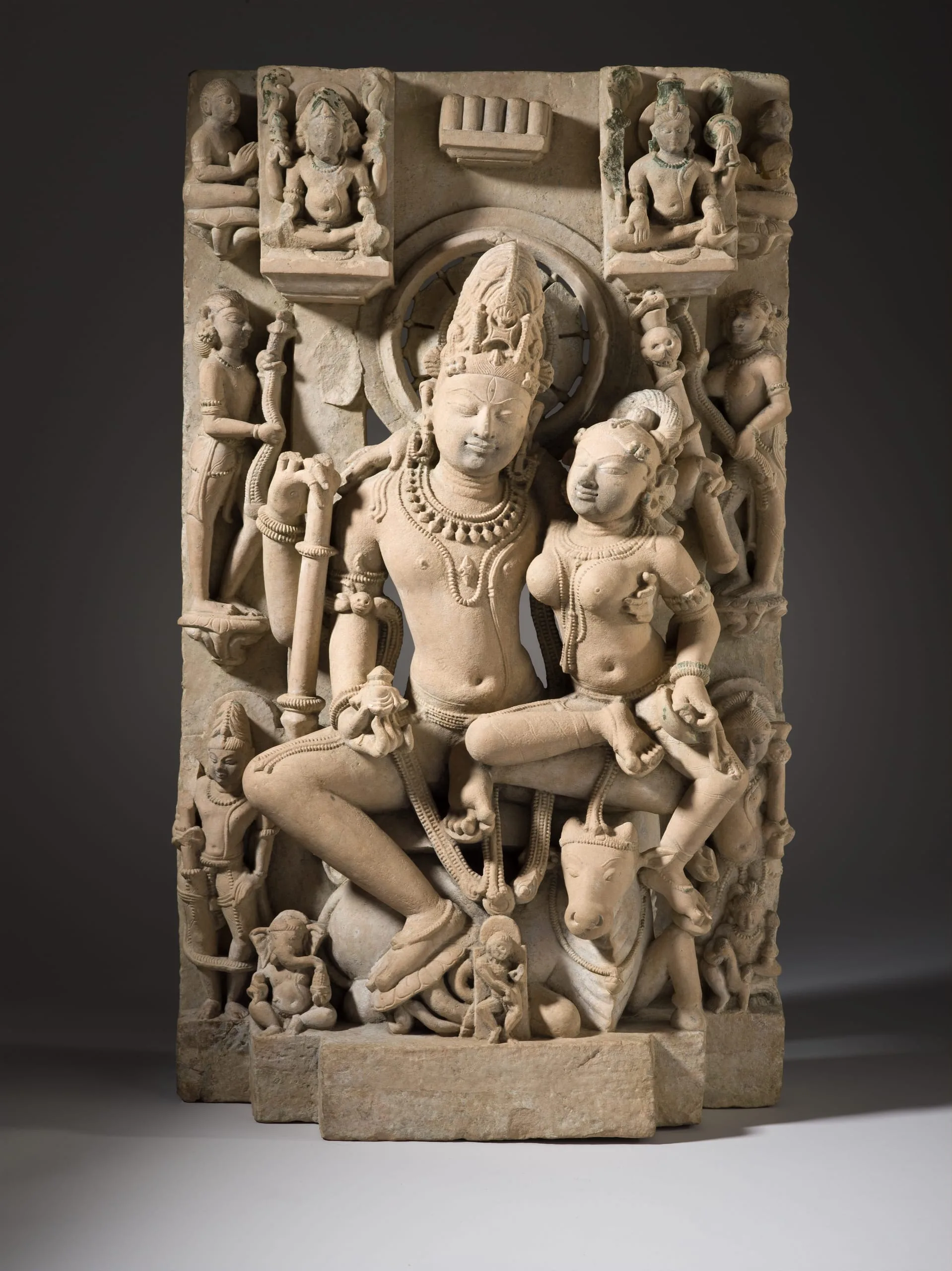
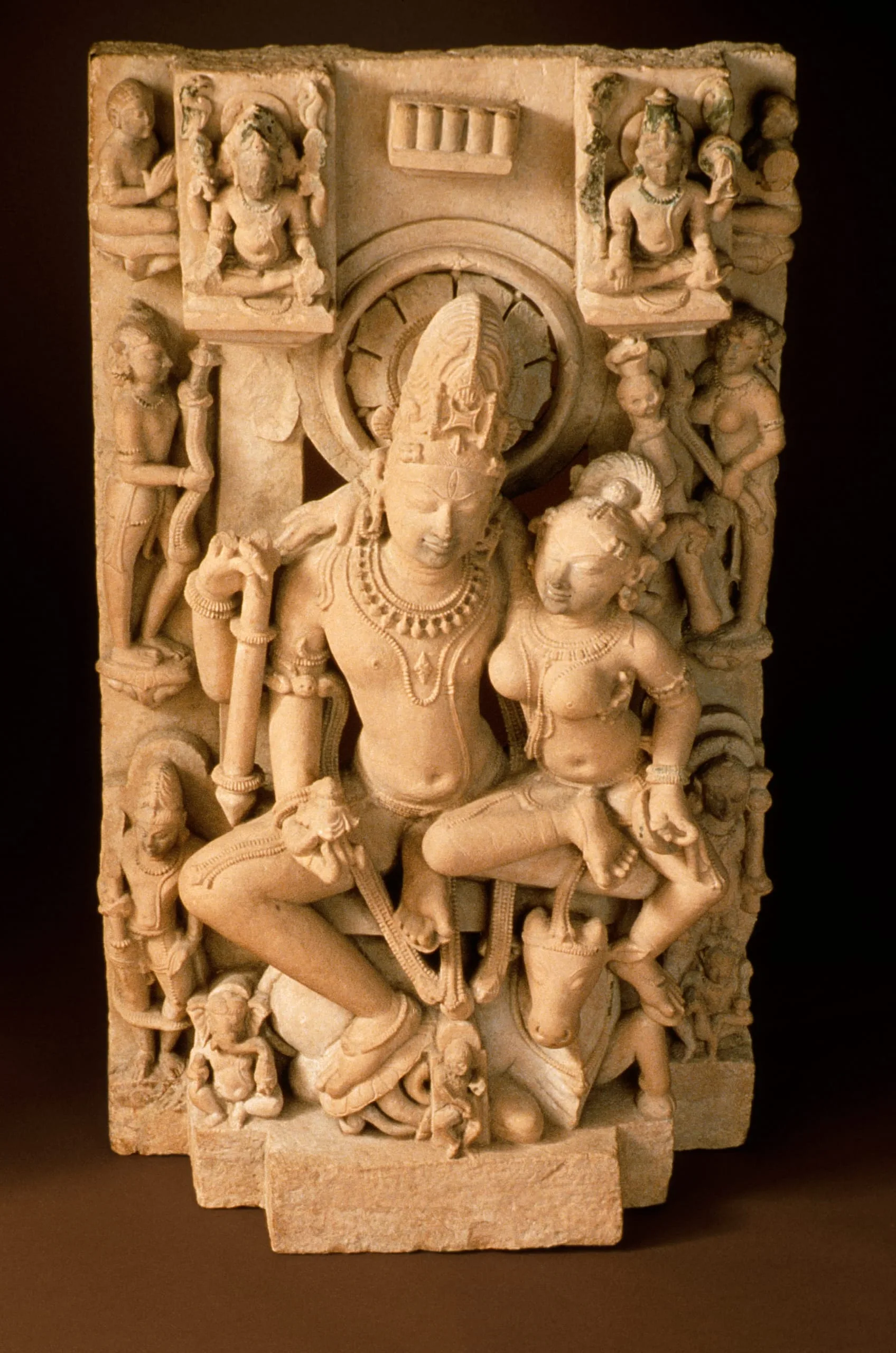
Shiva's Familycirca mid-10th century

Not on view
Sandstone relief sculpture with two large central figures — a seated crowned deity and a standing female attendant — surrounded by smaller carved figures, animals, and decorative panels
Sandstone relief sculpture featuring two central seated figures adorned with jewelry and elaborate headdresses, set against a circular halo, with a bull at lower center. Multiple smaller attendant figures carved in high relief along the sides and upper corners, with intricate detailing throughout.
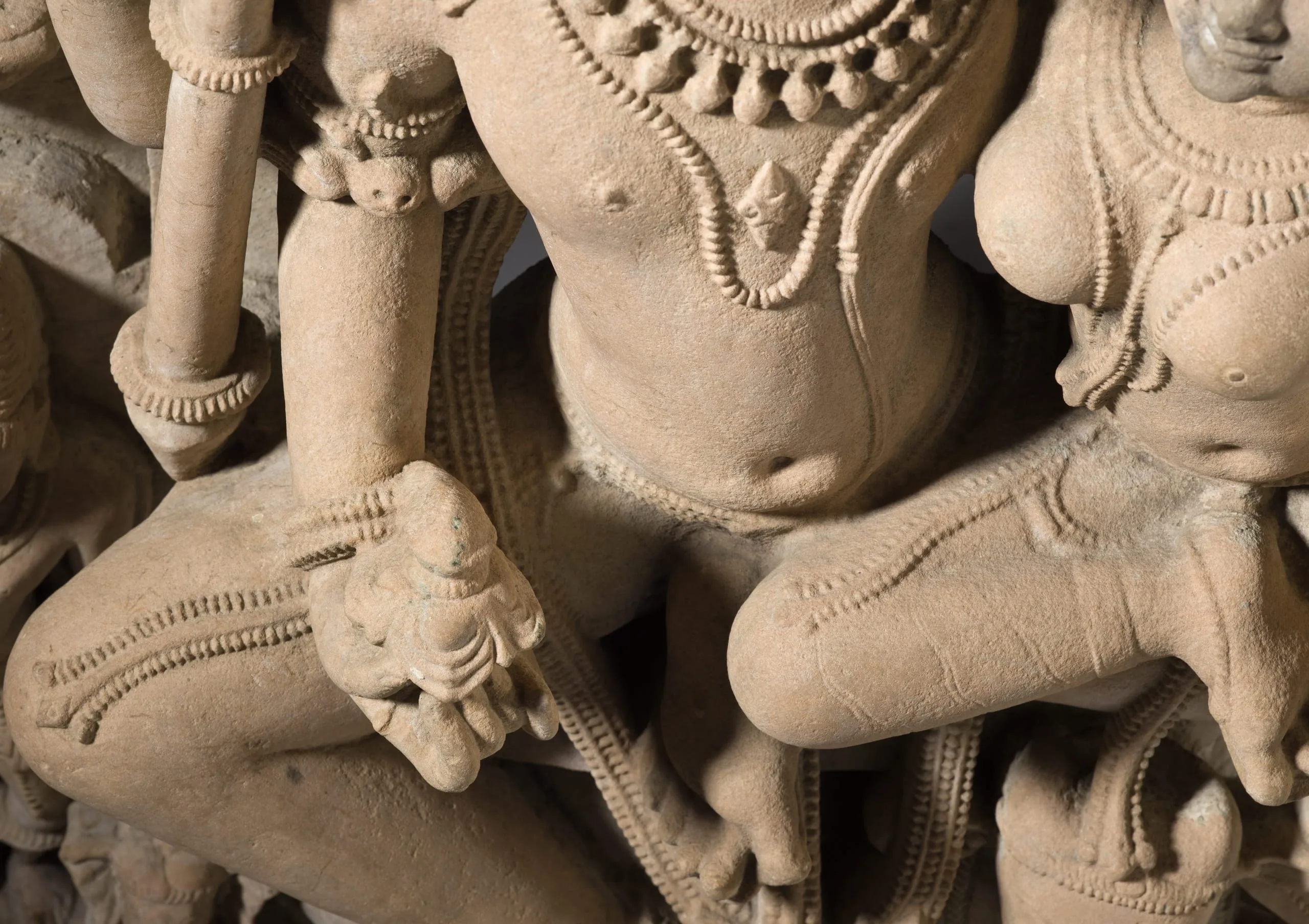
Sandstone relief sculpture, close-up of a multi-armed deity torso adorned with finely carved beaded necklaces and ornamental jewelry, with a small animal figure at lower right.
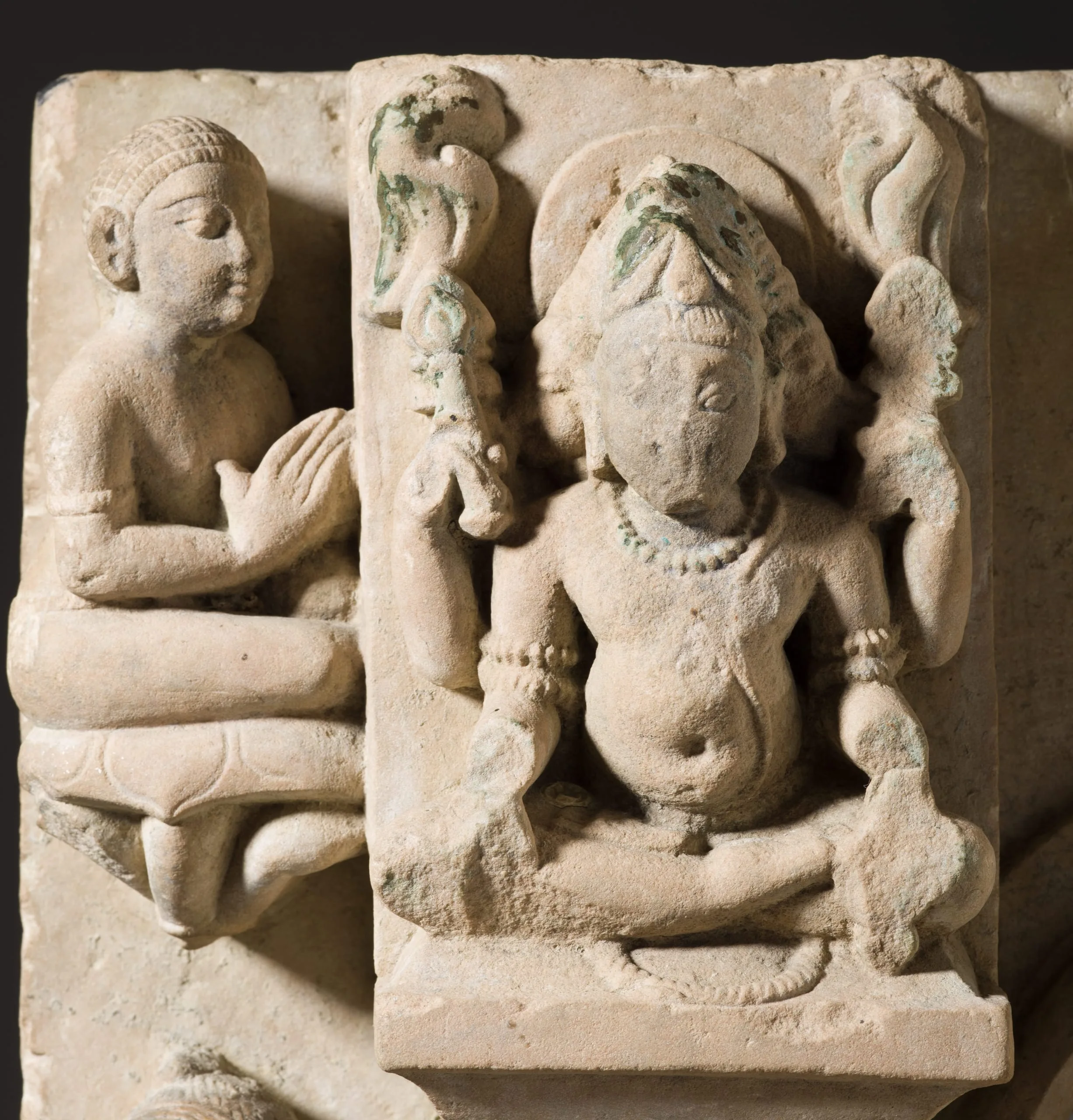
Stone relief carving with two seated figures in lotus position on adjoining panels; left figure is unadorned, right figure wears an elaborate headdress, necklaces, and armlets, with traces of green pigment remaining; high-relief work in pale sandstone.
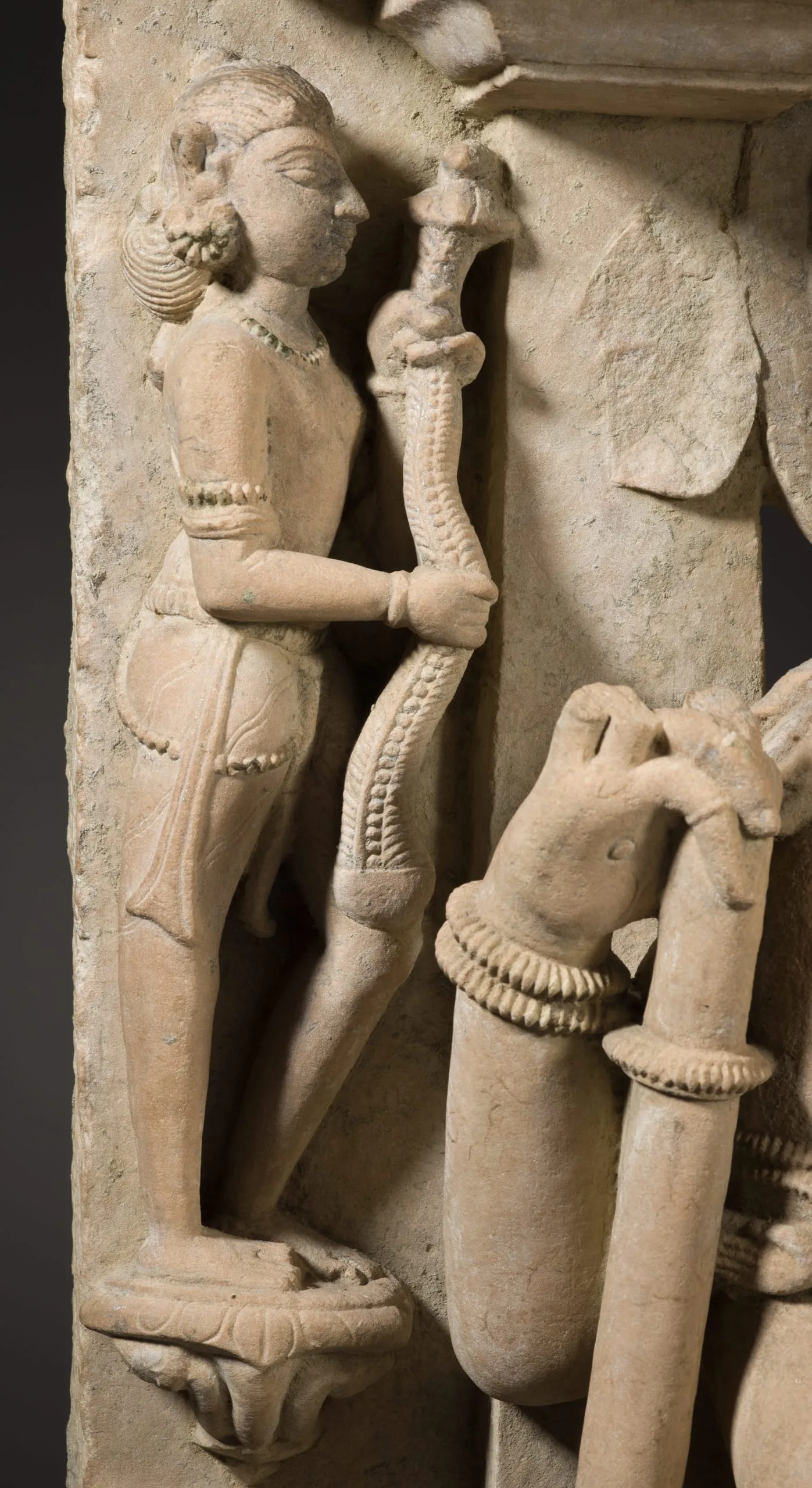
Stone relief sculpture depicting a standing female figure in profile, wearing jewelry and a wrapped lower garment, grasping a coiled serpent that extends upward; partial carved architectural elements and additional figures visible at right.
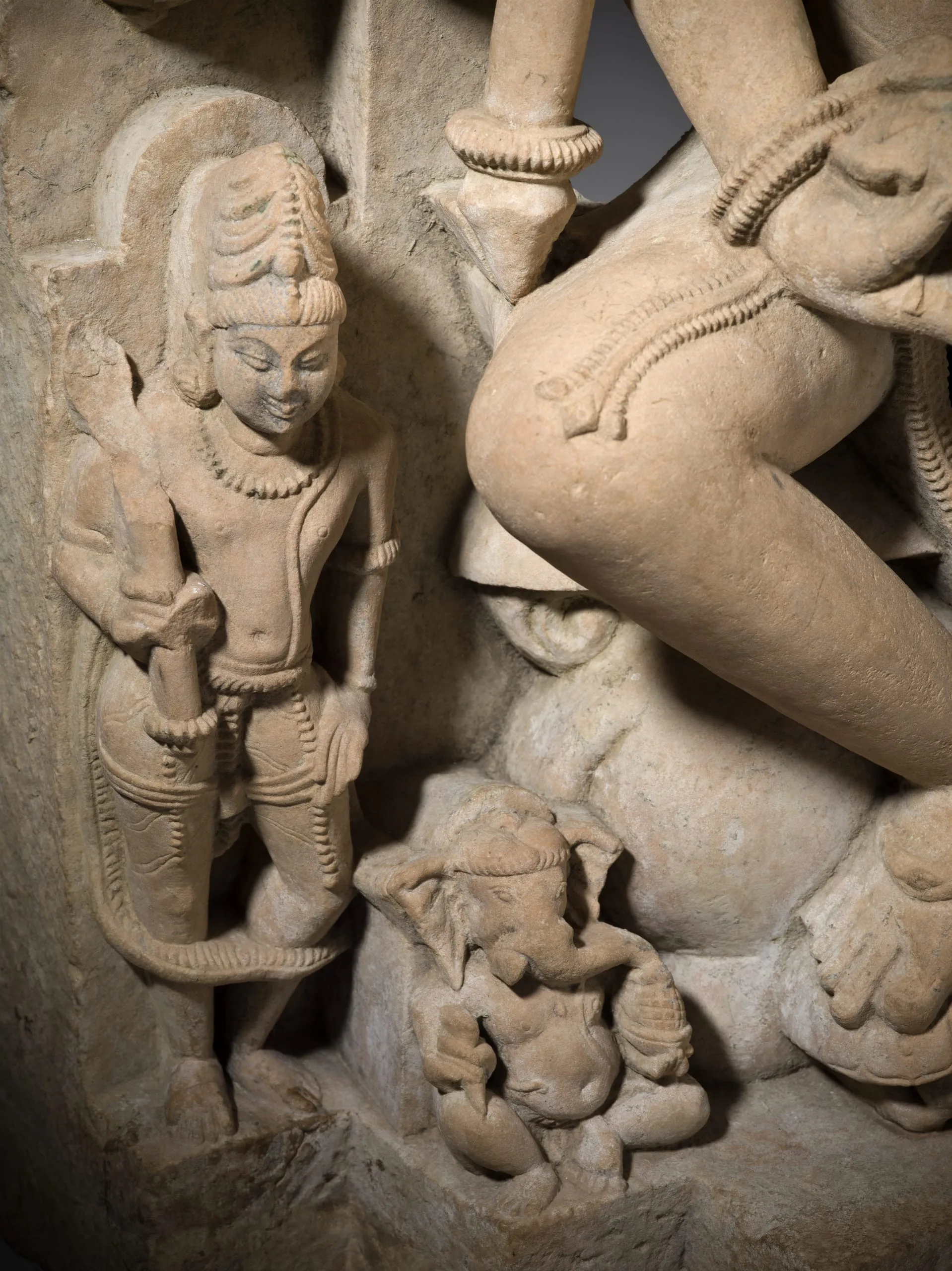
Stone relief sculpture with warm beige patina, depicting a standing attendant figure with beaded necklace and dhoti at left, beside a small elephant-headed figure in a dynamic pose at center, with carved limbs and rope-like decorative details of a larger figure above.
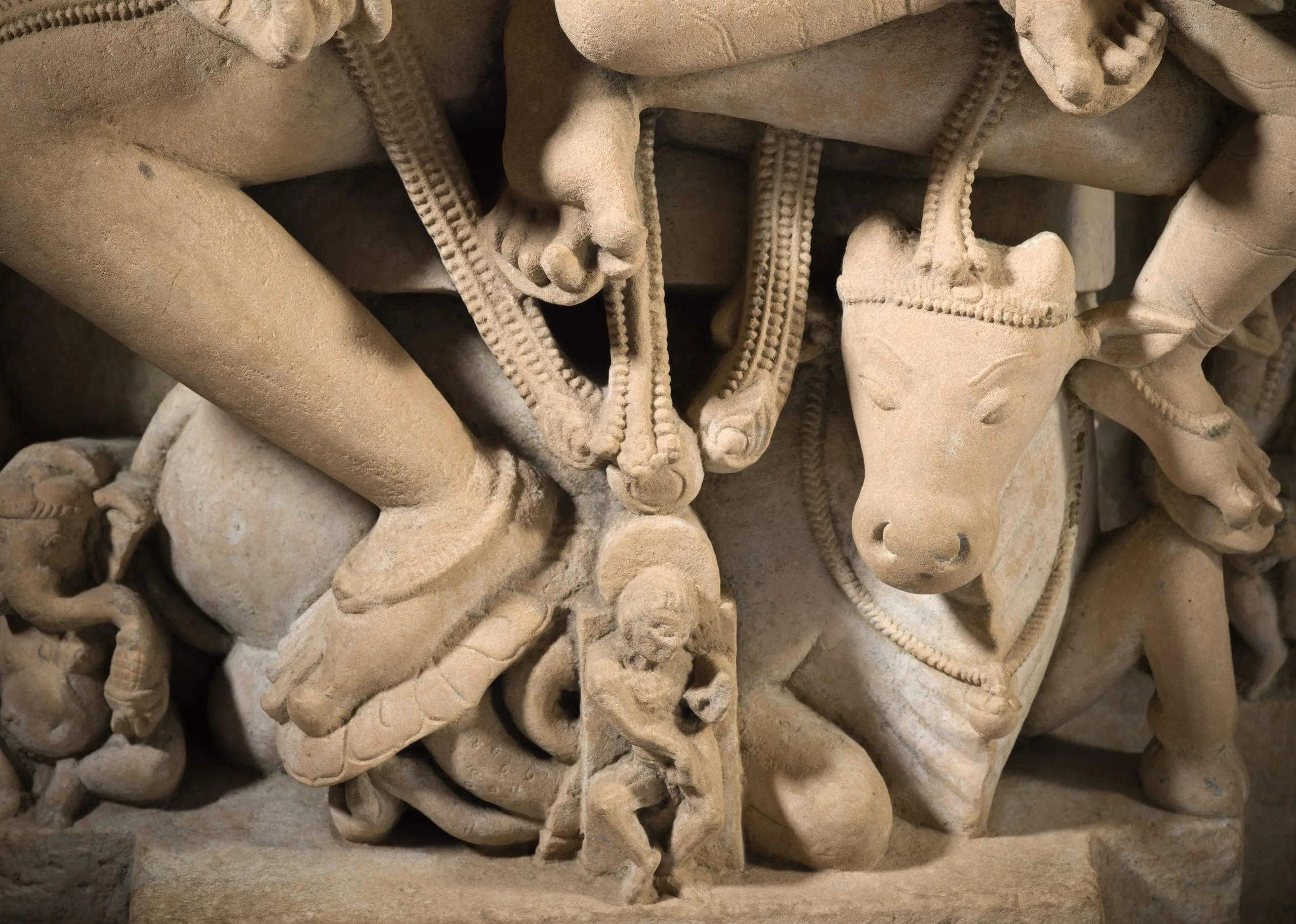
Sandstone temple relief fragment showing multiple large hands holding beaded garlands, a bull's head with decorative necklace at right, a small human figure at center base, and attendant figures at left, with finely detailed carving throughout.
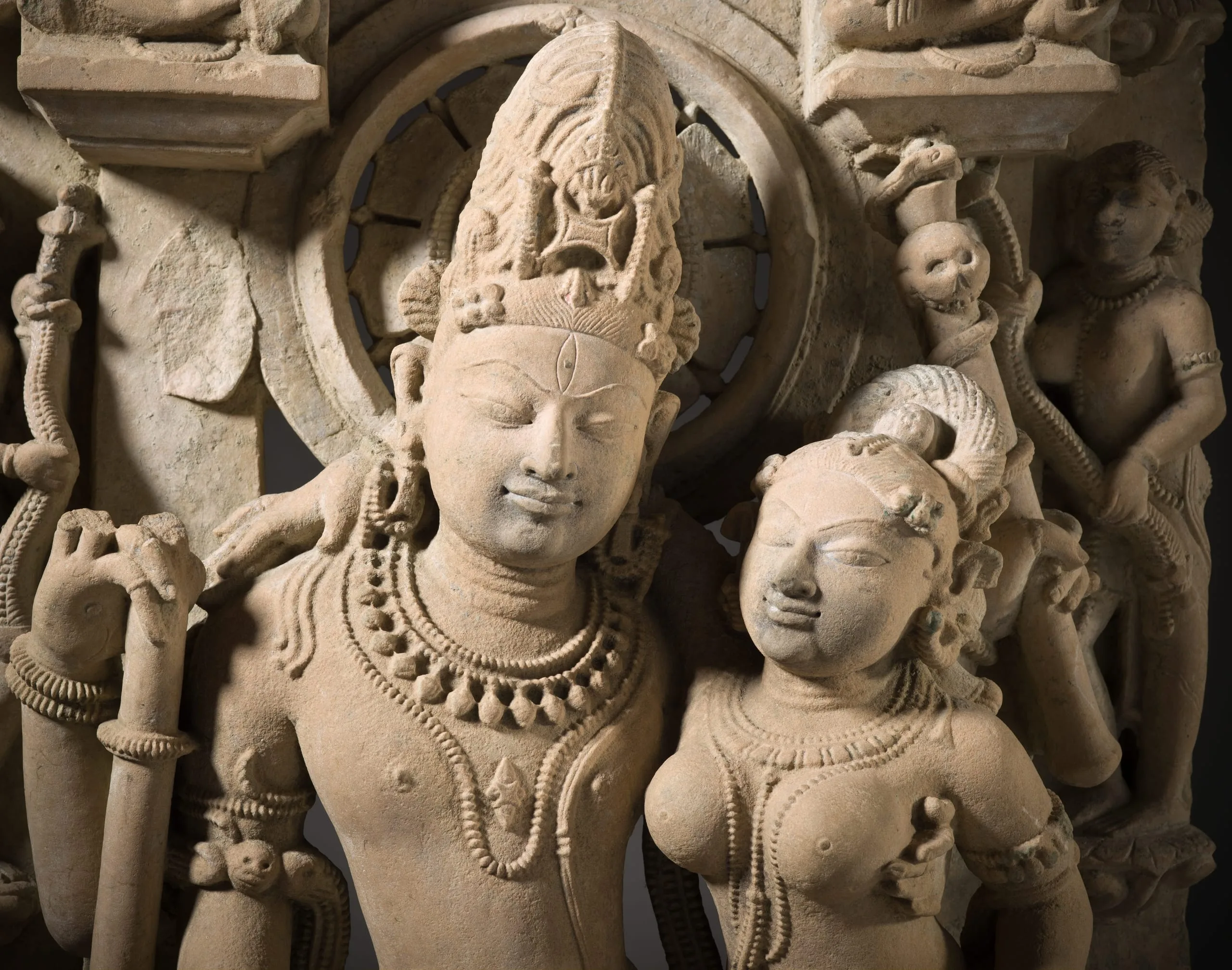
Sandstone relief sculpture featuring two central standing figures with multiple arms, ornate jeweled necklaces, and elaborately carved crowns, set against a circular halo; smaller attendant figures and serpentine forms visible at the edges, fine-grained stone with detailed surface carving throughout.
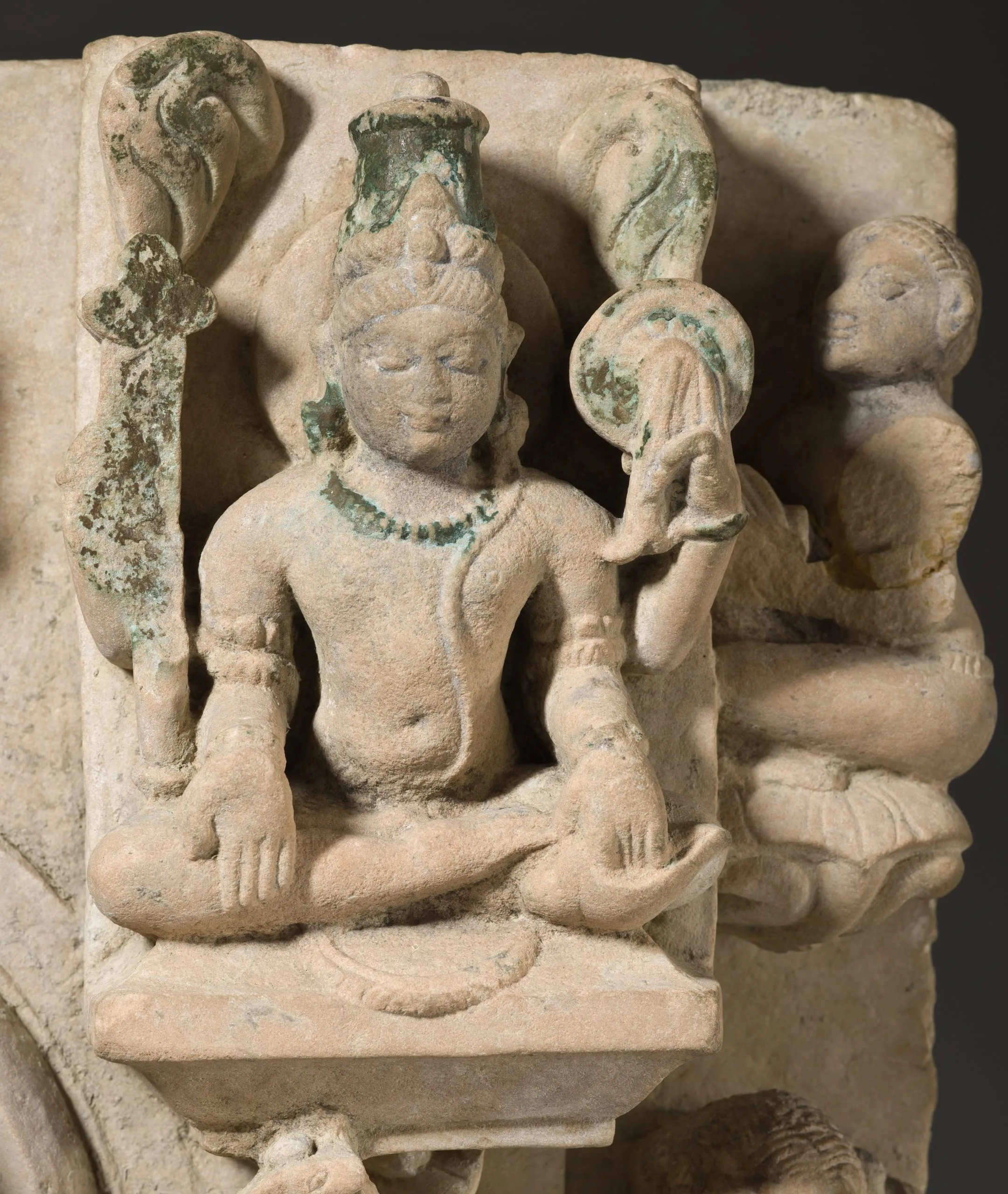
Sandstone relief sculpture of a four-armed deity seated in lotus position on a pedestal, wearing a beaded necklace with traces of green pigment, flanked by attendant figures and floral motifs.
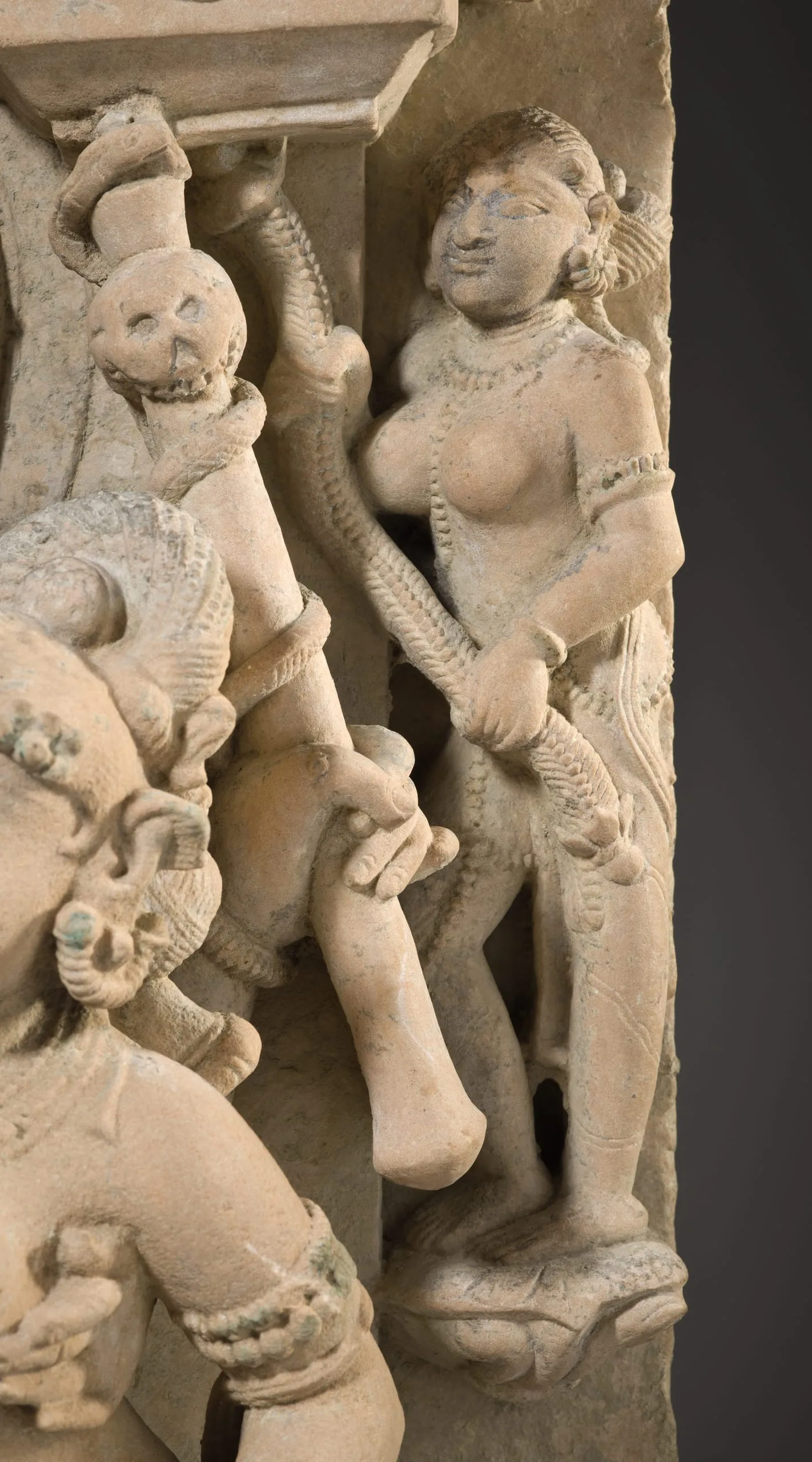
Sandstone temple sculpture relief featuring multiple figures in dynamic poses, with a standing female figure at right wearing jewelry and ornamental anklets, carved in high relief with fine detailing of beaded strands and braided hair.
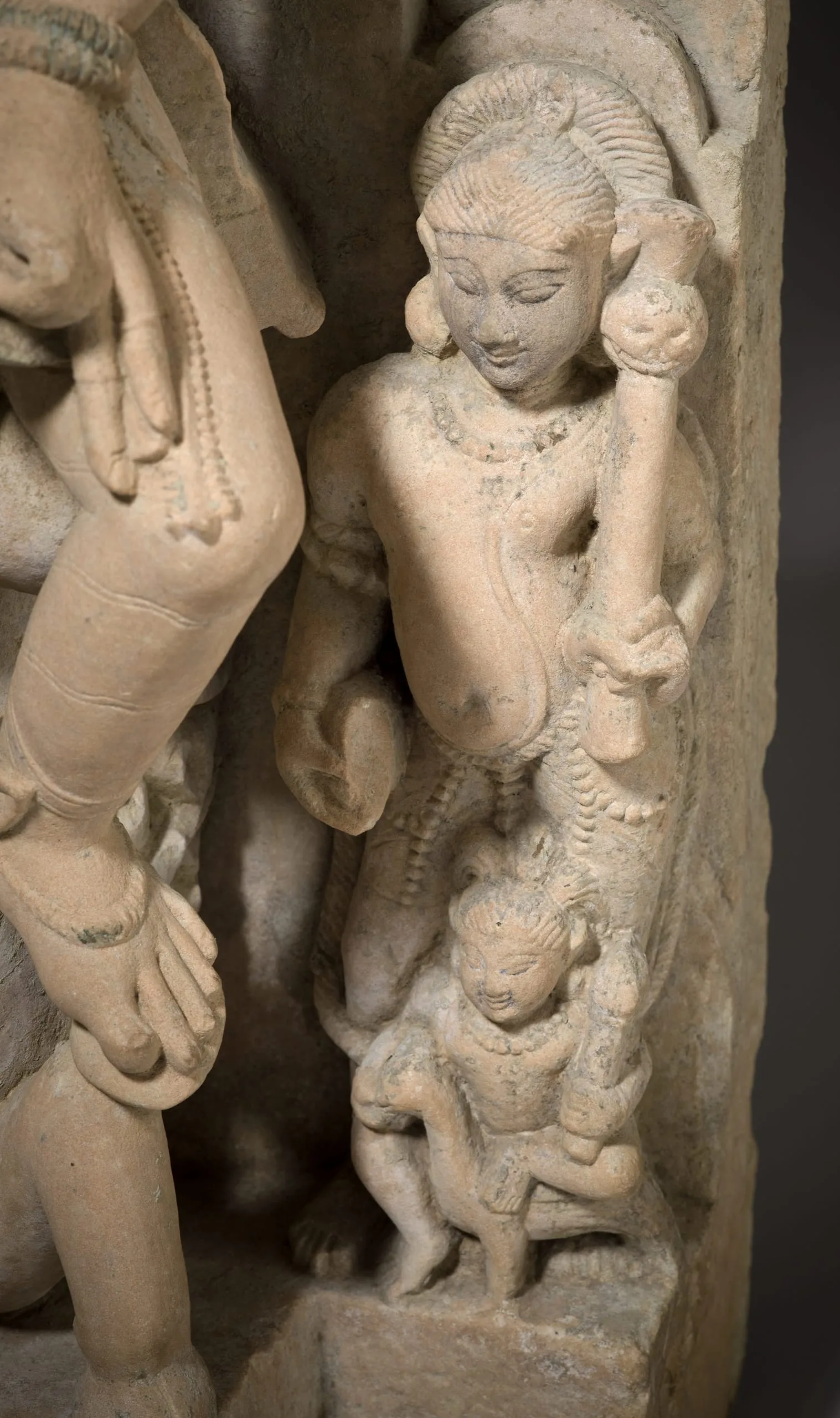
Stone sculpture fragment depicting a standing female figure adorned with beaded jewelry, her hair dressed in an ornate bun, grasping a pillar with one hand; a small crouching figure carved at her feet. Pale tan stone with fine surface carving and slight weathering.
Artist or Maker
Unknown
Title
Shiva's Family
Place Made
India, Haryana or Uttar Pradesh
Date Made
circa mid-10th century
Medium
Sandstone
Dimensions
33 3/4 x 19 7/8 x 10 3/4 in. (85.73 x 50.48 x 27.31 cm)
Credit Line
Gift of Mr. and Mrs. Harry Lenart
Accession Number
M.75.11
Classification
Sculpture
Collecting Area
South and Southeast Asian Art
Curatorial Notes

Shiva, the Hindu god of destruction, is seated with his wife, Parvati, a goddess of fertility, motherhood, and nurturance. Shiva is identified by the trident (now broken) in his right hand, the staff embellished with a snake and skull in his left, and his third eye of wisdom. His hair is piled atop his head in the matted locks of an ascetic and is adorned with his emblematic crescent moon. Parvati embraces her husband with her right arm and in her left hand holds a mirror that she uses to reflect her husband's glory as well as her own beauty. In this and other classic northern and central Indian images of Shiva and Parvati, the divine couple is typically portrayed interacting with a certain degree of restraint. This varies from eastern Indian images, in which their conjugal intimacy is more rapturously expressed.

Shiva's bull mount, popularly called Nandi, is recumbent beneath the gods. Shiva's favorite attendant, the skeletal Bhringi, dances in front of the bull, and their two sons, the elephant-headed Ganesha and the peacock-riding Kumara, sit at either side. Several attendants are also present. Along the top are the three-headed creator god Brahma and the god of preservation, Vishnu, deities who with Shiva form the Hindu trinity. Between them are five lingas (aniconic/phallic symbol of Shiva) symbolizing the five philosophical aspects of Shiva.
Selected Bibliography
  • Brown, Robert L. Southeast Asian Art at LACMA: An Online Scholarly Catalogue. Los Angeles: Los Angeles County Museum of Art, 2013. Accessed June 25, 2024. http://seasian.catalog.lacma.org/.