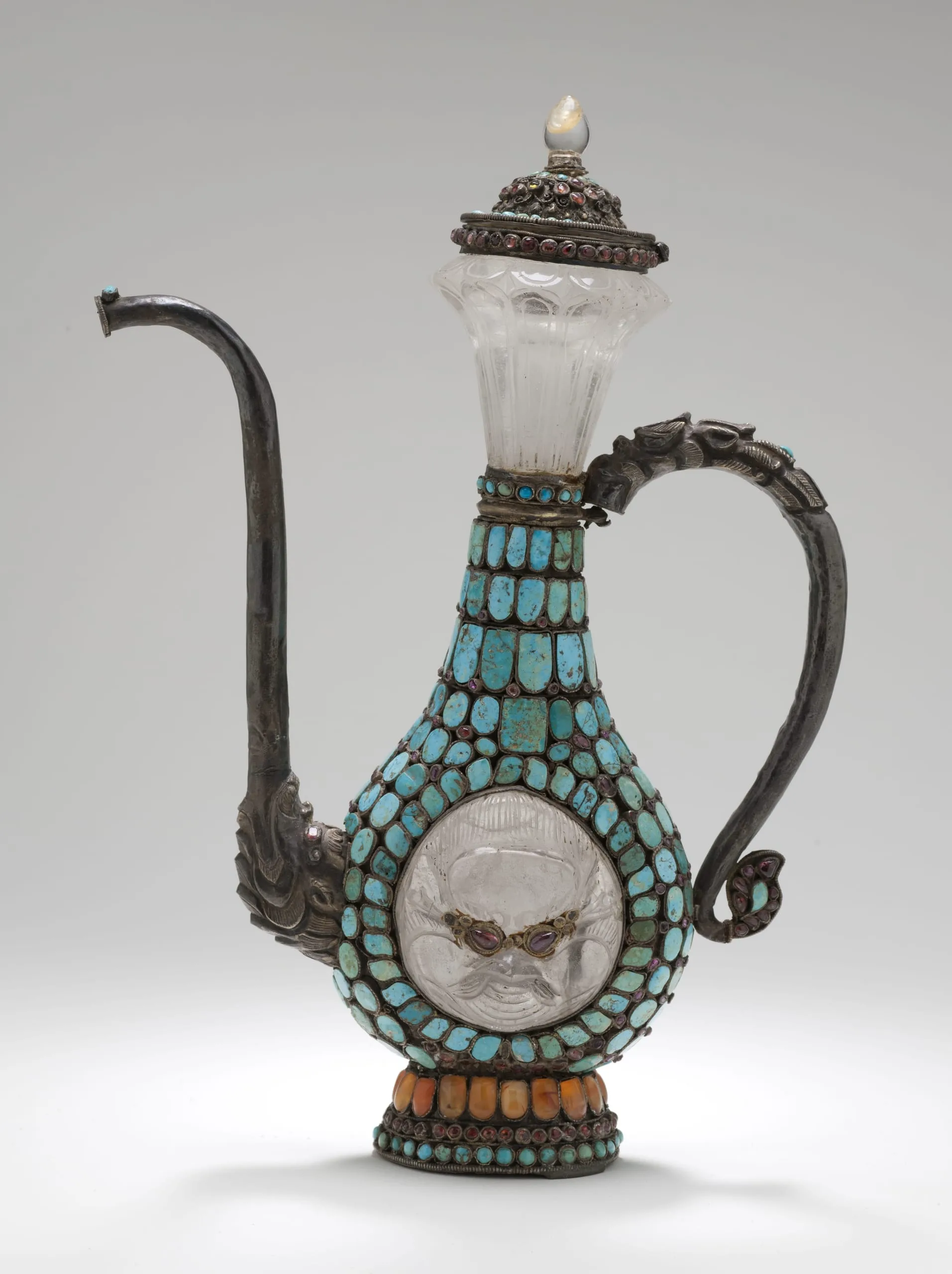
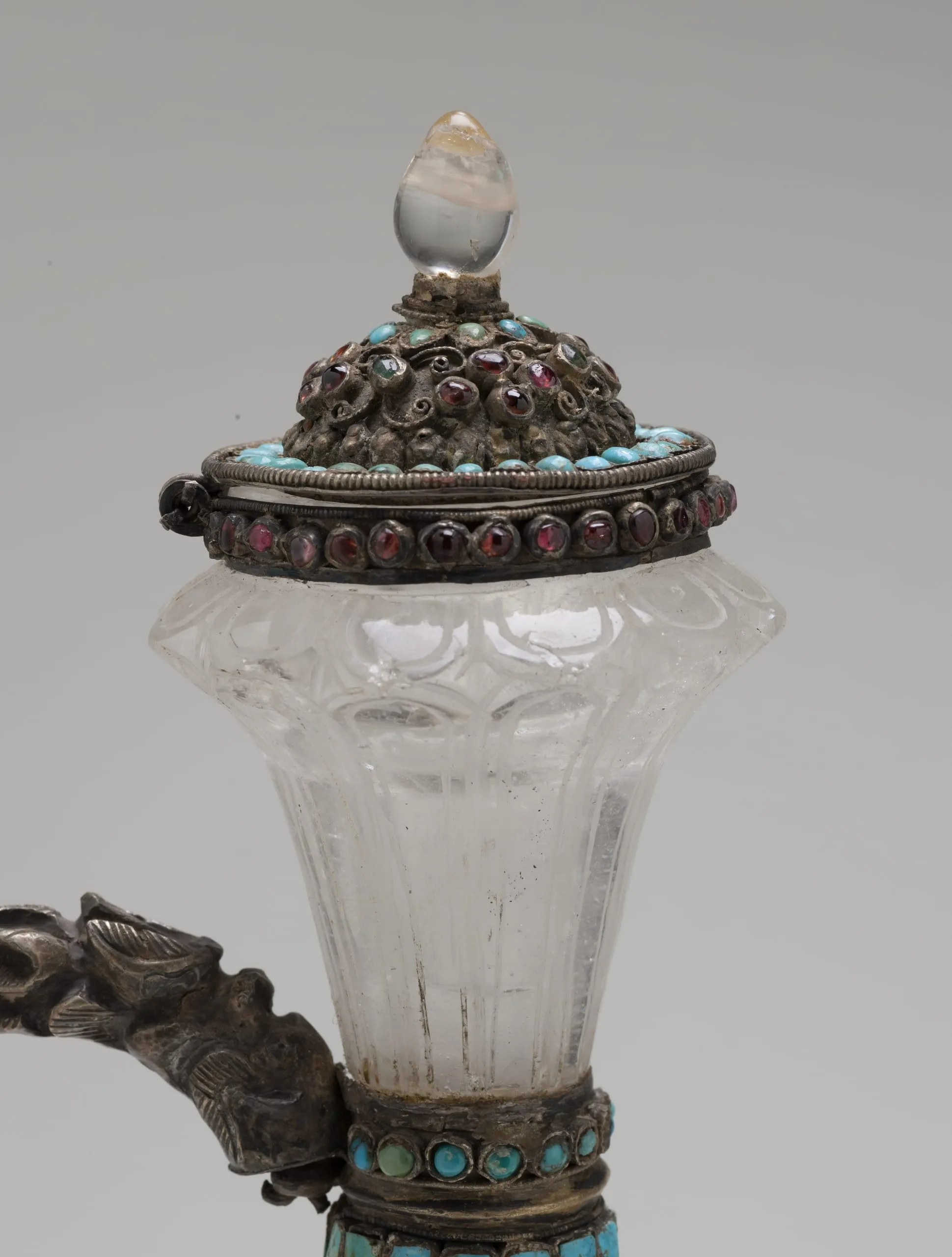
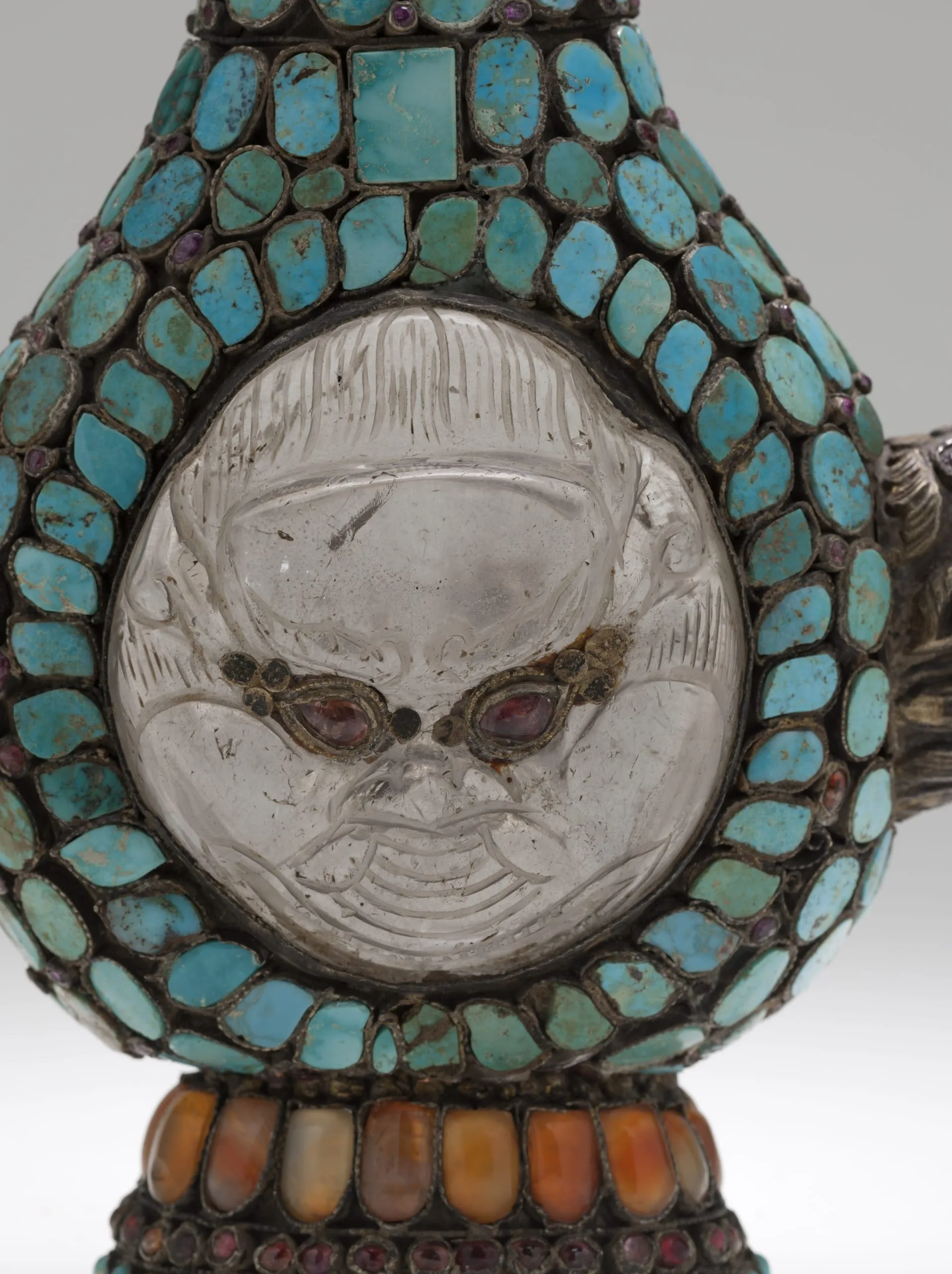
The ceremonial water ewer (Sanskrit: kalasha; Tibetan: ril-ba) is used in Buddhist rituals of ablution and consecration, and is a symbol of purification. During ceremonies, when a Buddhist priest sprinkles disciples with the "Water of Life" or "Nectar of Immortality" from the vessel, he bestows blessings. The water ewer is the symbol of Maitreya, the Buddha of the Future. It is also an attribute of the 8000-armed form of Avalokiteshvara (the Bodhisattva of Compassion), who uses it to relieve the thirst of all beings and purify their despondency and negative karma with the gentle waters of its compassion.
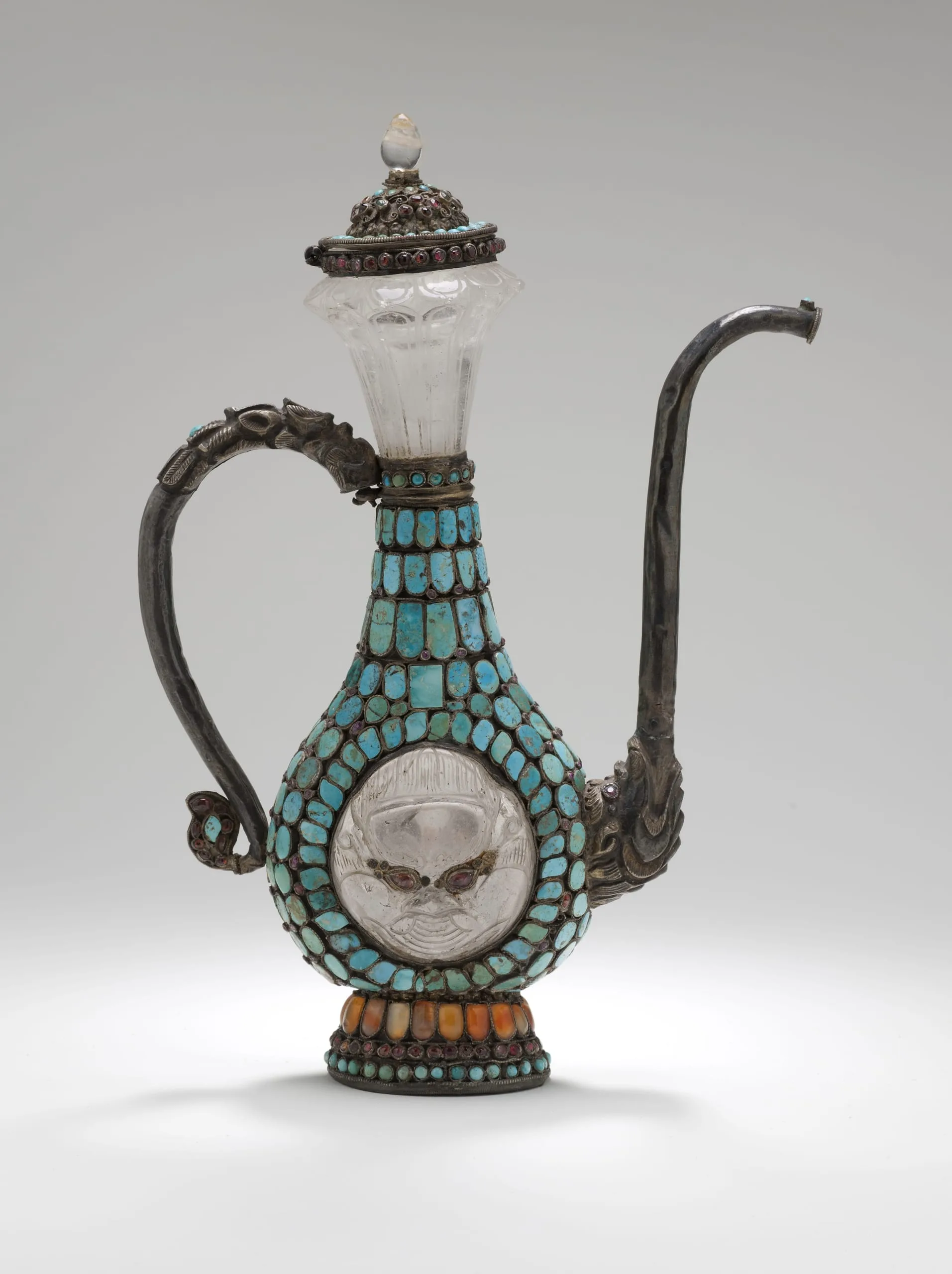
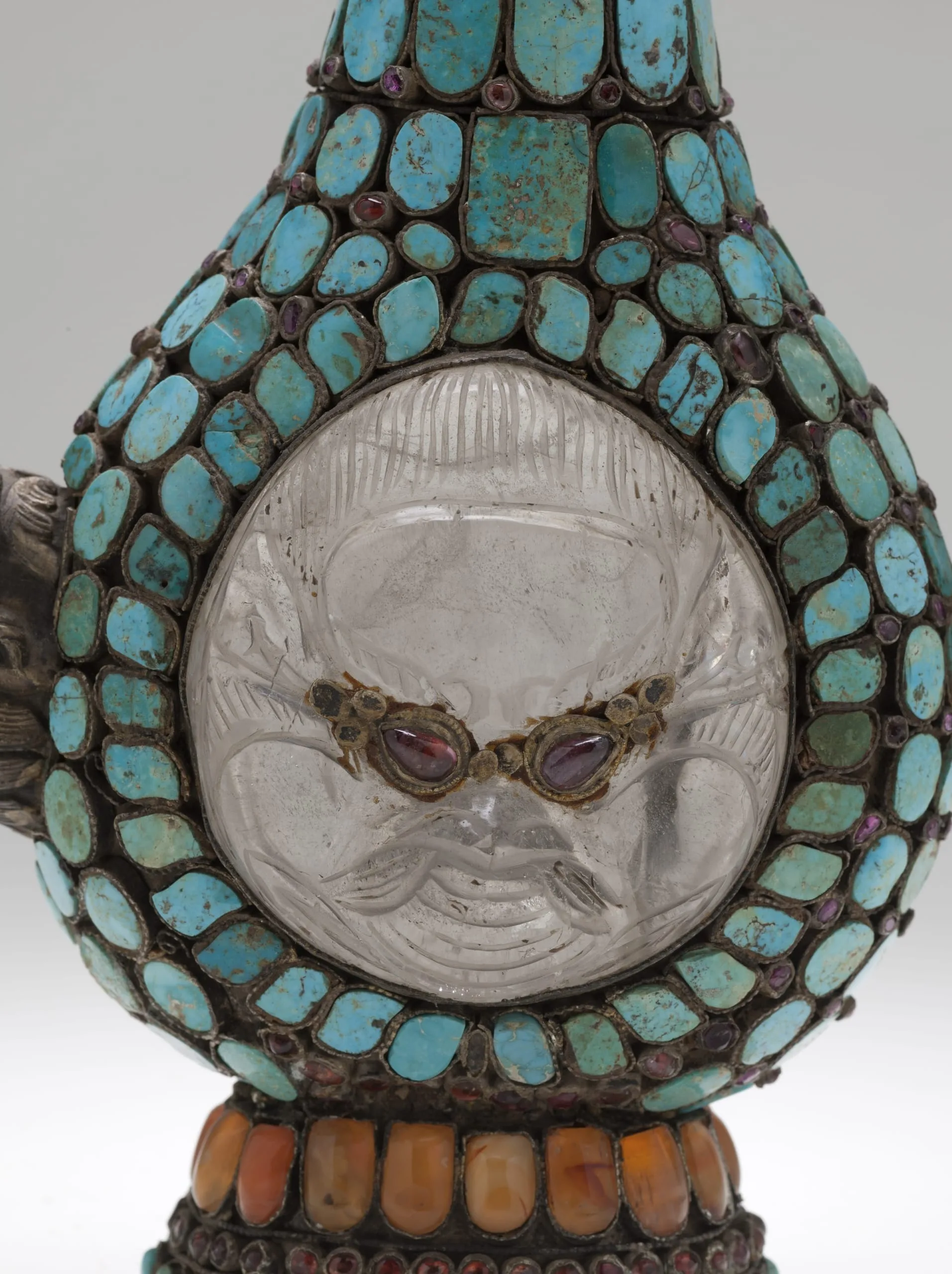
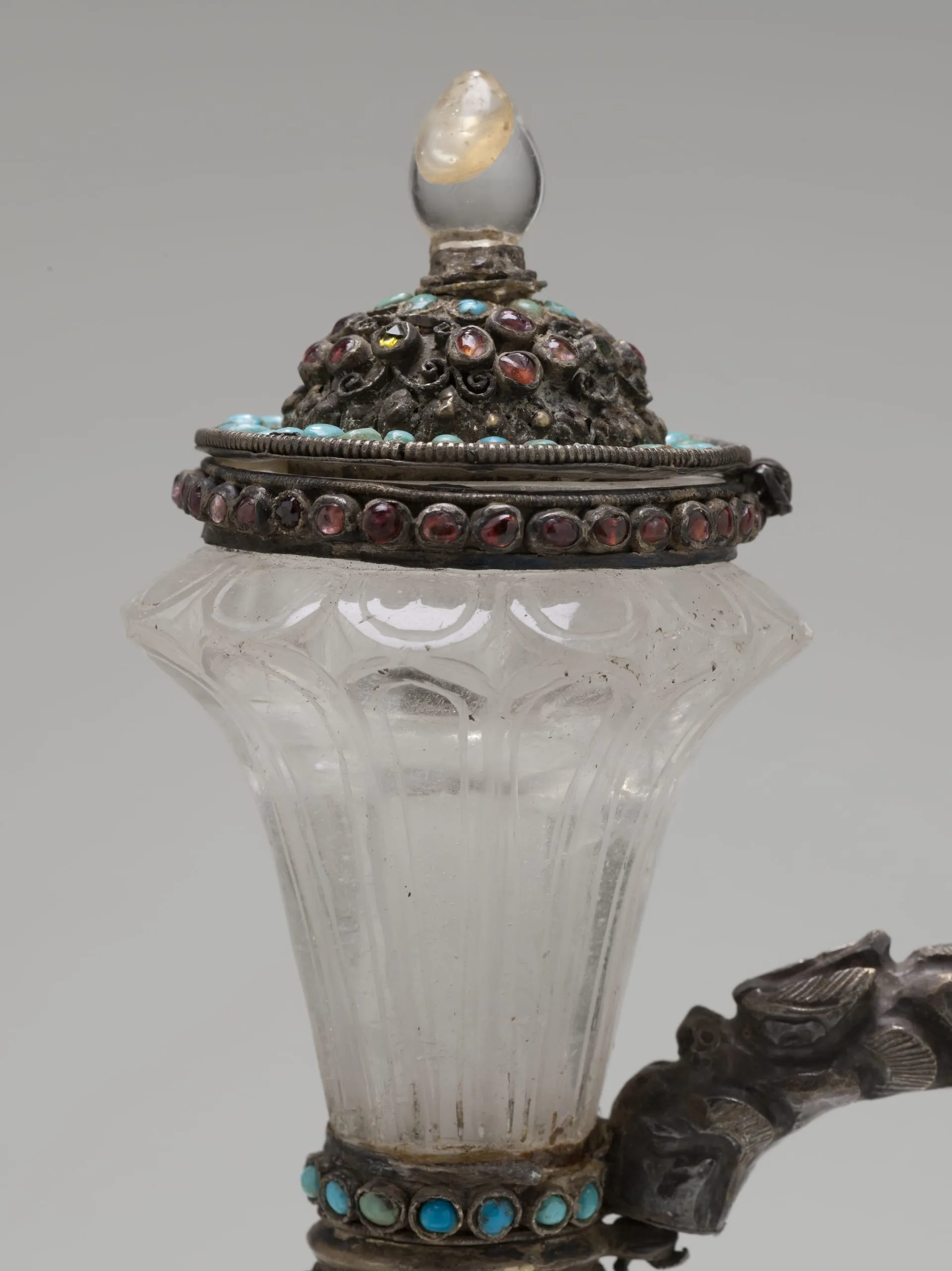
This morphological form of this Tibetan ewer derives from that of a Central Asian, Islamic, or Indo-Islamic water vessel (aftaba), such as AC1995.52.1 and M.83.2.2. Its silver filigree and gem-encrusted inlay indicate it was made by a Newari artist in Tibet or working for the Tibetan trade. The ewer has a bulbous body inset with turquoise that is supported by a pedestal foot inset with opals and turquoise. The principal decorative motif on the body is a rock crystal mask of a mythical animal, the zipac, which is a Tibetan apotropaic symbol resembling the Indian "Face of Glory" (kirttimukha) and the Chinese gluttonous creature (taotie). The neck is a fluted and hollowed piece of rock crystal that flares at the top into lotus petals. The lid is encrusted with inset gemstones and has a rock crystal knob finial in the form of a lotus bud. The vessel has a tall, slender silver spout issuing out of the mouth of a mythical aquatic creature (makara). It has a S-shaped silver handle terminating in a dragon’s head at the neck with an inlaid foliated tail attached to the body. See also M.84.227.2 and M.85.295.2a-b.