LACMA

ShopMembershipMyLACMATickets
LACMA
Los Angeles County Museum of Art
5905 Wilshire Blvd.
Los Angeles, CA 90036
info@lacma.org
(323) 857-6000
Sign up to receive emails
Subscribe
© Museum Associates 2025

Museum Hours

Monday

11 am–6 pm

Tuesday

11 am–6 pm

Wednesday

Closed

Thursday

11 am–6 pm

Friday

11 am–8 pm

Saturday

10 am–7 pm

Sunday

10 am–7 pm


  • About LACMA
  • Jobs
  • Building LACMA
  • Host An Event
  • Unframed
  • Press
  • FAQs
  • Log in to MyLACMA
  • Privacy Policy
© Museum Associates 2025
Collections

Unknown
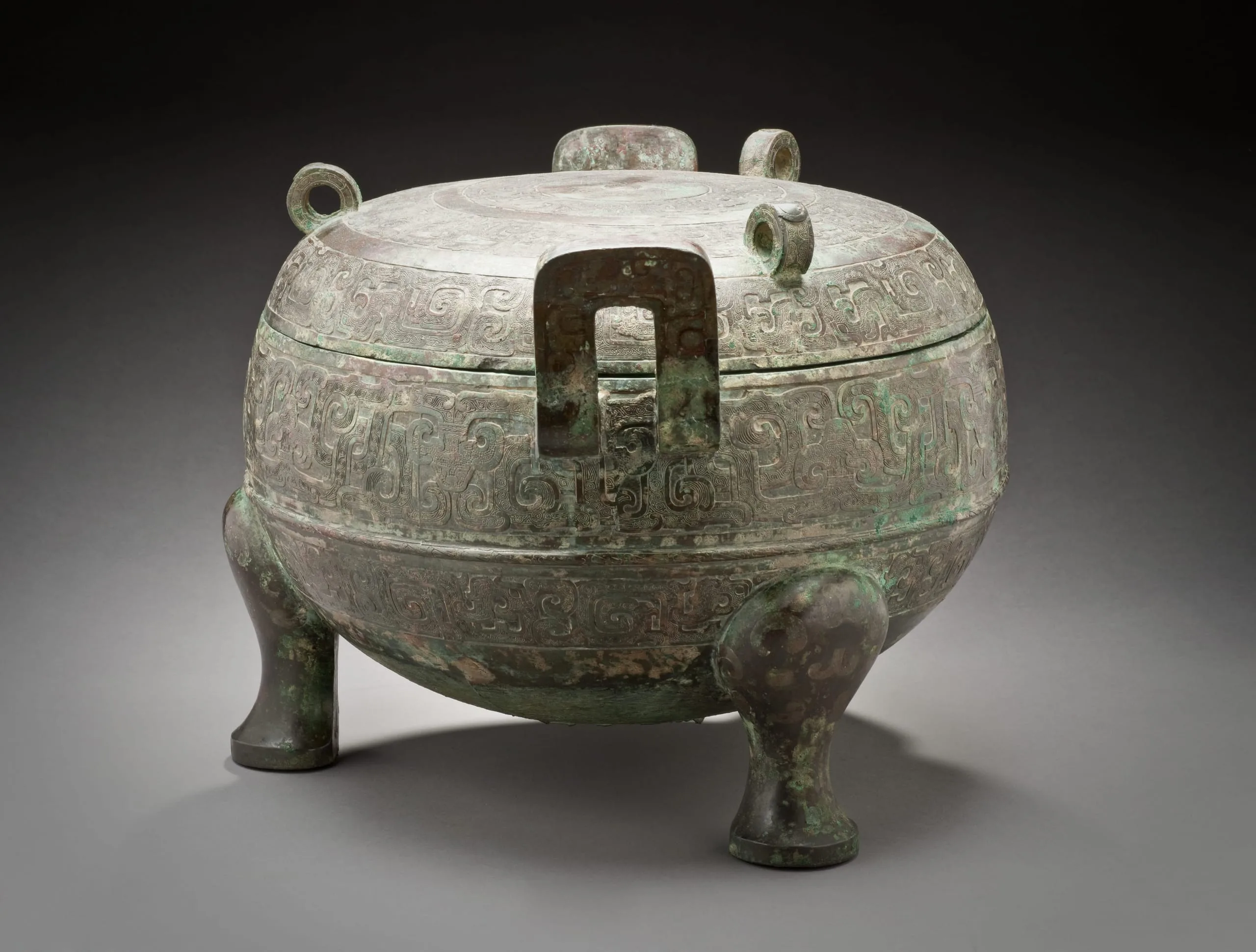
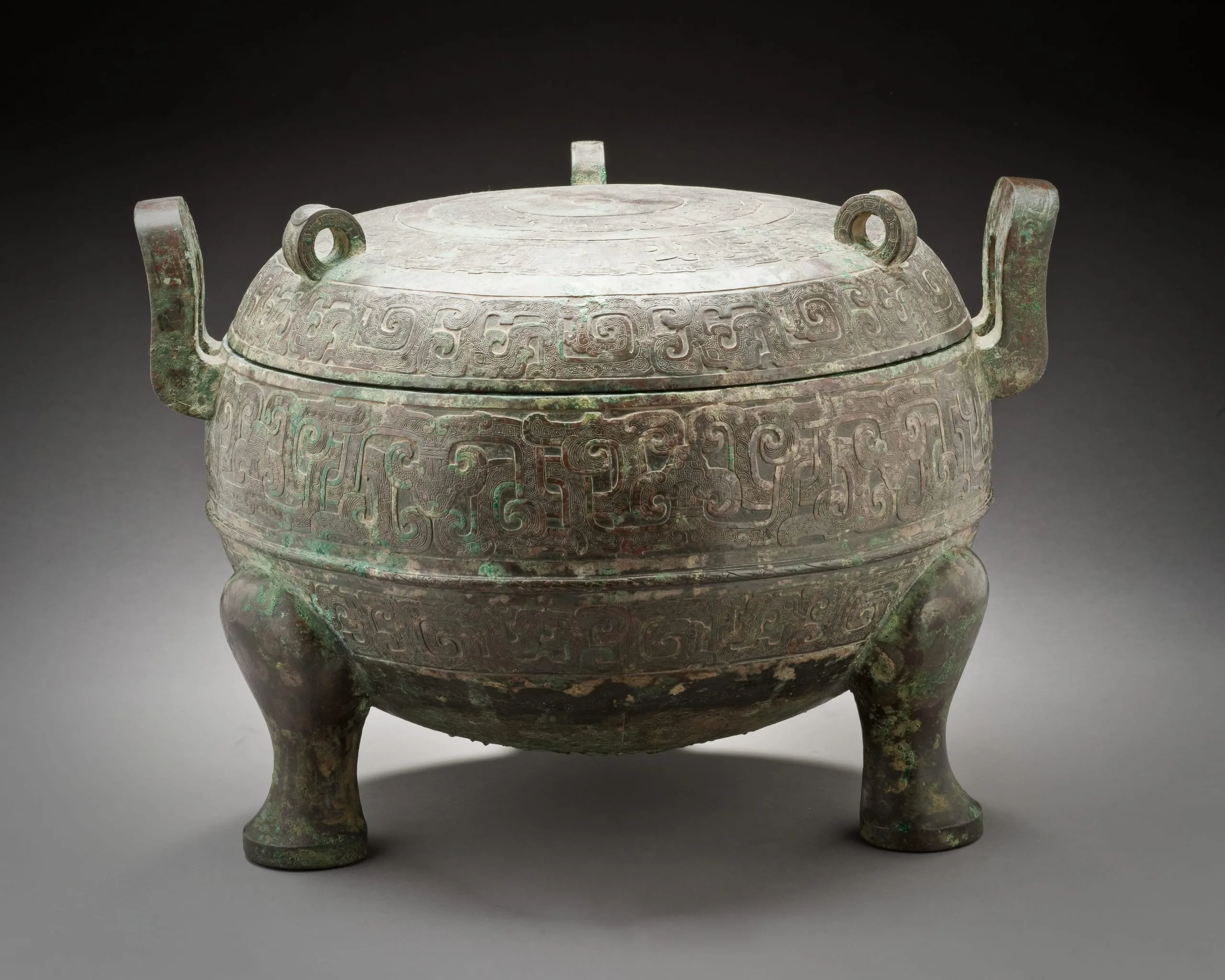
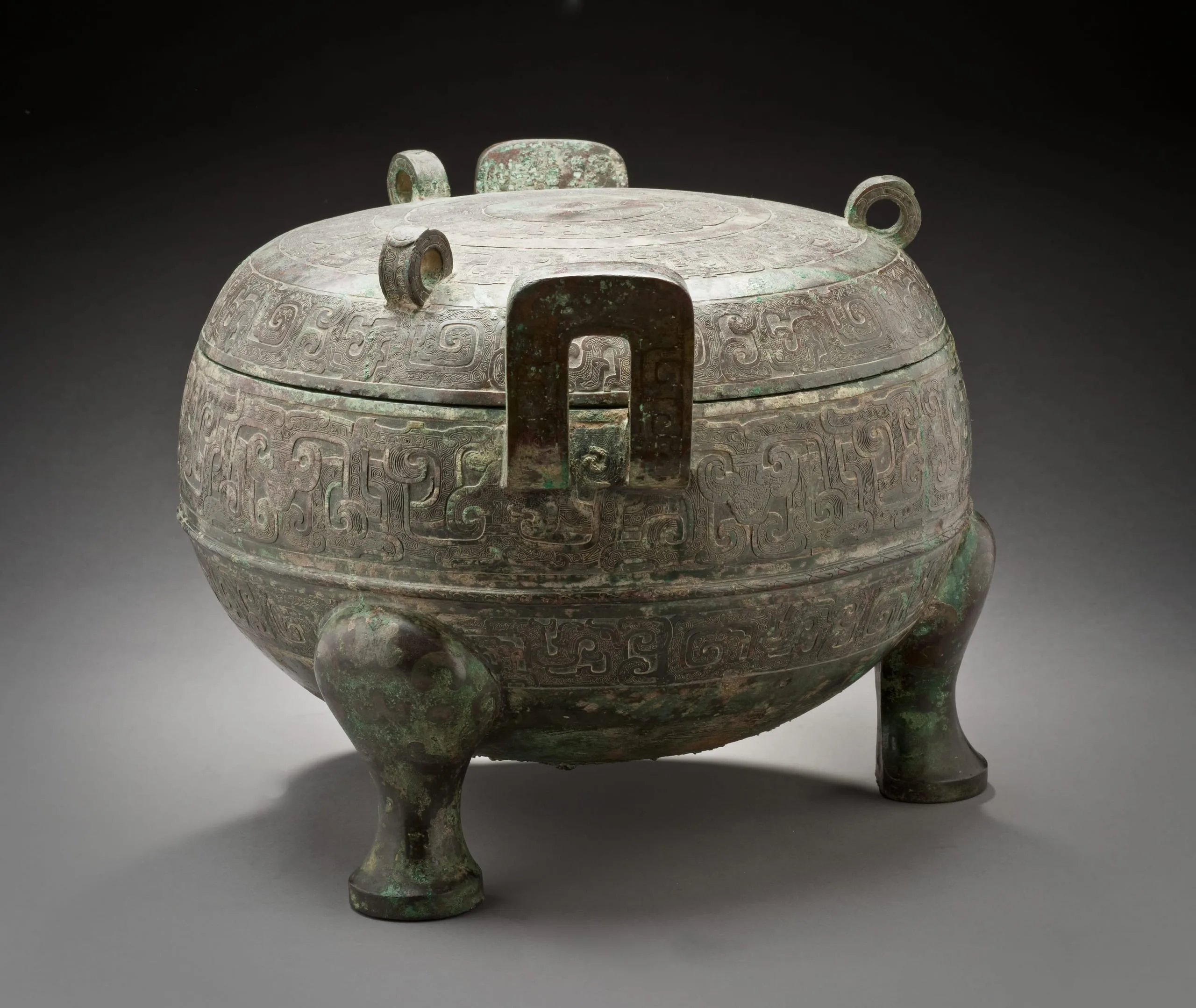
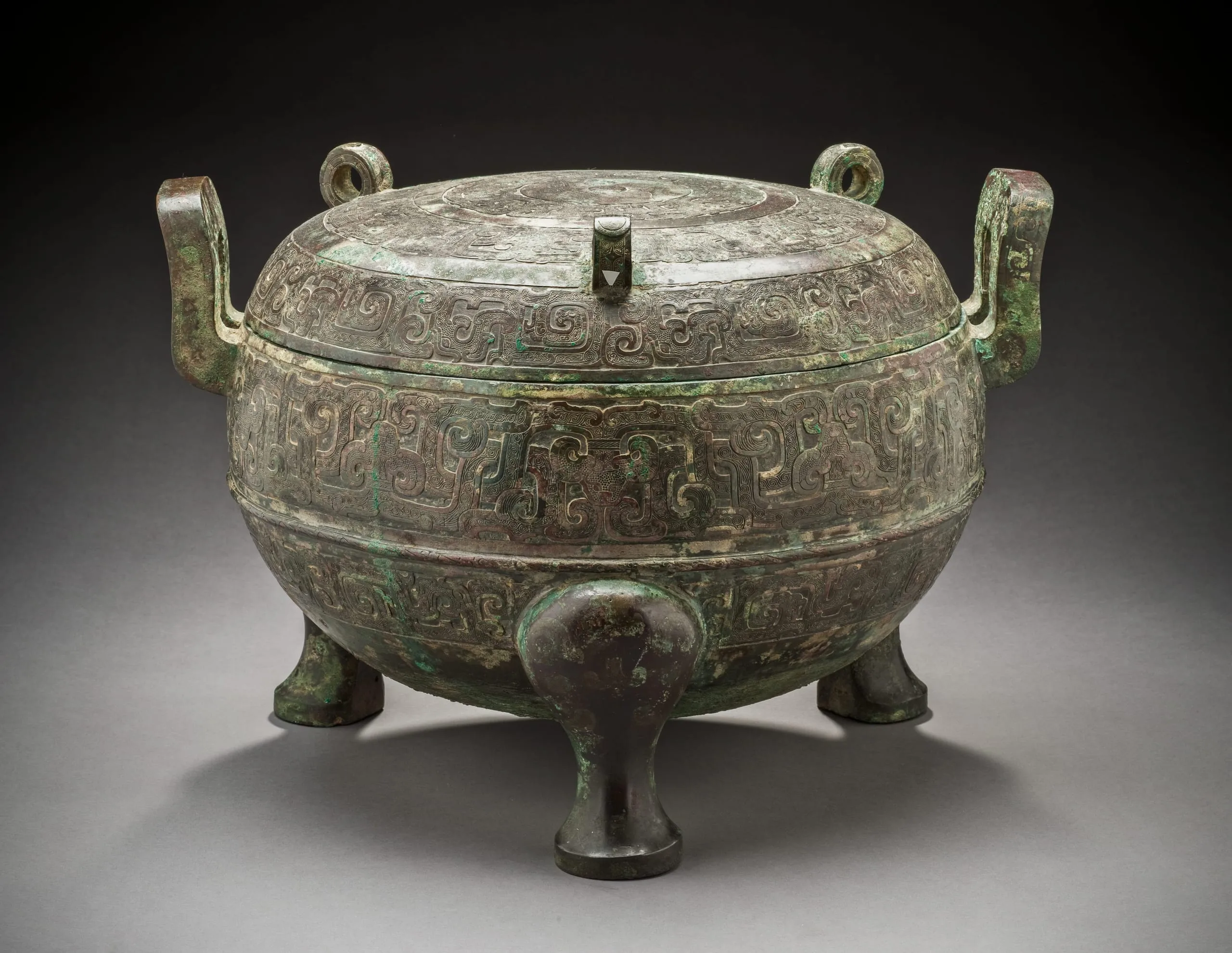
Lidded Ritual Food Cauldron (Ding) with Interlaced DragonsMid. Eastern Zhou dyn., late Spring and Autumn per. or early Warring States per., about 500-450 B.C.

Not on view
Ancient bronze vessel with domed lid, three flared legs, loop handles, and allover low-relief scroll and mask-like decoration, with dark brown patina and green verdigris
Chinese bronze ritual food vessel (gui) with domed lid, three bulbous legs, and two loop handles, covered in green patina and cast taotie and scroll patterns in horizontal bands.
Bronze ritual ding vessel with domed lid, three legs, and two loop handles, covered in green patina and cast taotie and scroll patterns in relief bands.
Ancient Chinese bronze ritual vessel (gui) with domed lid, raised on three hoof-shaped legs, with loop handles and a rectangular bail handle; body and lid decorated with cast taotie and scroll patterns; green patina with dark brown areas throughout.
Artist or Maker
Unknown
Title
Lidded Ritual Food Cauldron (Ding) with Interlaced Dragons
Place Made
China, Shanxi Province, ancient state of Jin
Date Made
Mid. Eastern Zhou dyn., late Spring and Autumn per. or early Warring States per., about 500-450 B.C.
Medium
Cast bronze
Dimensions
13 1/4 x 19 1/2 in. (33.66 x 49.53 cm)
Credit Line
Gift of Mr. and Mrs. Eric Lidow
Accession Number
M.74.103a-b
Classification
Furnishings
Collecting Area
Chinese and Korean Art
Curatorial Notes
The ding, a three-legged ritual vessel whose origins predate the legends and cloudy early history of the Shang dynasty (about 1600-1023 B.C.), was used to hold food offered to ancestral spirits. The ding was also a ground ornament. Fantastic creatures, symbols, even written characters recording ritual procedures were cast into its surface.
In its typical Shang form the ding was a sturdy, lidless vessel mounted on straight legs. Contact with other cultures introduced new elements in its shape and ornament as well as new uses. By the time of the Eastern Zhou dynasty (771-256 B.C.) the ding had acquired the refined form in which it appears here. It had also been secularized; although the Shang tradition of burying bronzes with the dead continued, they were also presented as state gifts to foreign rulers and preserved and handed down as symbols of family honor and status.
The Lidow ding is related stylistically to a cache of fine bronzes discovered near the village of Liyu (northern Shanxi province) in 1932. It exemplifies the high level of bronze casting attained by Eastern Zhou metalsmiths despite the anarchy and constant warfare that plagued the period. The animal forms of an earlier era have become finely stylized and abstracted; an interlace of zoomorphic and geometric elements covers the entire surface of the ding's body and lid. The curvilinear pattern in an overlapping two-layer relief contains forms suggestive of rams, birds, and felines. Restless spirals, S-curves, triangles, and scales are composed in ribbonlike bands. On the "knee" of each cabriole leg is an inlaid animal mask, an image from earlier ding forms.
Selected Bibliography
  • Price, Lorna. Masterpieces from the Los Angeles County Museum of Art. Los Angeles: Los Angeles County Museum of Art, 1988.
  • Kuwayama, George. The Joy of Collecting: Far Eastern Art From The Lidow Collection. Los Angeles, CA: Los Angeles County Museum of Art, 1979.
  • Kuwayama, George. Ancient Ritual Bronzes of China. Los Angeles: Los Angeles County Museum of Art, 1976.