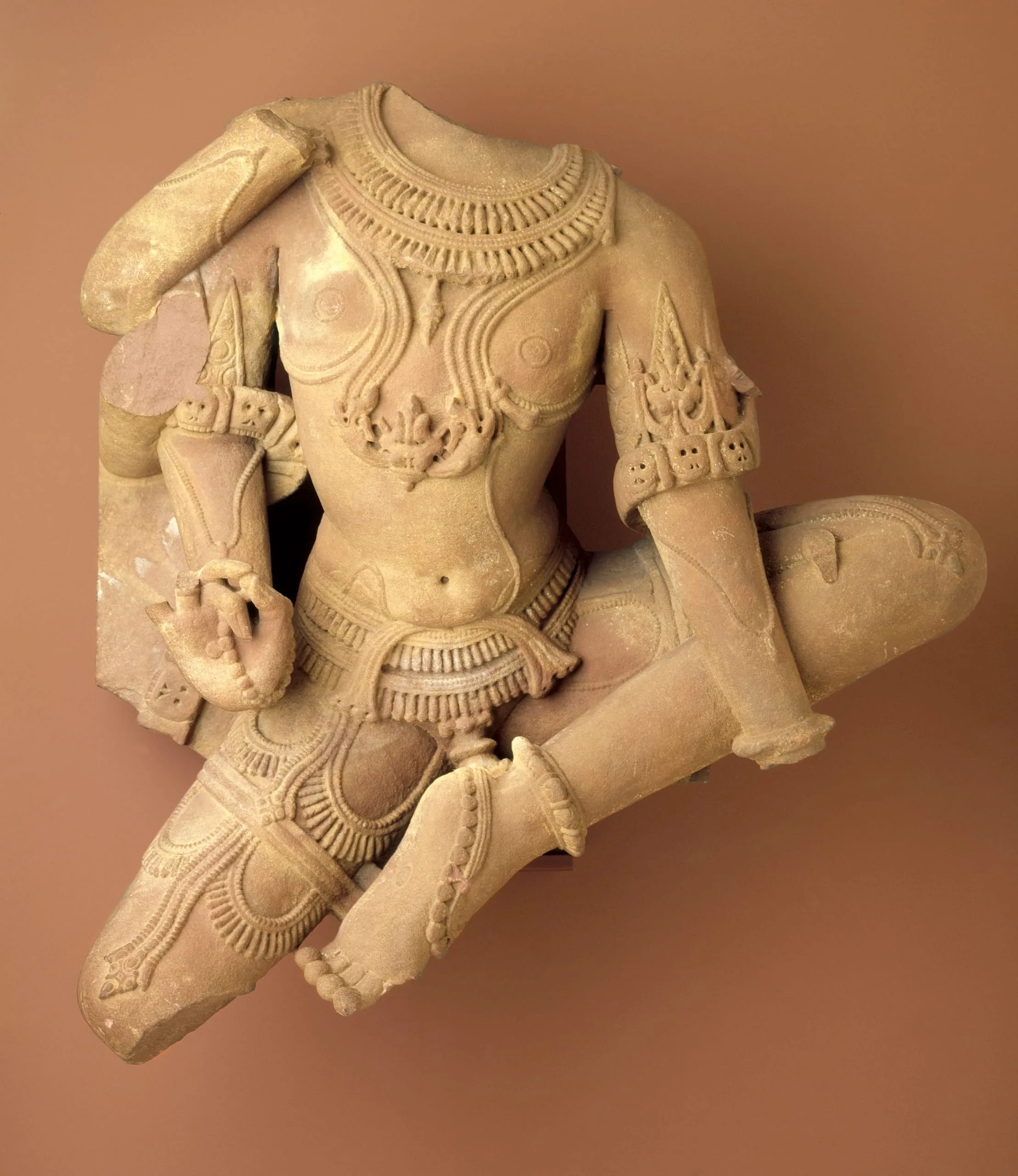
This fragment of an animated figure is likely a Shaiva deity (associated with Shiva), which has been deduced by his six arms, rosary (akshamala), and garland of severed skulls (mundamala). He wears additional copious jewelry, including the Brahmanical sacred thread (yajnopavita) worn over his left shoulder and a necklace and armlets graced by a face-of-glory (kirttimukha).
The figure has been interpreted as either being in the charming (lalita) dance posture (Heeramaneck 1979, no. 91) or as seated and supporting himself with his left arm (Pal 1988, p. 130, no. 55). However, it is more likely intended to represent a flying posture (langalaka). For a closely comparable Thai image of Indra in such a flying posture, see M.76.112.22.