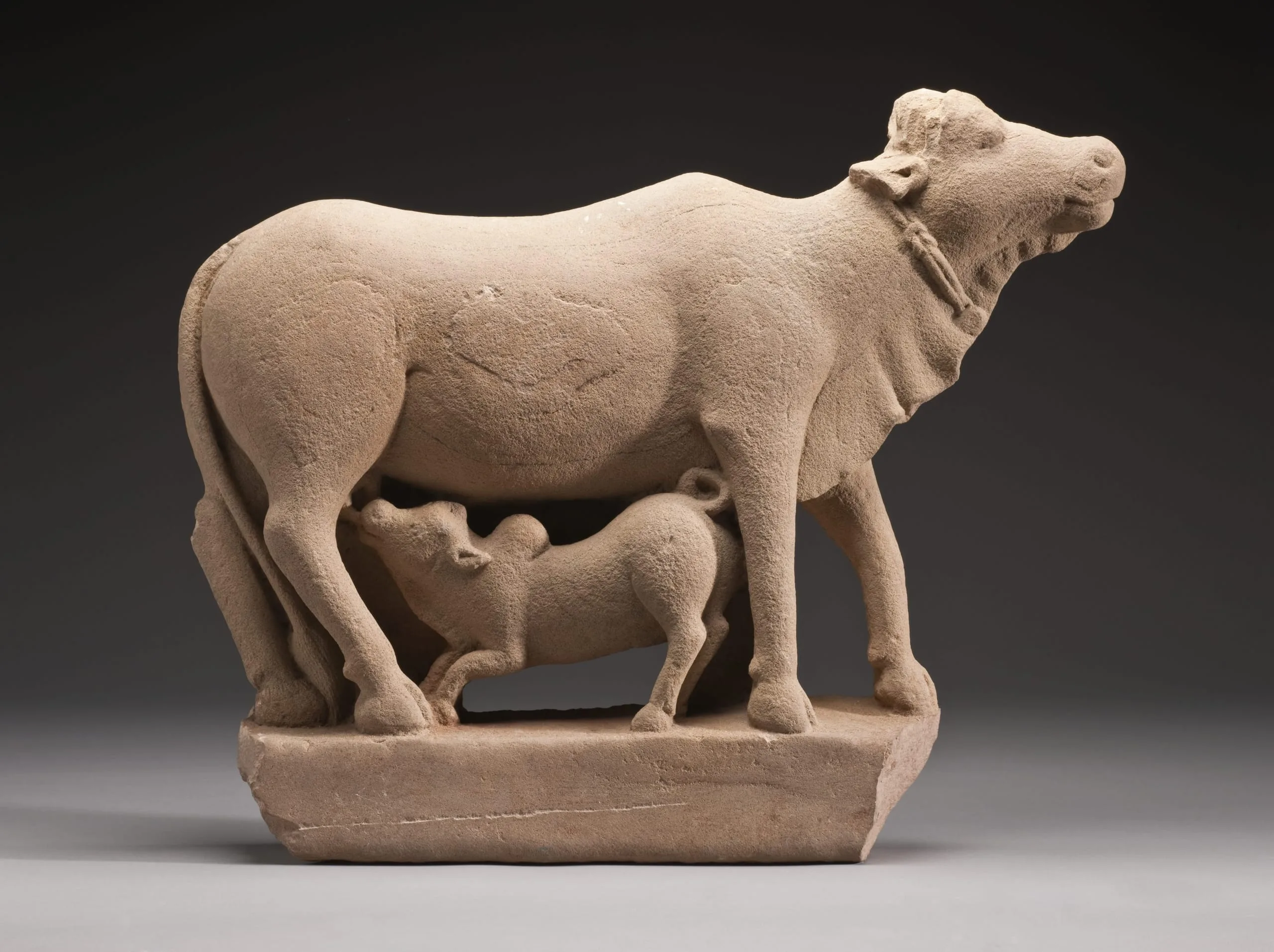
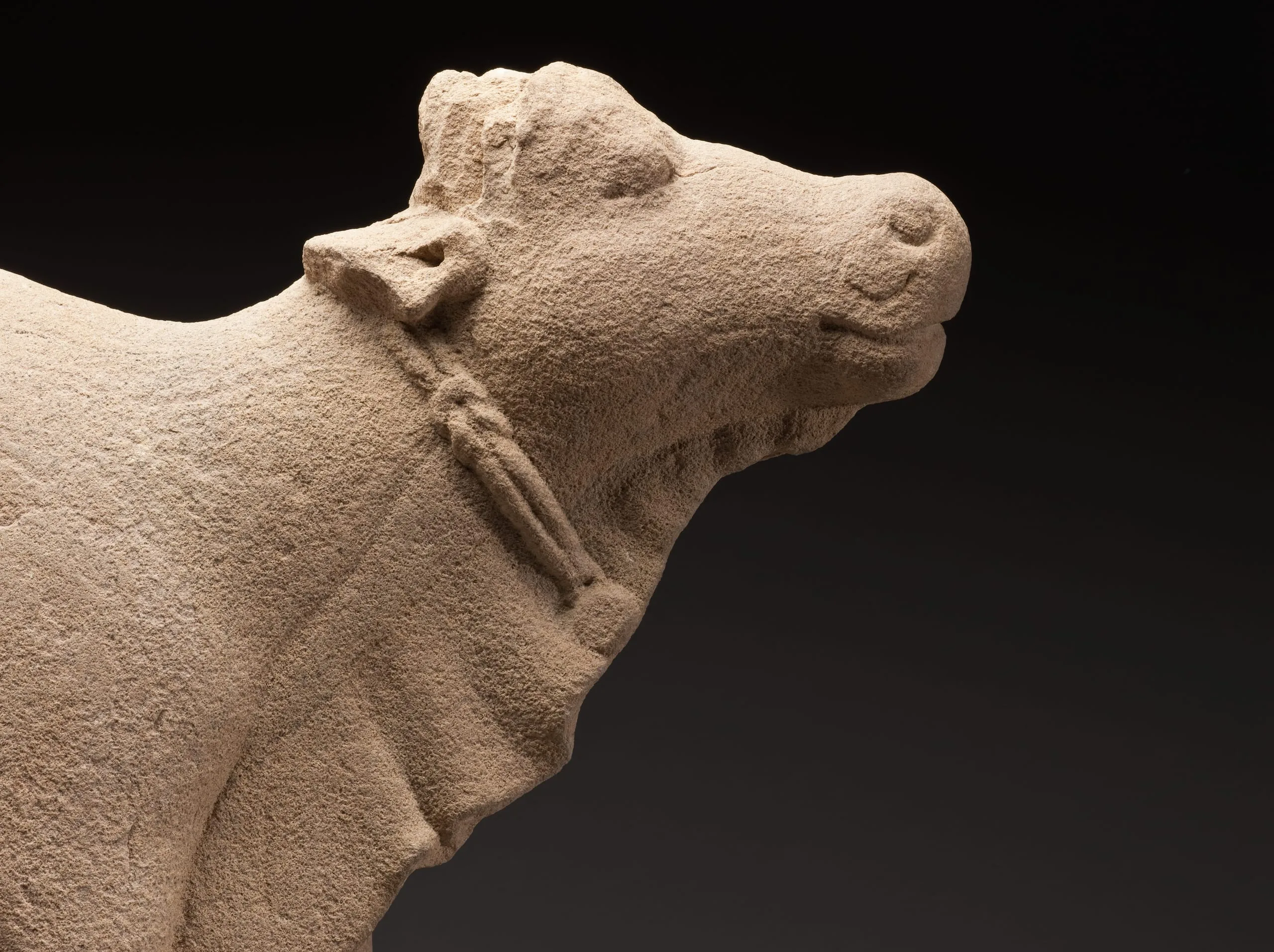
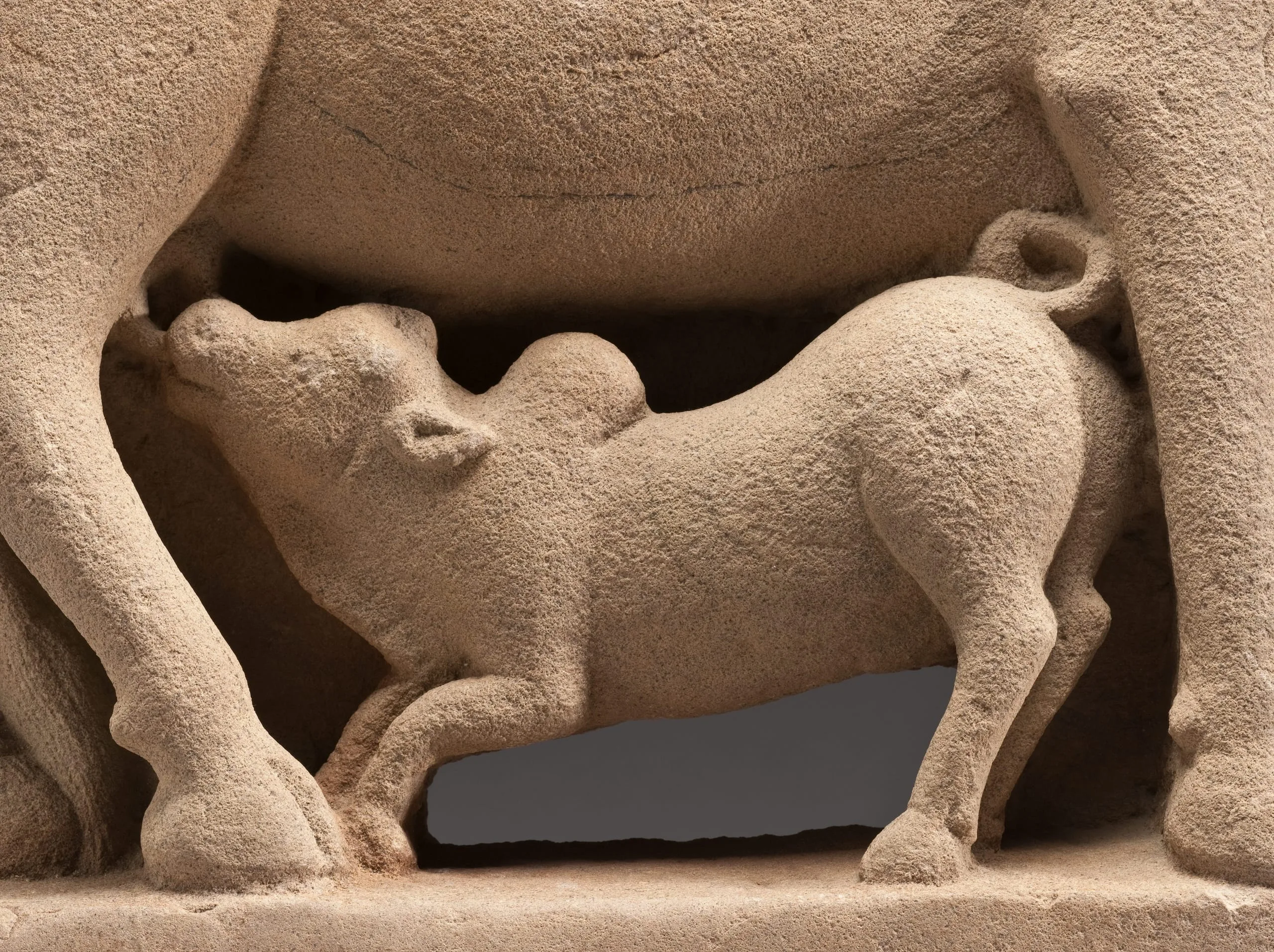
This sensitive portrayal of a cow suckling her calf epitomizes the empathy Indian artists have always expressed for animal subjects, and reflects the naturalism and stylistic legacy of the great Gupta Dynasty (319-467 CE). Their close observation of nature is reflected not only in the anatomical accuracy of the bovine’s features, especially the rippling of the dewlap under the neck and on the chest, but also in the naturalistic posture of the crouching calf drinking from her udder.
Originally, this relief may have once been part of a larger composition depicting a scene from the life of the Hindu God Krishna in his pastoral village of Vrindavan in Uttar Pradesh. For painted examples, see M.81.272.2 and M.88.49. Contemporary tourist representations of a cow suckling her calf are often identified as Kamadhenu or Surabhi, the divine wish-giving cow and mythological progenitor of cattle believed to have been created during the Churning of the Cosmic Milk Ocean. Traditionally, however, Kamadhenu is depicted as a cow with a woman’s head or a woman with a cow’s head.
See also M.90.163. A comparable 9th-century relief of a Cow and Calf is in the Art Institute of Chicago (2006.180).