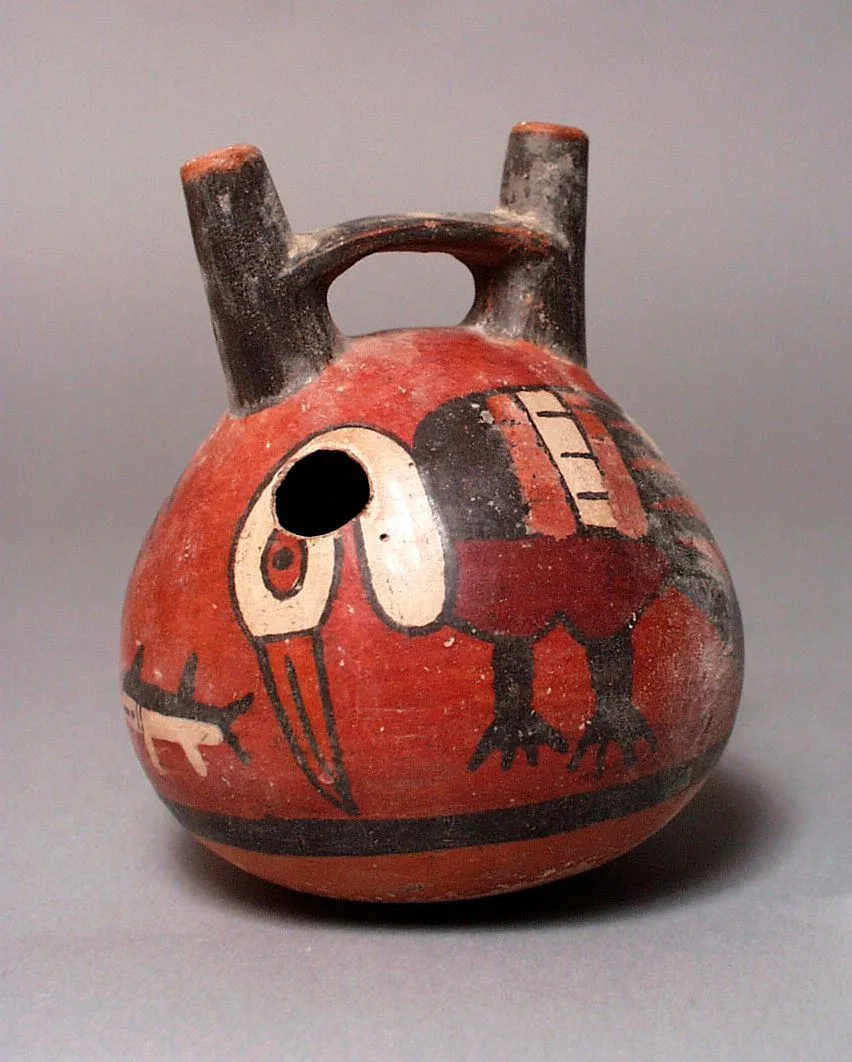
The two waterbirds painted onto this double-spout-and-bridge jar have long legs, necks, and beaks, and each looms over a fish. The saturated red, orange, and purple colors contrast starkly with the white and black, which is even more striking given that this jar was made and painted more than 1,500 years ago. It is a testament to the technological knowledge of Nasca potters, who developed a palette of slip paints with at least twelve distinct colors. The white was obtained from kaolin, reds and yellows—such as ochre—from various iron oxides, and black may have been made with manganese minerals.
The hole reveals the extremely thin walls of this vessel, barely a couple of millimeters thick. The ceramist or, more likely, the team of artists who made this piece were clearly very accomplished, having perfected everything from sourcing and refining the clay to shaping a delicate and symmetrical jar, and then painting, burnishing, and firing it without anything going wrong.
The significance of the imagery is no longer known. However, the Nasca people lived on the south coast of what is now Peru and relied heavily on marine resources such as fish and waterbirds, incorporating them into their mythology as well.