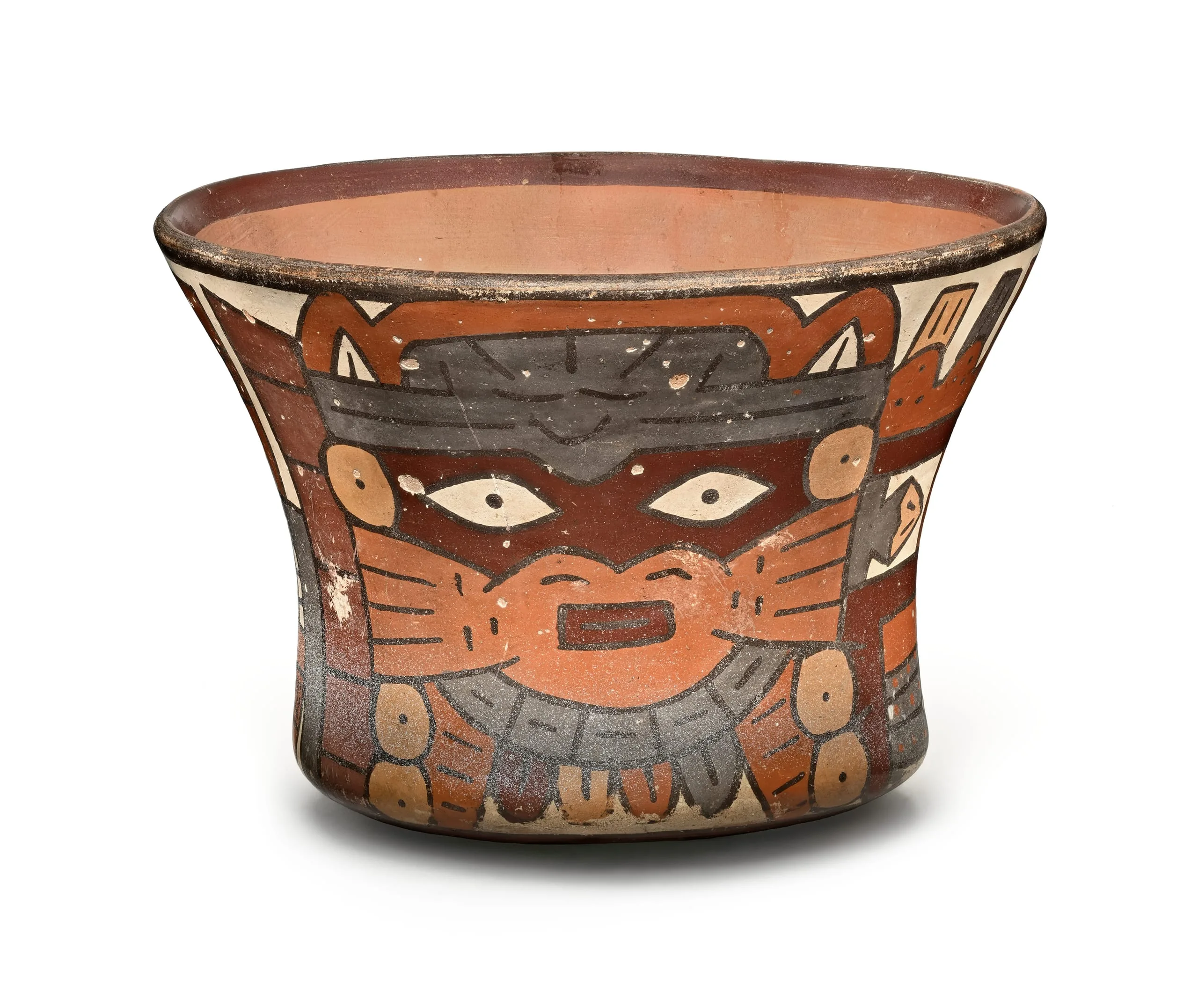
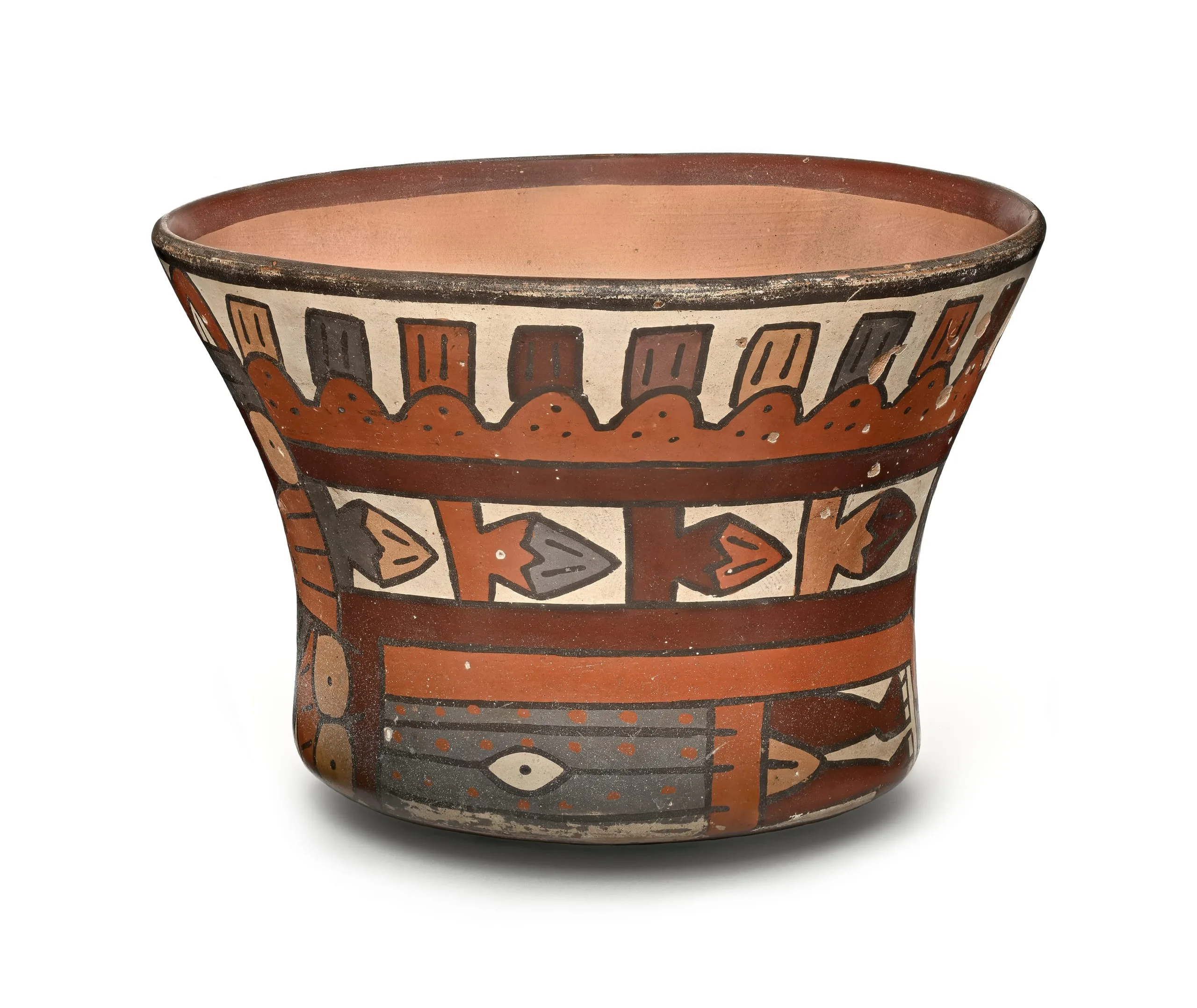
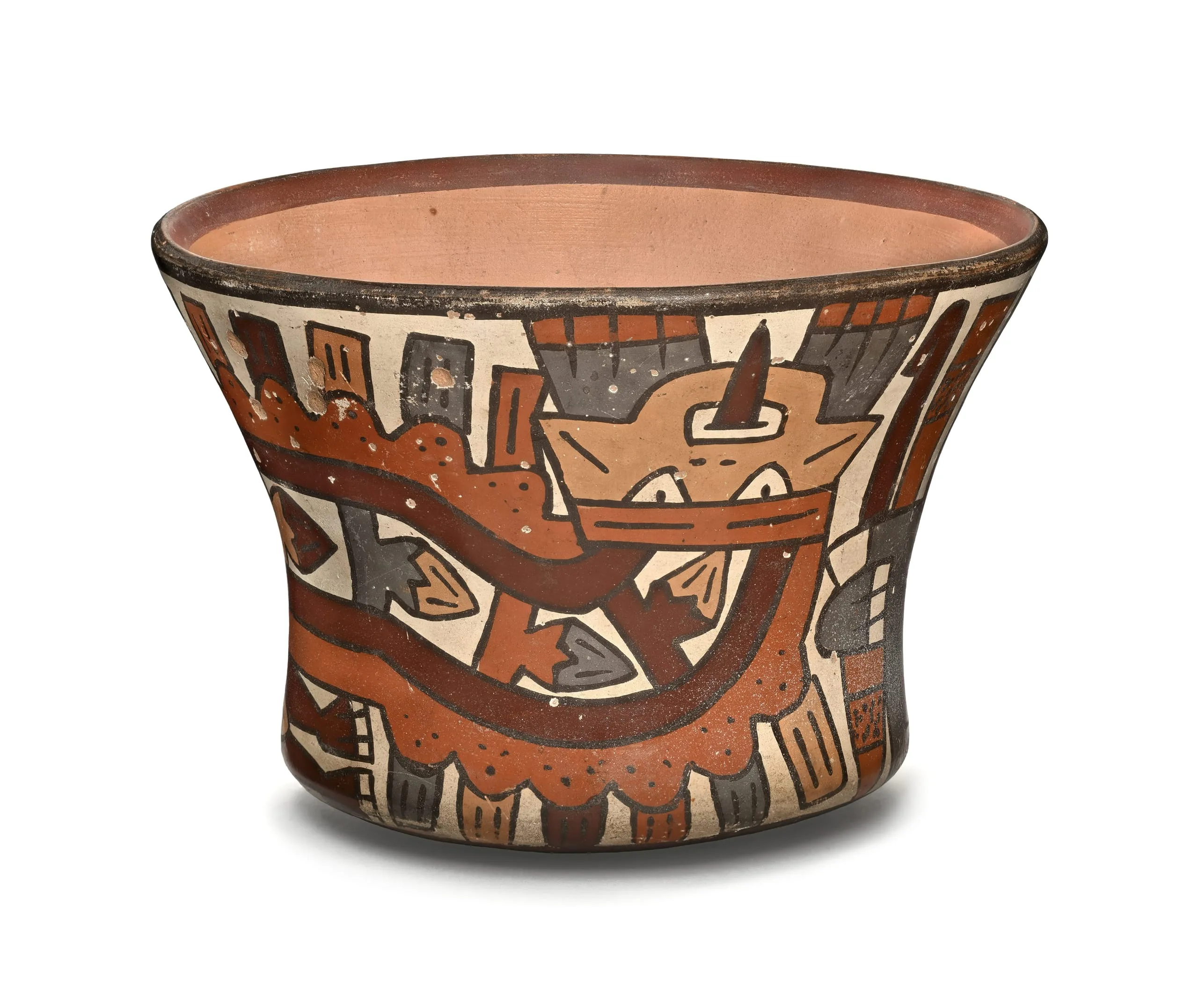
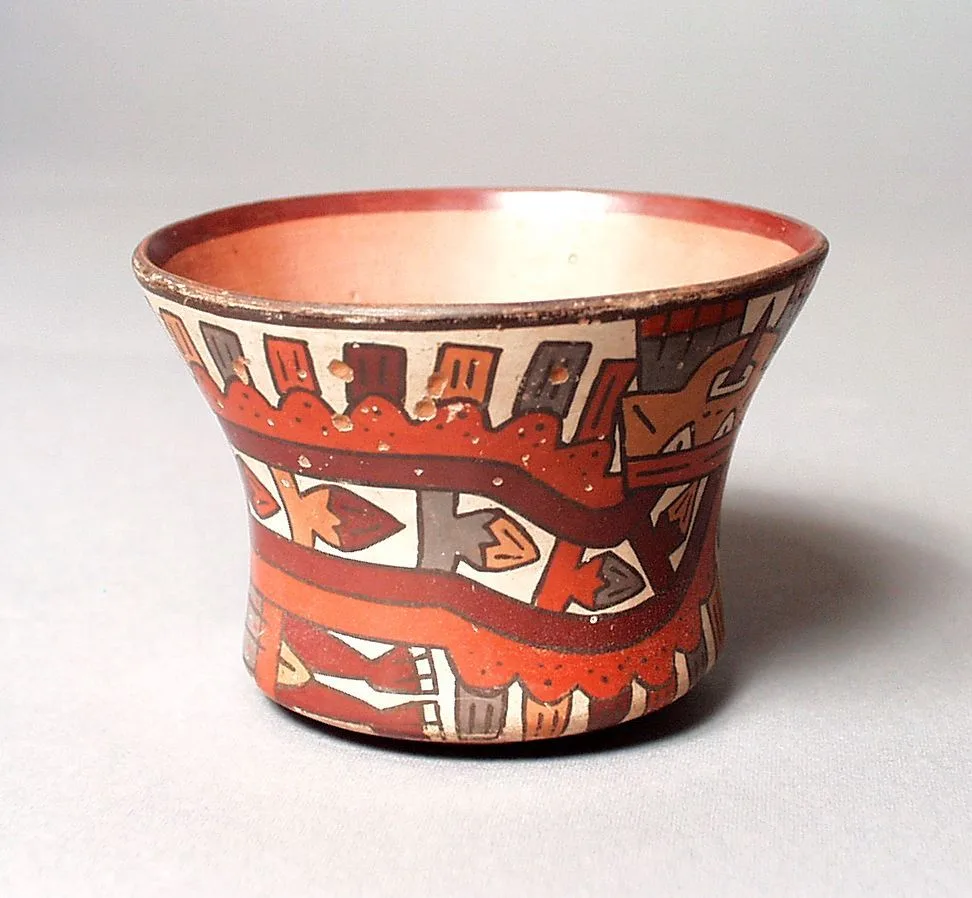
The Nasca Anthropomorphic Mythical Being (AMB) has a human body clothed in a striped tunic and breechcloth, with what looks like an eye on the navel, a motif that may represent a seed. It further wears a distinctive mouth mask, forehead ornament, and long cloak that forms a serpentine body ending in a trophy head with extended tongue. The serpentine body is covered in protrusions that may represent plants or crops, but in many other examples these are numerous trophy heads instead.
These iconographic elements associate the AMB with fertility, as well as sacrifice and head-hunting. Ubiquitous in Nasca ritual life, head-hunting is a frequent theme in their visual arts. Through such practices, these desert communities sought to appease the destructive forces of nature controlled by ancestors, deities, and cosmic forces. The gathering of corporeal fluids (such as human blood and semen) and body parts was likely a key aspect of ritual performances conducted in Nasca desert temples. Blood offerings were the most important gifts to the natural and supernatural beings who allowed humans to survive in such harsh conditions. Death by sacrifice enabled life to regenerate. Although shocking to us, these practices were essential components of negotiating life in the inhospitable environments of the Peruvian desert coast.