- Title
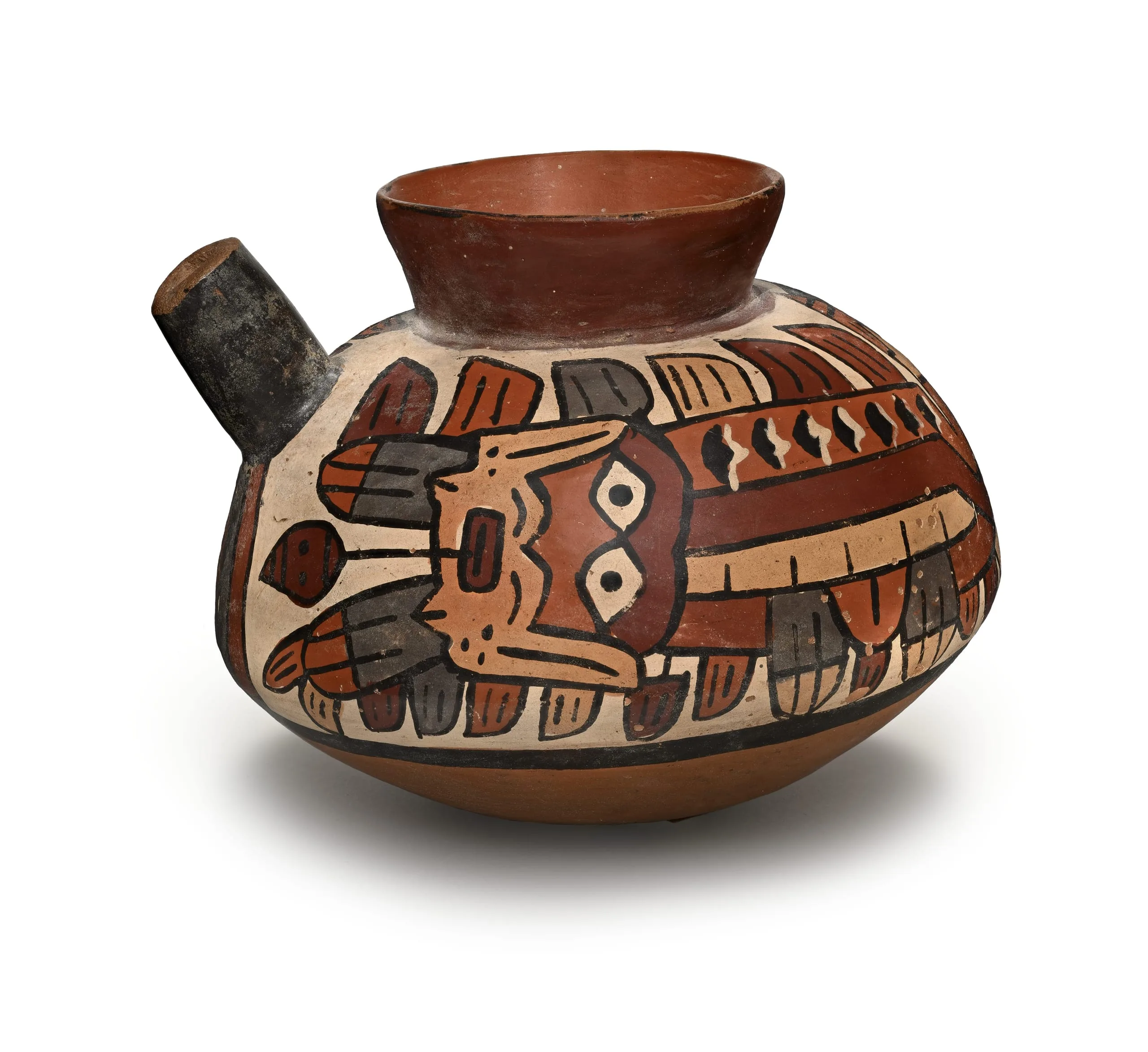
- Spouted Jar with “Serpentine Creature”
- Date Made
- 100 BCE–600 CE
- Medium
- Polychrome ceramic
- Dimensions
- 3 1/4 x 4 in. (8.26 x 10.16 cm)
- Accession Number
- M.73.48.37
- Curatorial Notes
The Serpentine Creature, with its varied appendages and symbolic elements, is a common character in Nasca iconography and embodies the agricultural cycle of life and death. It is always shown with a snakelike body and a feline or human head, often wearing a mouth mask, as here. Mouth masks are adornments made of sheet metal, usually gold, worn as a nose ring but so large that they end up effectively covering or surrounding the mouth (see also M.73.48.25 and .33). The creature’s body is tightly surrounded with plants or crops, perhaps leaves or bell peppers, and the small red shape hanging from its mouth may be a seed. In other examples, it is trophy heads and blood droplets that surround the Serpentine Creature’s body. All of these motifs, vegetal or sacrificial, transform these beings into forces that actualize / personify fertility and the fact that death enables life to regenerate.