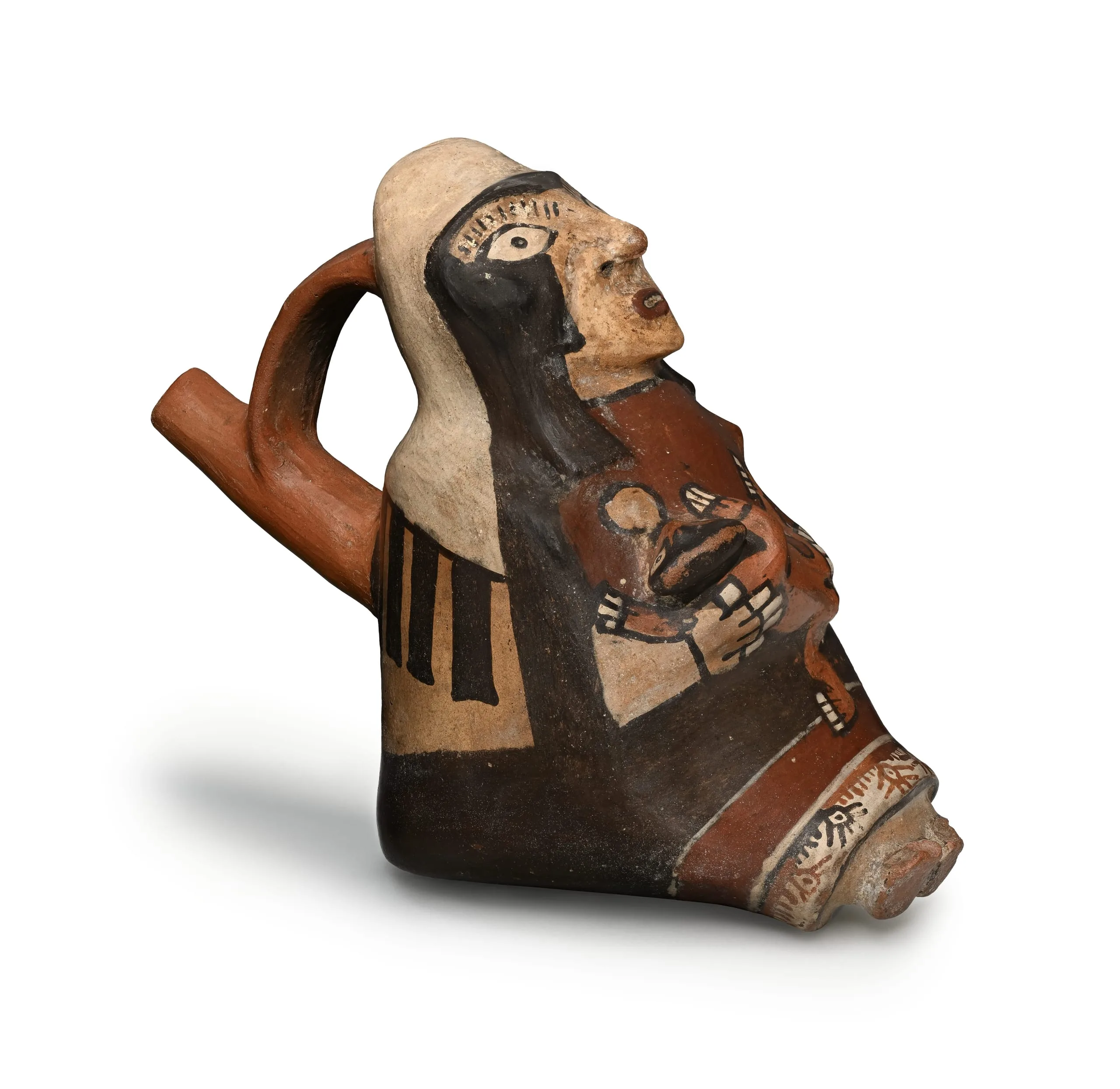
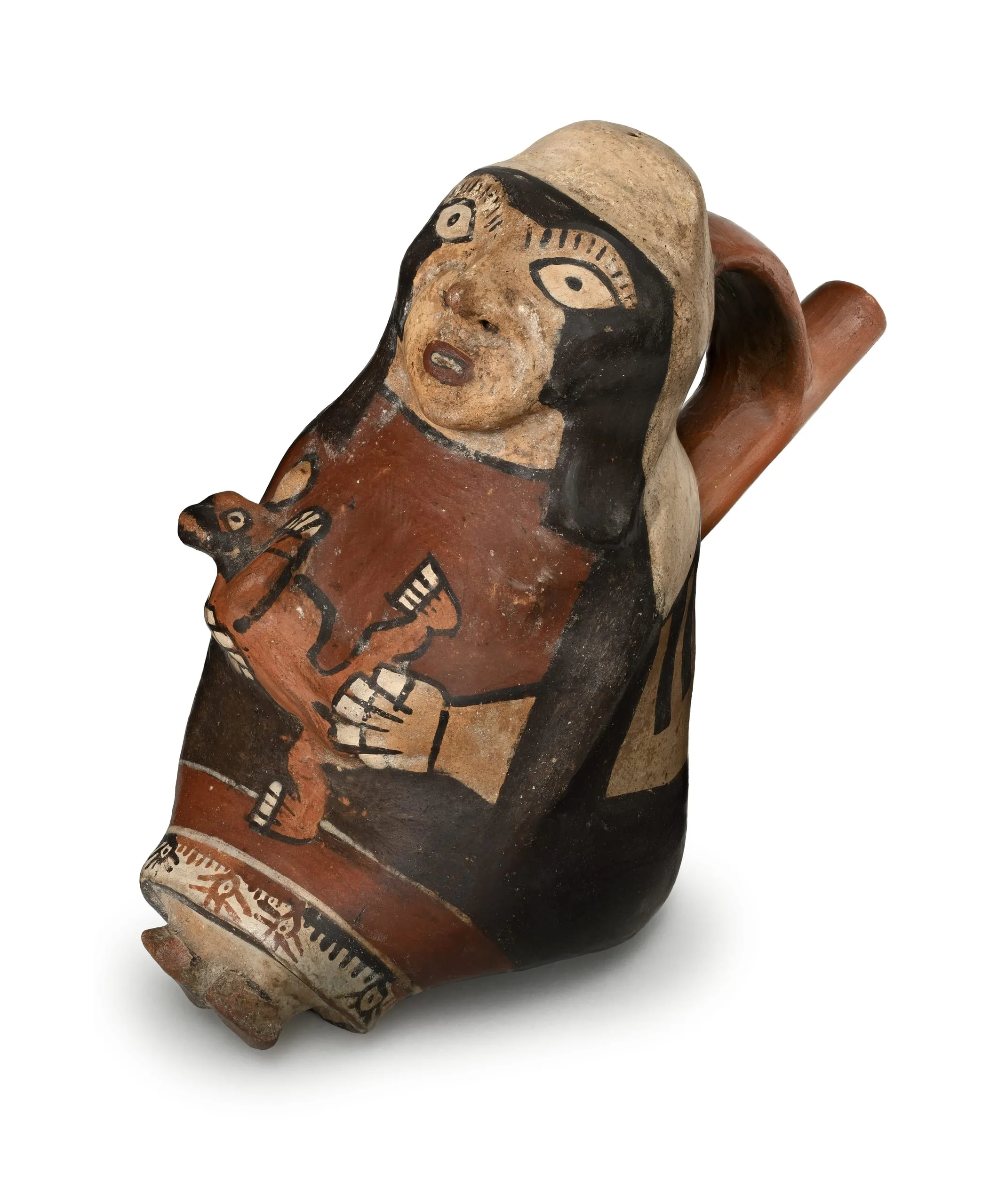
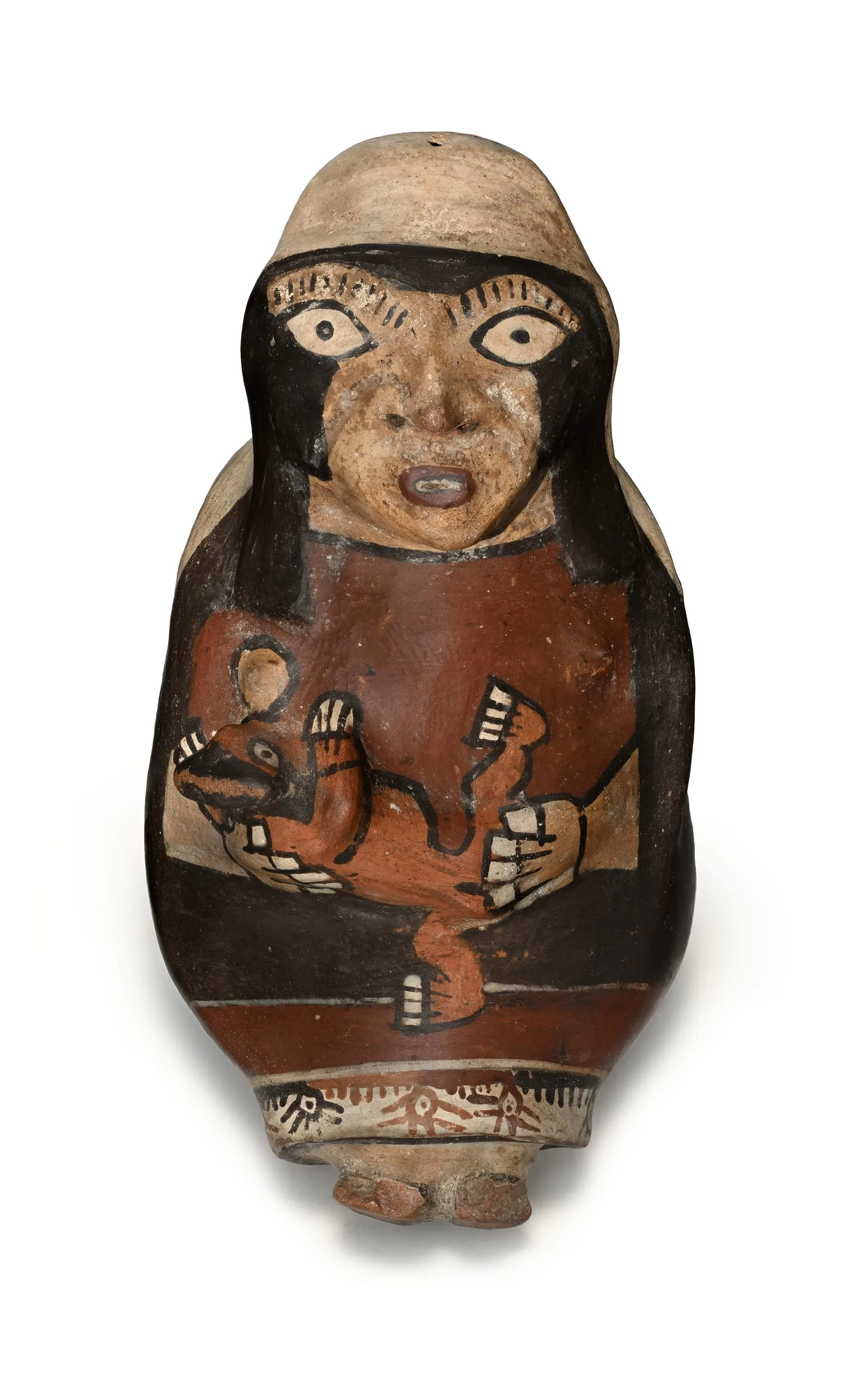
This breastfeeding figure wears a red tunic (unku) partially covered by a cloak with brown geometric designs; her head is draped in a white veil (chucco). Her expressionless face, with wide-open eyes and tightly closed mouth, might indicate that she is an ancestor (the dead were often depicted this way, while the living showed some emotion). The transmission of fluids from ancestors to humans is a classical theme in Nasca religious art (the same is true of the Moche culture). Such scenes might be related to the legitimization of inherited political power, indicating that it had been transmitted from the body and fluids of the ancestors.
In the Peruvian desert, the unpredictable forces of nature caused constant chaos. El Niñorelated heavy rainfalls and the extreme droughts that followed posed an imminent danger to desert communities, affecting basic means of subsistence. The ancestors, gods, and powerful spiritual forces that inhabited the desert played crucial roles in reestablishing the natural order. Obtaining corporeal fluids through warfare and sacrifice was a means toward that end, and these were employed in diverse rituals linked to fertilizing and repairing the desert. Many Nasca vessels evoke the idea of transmission and circulation of fluids between bodies, spaces, and landscapes. Sculptural ceramics are represented as receptacles in which fluids are stored, circulated, and transformed. Semen and maternal milk are depicted as passing from one person to another, but also from ancestors to ancestors, ancestors to humans, and mythological animals to persons. Thus, corporeal fluids, like water, are conceived as reparative and regenerative agents.
Luis Muro
2024