- Title
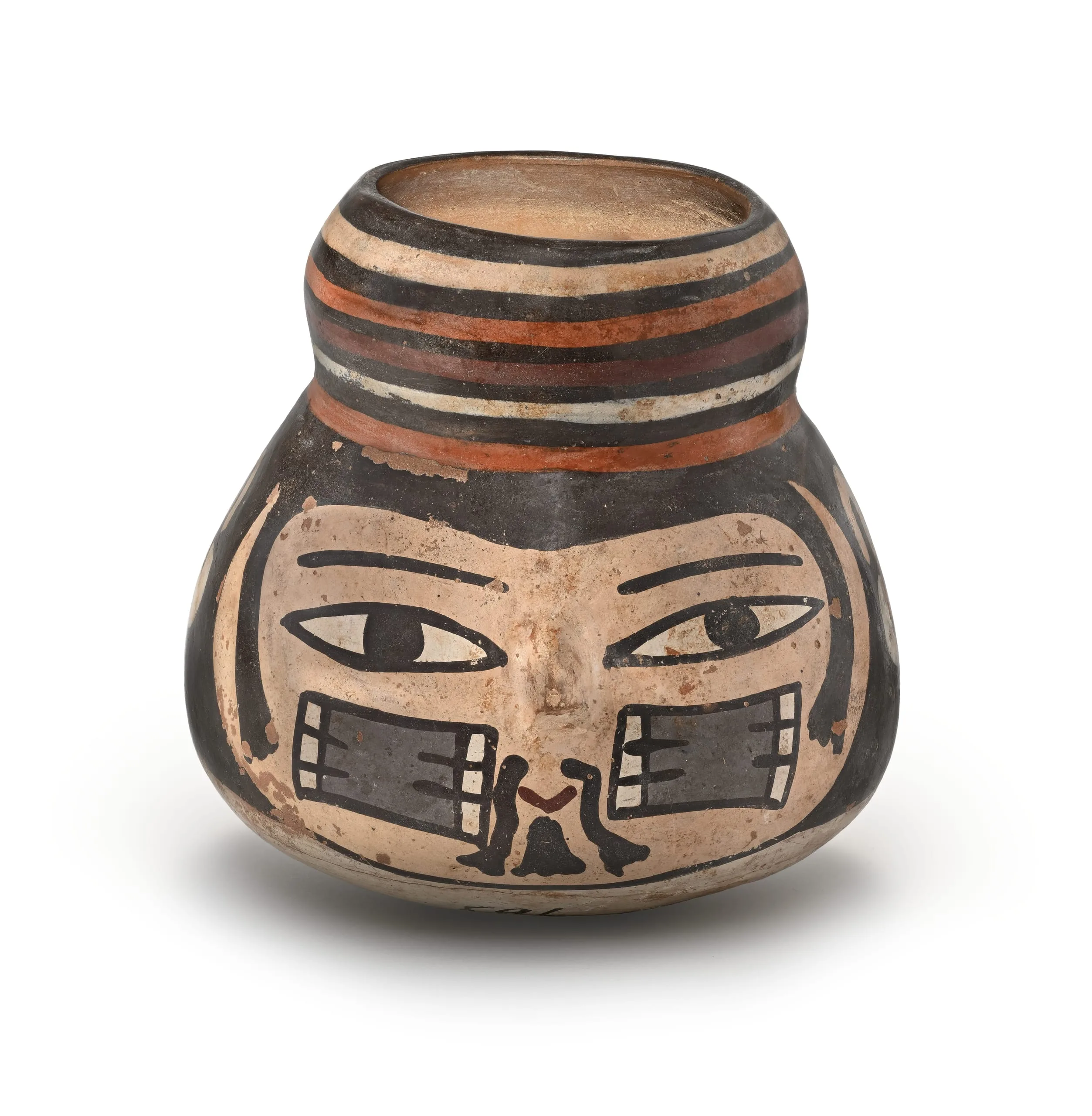
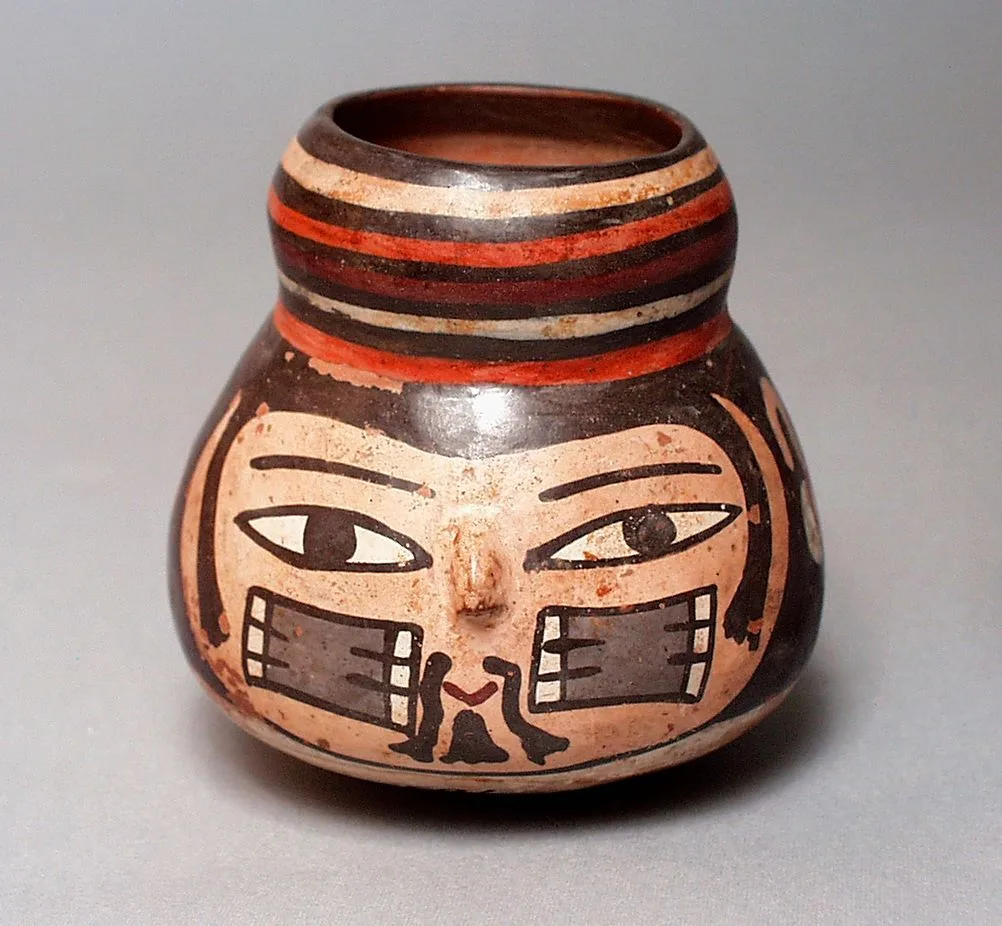
- Anthropomorphic Jar
- Date Made
- 100 BCE–600 CE
- Medium
- Ceramic, hand built, slip decorated, burnished, fired
- Dimensions
- 3 3/4 x 3 3/4 in. (9.52 x 9.53 cm)
- Accession Number
- M.73.48.11
- Curatorial Notes
This Middle Nasca cup represents a severed head. Because Nasca often depicted heads being captured by mythological creatures, such vessels are traditionally called “trophy heads.” Actual severed heads have been archaeologically documented in Nasca temples, such as Cahuachi, Majoro Chico, and Chaviña. Archaeologists interpret these findings as an indication that heads were taken during warfare and displayed as evidence of the warriors’ prowess. Biological analysis indicates that the victims were mostly male (as is the one shown here) and that a complex process of preparation was followed once the head was captured. It involved breaking the base of the skull; extracting the muscles, soft tissues, and internal organs; and inserting a carrying rope in the middle, to convert the head into a portable object.
Although shocking to us, such practices were essential components of negotiating life in the inhospitable environments of the Peruvian desert coast. Sacrifice was the most powerful means of communicating with the deities, and blood offerings were the most important gifts to the natural and supernatural beings who allowed humans to survive in harsh, desert conditions. Death by sacrifice enabled life to regenerate.
Luis Muro
2024