LACMA

ShopMembershipMyLACMATickets
LACMA
Los Angeles County Museum of Art
5905 Wilshire Blvd.
Los Angeles, CA 90036
info@lacma.org
(323) 857-6000
Sign up to receive emails
Subscribe
© Museum Associates 2025

Museum Hours

Monday

11 am–6 pm

Tuesday

11 am–6 pm

Wednesday

Closed

Thursday

11 am–6 pm

Friday

11 am–8 pm

Saturday

10 am–7 pm

Sunday

10 am–7 pm


  • About LACMA
  • Jobs
  • Building LACMA
  • Host An Event
  • Unframed
  • Press
  • FAQs
  • Log in to MyLACMA
  • Privacy Policy
© Museum Associates 2025
Collections

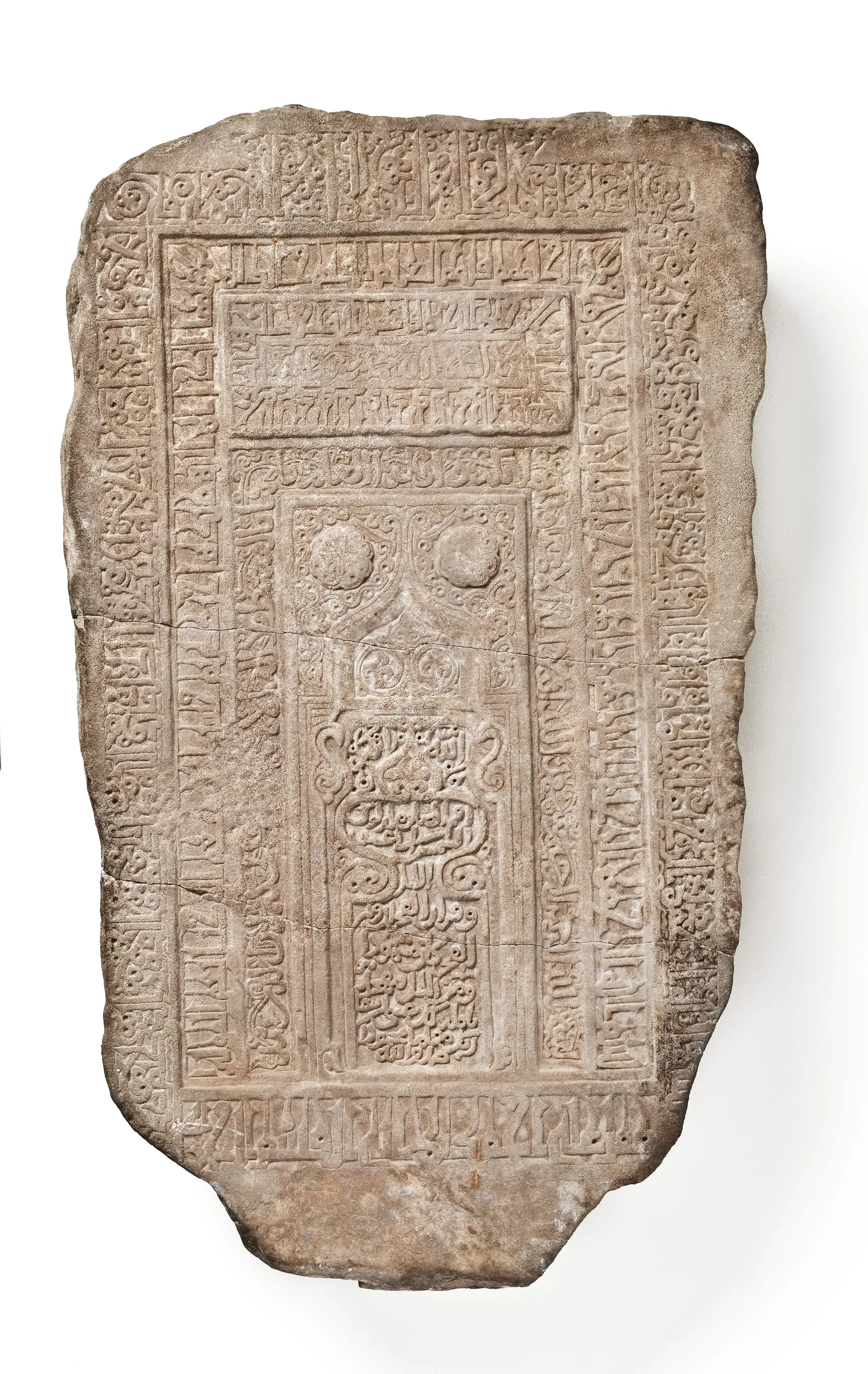
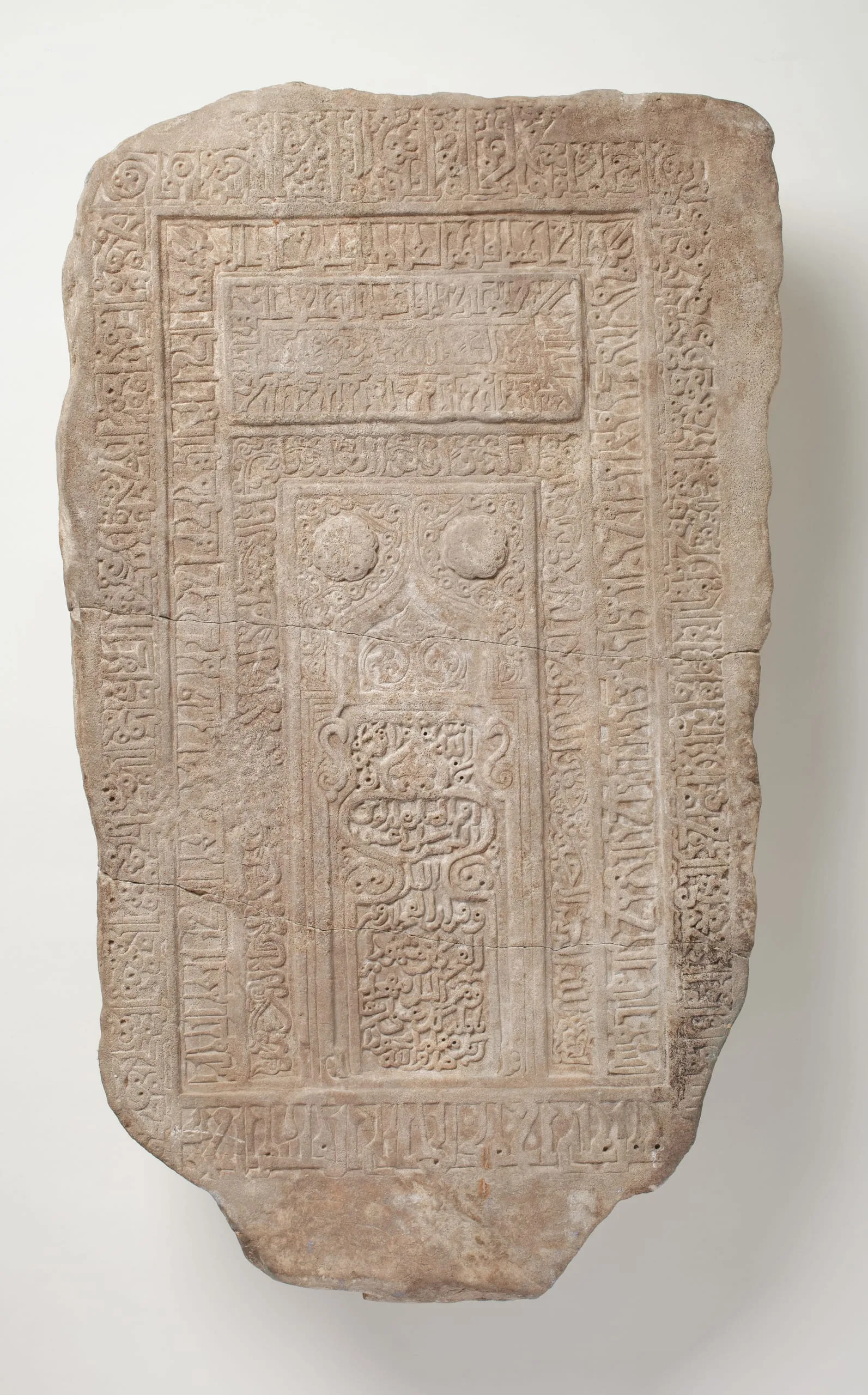
Ali Ahmad ibn Abu'l Qasim al-Kharrat
Mihrab or Tombstone12th century

Not on view
Carved limestone funerary stele with multiple framing bands of Kufic and cursive Arabic inscriptions surrounding a central niche-like panel with interlaced calligraphy
Carved stone funerary stele with multiple registers of Arabic script in relief, framing a central panel with an arched niche design and two circular medallions above dense arabesque scrollwork.
Artist or Maker
Ali Ahmad ibn Abu'l Qasim al-Kharrat
Title
Mihrab or Tombstone
Place Made
Iran
Date Made
12th century
Medium
Marble
Dimensions
29 1/4 x 17 1/2 in. (74.3 x 44.45 cm)
Credit Line
Gift of Nasli M. Heeramaneck
Accession Number
M.73.7.1
Classification
Stone
Collecting Area
Art of the Middle East: Islamic
Curatorial Notes
It is not immediately apparent whether this carved stone functioned as a mihrab or a tombstone, as it resembles both. Within and around the central prayer niche design, which occurs on both mihrabs and tombstones, are dense bands of Arabic inscriptions juxtaposing the rectilinear kufic script with the cursive naskh. The texts quote from the Qur’an without mention of a deceased. One of these Qur’anic passages refers to the act of prayer (17:78-79), lending support to the argument that this object is a mihrab, however, there is another Quranic citation that briefly references the gardens of Paradise (9:21-22). It is signed across the bottom by its maker ‘Ali Ahmad ibn Abu'l Qasim al-Kharrat. Al-Kharrat meaning “the turner” probably alludes to the stone carver’s hand-turned drill and thus his profession. Indeed, he belonged to a family of stone carvers; his father, Abu’l Qassim al-Kharrat, is known for a closely related marble tombstone dated 1138-39, in the Museum of Fine Arts, Boston.
Selected Bibliography
  • Chevedden, Paul E. "A Sāmānid Tombstone from Nīshāpūr." Ars Orientalis 16(1986): 153-170.