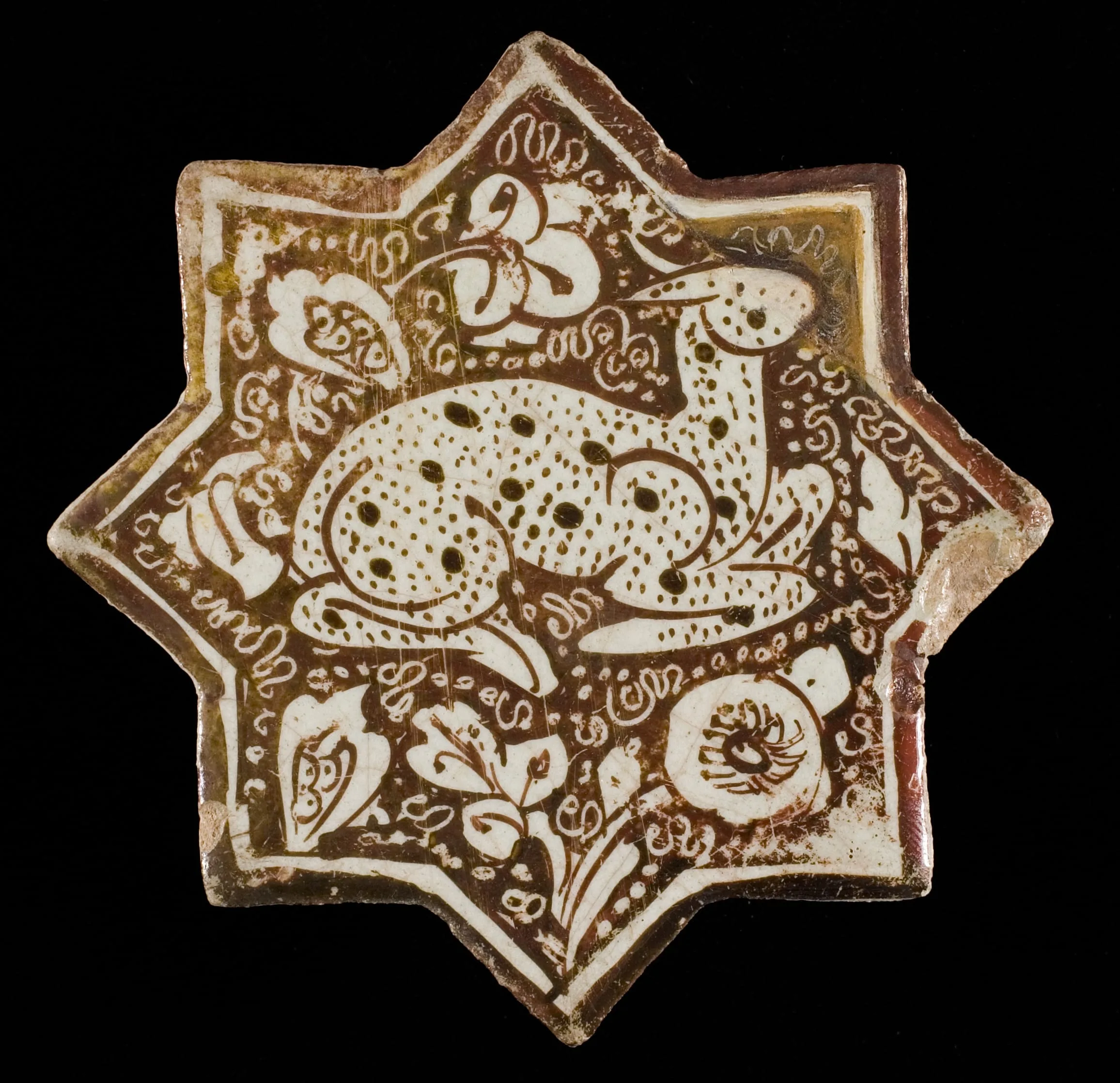
The subtle glittering surface of this tile is due to its luster-painted decoration. Luster-painted ceramics, which represent one of the most original and spectacular contributions of the Islamic potter, are part of an especially long-lived technique, and the resulting products must have always been considered a form of luxury ware, in part because they required two firings. The second firing took place in a special kiln in which the flow of oxygen was restricted, producing a reducing atmosphere that created a thin, lustrous film that fused with the glazed surface.
Tiles like this one, which likely once belonged to a group of star- and cross-shaped tiles that embellished the walls of a building, were typically decorated with animals and human figures. The former often have a fantastical appearance due to the dots that cover their bodies, seen for example in this reclining deer. Combined with depictions of other living creatures that were popular at the time, including boars, hares, and horses (see M.73.5.377), these tiles would have formed a lively menagerie within a given space.
2025