- Title
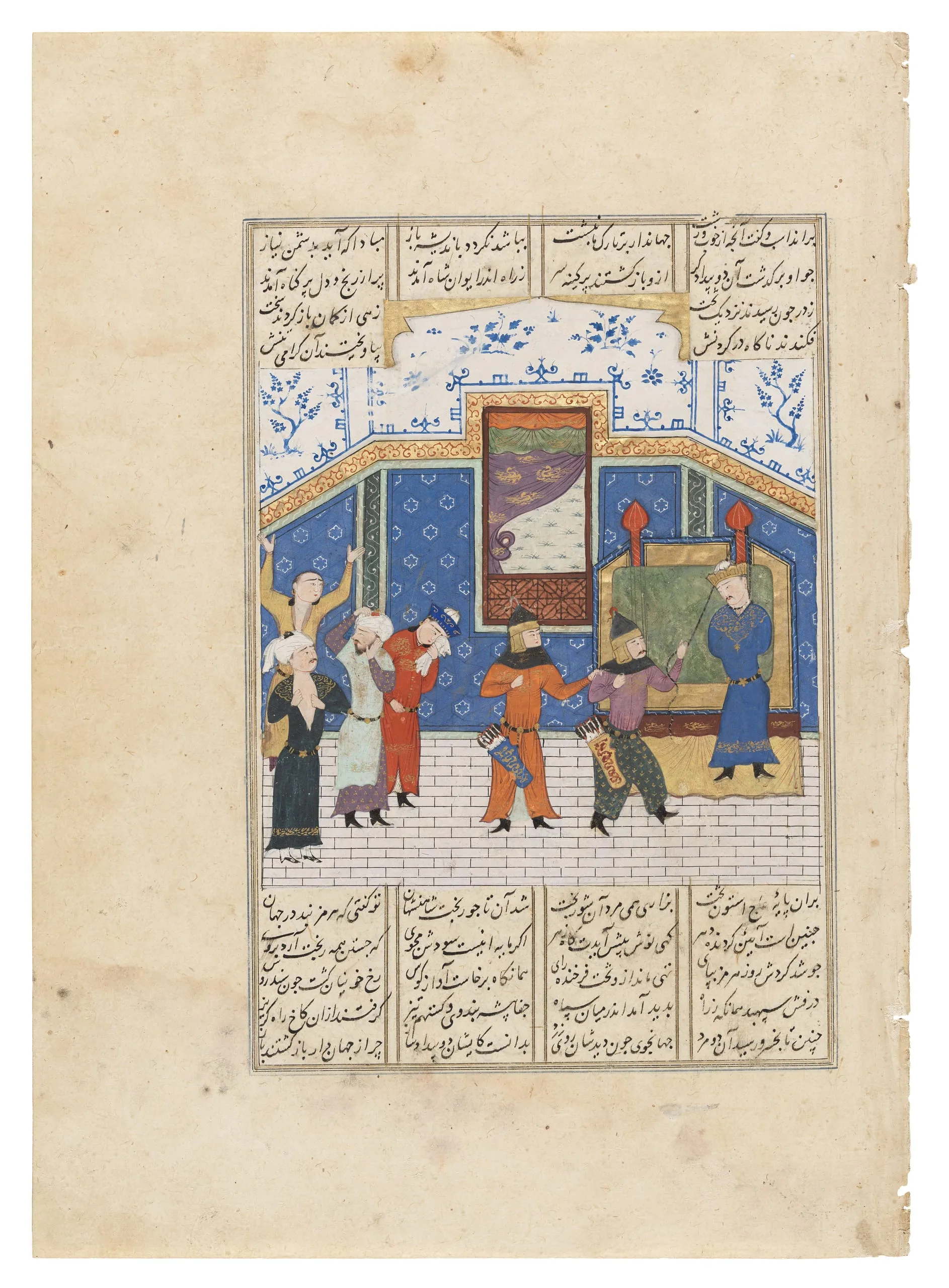
- Hormuz Tied to a Column and Beaten, Page from a Manuscript of the Shahnama (Book of Kings) of Firdawsi
- Date Made
- circa 1490
- Medium
- Ink, opaque watercolor, and gold on paper
- Dimensions
- 8 15/16 x 6 1/8 in. (22.70 x 15.56 cm)
- Accession Number
- M.73.5.463
- Curatorial Notes
The Shahnama (Book of Kings), the Iranian national epic, was composed by Firdawsi and completed around 1010. It chronicles in verse the legendary and historical kings and heroes of the Persian Empire up to the Arab Muslim conquest in the seventh century. Illustrated manuscripts of the text, usually made under courtly patronage, only survive from the early fourteenth century onward; many of these were broken up in modern times for the sake of their paintings. Typically, the architectural settings and costumes of the depicted characters reflect the era in which the manuscript was made, drawing a connection between ancient kings and heroes and the then present-day court. On that account, the commissioning of such anachronistically illustrated manuscripts appealed to great kings and provincial rulers alike.
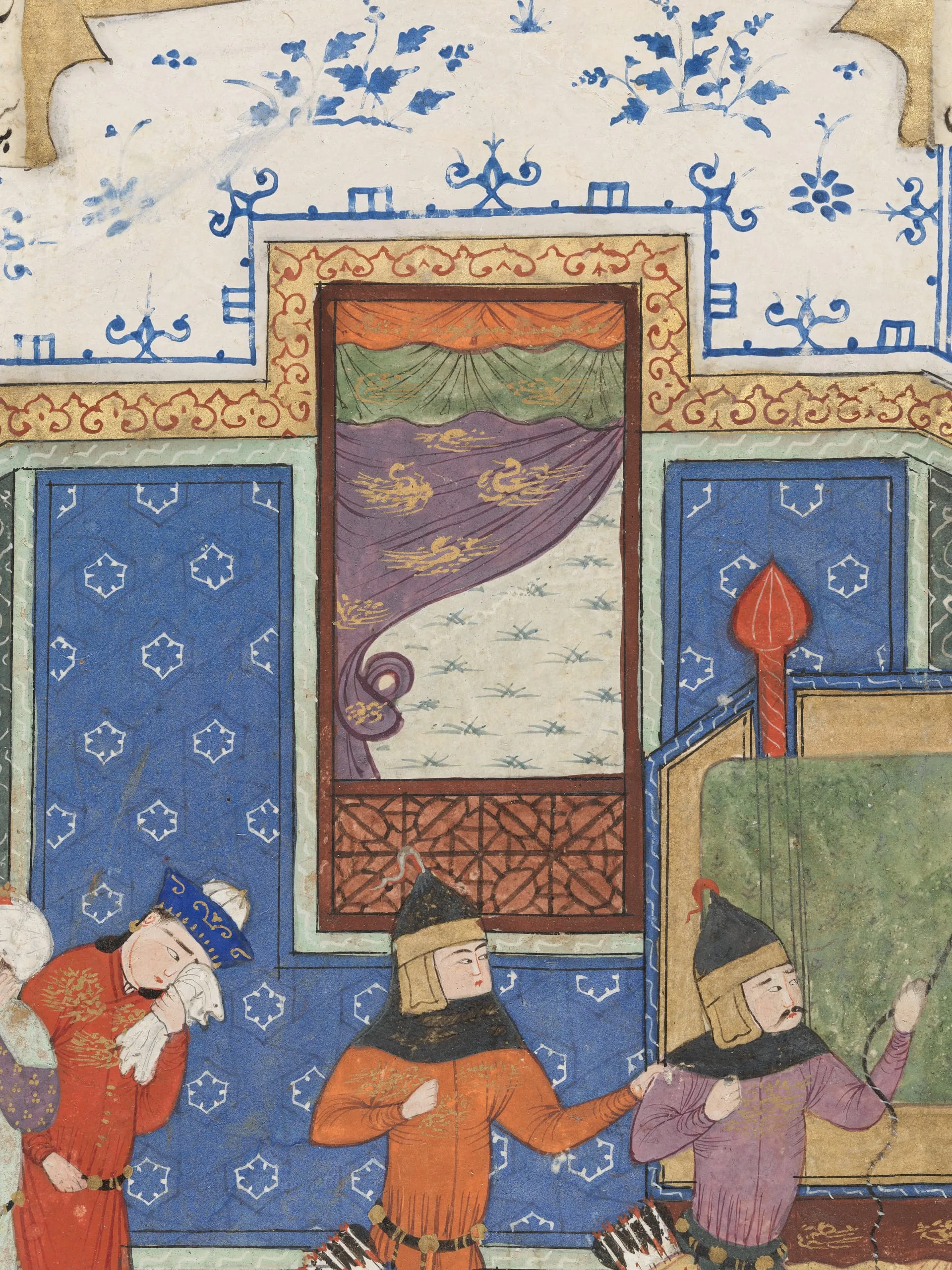
This illustration depicts the prophesied death of the historical ruler Hormuz (Hormozd IV, r. 579−90), whose overthrow and execution by his own brothers-in-law are presented by Firdawsi as just punishment for his unjust rule. Here, the scene captures the pivotal moment in the story when the two instigators string Hormuz up from one of the finials of his throne. A group of bystanders from the disgraced shah’s entourage bear witness to the deed as one tearfully wipes his eye and another beats his chest in grief. This folio is one of seven illustrations from the same Shahnama in LACMA’s collection (see M.73.5.23, .410, .411, .413, and .462).
2024
- Selected Bibliography
- Pal, Pratapaditya, ed. Islamic Art: The Nasli M. Heeramaneck Collection. Los Angeles: Museum Associates, 1973.