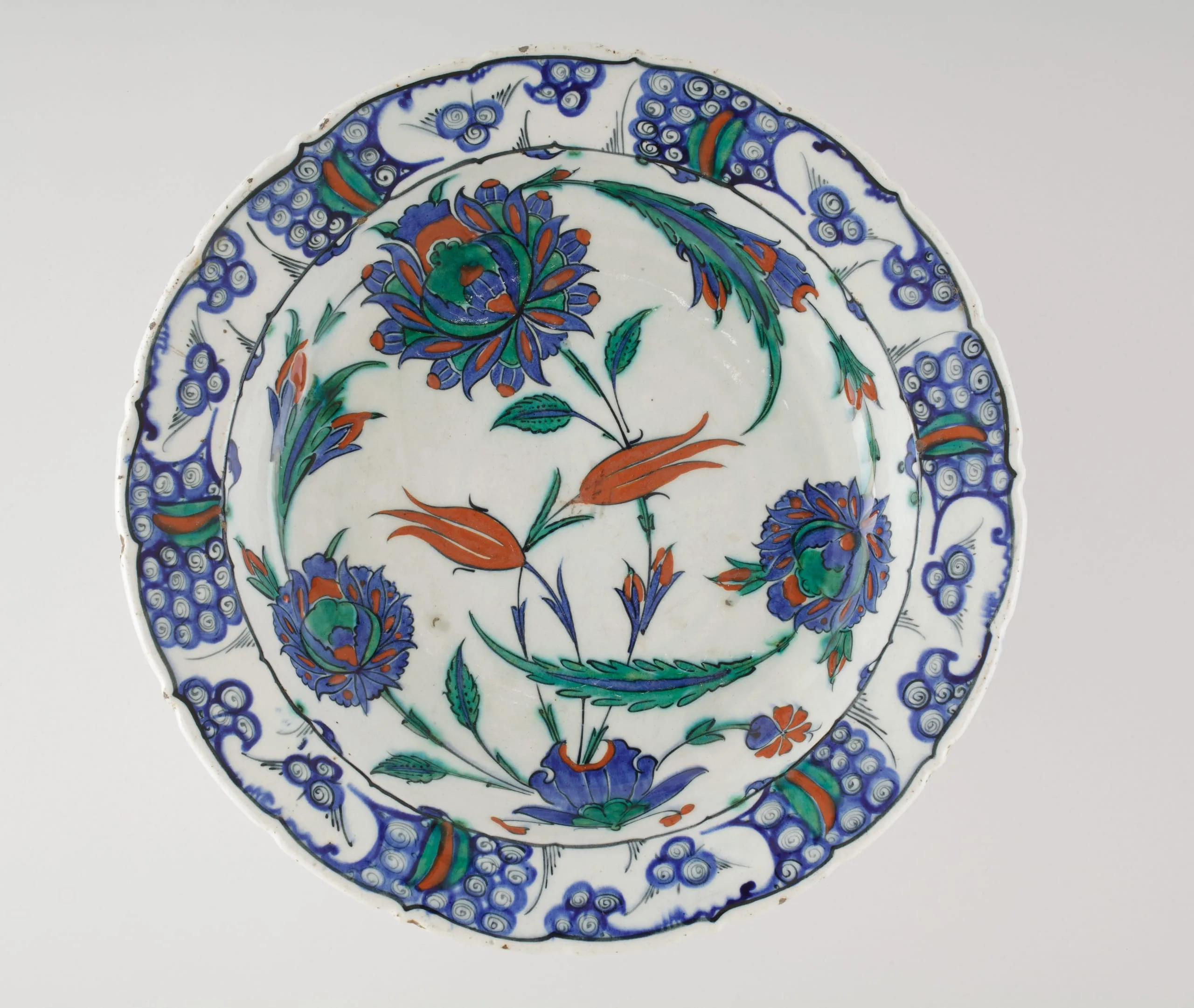
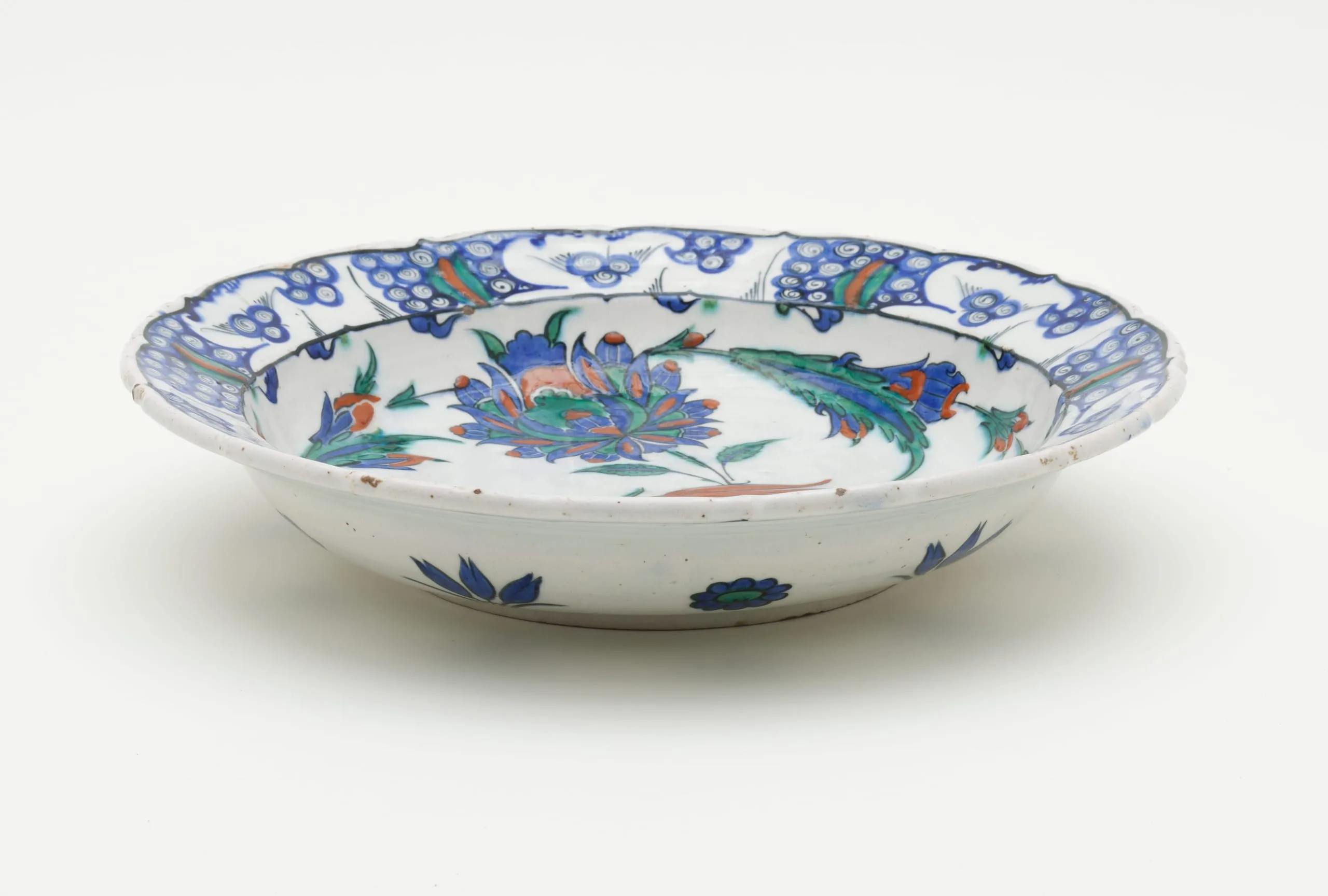
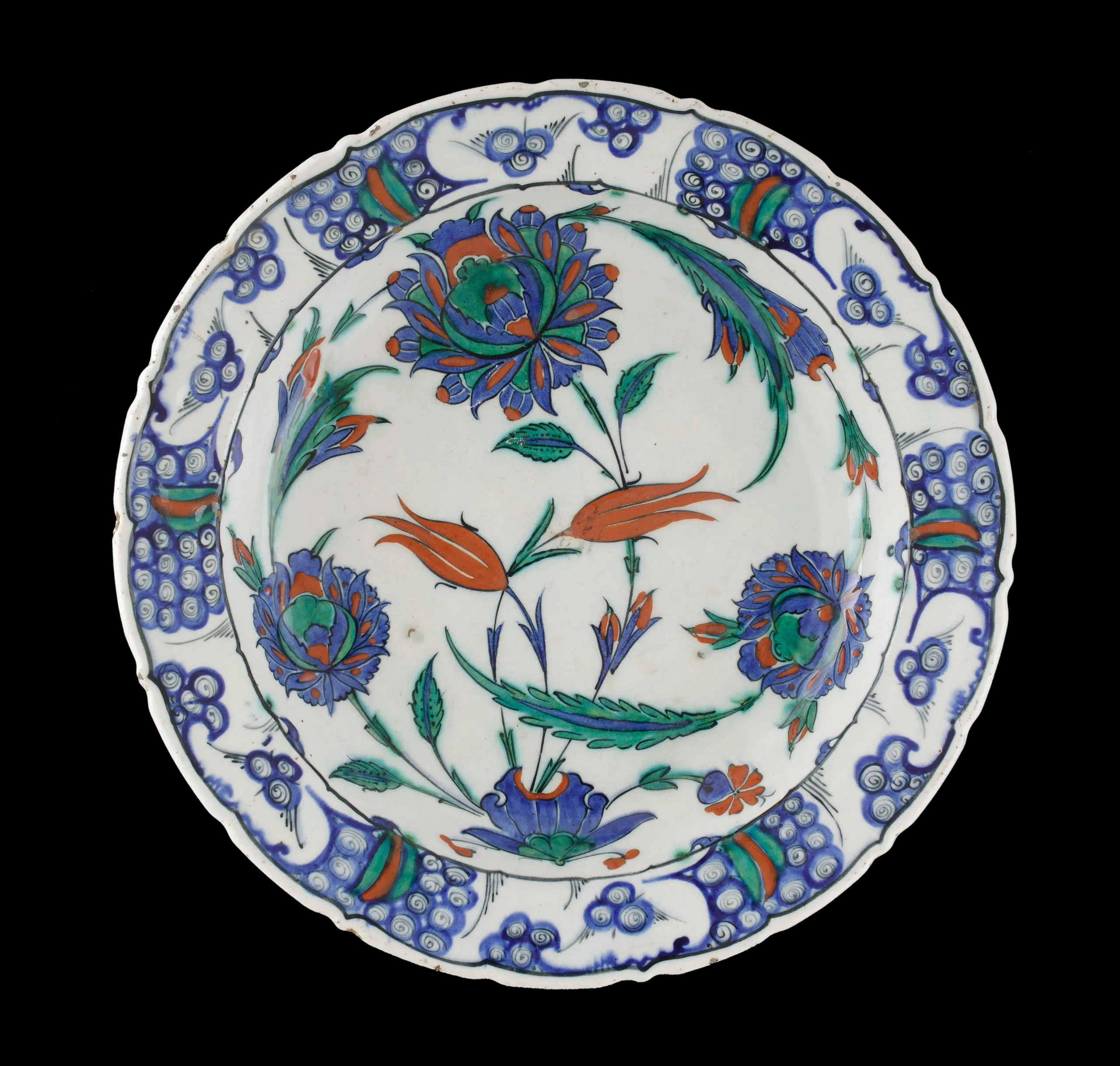
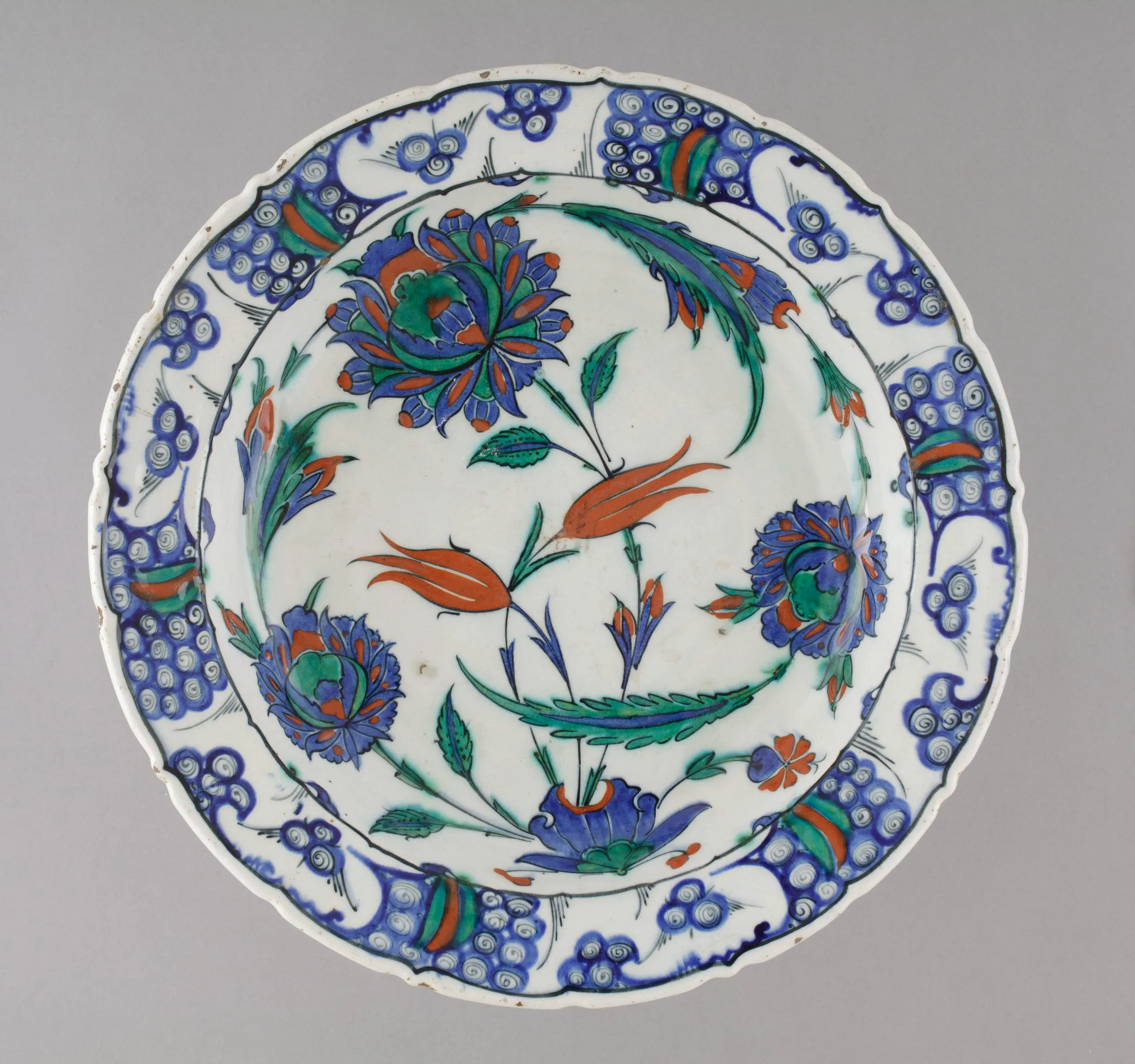
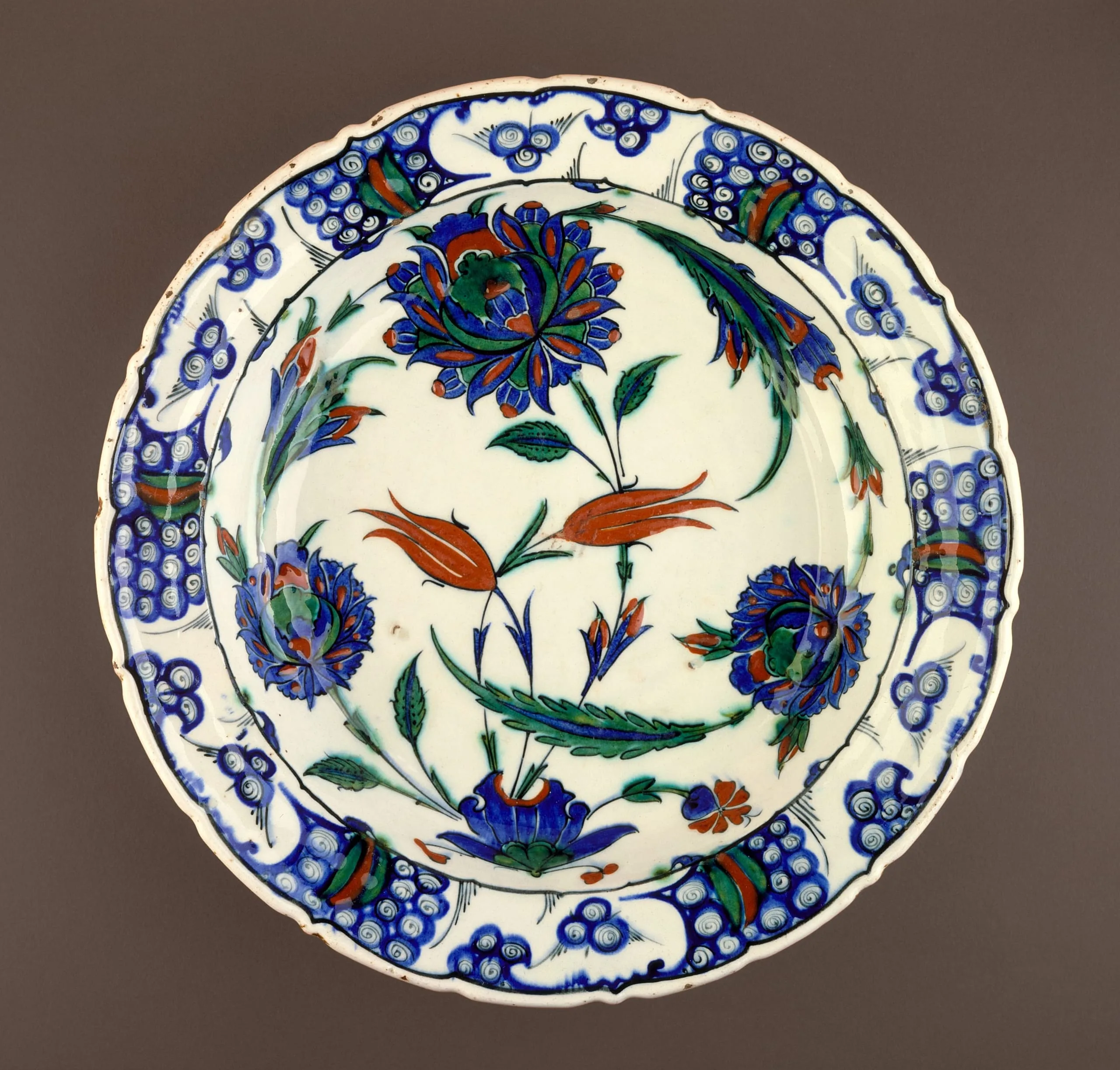
Ceramics made in Iznik, in western Turkey, represent one of the most renowned and influential arts of the Ottoman period. The Iznik kilns, about 85 miles southeast of the capital, Istanbul, manufactured both architectural revetment and tableware such as this handsome plate. It belongs to a specific phase in Iznik ceramics, beginning around the mid-sixteenth century, when potters added a brilliant red and bright grass-green to their palette. This new color scheme, which is the most prevalent among Iznik wares, expanded the creative possibilities of the style, resulting in more adventurous compositions. The painter of this plate experimented with the confines of the round space, allowing the floral stem on the left side to grow up and around the edge of the plate’s interior to create a lively swirling motion.
Objects of this type, both tile revetment and vessels, demonstrate the great variety of ornament used by Iznik potters, including the ubiquitous tulip; lush, plump peonies and carnations; and spiky and scrolling leaves. They also help to illustrate the different stylistic phases of Iznik wares, which in turn reflect the evolution of Ottoman taste in the sixteenth and seventeenth centuries in a variety of mediums.