LACMA

ShopMembershipMyLACMATickets
LACMA
Los Angeles County Museum of Art
5905 Wilshire Blvd.
Los Angeles, CA 90036
info@lacma.org
(323) 857-6000
Sign up to receive emails
Subscribe
© Museum Associates 2025

Museum Hours

Monday

11 am–6 pm

Tuesday

11 am–6 pm

Wednesday

Closed

Thursday

11 am–6 pm

Friday

11 am–8 pm

Saturday

10 am–7 pm

Sunday

10 am–7 pm


  • About LACMA
  • Jobs
  • Building LACMA
  • Host An Event
  • Unframed
  • Press
  • FAQs
  • Log in to MyLACMA
  • Privacy Policy
© Museum Associates 2025
Collections

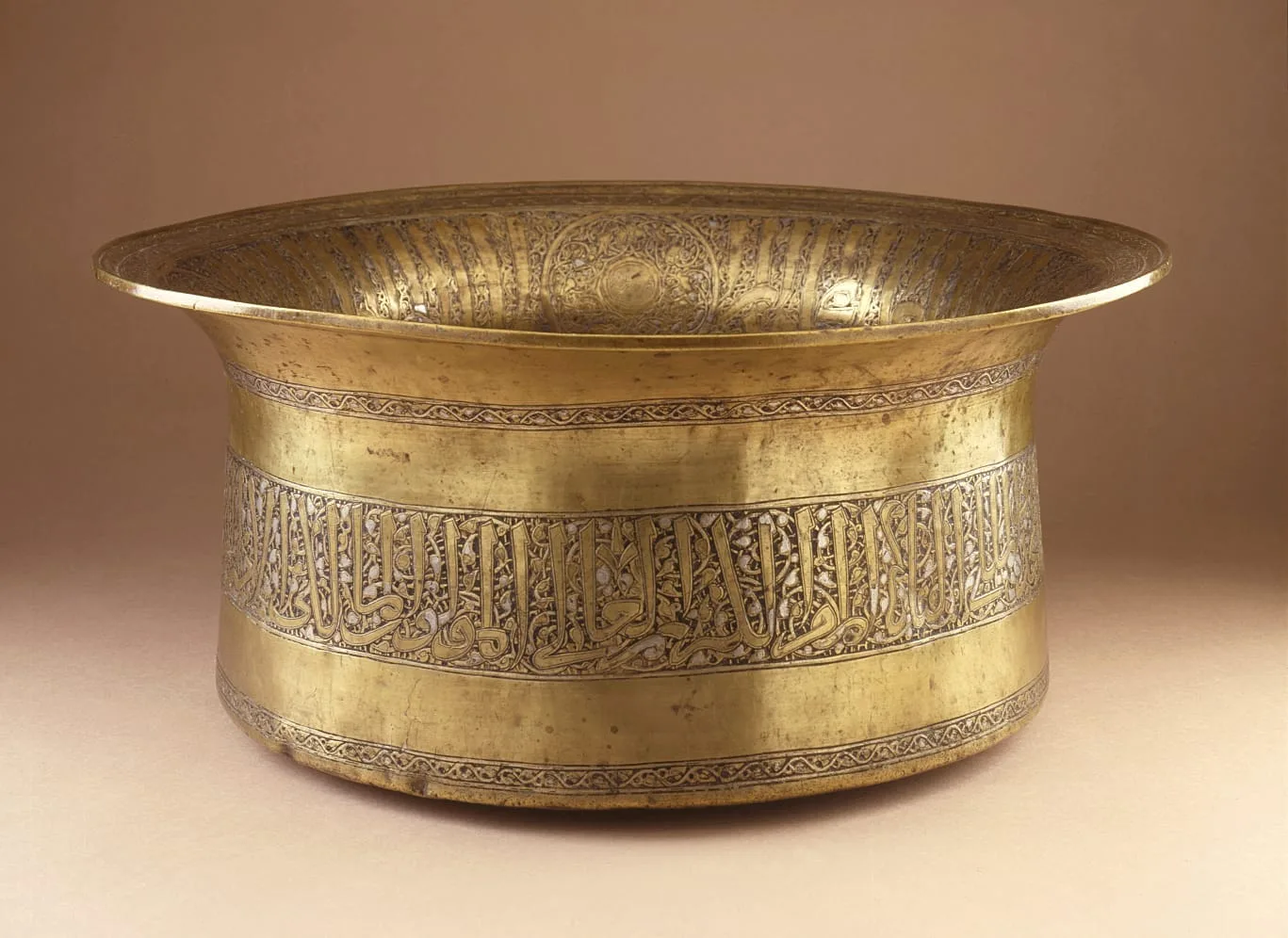
Basin14th century

Not on view
Brass vessel with wide flaring rim and cylindrical body, engraved with Arabic-script inscription and foliate ornament on a honey-gold surface
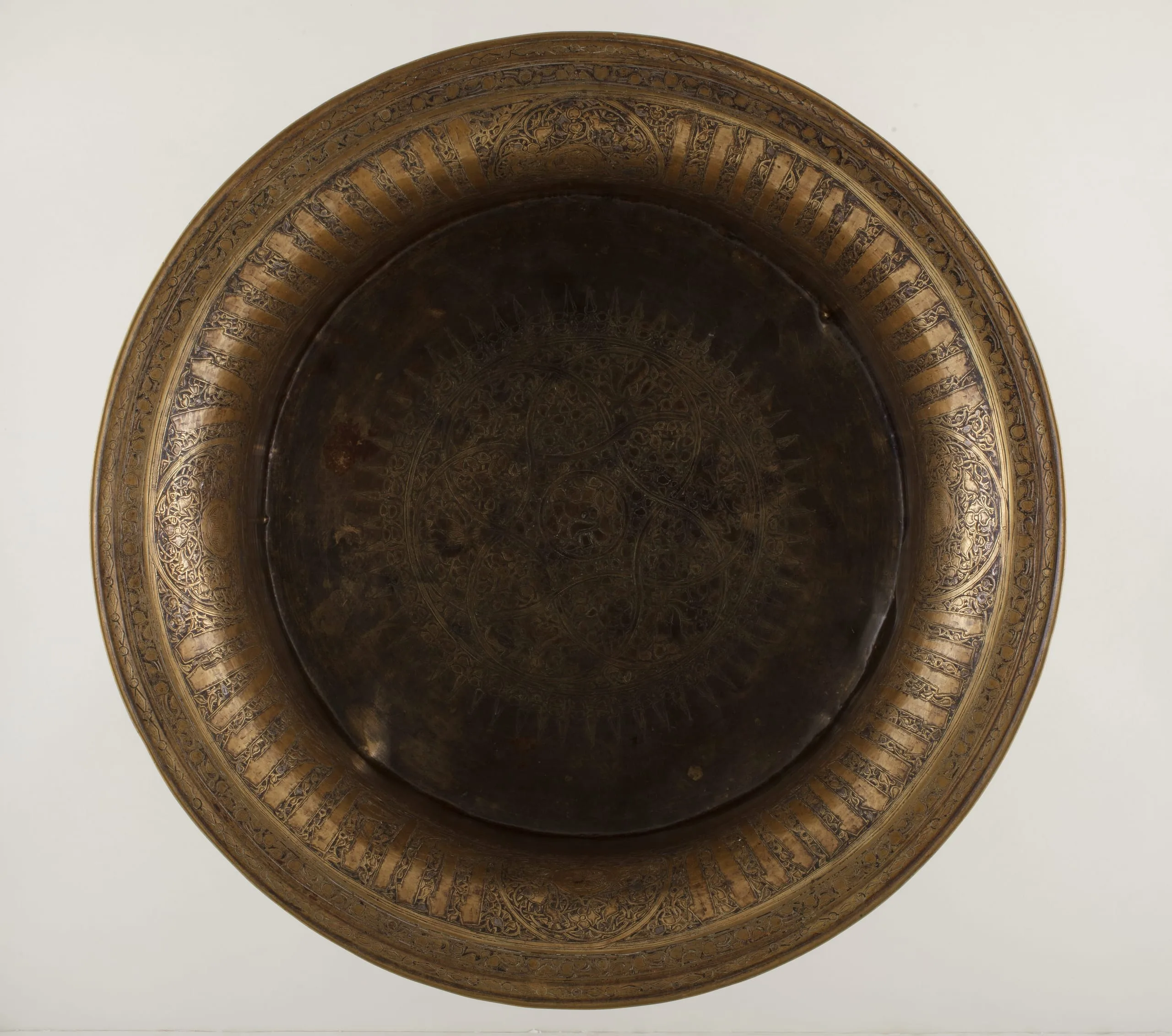
Brass basin photographed from above, with a wide flat rim densely engraved with scrolling arabesques and radiating cartouches; the darkened interior bowl features a central medallion with fine incised floral and figural decoration.
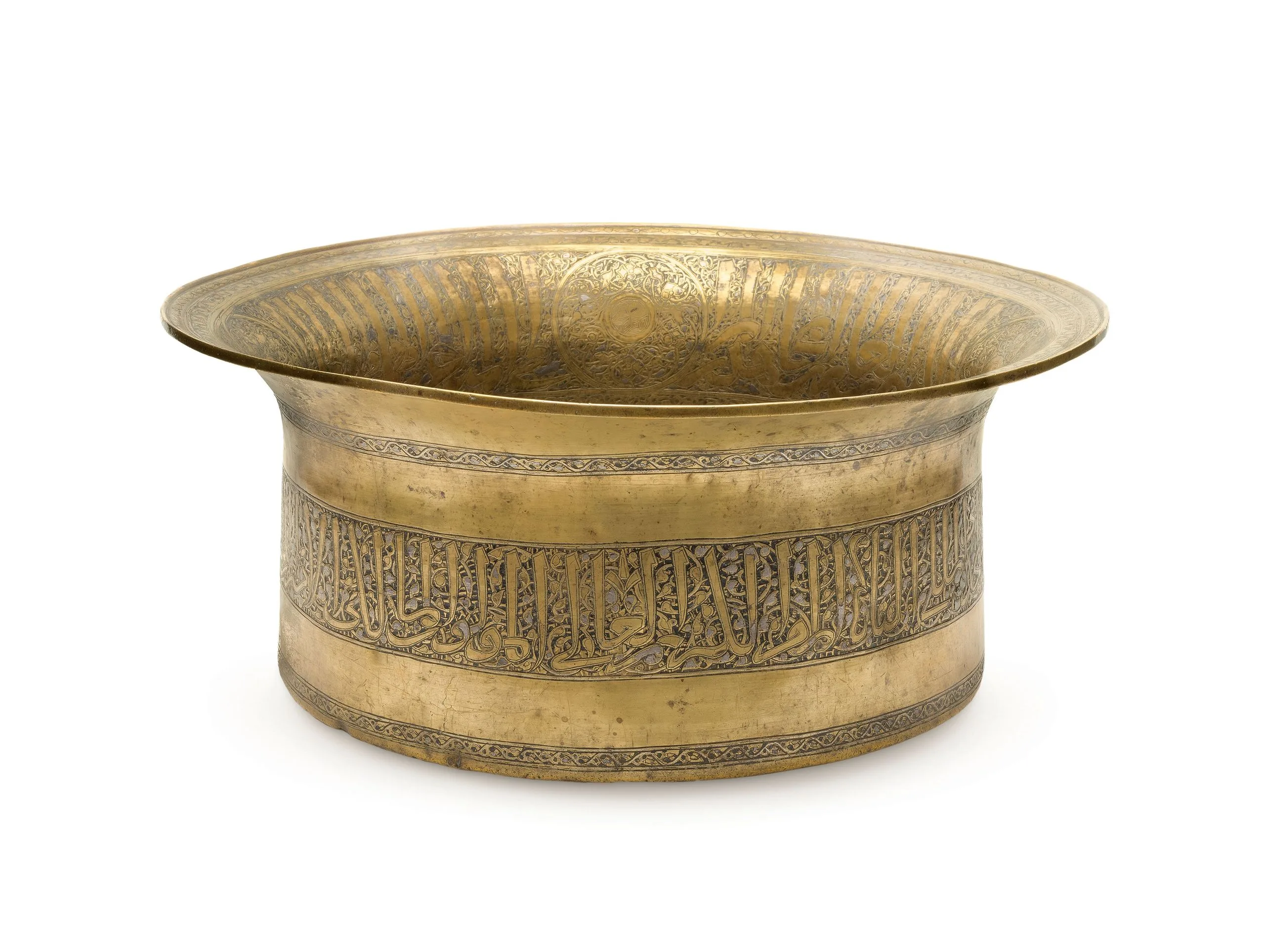
Large engraved brass basin with flared rim and cylindrical body, decorated with a wide band of Arabic calligraphy in naskh script surrounded by scrolling arabesque borders, with additional geometric and vegetal patterns along the interior rim.
Title
Basin
Place Made
Egypt
Date Made
14th century
Medium
Brass, engraved and inlaid with silver
Dimensions
8 x 18 1/8 in. (20.25 x 46.00 cm)
Credit Line
The Nasli M. Heeramaneck Collection, gift of Joan Palevsky
Accession Number
M.73.5.125
Classification
Metal
Collecting Area
Art of the Middle East: Islamic
Curatorial Notes

Bold calligraphic bands of thuluth, a monumental script with rounded proportions, became the main decorative element on metalwork produced for the Mamluk rulers of Egypt during the first decades of the fourteenth century, as is demonstrated by this large silver-inlaid basin. It is encircled by two prominent epigraphic registers, on the exterior and on the interior rim. The inscriptions provide the lengthy titles of an anonymous amir in the service of Sultan al-Nasir Muhammad (r. 1294–1340, with interruptions). Brass basins were often made as a set with an ewer, some of which survive, and were likely intended for washing the hands after dining.
Selected Bibliography
  • Markel, Stephen. Mughal and Early Modern Metalware from South Asia at LACMA: An Online Scholarly Catalogue. Los Angeles: Los Angeles County Museum of Art, 2020. https://archive.org/details/mughal-metalware (accessed September 7, 2021).
  • Komaroff, Linda, editor. Dining with the Sultan: The Fine Art of Feasting. Los Angeles: Los Angeles County Museum of Art; New York: DelMonico Books, 2023.