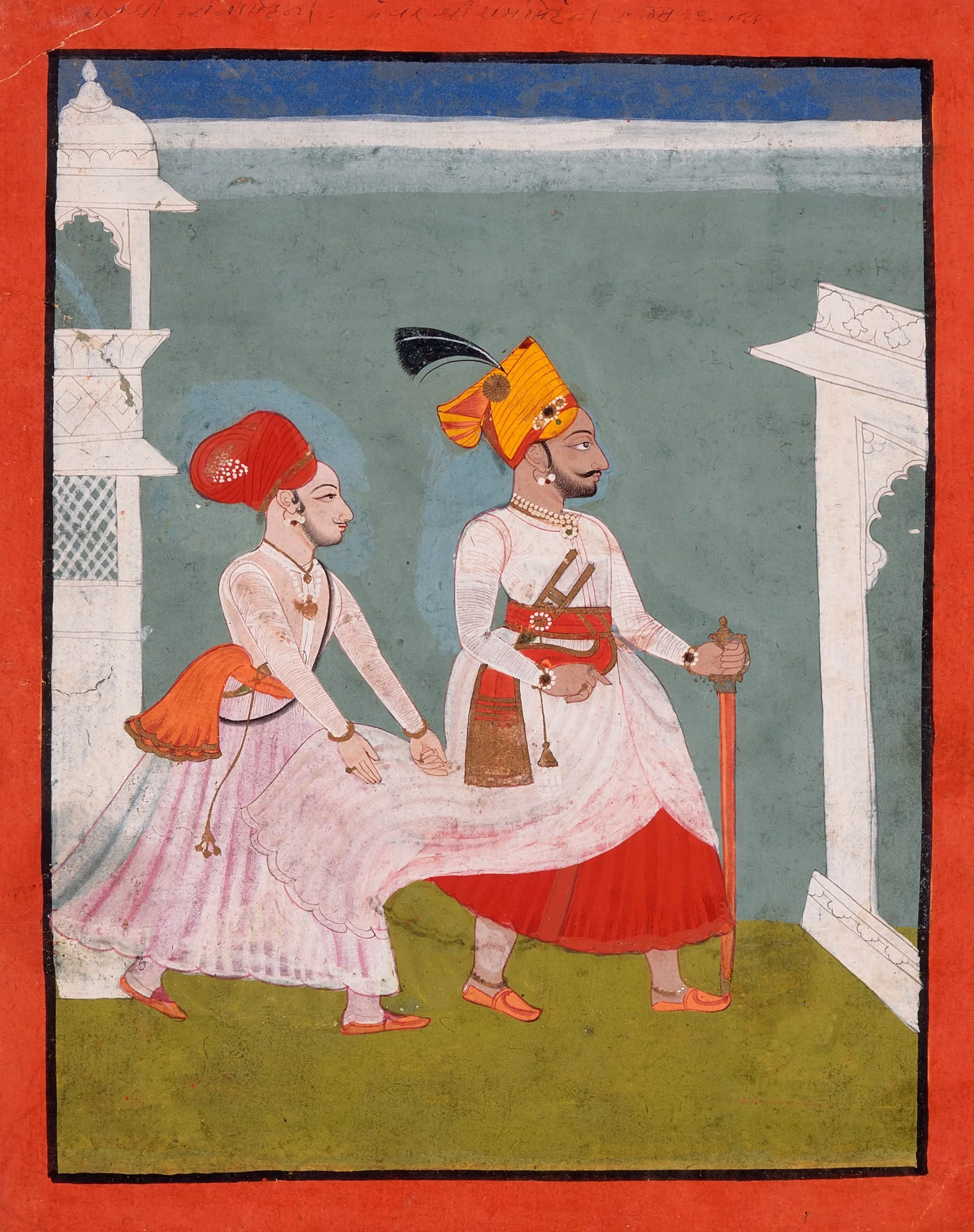
The devanagari inscriptions on the upper red border of this painting and on the reverse identify the two figures striding jauntily as Raja Shiv Singh and Prince Ram Singh (dates unknown). The prince is said to be sixteen years old. A second inscription on the reverse states, “a Bhati [clan member] from Shrimali of Mewar.” Shrimali (modern Bhinmal) was a fiefdom of Mewar.
Raja Shiv Singh wears a yellow-and-red turban crested with a feather plume with a golden feather brooch, and adorned above the brow with a sarpati (horizontal tripartite ornament). The turban jewels indicate his royal status. He wears pearl jewelry, has a punch dagger (katar) tucked into his red waist sash, and carries a “Firangi” (European) straight sword. His white overcoat, worn over a red undergarment, is being held off the ground as a measure of respect by Prince Ram Singh, who is similarly dressed with a different style of turban. They are depicted in a palace courtyard about to enter a pavilion.
In the last quarter of the 18th century, cultural patronage under Maharana Bhim Singh (r. 1778-1828) was at an ebb due to the kingdom’s economic decline, disruptive clan rivalry, and Maratha incursions. Few Mewar paintings survive from this period until its renaissance in the early 19th century.