LACMA

ShopMembershipMyLACMATickets
LACMA
Los Angeles County Museum of Art
5905 Wilshire Blvd.
Los Angeles, CA 90036
info@lacma.org
(323) 857-6000
Sign up to receive emails
Subscribe
© Museum Associates 2026
  • About LACMA
  • Jobs
  • Building LACMA
  • Host An Event
  • Unframed
  • Press
  • FAQs
  • Log in to MyLACMA
  • Privacy Policy
© Museum Associates 2026
Collections

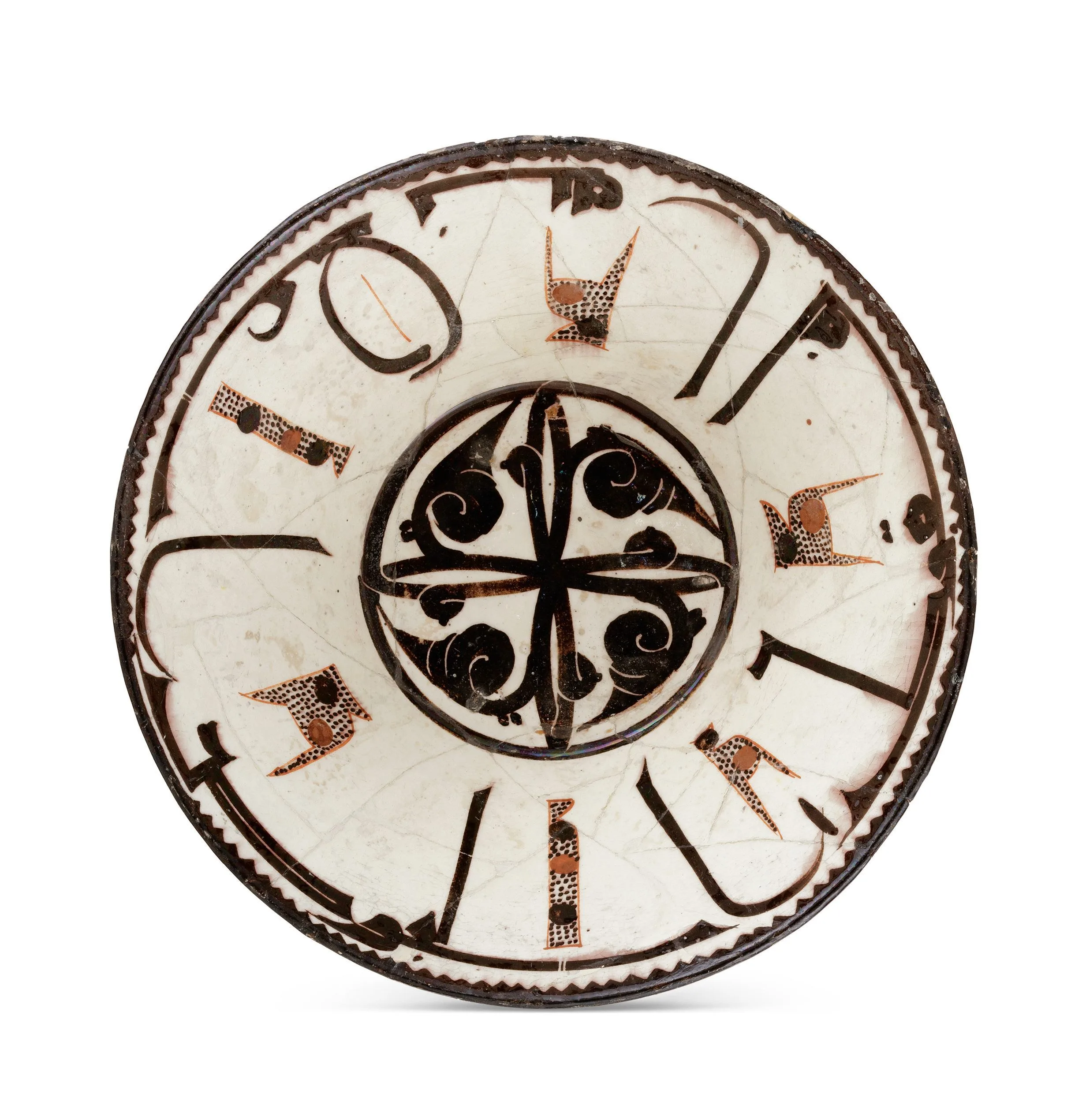
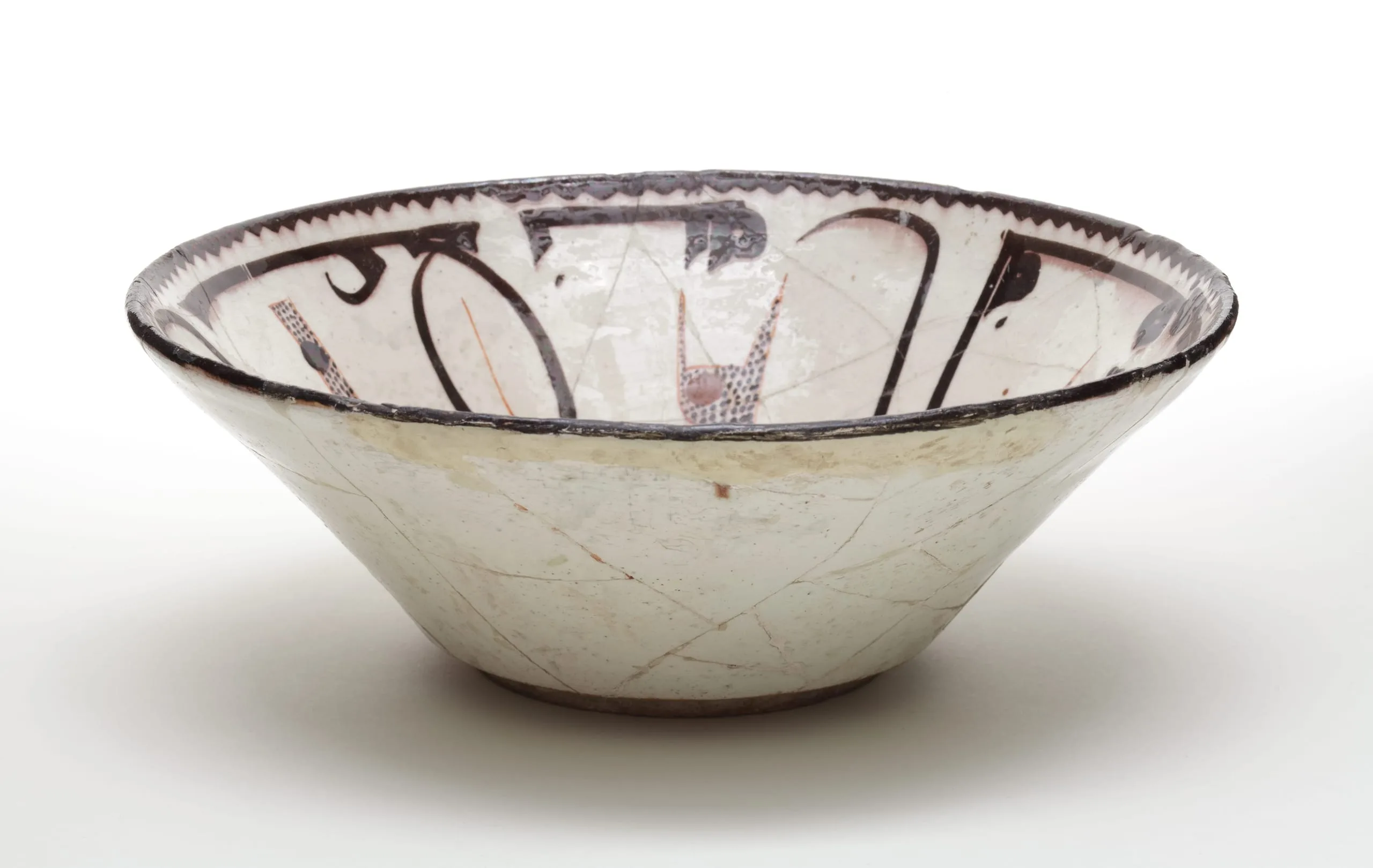
Bowl with epigraphic and vegetal decoration10th century

On view:
Geffen Galleries
Ceramic bowl viewed from above, off-white glaze with bold dark brown Arabic script around the interior and a central scrolling rosette medallion, terracotta red accent details, crazed surface
Ceramic bowl with conical form and white slip glaze, decorated on the interior with Arabic calligraphy and a bird figure in dark brown and red; serrated band at rim, crackled glaze with visible restoration lines throughout.

Unknown, Bowl with epigraphic and vegetal decoration, 10th century, Los Angeles County Museum of Art, The Nasli M. Heeramaneck Collection, gift of Joan Palevsky, photo © Museum Associates/LACMA

Title
Bowl with epigraphic and vegetal decoration
Place Made
Iran, Nishapur or Uzbekistan, Samarqand
Date Made
10th century
Period
Samanid (819-1005)
Medium
Earthenware with white slip covering and decoration in pigments under a transparent glaze
Dimensions
3 1/8 x 8 7/8 in. (8.1 x 22.5 cm)
Credit Line
The Nasli M. Heeramaneck Collection, gift of Joan Palevsky
Accession Number
M.73.5.199
Classification
Ceramics
Collecting Area
Art of the Middle East: Islamic
Curatorial Notes

In Muslim cultures, words are used not only to communicate but to decorate. Because it is through writing that the Qur’an is transmitted, scripts in the Arabic alphabet were devised and perfected to be worthy of divine revelation. On this account, calligraphy became the most important art form regardless of the text. This concern with beautiful writing extended beyond the page to inscriptions on buildings as well as objects of all sorts, including metalwork, coins, stone, glass, wood, textiles, and ceramics, as here.

This strikingly modern bowl is made from humble earthenware, disguised and beautified through the application of a white slip, a semifluid colored clay. Its interior is decorated with an encircling black inscription, and the spaces between the letters are filled by abstract decoration that is augmented by the color red, all covered with a transparent glaze. Read by turning the bowl counterclockwise, the beginning marked by a short black vertical line, the Arabic inscription presents a proverb that resonates even today: “Greed is a sign of poverty.” Although we do not know what type of food this vessel once held, we can surmise that part of the pleasure of enjoying its contents was to read its inscription, which would likely involve consuming at least some of the contents to reveal the text.
Selected Bibliography
  • Pal, Pratapaditya, ed. Islamic Art: The Nasli M. Heeramaneck Collection. Los Angeles: Museum Associates, 1973.
  • Price, Lorna. Masterpieces from the Los Angeles County Museum of Art. Los Angeles: Los Angeles County Museum of Art, 1988.
  • Komaroff, Linda. Islamic Art at the Los Angeles County Museum of Art. Los Angeles: Museum Associates, 2005.
  • Lo Terrenal y lo Divino: Arte Islámico siglos VII al XIX Colección del Museo de Arte del Condado de Los Ángeles. Santiago: Centro Cultural La Moneda, 2015.

  • Pal, Pratapaditya, Thomas W. Lentz, Sheila R. Canby, Edwin Binney, 3rd, Walter B. Denny, and Stephen Markel. "Arts from Islamic Cultures: Los Angeles County Museum of Art." Arts of Asia 17, no. 6 (November/December 1987): 73-130.

  • Komaroff, Linda. Beauty and Identity: Islamic Art from the Los Angeles County Museum of Art. Los Angeles: Los Angeles County Museum of Art, 2016.
  • Komaroff, Linda, editor. Dining with the Sultan: The Fine Art of Feasting. Los Angeles: Los Angeles County Museum of Art; New York: DelMonico Books, 2023.