LACMA

ShopMembershipMyLACMATickets
LACMA
Los Angeles County Museum of Art
5905 Wilshire Blvd.
Los Angeles, CA 90036
info@lacma.org
(323) 857-6000
Sign up to receive emails
Subscribe
© Museum Associates 2025

Museum Hours

Monday

11 am–6 pm

Tuesday

11 am–6 pm

Wednesday

Closed

Thursday

11 am–6 pm

Friday

11 am–8 pm

Saturday

10 am–7 pm

Sunday

10 am–7 pm


  • About LACMA
  • Jobs
  • Building LACMA
  • Host An Event
  • Unframed
  • Press
  • FAQs
  • Log in to MyLACMA
  • Privacy Policy
© Museum Associates 2025
Collections

Unknown
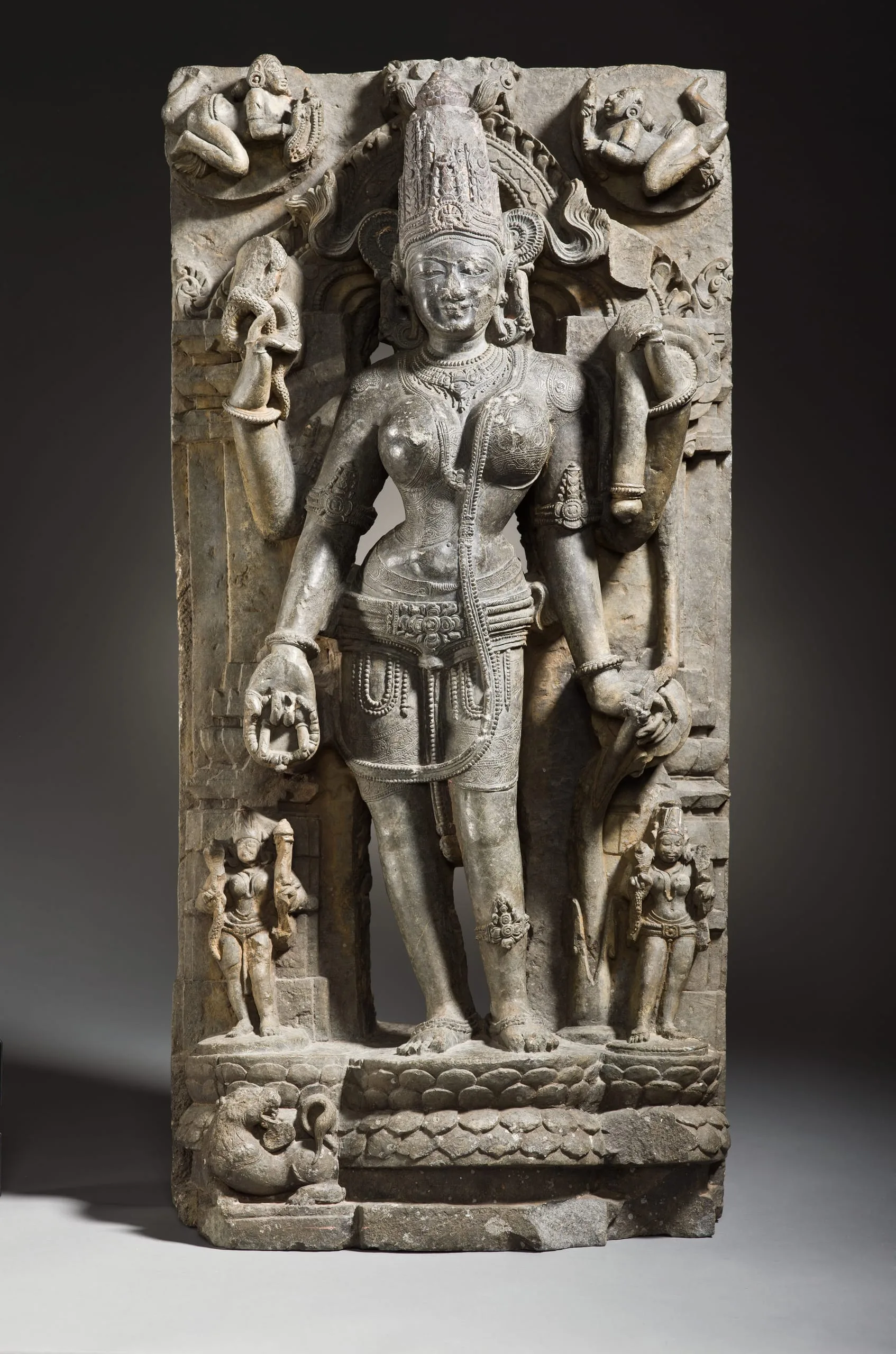
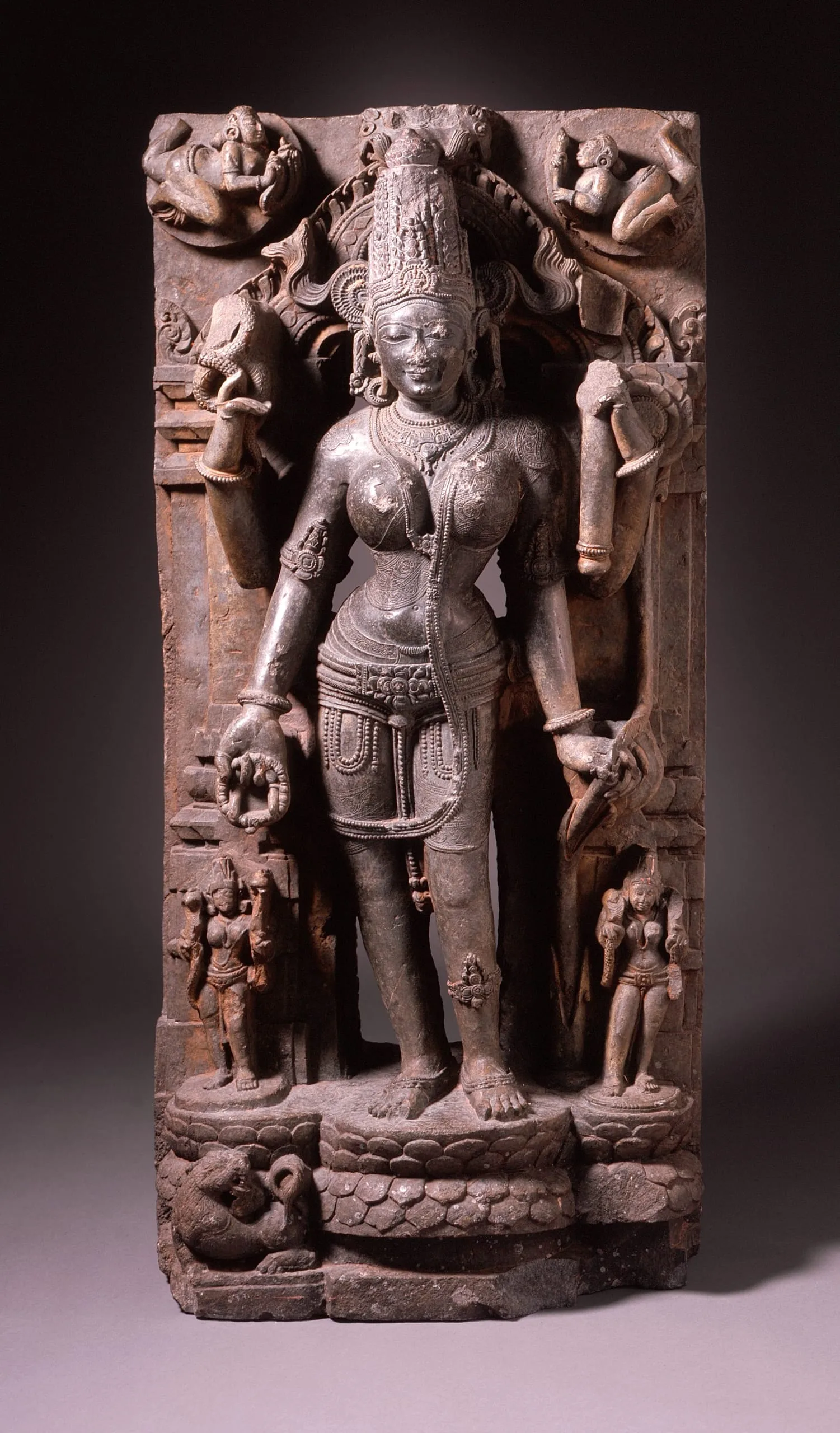
The Hindu Goddess Parvaticirca 1050-1100

Not on view
Dark gray stone relief sculpture of a multi-armed standing deity figure with elaborate crown, jewelry, and attendant figures, carved on a tall rectangular slab
Stone relief sculpture of a multi-armed standing deity in tribhanga pose, adorned with elaborate jewelry, crown, and draped garments, flanked by smaller attendant figures and celestial beings in the upper corners, standing on a lotus pedestal above a makara base.
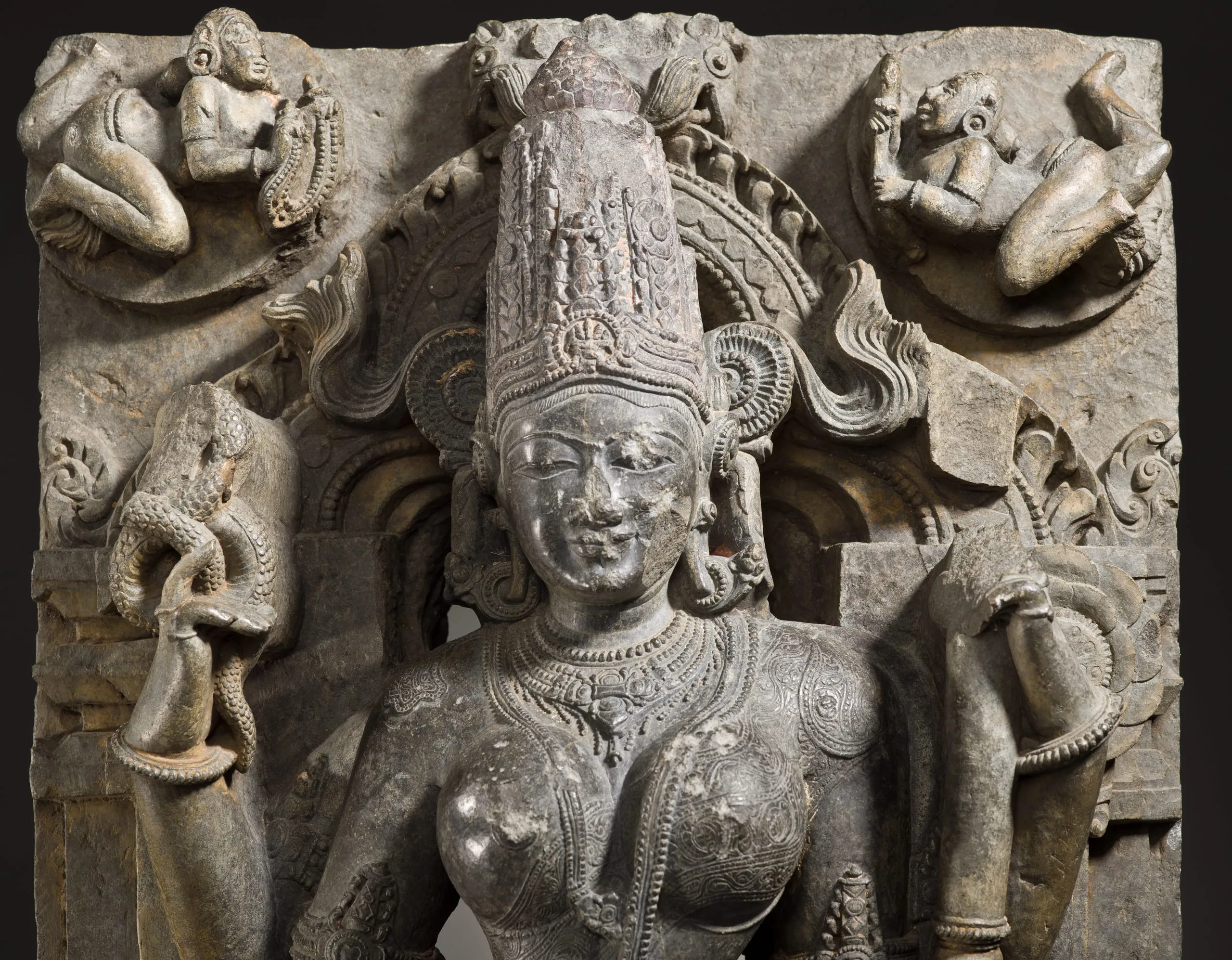
Stone relief sculpture of a four-armed deity in frontal stance, wearing an elaborate tall crown (kirita-mukuta) and ornate jewelry, with two reclining celestial figures in arched niches at upper corners and coiled serpents flanking the sides.
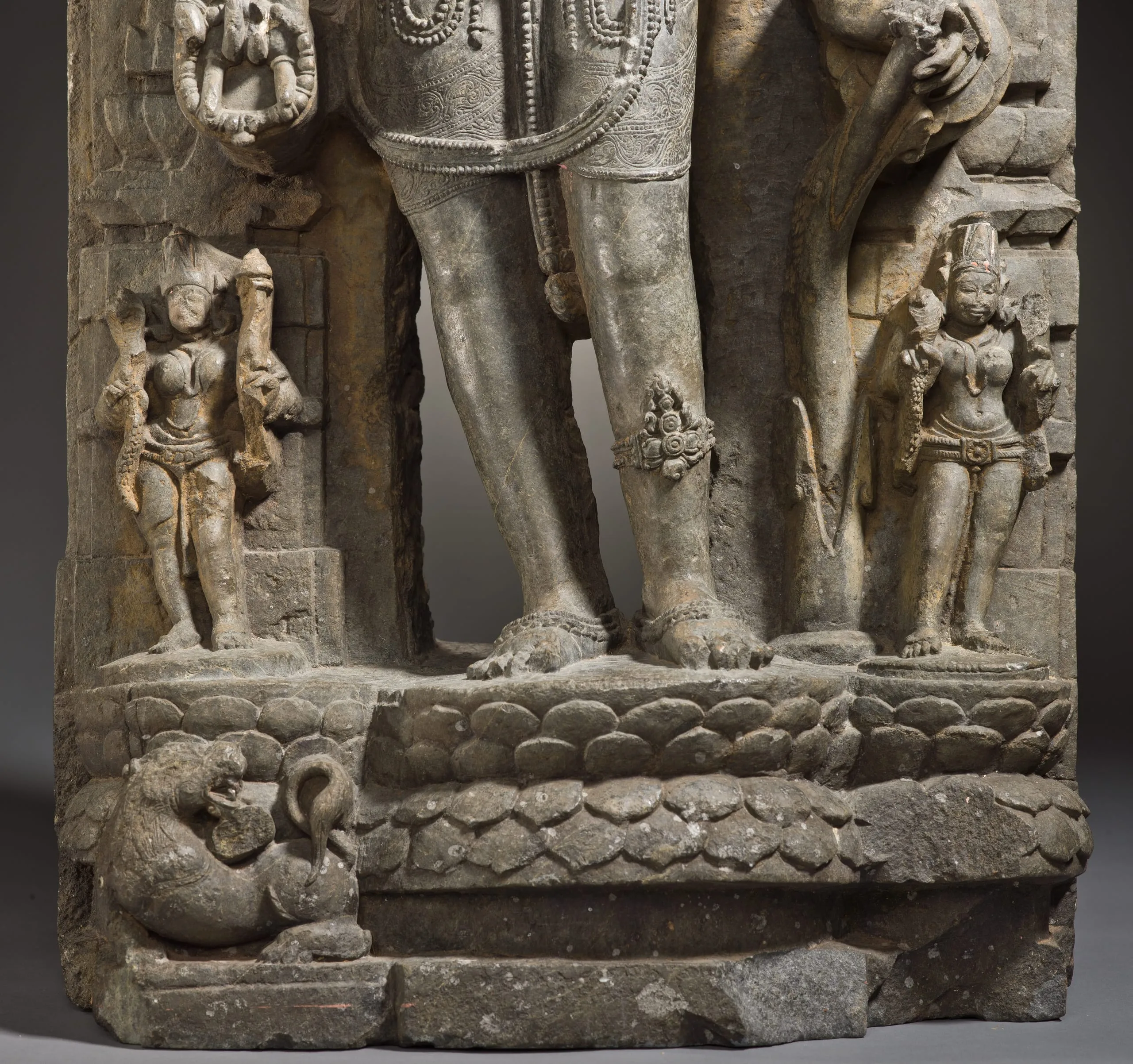
Stone sculpture detail showing the lower half of a large central figure adorned with elaborate jewelry and anklets, standing on a tiered pedestal with scale-like carving. Two smaller female attendant figures flank the central figure, each in tribhanga pose. A crouching animal figure appears at lower left.
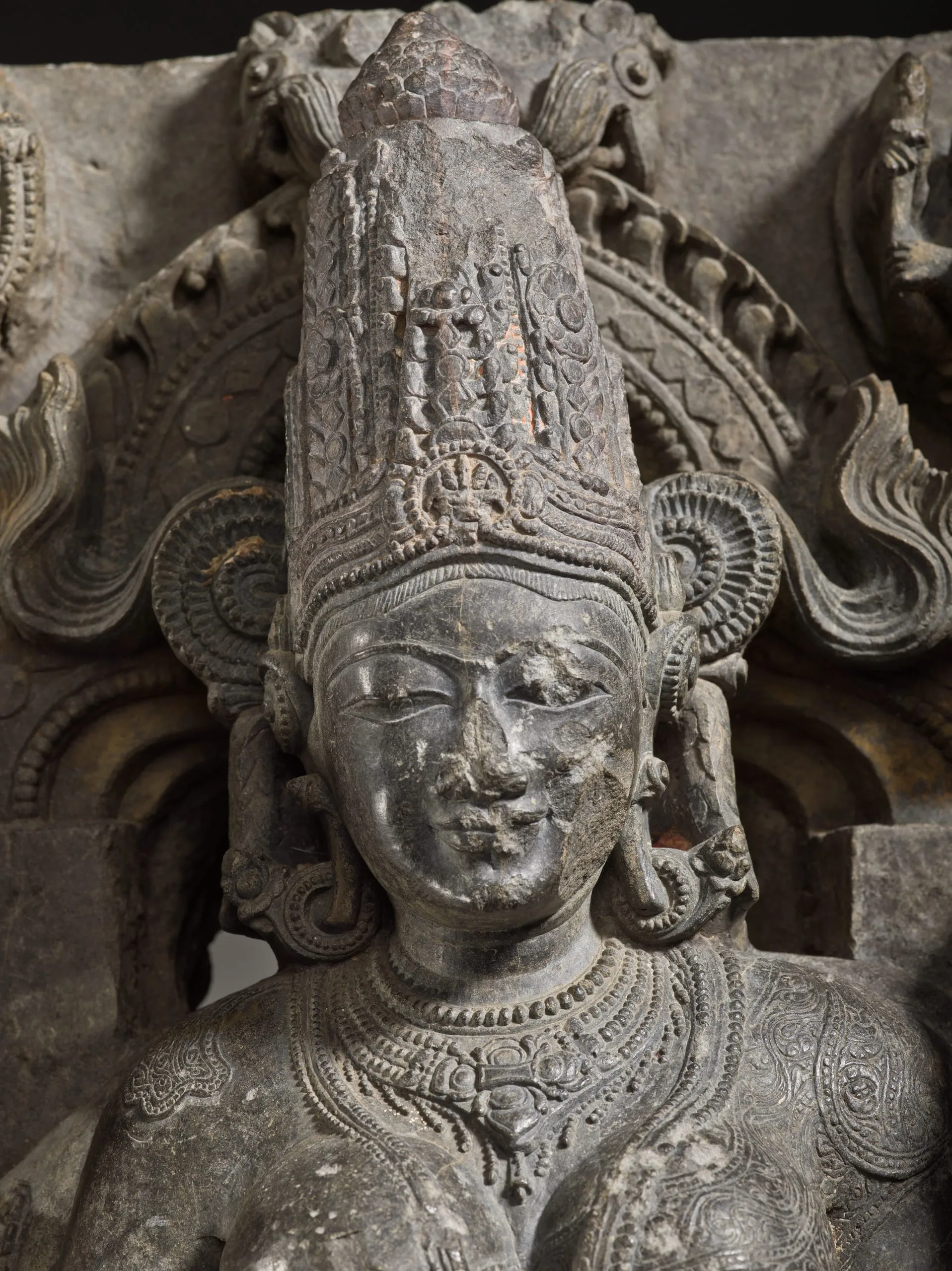
Stone relief sculpture, close-up of a deity figure wearing a tall decorated crown (kirita-mukuta) with intricate carved ornamentation, large circular ear ornaments, and a beaded necklace, set against an elaborately carved architectural backing with scroll and floral motifs.
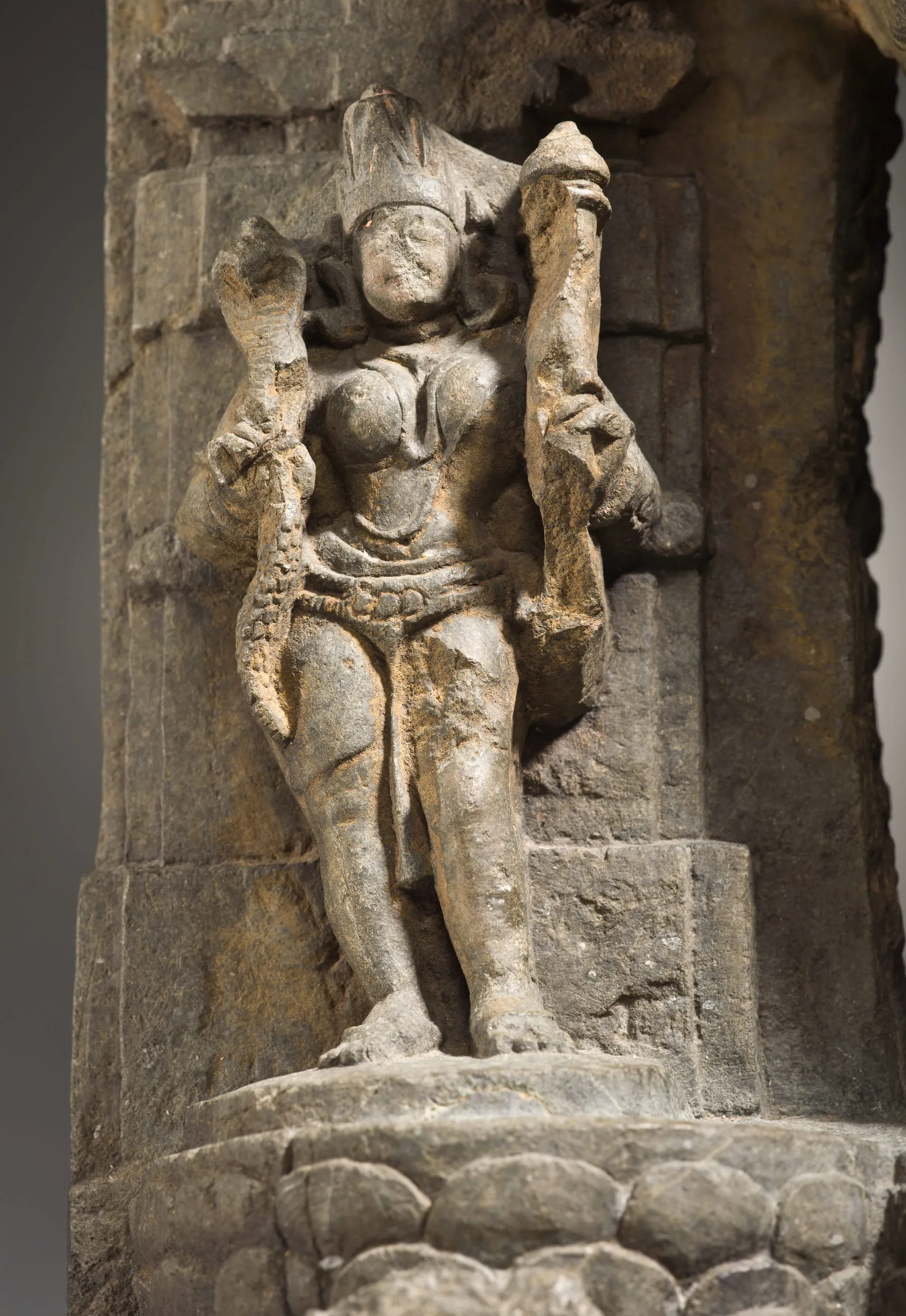
Stone relief sculpture of a standing female figure with multiple arms, carved in high relief against a pillar, wearing ornamental jewelry and a crown, with weathered gray stone surface.
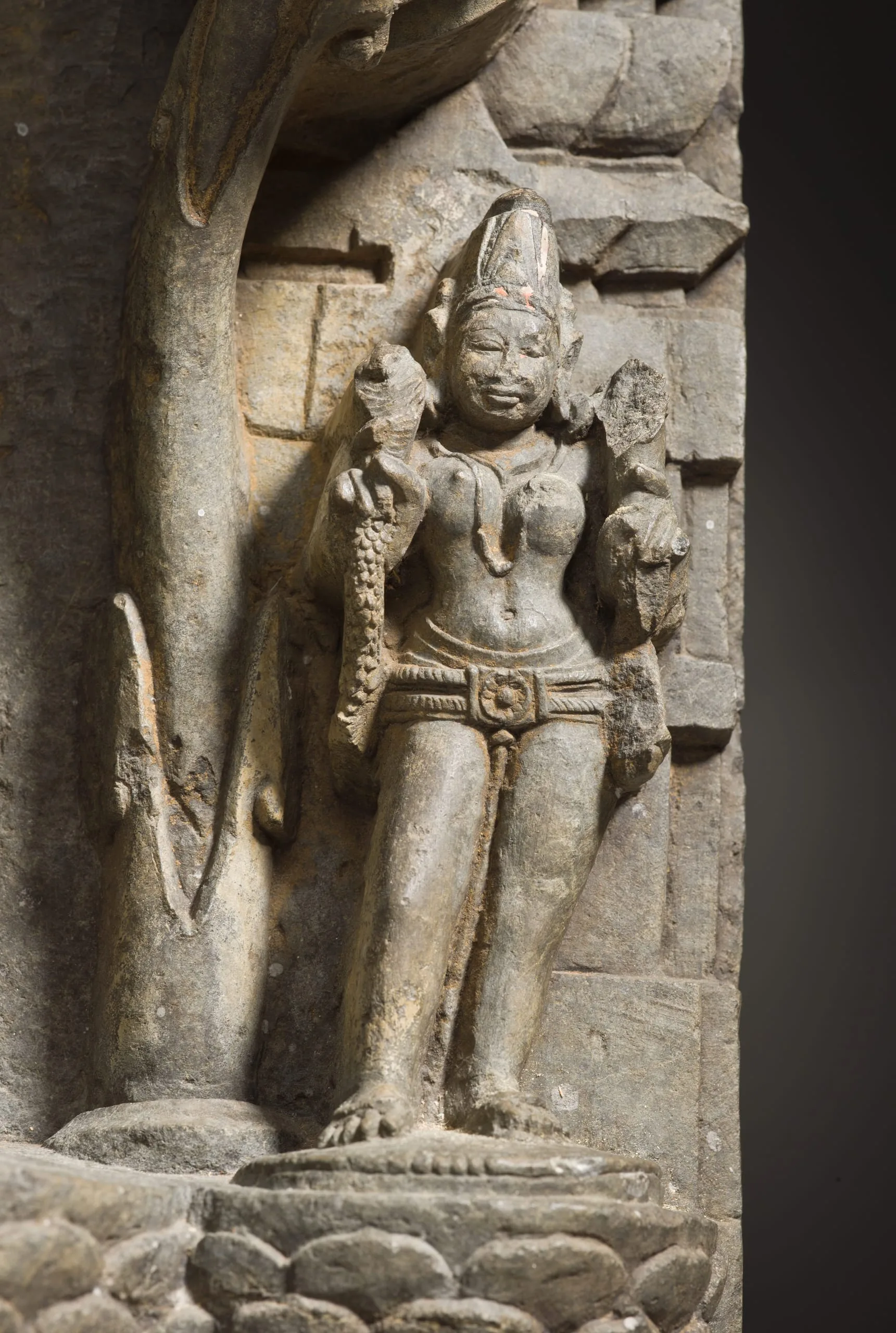
Stone relief sculpture of a standing four-armed female deity in tribhanga pose, wearing an ornate belt and crown, set within a temple architectural niche with stepped framing.
Artist or Maker
Unknown
Title
The Hindu Goddess Parvati
Place Made
India, Odisha (Orissa)
Date Made
circa 1050-1100
Medium
Magnesian schist
Dimensions
34 x 16 1/2 x 9 1/2 in. (86.36 x 41.91 x 24.13 cm)
Credit Line
Gift of Mr. and Mrs. Harry Lenart
Accession Number
M.77.82
Classification
Sculpture
Collecting Area
South and Southeast Asian Art
Curatorial Notes
This four-armed representation of the Hindu goddess Parvati is believed to be a syncretic form venerated in Odisha (Orissa). She stands with her left leg slightly bent (kuncitapada) on a double lotus base under an ornate arch atop pilasters. The goddess wears a tall crown (kirita mukuta) with a diadem adorned with a “Face of Glory” (kirttimukha). She is profusely embellished with heavy jewelry, including an ascetic’s sash (yoga patta) worn across her left shoulder, ornate hip belt (katibandha) with pearl pendants, and a single leg ornament on her left shin. Her sari is incised with delicate bands of scrolling floral motifs. In her upper right hand, she holds a now-damaged coiled cobra that may have doubled as a noose (naga pasha). In her lower right hand, she holds a rosary (akshamala). In her now-missing upper left hand, she grips the shaft of a broken attribute, perhaps an elephant goad (ankusha). Her lower left hand is held at a right angle away from her dangling arm in the restless hand gesture (lola mudra). It grasps a long stalk with two open lotuses (?) with large flowerheads behind each left hand. She is flanked by two identical female attendants, each holding a cobra in the right hand and perhaps a long flower (?) in the left hand. Parvati’s lion (simha) mount crouches in the left corner of the base and turns back to face his mistress snarling. Two flying celestial “Bearers of Wisdom” (vidyadharas) hover near her head. The one on her right holds a pearl garland, while the other carries an honorific fly whisk (cauri or chowri).
Selected Bibliography
  • Newman, Richard. The Stone Sculpture of India: a Study of the Materials Used by Indian Sculptors from ca. 2nd Century B.C. to the 16th Century. Cambridge, MA: Center for Conservation and Technical Studies, Harvard University Art Museums, 1984.
  • El Universo de la India: Obras Maestras del Museo de Arte del Condado de Los Angeles. Santiago: Centro Cultural Palacio La Moneda, 2012.