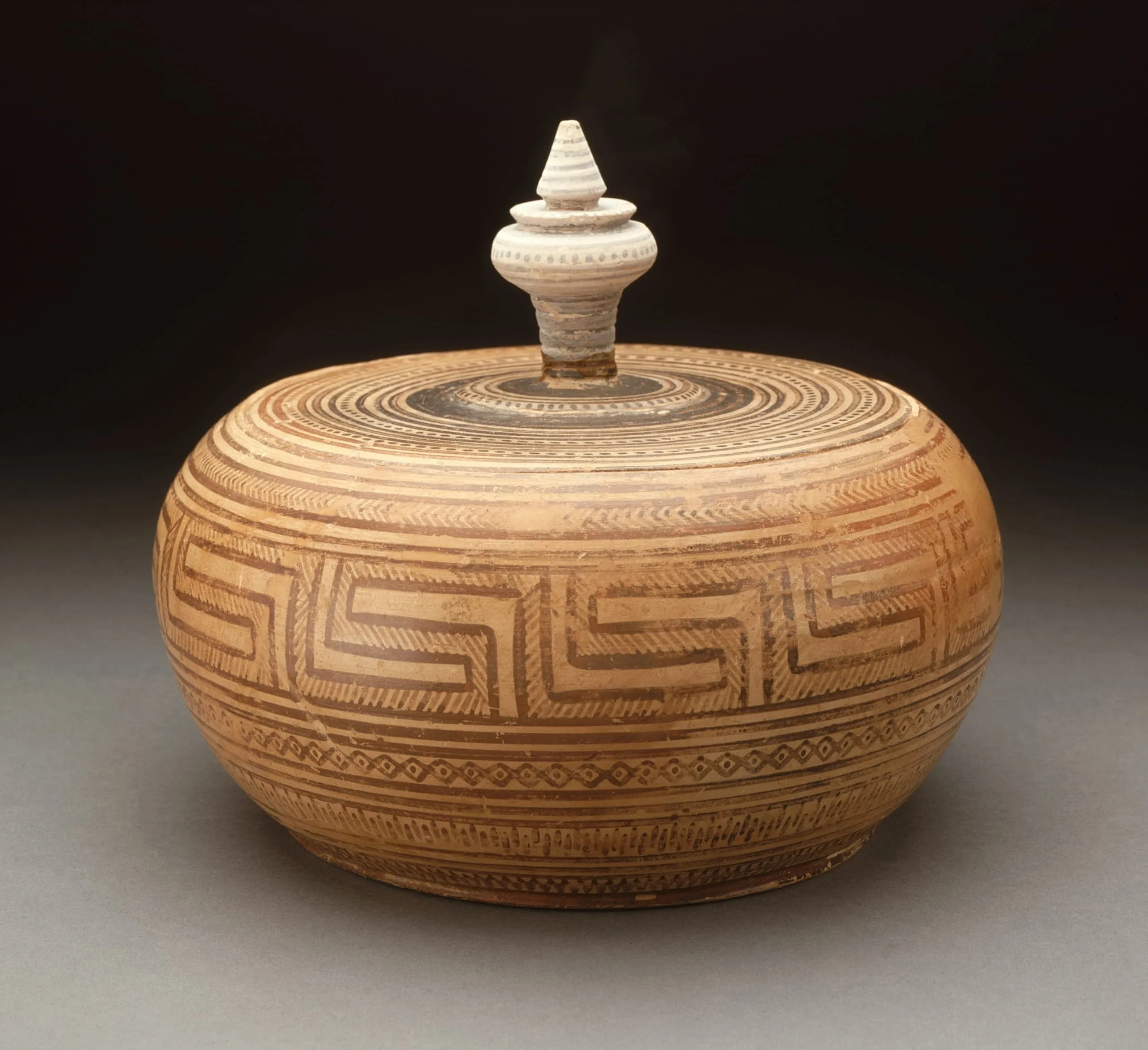
A pyxis is a lidded vessel typically used to hold cosmetics or jewelry. The style of this pyxis, characterized by geometric patterns on its surface, curved body, and inset, flat lid, appeared in Athens around 850 BCE. The vessel’s decorative program is dominated by a large, hatched meander that runs across the upper third of the body. Other patterns include chevrons, dotted diamonds, slashes, and zigzags. The lid is decorated with concentric rings, some of which are filled with dots. The knob is modeled after a small pyxis with a conical handle and is decorated with dots and bands. Although the knob is ancient, it is not original to this vessel. Two holes bored on either side of the lid match up to holes on the inner rim of the bowl, suggesting that the pyxis had been hung from strings. There is an “X” graffito etched into the underside of the lid, perhaps a maker’s mark or an indication of the vessel’s prior ownership.
Geometric pyxides were commonly dedicated as votives at sanctuaries and deposited into tombs as grave goods. Many of these vessels show signs of ancient repairs, indicating that they had been used during their owners’ lifetimes.